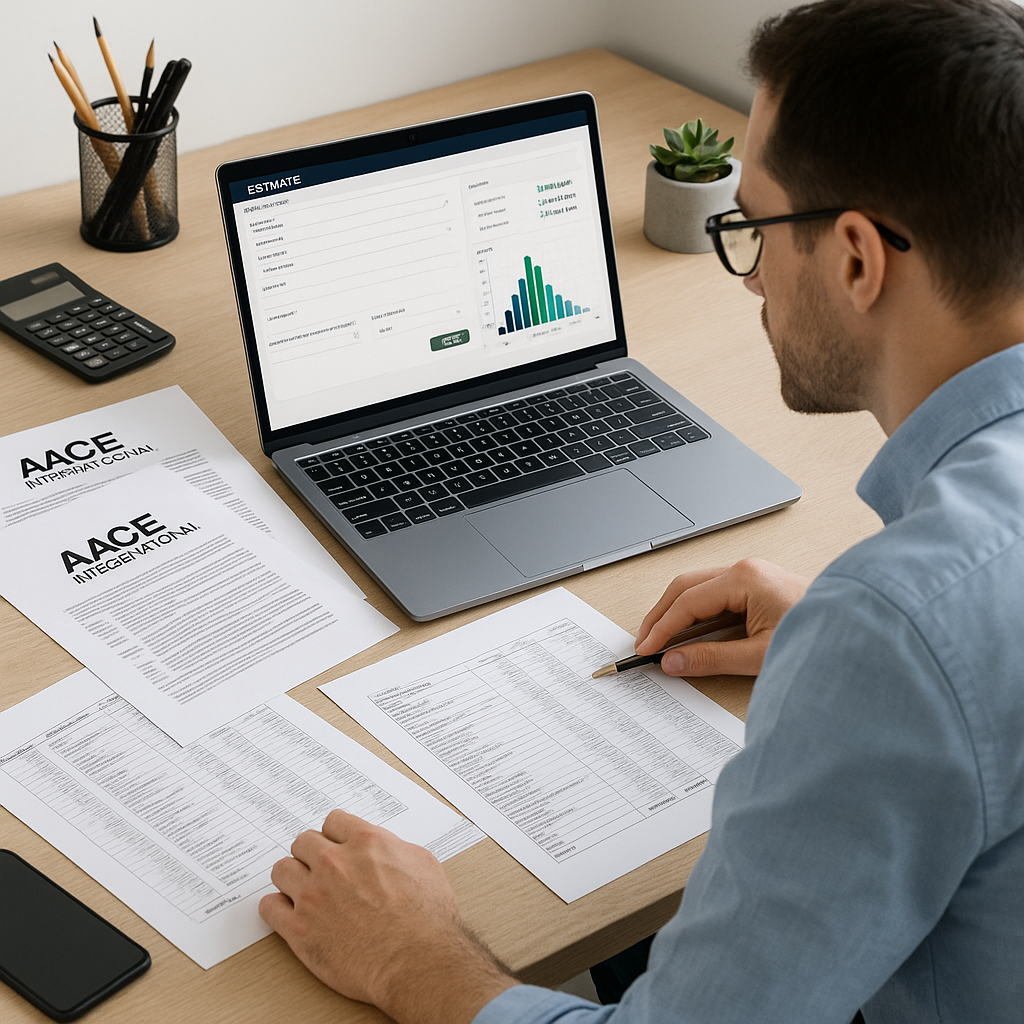
Why AACE Cost Engineering PDFs Are Still Around
Let’s be honest: the AACE Cost Engineering PDF is a cornerstone in project cost management. It's detailed, reliable, and standardized. But here's the problem no one talks about—it’s static. In a world where prices shift monthly (or daily), and projects cross borders with different tax regimes and labor costs, static documents just can’t keep up.
Don’t get me wrong, AACE’s classification system is still the gold standard for defining estimate types (Class 1 to Class 5). But if you’re flipping through a PDF for rates or classifications in today’s fast-paced environment, you’re already behind.
The Pain of Manual Rate Matching
Take the rate-matching process. Imagine you’re pricing a BOQ for a mid-rise office tower. You’ve got 12 subcontractor quotes, three pages of scope notes, and a 2,000-item Excel sheet. Now, you need to map those rates to something meaningful—labor, material, and equipment costs broken down by AACE’s standards. With just the PDF? That’s hours of manual work.
This is where most estimators falter. You’re either guessing based on past projects, or you’re stuck cross-referencing multiple sources. And let’s admit it, even the most diligent estimator occasionally misses a line item in this chaos.
Case Study: Manual Rate Matching Gone Wrong
Consider a construction firm that lost out on a $15M hospital project bid because of errors in their manual rate-matching process. The estimating team spent three days manually inputting subcontractor quotes into their Excel sheet but missed a key line item—specialized medical equipment installation labor costs. When the client compared bids, this oversight made their submission appear unrealistically low, leading to disqualification.
AI-Powered Rate Matching: A Real-World Example
Here’s what AI tools like EstimateNext change. Instead of flipping through PDFs, you upload the BOQ. The platform parses every line, matches rates from 78,000+ items across catalogs like CPWD DSR, RSMeans, or AECOM Middle East, and breaks down each match into material, labor, and equipment components. All this in under 10 minutes.
Case Study: A Contractor's Success Story
A contractor bidding on a $30M mixed-use project recently used EstimateNext. They uploaded a messy BOQ full of merged cells and inconsistent headers. The AI cleaned it up, matched 92% of the line items accurately, and flagged the rest for manual review. What would’ve taken two estimators two days? Done in under an hour. This saved them $2,400 in labor costs and improved their bid accuracy, helping them win the project.
Why Real-Time Updates Matter
One major limitation of AACE PDFs? Inflation. They don’t account for it in real-time. If you’re working with older data, your estimates are already off before you’ve even submitted the bid.
AI tools, on the other hand, suggest inflation adjustments based on catalog year or even CPI percentages. Let’s say you’re using RSMeans 2020 rates, but it's 2026. The tool applies a compound inflation factor, ensuring your bid reflects current market conditions. This isn’t just about accuracy—it’s about winning bids without undercutting yourself.
Example: Inflation-Adjusted Estimates
A residential builder in the U.S. used RSMeans 2018 data to estimate costs for a 2023 project. With no inflation adjustments, their bid came in $1.2M lower than competitors. After losing the bid, they adopted EstimateNext, which now adjusts historical rates by CPI factors automatically. Their next bid? Accurate and competitive.
Handling Multi-Market Complexity
Another blind spot in static AACE documents is multi-market projects. What happens if you’re managing a GCC tender with FIDIC compliance while referencing CPWD standards for an Indian subcontractor? You’re juggling multiple rate books, measurement standards, and even currencies. Good luck doing that manually.
AI-driven platforms handle this seamlessly. They apply country-specific tax regimes, labor rules, and even currency conversions automatically. You just set the project’s MarketProfile, and the system does the rest.
Example: Multi-Market Complexity Solved
An engineering firm managing a $50M infrastructure project across India and the UAE used EstimateNext to handle the complexities of working with CPWD rates for Indian subcontractors and GCC-compliant contracts for UAE vendors. The platform auto-adjusted rates based on local tax laws and currency exchange rates, saving the firm from time-consuming manual calculations.
The Future: Dynamic Cost Engineering
We’re not saying AACE PDFs are obsolete. They’re foundational. But they need to be paired with dynamic tools that adapt to real-world complexities. In my view, the future of cost engineering is hybrid—combining the structure of AACE standards with the adaptability of AI-powered platforms.
If you’re still relying on static documents alone, you’re leaving efficiency—and money—on the table.
Comparison Table: AACE PDFs vs. AI-Powered Tools
| Feature | AACE PDFs | AI-Powered Tools |
|---|---|---|
| Data Updates | Static (No real-time updates) | Dynamic (Real-time rates) |
| Inflation Adjustments | Manual | Automated |
| Multi-Market Support | Limited | Seamless |
| Time to Process BOQ | Hours or Days | Minutes |
| Error Reduction | High Manual Error Risk | AI Flags Issues |
| Cost of Implementation | Free or Low Cost | Subscription-Based |
Call to Action
Tired of flipping through PDFs and redoing Excel formulas? EstimateNext automates the entire preconstruction workflow—from BOQ upload to priced bid package. Start free and see the difference for yourself.


