The Brutal Math of Manual Estimation
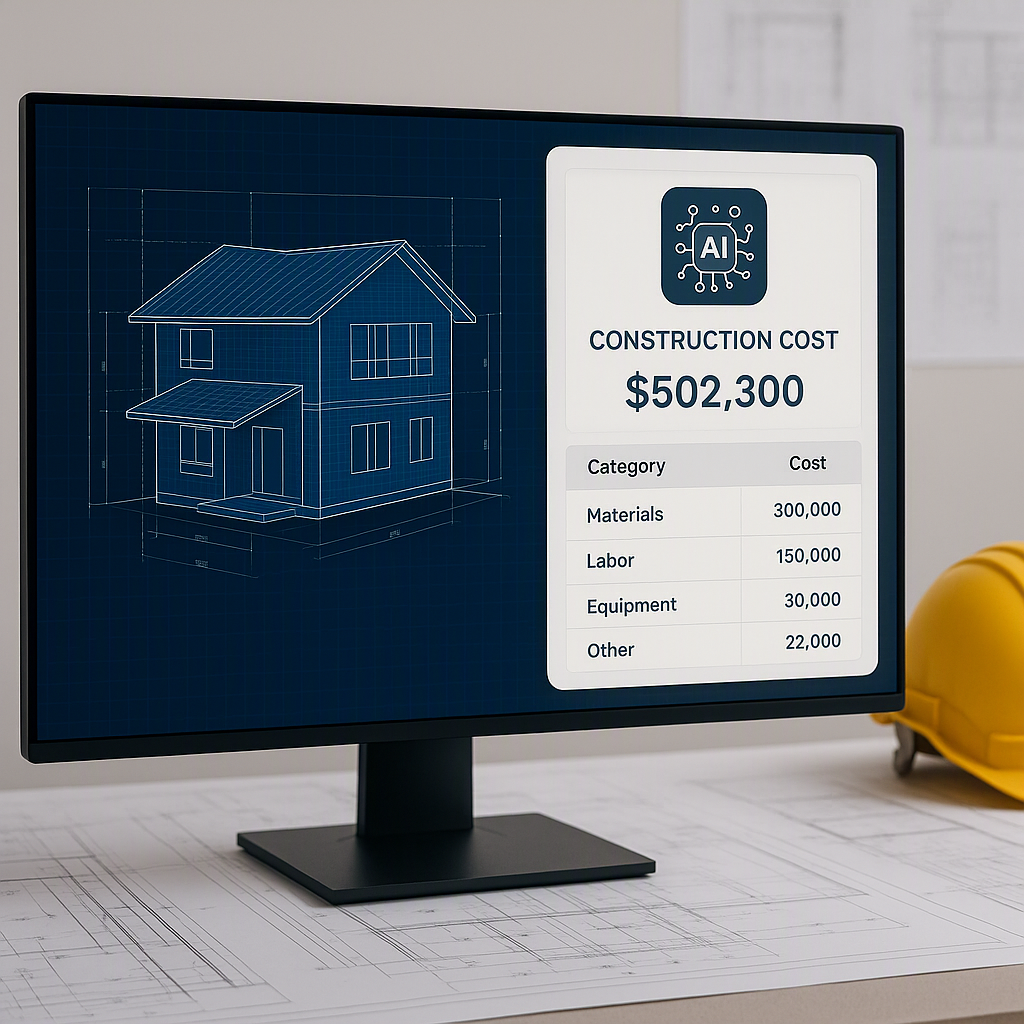
Every preconstruction director knows the pain. You start with a pile of PDF drawings and an Excel BOQ that’s barely readable. Two estimators spend 40 hours tracing, measuring, and flipping through rate books. That’s two full days just to get quantities — before you even touch pricing.
It’s worse than inefficient; it’s expensive. At $130/hour for an experienced estimator, those 40 hours cost $5,200. Multiply that by 5 GMP pursuits a year, and your firm burns $26,000 annually just on manual takeoffs. And we haven’t even factored in errors or missed deadlines yet.
Why Manual Processes Are a Money Pit
Manual estimation isn’t just about time; it’s about risk. Studies show that manual takeoff processes result in error rates of 10-15%. For a $10 million project, that’s potentially $1.5 million in costs due to miscalculations or missed quantities. Even when errors don’t blow your budget, they can still erode trust with clients.
Let’s not forget the opportunity cost. Estimators bogged down with manual tasks can’t focus on higher-value activities like refining bid strategies or building stronger subcontractor relationships. In competitive markets, this lack of strategic focus can mean the difference between winning and losing bids.
Enter AI-Powered Takeoffs
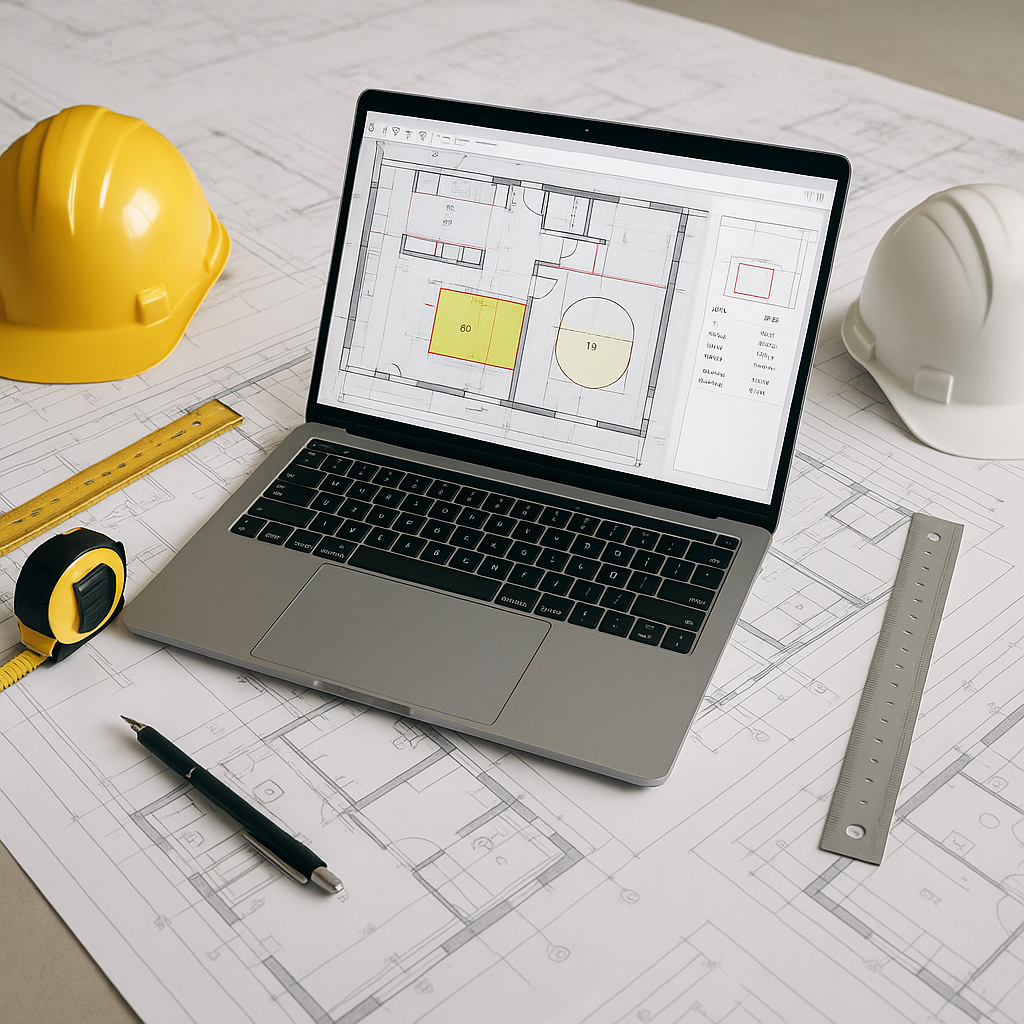
This is where tools like EstimateNext change the game. Vision AI reads your PDF drawings — walls, doors, areas, even window counts — and extracts quantities in just 10 minutes. That’s a 10X speed improvement.
Think that’s too good to be true? A mid-sized GC used AI takeoffs on a high-rise bid and saved 120 hours over two weeks. They described it as hiring an extra estimator without the payroll hit.
How AI Works With Your Process
AI-powered takeoff tools are designed to fit seamlessly into existing workflows:
- Upload Documents: Simply upload PDF plans or CAD files directly into the platform. No need for apps like Bluebeam or manual overlays.
- Automated Quantity Extraction: The AI identifies key elements like walls, windows, doors, and flooring areas, generating an initial set of quantities in minutes.
- Custom Rate Integration: Input your rate catalogs (or use pre-loaded standards like CSI or NRM2), and the system automatically applies them to the quantities.
- Human Review & Adjustments: AI flags low-confidence areas for manual review, ensuring accuracy without replacing your expertise.
By automating the grunt work, your team can focus on what they do best: pricing strategies, subcontractor negotiations, and value engineering.
Addressing the Obvious Objection: “But AI Can’t Think Like an Estimator”
You might be skeptical. AI isn’t replacing your expertise. It amplifies it. You’re still the one making judgment calls, negotiating with subcontractors, and deciding on markup. But AI eliminates grunt work — like tracing plans and manually calculating square footage.
It’s not perfect. Sometimes Vision AI flags “low-confidence” lines for manual review. But that’s the point: you’re still in control, with tools to catch mistakes before they cost you.
Actionable Tip: How to Handle Low-Confidence Outputs
When AI tools flag ambiguous or unclear sections, use this as an opportunity to:
- Cross-check against your experience. For example, if the AI misinterprets a structural wall as a partition, you can quickly correct it.
- Update the AI. Most platforms allow you to provide feedback, improving accuracy for future projects.
- Collaborate with your team. Low-confidence areas are often worth a second opinion, especially for complex builds.
Real ROI: More Bids, Better Margins
Let’s talk numbers. If AI saves 36 hours per bid, that’s $4,680 back in your pocket. Across 5 pursuits, you’re up $23,400 annually. But the bigger win? Those extra hours mean more time for your team to respond to additional bids.
For MEP subs, the ROI is even sharper. Faster quotes mean responding to 50% more bid packages. That’s potentially 4-8 extra wins a year, worth $800K-$1.6M in incremental revenue.
Real-World Example: MEP Contractor Wins Big
One regional MEP firm adopted EstimateNext and reported a 2-week reduction in their bid timelines. This allowed them to respond to 12 additional bid requests over the course of a year. Out of those, they secured 6 projects worth a combined $2.4 million. Without AI, these opportunities would’ve been missed.
Case Study: The $1B Rail Project
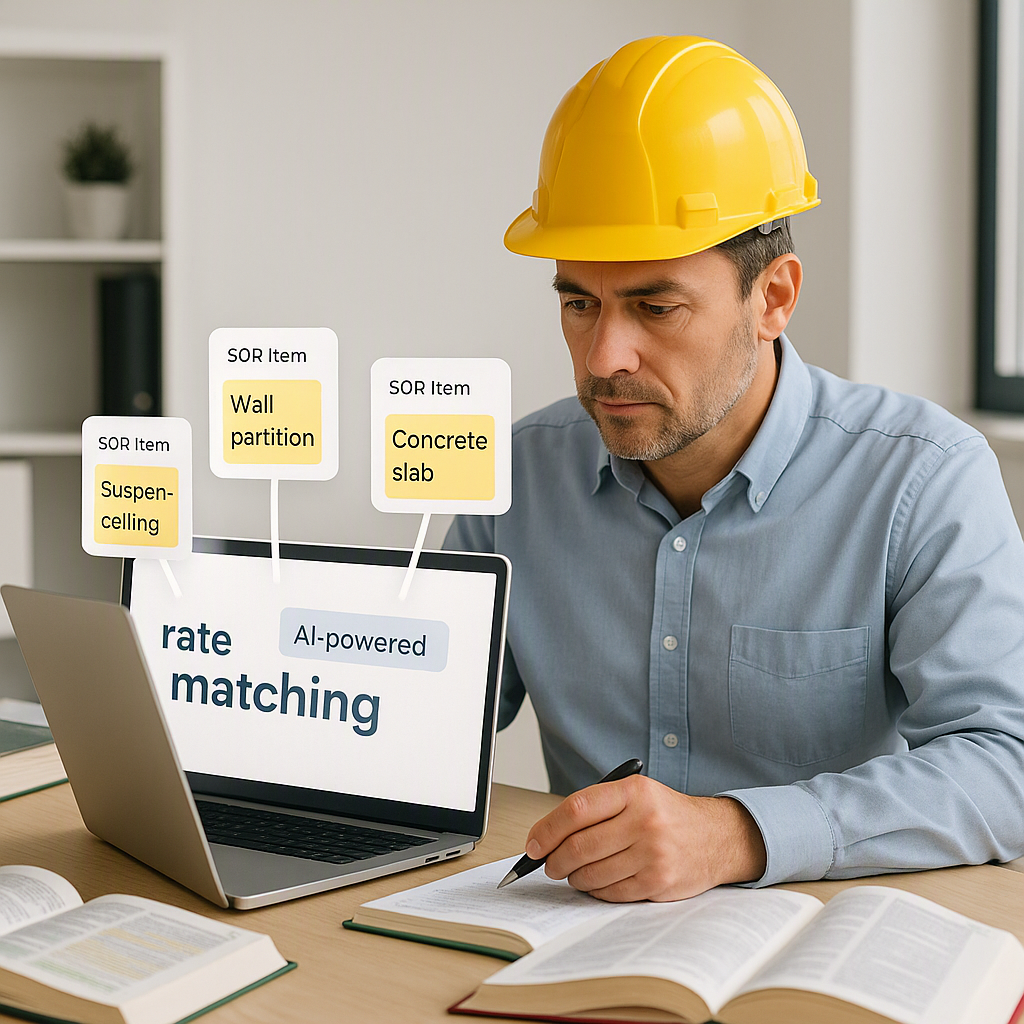
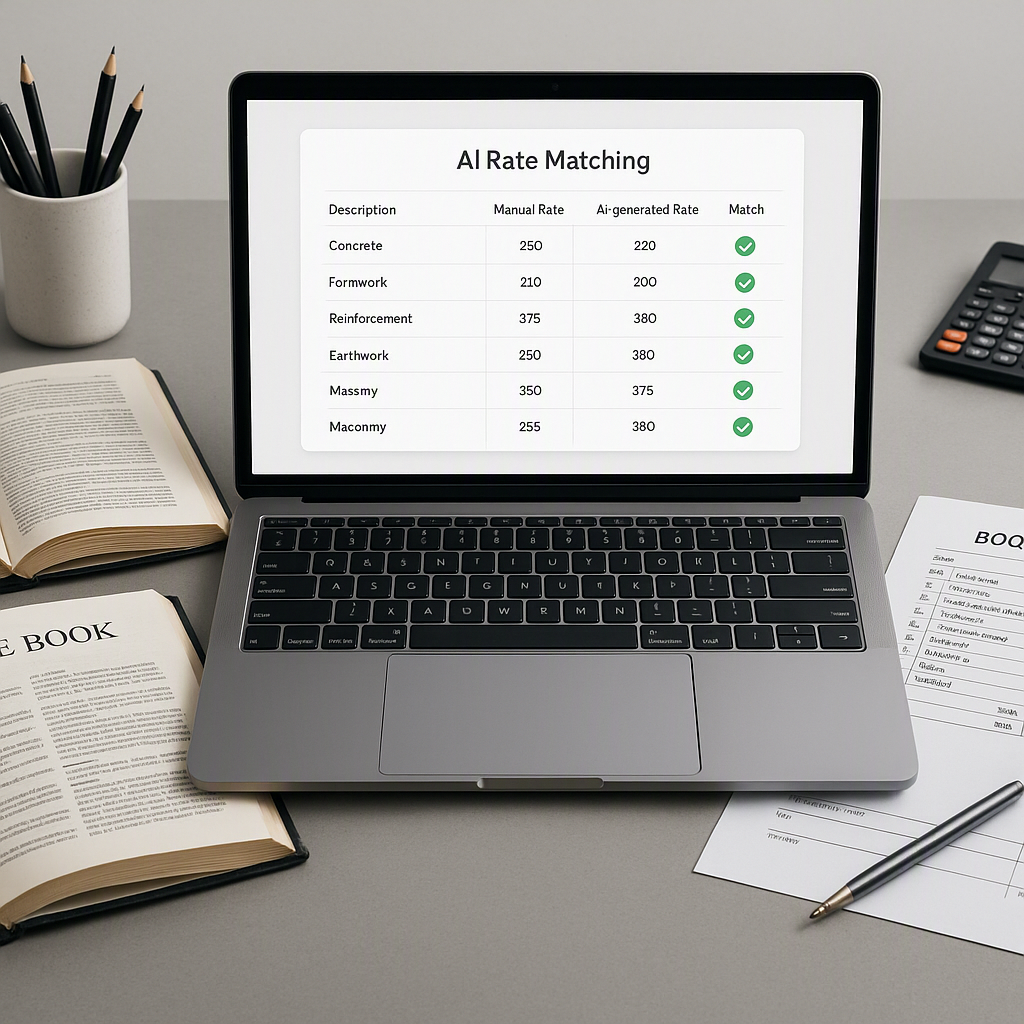
Take a major contractor’s rail bridge project as an example. Rates for everything — from rail ties to structural steel — needed matching to DOT-approved catalogs. Manual lookup would’ve taken weeks. With AI-powered rate matching, they pulled everything in seconds.
That’s the kind of speed that wins bids. And, frankly, it’s why early adopters of AI in construction see average cost savings of 10-20% per project.
Breakdown of Savings
| Task | Manual Time | AI Time | Savings |
|---|---|---|---|
| Quantity Takeoffs | 40 hours | 4 hours | $4,680 |
| Rate Matching | 10 hours | 1 hour | $1,170 |
| Error Corrections | 5 hours | 0.5 hours | $585 |
Total savings per bid: $6,435
What About Edge Cases?
You might ask: “What if my rates are project-specific?” AI tools handle that too. You can upload custom rate catalogs, and the system integrates them seamlessly. By the third project, most users report significant accuracy improvements as the AI learns from feedback.
Multi-market complexity? No problem. EstimateNext supports CSI, NRM2, CPWD, and CESMM3 standards — all within the same platform.
Actionable Tip: Managing Custom Rate Catalogs
If your rates vary by project or region, take these steps:
- Standardize Inputs: Organize your rate data into consistent formats like Excel or CSV.
- Upload & Test: Upload your custom catalog into the AI platform and test it on a smaller project to ensure accuracy.
- Iterate: Use the platform’s feedback loop to refine rates and improve precision over time.
Call to Action
If your team spends more time on takeoffs than strategic decisions, AI-powered tools like EstimateNext can help. Don’t let inefficiencies hold you back. Get started free →