Preconstruction Estimation: Why It's Broken
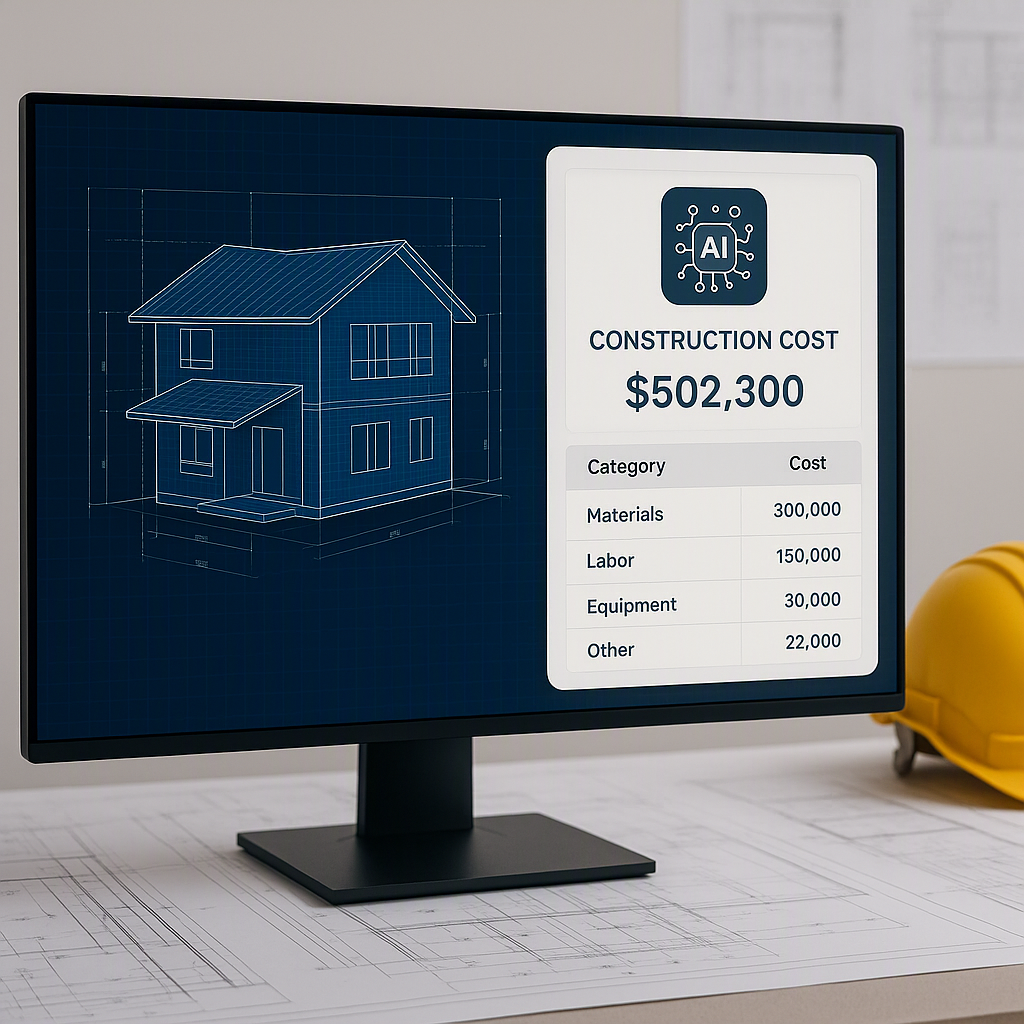
If you've ever spent two days hunched over drawings, manually counting walls and windows, you know the frustration. Preconstruction estimation eats time. A lot of it. For a typical mid-size GC, just the quantity takeoff (QTO) phase can take 40 hours per project — two estimators, two full workdays. And that's before you even get to pricing the BOQ.
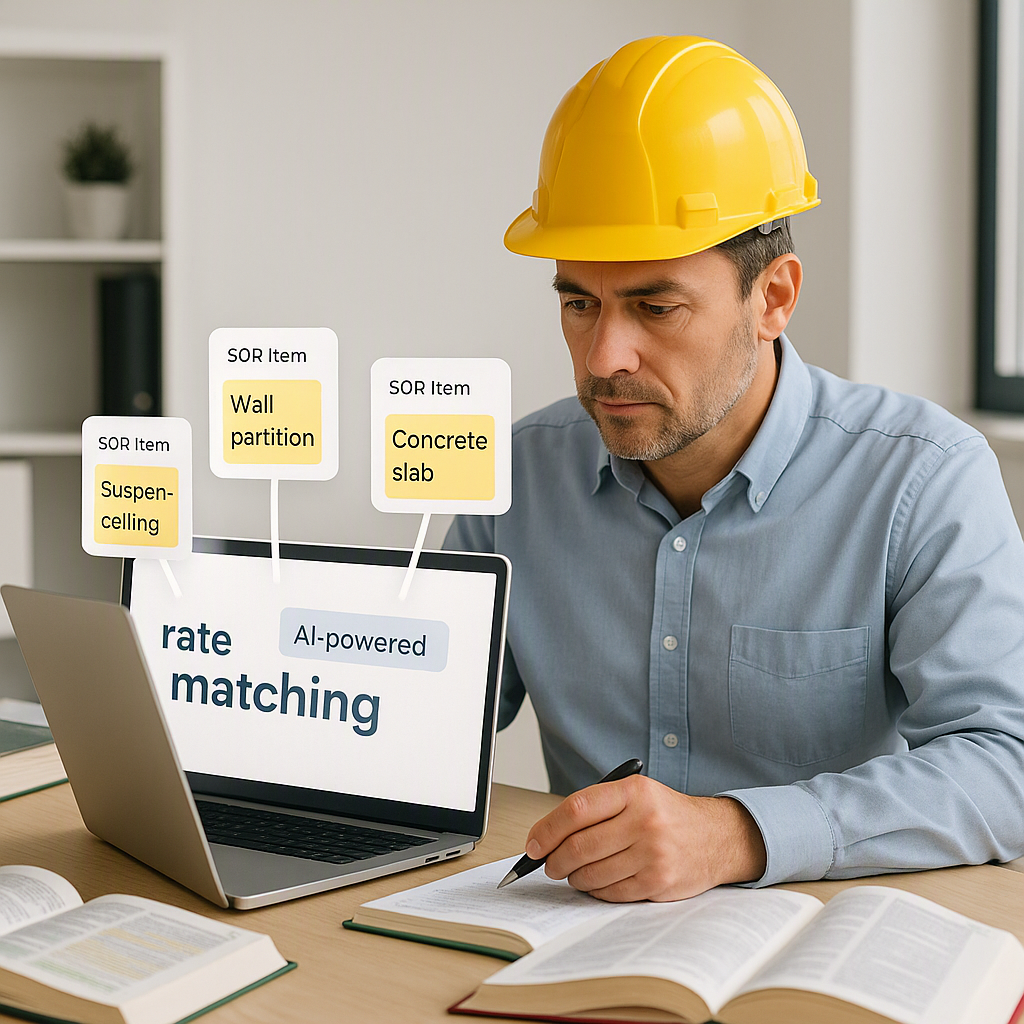
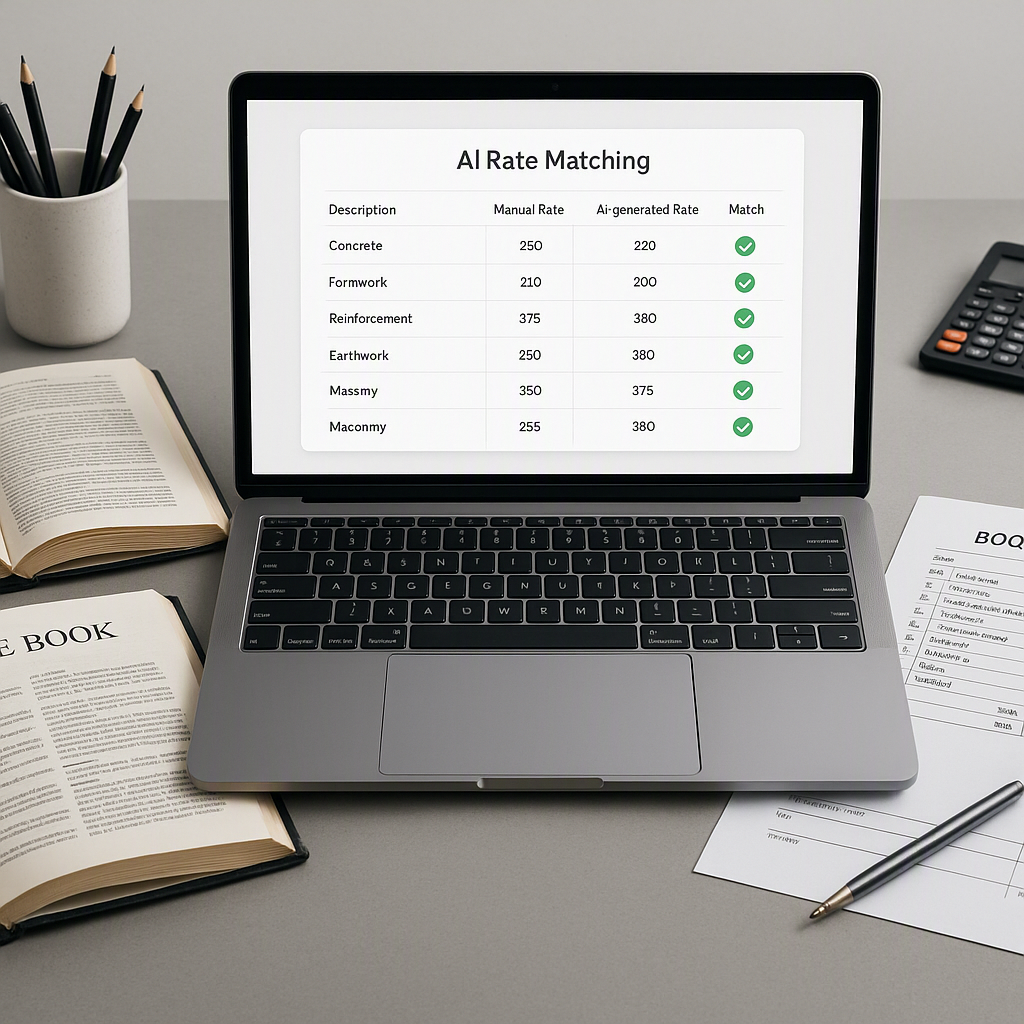
Why so slow? Manual workflows. Most teams still rely on a mix of Bluebeam, Excel, and rate books like RSMeans. You're flipping between tools, double-checking measurements, and praying you didn't miss a line item. Not ideal.
But here's the thing: it doesn't have to be this way. AI-powered tools like EstimateNext can extract quantities directly from your PDFs in minutes. No more endless clicking. No more headaches.
The 10-Minute Game Changer: Vision AI Takeoff
Let’s talk specifics. Vision AI, part of EstimateNext’s platform, reads your drawings like a human would — only faster. Upload a PDF set, and it’ll extract areas (like rooms), lengths (like walls), and counts (like doors/windows). Accuracy? Around 95%, straight out of the box.
A real-world example: A regional GC in Texas recently used Vision AI to process a 150-page drawing set. What used to take them 30 hours was done in under 15 minutes. They even caught a missed window count that would’ve cost them $12,000 in rework.
You might be thinking, "Okay, but what about errors?" Fair question. No AI is perfect, and Vision AI isn’t either. But the tool flags low-confidence items for manual review. You get to double-check anything that seems off. It’s still faster than starting from scratch.
The ROI of Speed
Let’s do some math. If your team is saving 40 hours on takeoff for every project, that’s $5,200 per estimate (assuming $130/hour billable rates). Multiply that by five GMP pursuits a year, and you’re looking at $26,000 in savings. And that’s just one feature.
For MEP subs, the math gets even better. Faster takeoffs mean faster quotes. Faster quotes mean more bids submitted. Imagine responding to 50% more bid packages a year. Even if you win just four more projects, that’s $800,000 in incremental revenue (assuming $200K/project).
This isn’t theory. It’s happening right now for firms using tools like EstimateNext.
What AI Can't Fix (Yet)
Now, let’s keep it real. AI isn’t magic. It won’t solve everything. If your drawings are a mess — missing dimensions, overlapping revisions, or handwritten notes — no software can clean that up completely. You'll still need a human touch for those edge cases.
And while AI tools are great for speed, they’re only as good as the data you feed them. Garbage in, garbage out. So if your BOQ is riddled with errors, AI won’t magically fix it. But it will make spotting those errors faster.
Final Thought: Stop Wasting Time
Here’s the blunt truth: manual estimation isn’t just slow. It’s wasteful. The sooner you adopt AI-powered tools, the sooner you free up your team for higher-value work — like refining bid strategies or negotiating with subs.
Tools like EstimateNext aren’t just nice-to-haves. They’re table stakes for staying competitive in a market where speed wins jobs. The question isn’t if you’ll adopt AI. It’s when.
Want to see what 40 hours back in your week feels like? Try it. You might just realize you’ve been working harder, not smarter, all along.
Ready to see EstimateNext in action?
AI-powered preconstruction estimation platform — from BOQ upload to priced bid package in minutes. 78K+ SOR items, 7 specialist trade tools, bid intelligence, and a procurement network.
Get Started Free →