Manual Rate Lookups Are Killing Your Estimates
If you've ever spent hours flipping through RSMeans or CPWD DSR catalogs to find a single rate, you know how frustrating it is. It's not just the time spent—it’s the mistakes that creep in when you're tired or rushing. Miss one line item, and your bid either loses the job or eats your margin. Neither is ideal.
Here’s the reality: rate lookup isn’t just tedious. It’s expensive. Estimators waste an average of 12 hours per project searching for rates. Multiply that by 5-8 GMP pursuits per year for a typical general contractor (GC), and you’re looking at 60-100 hours of lost productivity annually. That’s two full weeks of skilled labor spent on something a machine could do in seconds.
The Ripple Effect of Manual Rate Lookups
Beyond the time wastage, the impact on project accuracy and profitability is staggering. According to a study by Dodge Data & Analytics, errors in estimates account for up to 21% of project cost overruns. Over-reliance on manual rate lookups often contributes to these errors, especially when estimators miss key line items or use outdated rates. For small firms, this could mean losing critical margins; for larger firms, the consequences compound across multiple projects.
The AI Fix: Instant, Accurate Rate Matching
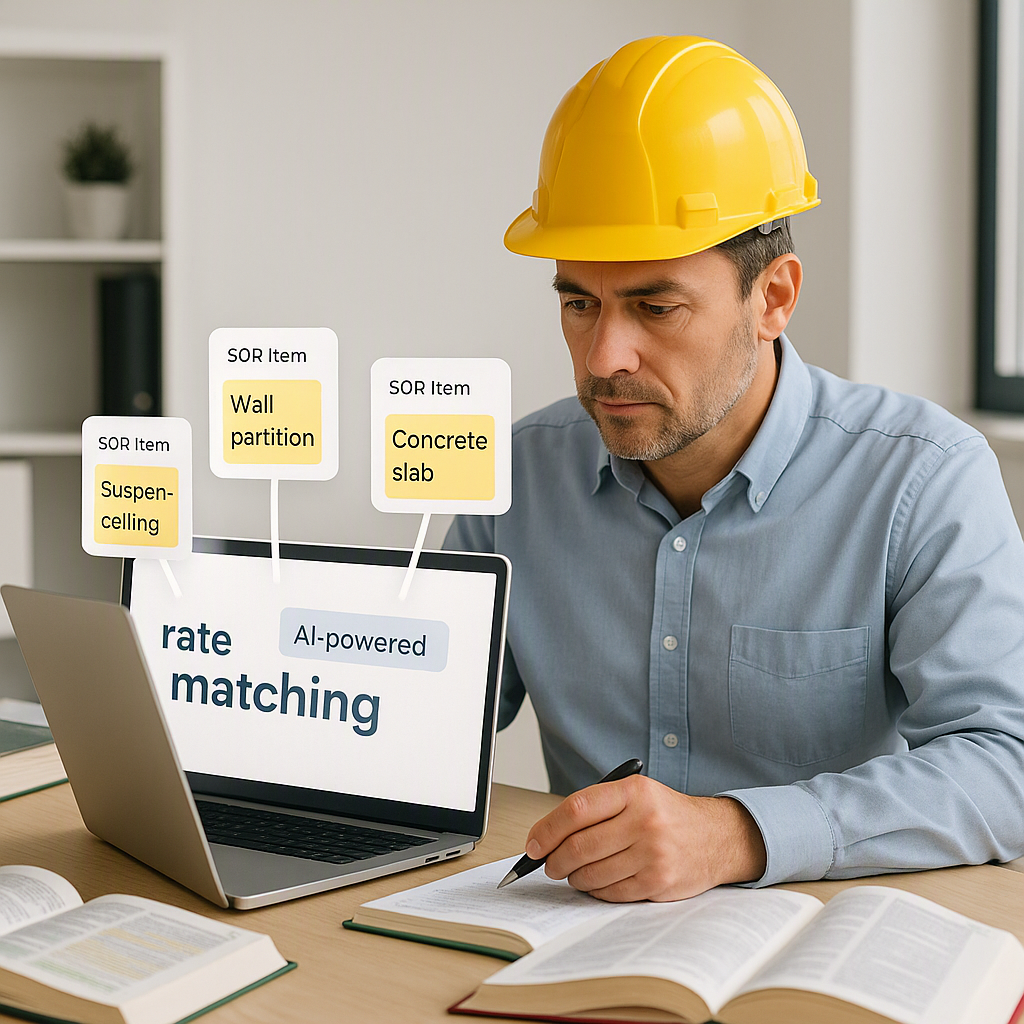
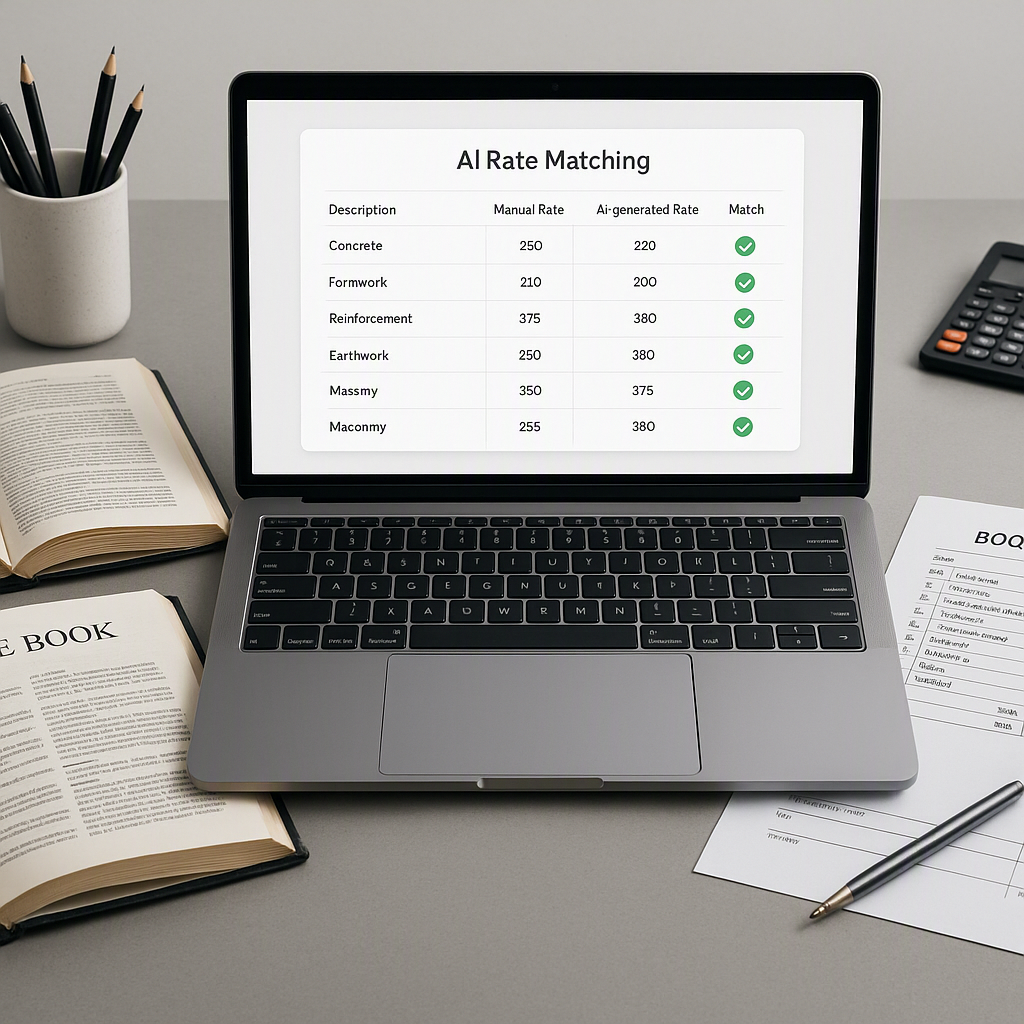
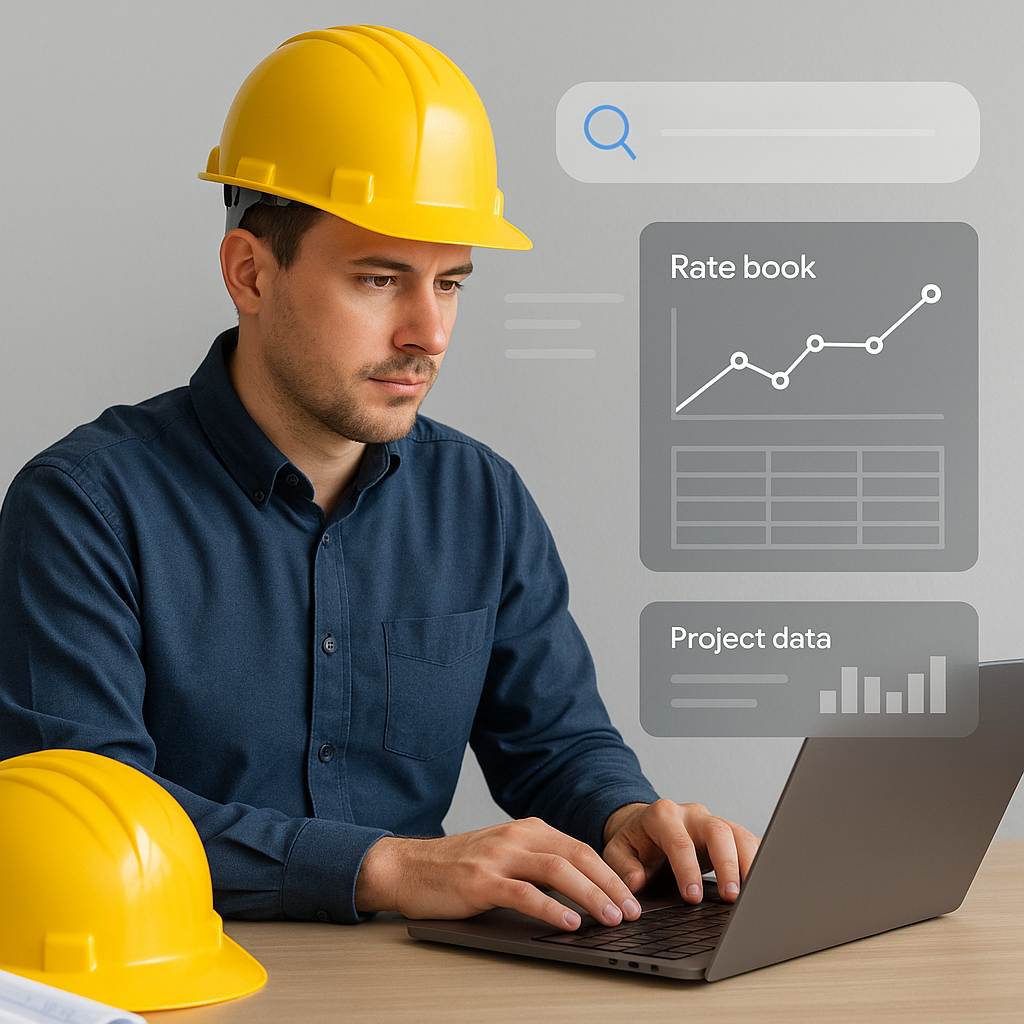
This is where AI-powered tools like EstimateNext step in. Instead of scrolling through endless PDFs or spreadsheets, you type what you need: "Labor rate for installing pre-stressed concrete girders" or "Painting rate for Cat-A office walls." Within seconds, the system matches your query to the most relevant line item from its 78,000+ rate database. Done.
But it doesn’t stop there. Let’s say you’ve got custom materials or project-specific rates. AI adapts. You upload your own rate catalogs, and the system integrates them for future use. The more you use it, the smarter it gets. By the third project, users report significant accuracy improvements.
Real-World Example: A Major Contractor’s Rail Bridge Bid
Take a large national contractor’s $1 billion rail bridge project. The bid required rates for everything from rail ties to structural steel, all pulled from DOT-approved catalogs. Traditionally, this would’ve taken days of manual lookup. With AI, the same work was done in minutes.
Imagine the competitive edge: faster bids, fewer errors, and more time to focus on value engineering or subcontractor negotiations. That’s not just saving time. That’s winning bids.
Additional Case Study: Small GC Wins a Competitive Bid
Consider a midsized contractor bidding for a $20 million mixed-use development. With manual rate lookup, their team spent nearly 40 hours compiling rates from RSMeans and local supplier catalogs. After switching to EstimateNext, they completed the same estimate in under six hours. Not only did they submit the bid ahead of the deadline, but they also had time to refine their proposal with alternate materials, giving them a competitive edge. The result? A win that added $3 million in profit margins.
Why Accuracy Matters More Than Speed
Speed is great. Accuracy is non-negotiable. AI-powered rate matching doesn’t just find the first result that pops up. It uses semantic search—meaning it understands context. Need a rate for "polished concrete flooring" in a high-traffic retail area? The AI factors in location, application, and catalog specifics to return a precise match.
And if the AI isn’t confident in its result? It flags it for manual review, keeping you in control. No blind trust, just smarter tools.
Actionable Steps for Ensuring Accuracy:
- Regularly Update Your Rate Catalogs: AI tools rely on the data you feed them. Make sure your catalogs reflect the latest market rates and supplier adjustments.
- Set Up Review Flags: Configure your AI tool to flag any rates with low confidence scores for manual validation.
- Use Historical Data: Leverage past project estimates and performance data to train the AI for better contextual understanding.
Obvious Objection: “AI Can’t Think Like an Estimator”
You’re right. AI doesn’t know your project like you do. But that’s not its job. Its job is to handle the grunt work—like rate lookups, takeoffs, and what-if recalculations—so you can focus on high-value tasks. It’s a tool, not a replacement.
Smart Pairing: Junior Estimators + AI
In fact, pairing junior estimators with AI tools is one of the smartest moves you can make. It frees up senior staff to focus on strategy while giving your juniors hands-on experience with cutting-edge tech. That’s how you build a future-ready team.
Comparison: Manual vs. AI-Assisted Rate Lookup
| Feature | Manual Lookup | AI-Assisted Lookup |
|---|---|---|
| Time Per Rate | 15–60 minutes | <1 minute |
| Error Rate | High (human fatigue) | Low (automated checks) |
| Integration with Custom Data | Manual input, prone to errors | Seamless integration |
| Scalability for Large Projects | Limited | Unlimited |
How to Get Started
If you’re not ready to overhaul your entire workflow, start small. Use an AI tool like EstimateNext for a single bid. Test its rate matching against your current process. Measure the time saved. Chances are, you’ll see the value immediately.
Step-by-Step Implementation:
- Choose a Pilot Project: Pick a project with moderate complexity to test AI capabilities.
- Upload Data: Feed the AI tool your rate catalogs, historical estimates, and supplier data.
- Compare Results: Run the same estimate manually and with AI. Document time savings and accuracy improvements.
- Expand Gradually: Once you’re confident, integrate AI into larger or more complex bids.
If you’re tired of losing time (and margins) to manual rate lookups, EstimateNext can help. Get started free →