The Hidden Time Sink in Bid Leveling
Here’s a scenario you’ve probably lived through: it’s bid day, and your inbox is flooded with subcontractor quotes. You’ve got just a few hours to make sure you’re comparing apples to apples—checking for scope gaps, alternate materials, and exclusions.
What happens next? A mad scramble. You’re manually going line by line, building clunky spreadsheets, and trying to normalize wildly different bids. It’s almost always a 6-hour slog, even for a mid-sized project. Multiply that by the number of bid packages your team handles each year, and you’ve got hundreds of hours lost to what should be a straightforward process.
But it’s not straightforward. Manual bid leveling is messy, prone to errors, and, let’s face it, a waste of skilled labor. In my experience, it’s the single biggest bottleneck in preconstruction workflows. The good news? AI can fix this.
What Makes Manual Bid Leveling So Painful?
Let’s break it down:
-
Inconsistent Scopes: Subcontractors rarely provide quotes in the same format. One might include demolition, while another leaves it out entirely. Comparing “like-for-like” becomes a nightmare.
- Example: Imagine receiving three bids for a commercial office build-out. Bid #1 includes plumbing fixtures, labor, and demolition. Bid #2 excludes demolition but includes only rough plumbing. Bid #3 provides a lump sum with no breakdowns. Without manually normalizing these, you have no clear way to compare costs.
-
Time Pressure: You’re working against the clock. The bid deadline looms, and every delay eats into time you could spend refining your own margins.
- Concrete Data: According to a 2023 McKinsey report, 35% of preconstruction time is spent on repetitive and manual tasks—bid leveling being one of the largest contributors.
-
Human Error: One missed exclusion or misread line item can lead to underbidding, which might torpedo your margins—or worse, sink the project altogether.
- Case Study: A general contractor bidding on a $50 million healthcare facility overlooked a subcontractor’s note about excluding HVAC ductwork. The omission ended up costing the GC $750,000 to correct post-award.
-
Dynamic Changes: Revisions from project owners or new addenda mean your carefully normalized spreadsheet needs constant updates. One change can ripple through the entire estimate, forcing you to start over.
- Pain Point Comparison: Consider how quickly an Excel-based bid leveling process can spiral out of control. One minor scope change can mean revising 20+ line items across five subcontractor bids.
How AI Bid Leveling Works
This is where AI steps in. Tools like EstimateNext automate the grunt work of bid leveling, so you can focus on what matters—making informed decisions.
Here’s how it works:
-
Upload Sub Bids: Drag and drop PDFs or Excel files into the platform. AI will parse the data, recognizing line items, scopes, quantities, and exclusions.
- Example in Action: For a $5 million retail project, a project manager uploaded bids from five subcontractors into an AI tool. Within minutes, the system extracted line-item details, identified missing exclusions, and flagged discrepancies.
-
Automated Normalization: The system identifies discrepancies, like missing line items or alternative materials. It flags these for your review, so you don’t have to hunt them down manually.
- Actionable Step: Instead of manually reviewing each bid for missing scope items, use AI to automatically cross-reference line items against the project’s baseline requirements.
-
Quick Comparisons: AI ranks subcontractor bids in real-time, showing you the top three options (L1, L2, L3) based on price, scope, and exclusions.
- Example Output: A detailed comparison table showing price differences, scope inclusions/exclusions, and alternate materials side by side.
-
Real-Time Updates: Need to make a change? No problem. Adjust one line item, and the system recalculates everything instantly. No more redoing your entire workbook.
- Case Study: A contractor bidding on a $100 million infrastructure project used AI to instantly account for new addenda that introduced additional structural steel requirements. Recalculating the bids manually would’ve taken 4 hours; the AI handled it in under 10 minutes.
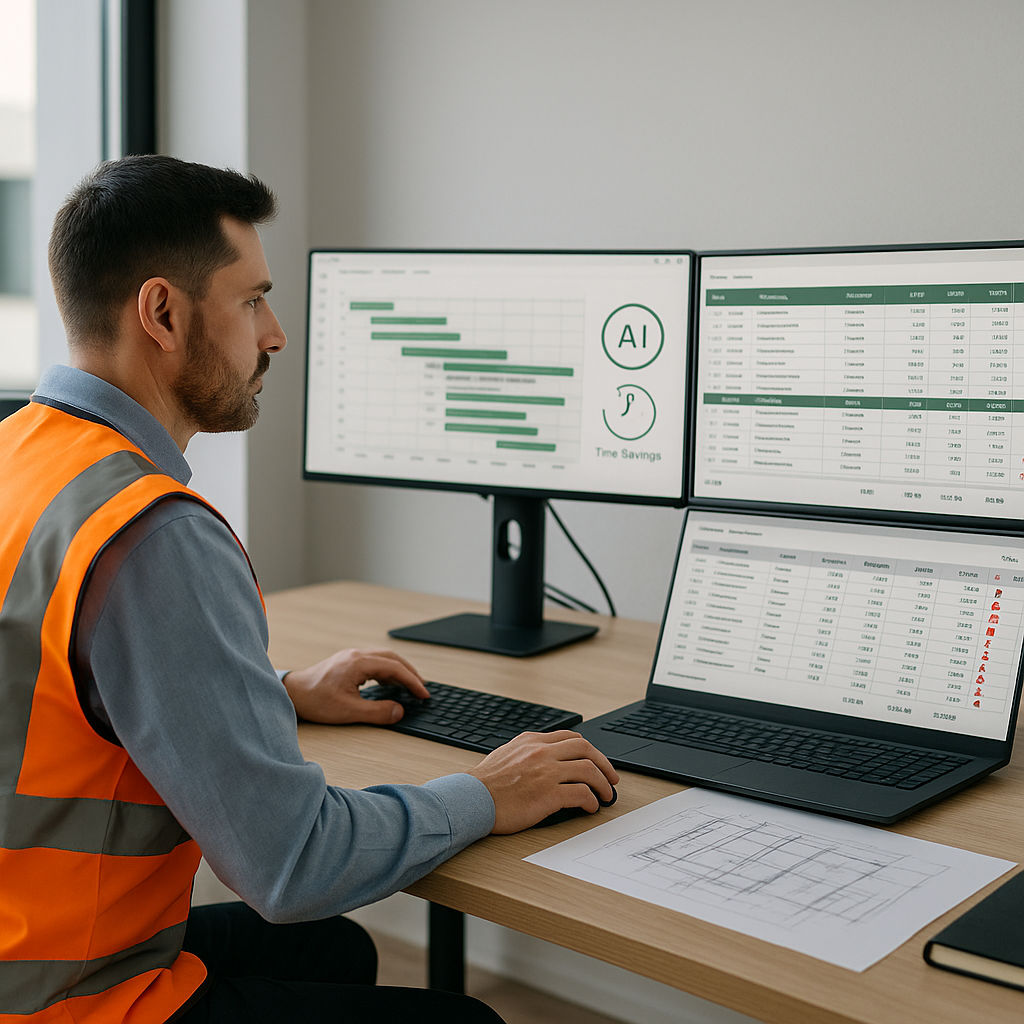
In practice, this can cut bid leveling time from 6 hours to just 30 minutes—a 12X productivity boost. One mid-sized general contractor using EstimateNext reported saving 50 hours per week during peak bid season. That’s like hiring an extra estimator without adding to your headcount.
Why Accuracy Matters as Much as Speed
You might be thinking: Sure, AI is fast, but can it actually get this right? It’s a fair question. Accuracy is non-negotiable when it comes to bid leveling. If the AI misses a critical exclusion or misinterprets a line item, you’re back to square one—or worse, you win a bad bid.
Here’s the thing: AI isn’t perfect, but it’s pretty close. The key lies in the feedback loop. With EstimateNext, the system learns from every adjustment you make. By your third or fourth project, accuracy improves significantly. It’s like training a junior estimator—only this one doesn’t take coffee breaks.
And let’s not forget the human element. You’re still in control. The AI flags potential issues and gives you the final say. Think of it as a second set of eyes—one that works at lightning speed.
The ROI of AI Bid Leveling
Let’s talk numbers. For a mid-sized contractor handling 30 bid packages a year, automating bid leveling can save 150 hours annually. At an average estimator rate of $130/hour, that’s nearly $20,000 in labor costs saved.
But the real ROI comes from improved accuracy. By catching scope gaps and exclusions early, you avoid underbidding, which can save you hundreds of thousands—or even millions—on large projects. According to EstimateNext’s case studies, AI-powered bid leveling has reduced bid discrepancies by up to 80%.
Comparison Table: Manual vs. AI Bid Leveling
| Factor | Manual Process | AI-Powered Process |
|---|---|---|
| Time Required | 4-6 hours per bid | 30-45 minutes per bid |
| Error Rate | High (due to manual oversight) | Low (with human review) |
| Scalability | Limited by manpower | Easily scalable |
| Handling Scope Gaps | Entirely manual | Automated with flagged issues |
| Cost | Higher labor costs | Lower labor costs |
FAQs
Q: What if my subcontractors use custom formats?
A: No problem. AI tools like EstimateNext are designed to handle unstructured data. They can parse PDFs, Excel sheets, and even handwritten notes (though I wouldn’t recommend relying on pen-and-paper in 2026).
Q: How does AI handle alternate materials or methods?
A: The system flags anything that doesn’t align with the baseline scope. You can adjust these manually, and the AI will learn from your inputs for future projects.
Q: Is this overkill for small projects?
A: Not at all. AI scales to any project size. Whether you’re bidding on a $1 million fit-out or a $1 billion infrastructure project, the time savings are proportional.
Q: How secure is the data I upload?
A: Leading AI platforms use enterprise-grade security protocols. Your data is encrypted both in transit and at rest, ensuring compliance with industry standards.
Q: Do I lose control over the process with AI?
A: Not at all. AI assists with the heavy lifting but still leaves final decisions in your hands. It’s a tool to enhance your expertise, not replace it.
Don’t Let Manual Bid Leveling Hold You Back
If you’re tired of wasting hours (or days) on manual bid leveling, it’s time to make a change. Tools like EstimateNext can save you time, reduce errors, and help you focus on winning more bids.