The Data Center Boom Is Real, But It’s Not Enough
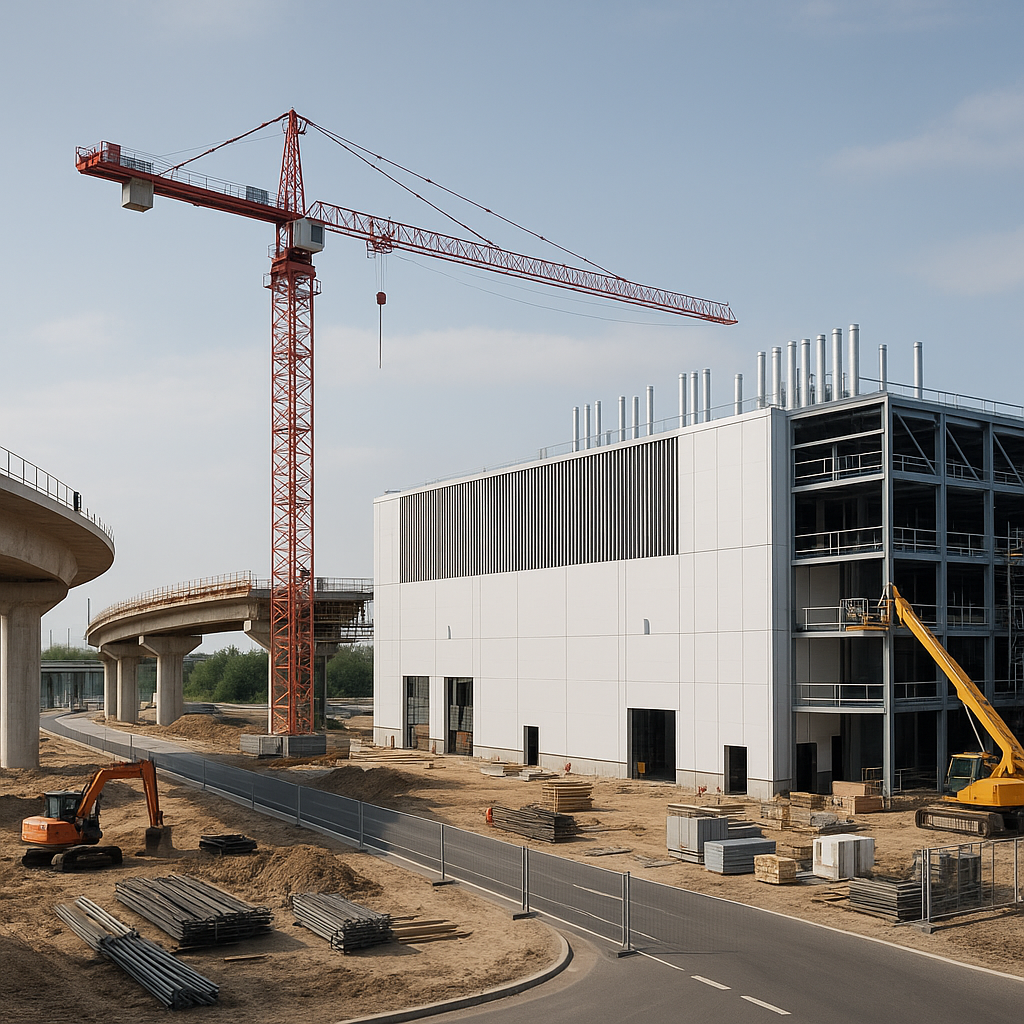
By now, everyone knows data centers are dominating construction headlines. Hyperscale projects from AWS, Google, and Meta are driving a $62 billion industry expected to grow well into 2027. But here’s the kicker: despite this surge, overall non-residential construction spending declined by 3.2% in 2022 (Construction Dive).
You might be thinking, “How can a booming sector coexist with a slump?” The answer lies in what’s happening outside the data center bubble. Public infrastructure, commercial real estate, and entertainment projects are quietly taking the lead, with unique demands that make traditional workflows buckle under pressure.
Growth Beyond Hyperscale Builds
Take Chicago, for example. The city is in the middle of a $14.4 billion construction boom, driven by massive public infrastructure investments like the $3.6 billion O’Hare Terminal 5 expansion and the $6.5 billion Red Line Extension (EstimateNext Blog). Add to that over 13 million square feet of commercial real estate and a $1 billion casino project, and you’ve got a market exploding in complexity.
But these aren’t cookie-cutter projects. Public works demand compliance with shifting regulations, while commercial real estate hinges on tight timelines and fluctuating material costs. Entertainment projects? They’re logistical puzzles, with budgets and sub-bid coordination tighter than ever.
For example, Bally’s Chicago casino project is a $1 billion entertainment hub slated to include gaming, hotels, and restaurants. Coordinating sub-bids for specialty trades like interior design and audiovisual systems requires precision, especially when working with fluctuating supplier prices and labor rates.
Actionable Steps for Estimators
- Understand Compliance Requirements: Public infrastructure projects often involve federal or state funding, requiring strict adherence to regulations like Buy America provisions. Build checklists for compliance to avoid costly delays.
- Factor in Material Price Volatility: With ongoing supply chain disruptions, estimators should update material costs monthly or use escalation clauses to protect bids.
- Master Sub-bid Coordination: Entertainment projects often involve dozens of specialized subcontractors. Use tools that aggregate bids and track scope to avoid gaps or overlaps.
Why Traditional Tools Are Failing
The problem isn’t demand. It’s inefficiency. Most estimators still rely on a patchwork of tools: Bluebeam for takeoffs, RSMeans for rates, and Excel for everything else. It works—until it doesn’t.
Let’s take a real-world example: pricing a $500 million infrastructure project in India. You’ve got to flip through a 2,000-page CPWD DSR PDF to find rates, manually cross-referencing them with localized factors. This process can take hours—or even days—depending on the scope. And when scope changes hit (they always do), you’re back to square one.
Case Study: The Cost of Inefficient Tools
A mid-sized estimating firm lost a $40 million commercial contract because the bid submission was delayed by a day. The culprit? A rate mismatch caused by outdated Excel formulas. The estimating team had no centralized tool to validate rates against real-time market data, leading to errors that snowballed.
Actionable Steps to Avoid Failures
- Audit Your Workflow: Identify bottlenecks like manual rate lookups or redundant data entry. Automate where possible.
- Invest in Training: Many firms underutilize their existing tools due to lack of training. Dedicate time to upskilling your team.
- Adopt Tools for Collaboration: Use cloud-based platforms to centralize project data and improve team coordination.
How AI Changes the Game
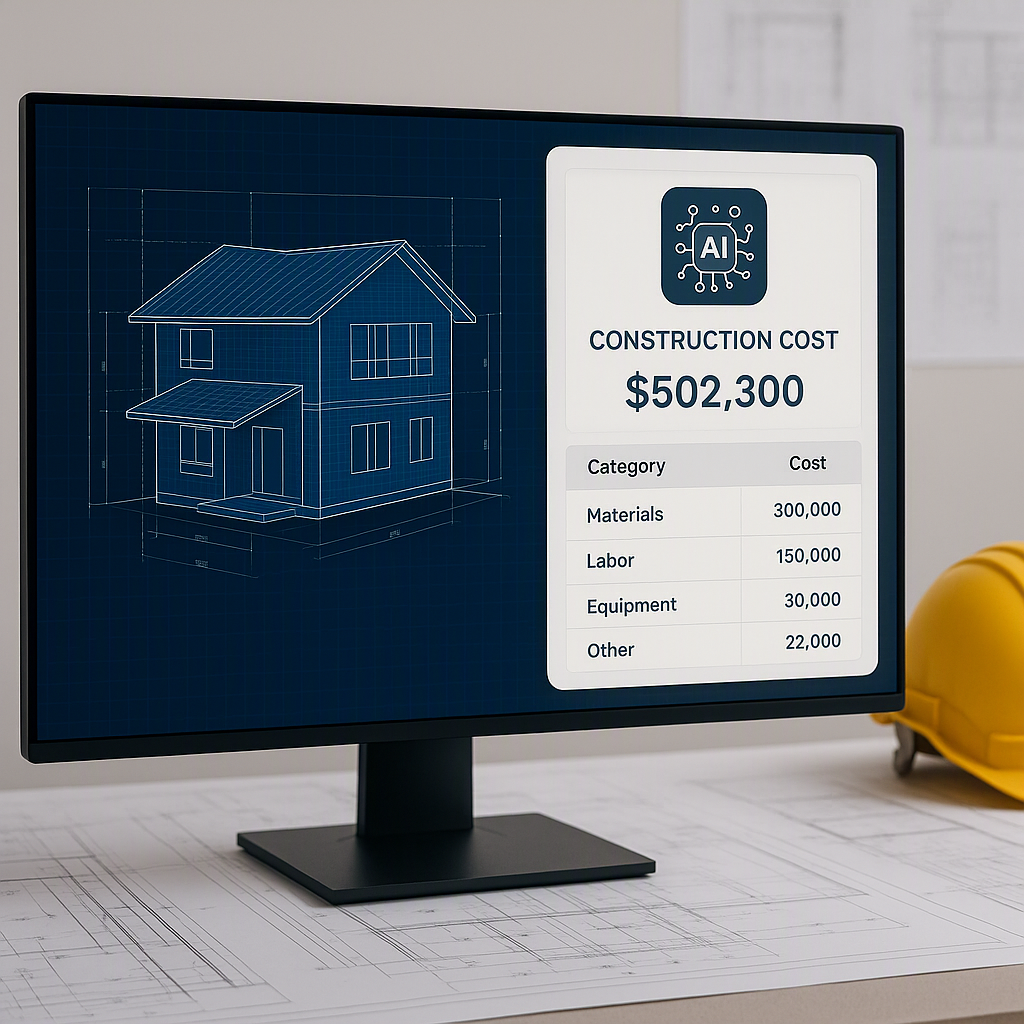
This is where platforms like EstimateNext come in. Unlike traditional software, EstimateNext uses AI to slash time spent on tedious tasks like takeoffs and rate matching.
Real-World Example: Automating Takeoffs
A $200 million data center project required estimators to process a 20,000-line Bill of Quantities (BOQ). Using traditional tools, this would have taken 2-3 weeks. With EstimateNext’s Vision AI, the team completed the takeoffs in under 10 minutes. That’s over 99% time savings.
Key Features of AI-Powered Tools
- Smart BOQ Parsing: Upload messy Excel files, auto-detect hierarchies, and map rates to catalog items in minutes.
- MarketProfile Adjustments: Toggle between standards like CSI, NRM2, and CPWD to ensure compliance across regions.
- Inflation Modeling: Automatically suggest compound CPI adjustments for long-term projects.
Actionable Steps for Adopting AI
- Start Small: Begin with one AI-powered tool for takeoffs or rate matching to test ROI.
- Integrate Gradually: Align AI tools with existing platforms like Procore or Bluebeam to avoid disruption.
- Leverage Analytics: Use AI dashboards to spot trends in project costs and performance.
The Real Opportunity: Non-Residential Growth
Outside the data center boom, the real opportunities lie in sectors like public infrastructure and entertainment. These projects demand fast, accurate estimates to stay competitive. Here’s what the latest data tells us:
Public Infrastructure
The U.S. is investing heavily in roads, bridges, and transit systems. The Bipartisan Infrastructure Law has unlocked $1.2 trillion in funding, with $10.1 billion already active in Chicago alone. Estimators must be prepared to handle projects with complex compliance and environmental impact requirements.
Commercial Real Estate
As hybrid work reshapes office spaces, over 13 million square feet of real estate is under construction in Chicago alone as of 2023. Projects are transitioning from traditional layouts to flexible, tech-enabled spaces—requiring estimators to account for new materials and systems.
Entertainment Projects
High-profile builds like Bally’s $1 billion casino are reshaping urban landscapes. These projects require estimators to coordinate dozens of specialty trades, from lighting to sound systems, while managing tight deadlines.
Comparison Table: Traditional Tools vs. AI-Powered Platforms
| Feature | Traditional Tools | AI-Powered Platforms |
|---|---|---|
| Takeoff Speed | Manual, 1-2 weeks | Automated, 10 minutes |
| Rate Matching | Manual lookup | Auto-suggested rates |
| Compliance Adjustments | Manual cross-referencing | Real-time toggles |
| Inflation Modeling | Static formulas in Excel | Dynamic CPI adjustments |
| Collaboration | Siloed workflows | Cloud-based integration |
The Bottom Line
Data centers may dominate the headlines, but they’re not the whole story. Non-residential construction is quietly outpacing expectations, driven by public infrastructure, commercial real estate, and entertainment projects. The challenge? These sectors demand precision and speed that traditional workflows can’t deliver.
Tools like EstimateNext are stepping in to fill the gap, offering AI-powered solutions that reduce manual effort and improve bid accuracy. If you’re still relying on Excel and rate books, it’s time to rethink your approach.
If you’re stuck in outdated workflows, EstimateNext can help. Get started free →