The $1.45B Lesson for GCs: Complexity Kills Margins
When two large ENR-ranked general contractors team up for a major university stadium renovation, you can bet on one thing: complexity. We’re not just talking about the number of subcontractors or the sheer volume of materials. It’s the constant scope changes, compressed timelines, and razor-thin margins that keep general contractor (GC) directors up at night.
Here’s the thing: traditional estimation methods don’t cut it on projects like this. Manual takeoffs, hand-matching rates, and gut-feel bid decisions? They’re a recipe for mistakes—and mistakes at this scale are expensive. Just one error in a stadium’s HVAC system bid, for example, could cost millions.
So, what’s the fix? AI-powered preconstruction tools like EstimateNext are changing the game. Let’s break it down.
Why Takeoff Speed Matters More Than Ever
Massive projects like stadiums come with massive drawings. These aren’t your typical blueprints. We’ve seen PDF sets with hundreds of pages—each packed with details that need to be measured, re-measured, and cross-checked. For example, a major stadium renovation requires architectural drawings for everything from seating configurations to HVAC layouts to advanced lighting systems.
Manually, this takes 40+ hours per estimator. For a project like a large stadium renovation, that’s weeks of work before you even start pricing. And if the architect drops a revised drawing mid-cycle (which they will), you’re back to square one. Multiply this by the number of trades involved—electrical, plumbing, structural steel, and more—and you’re looking at a bottleneck that could derail your entire preconstruction timeline.
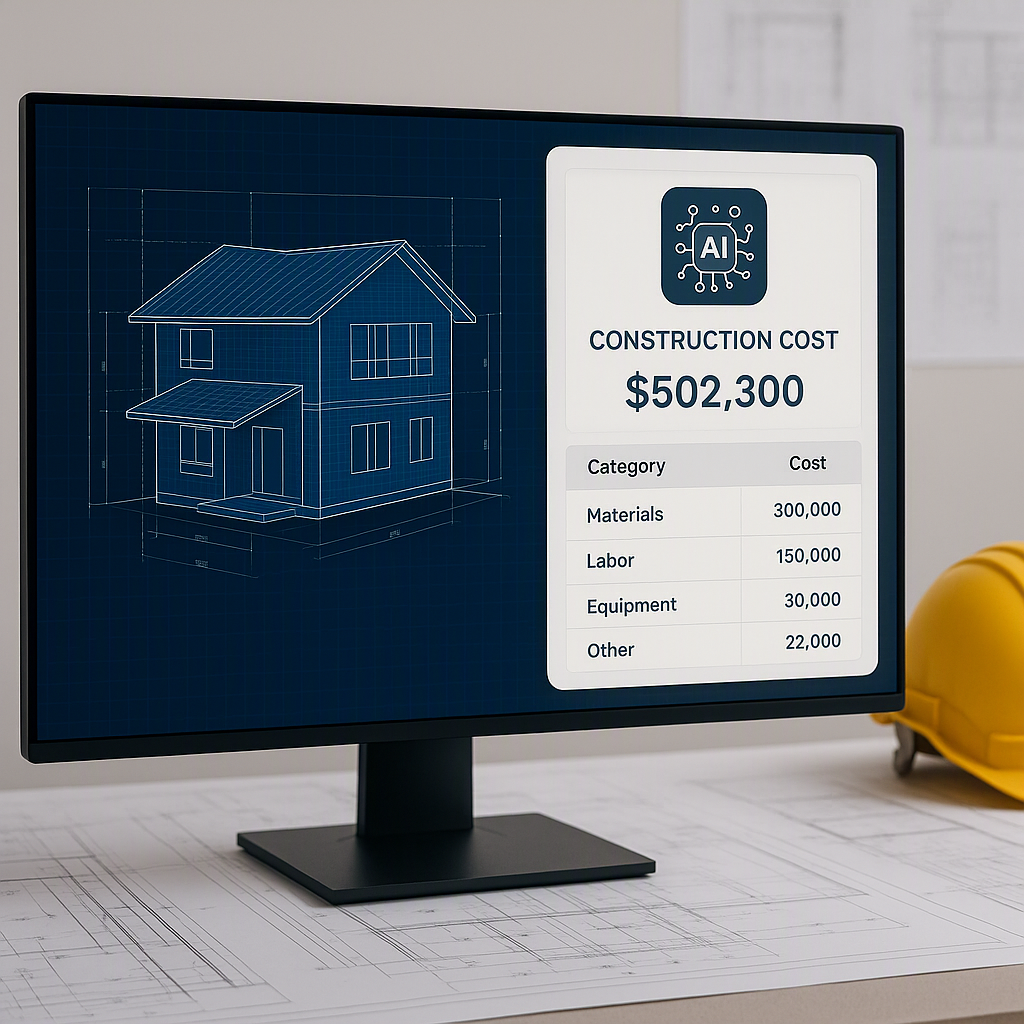
Using AI tools like EstimateNext’s Vision AI, you can extract quantities from any PDF in 10 minutes. Wall lengths, seating areas, structural steel—everything is processed in a fraction of the time. Need to compare drawing revisions? Upload them, and the system highlights the changes automatically.
A Real-World Example
One GC we worked with saved 100+ hours on takeoffs for a recent sports complex. This allowed their team to pivot resources to value engineering and risk mitigation tasks instead of burning time on manual measurements. Another contractor reported that using automated takeoff tools helped them catch a discrepancy in steel quantities early, saving them over $250,000 in potential overages.
Actionable Steps for Faster Takeoffs
- Digitize Your Workflow: Start with high-quality PDFs of your drawings to ensure AI tools can interpret the data accurately.
- Train Your Team: AI tools aren’t plug-and-play; invest in short training sessions to maximize their potential.
- Leverage Revision Features: Use the compare-and-highlight functionality to stay on top of mid-project design changes.
Getting Rates Right: The Silent Margin Killer
Now let’s talk rates. Stadium projects are notorious for requiring specialized materials and labor. Think high-performance turf, custom steel beams, and advanced AV systems. If you’re flipping through a 2,000-page RSMeans book or manually searching CPWD DSR rates, you’re burning hours—and risking errors.
Why This Matters
Consider the HVAC systems in a stadium. A standard unit might cost $1 million, but an energy-efficient system that meets NCAA sustainability standards could run closer to $1.4 million. Misquoting this difference could eat into your already-tight margins or cost you the bid entirely.
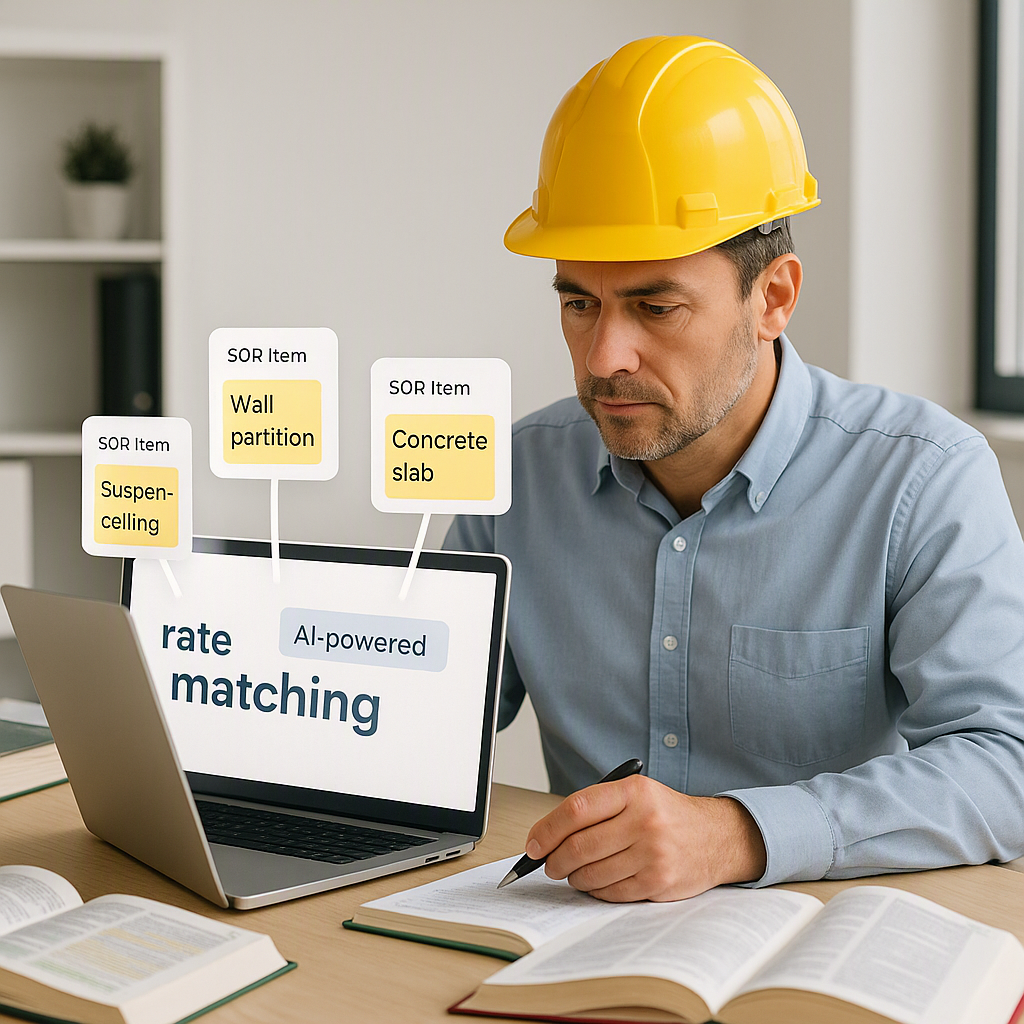
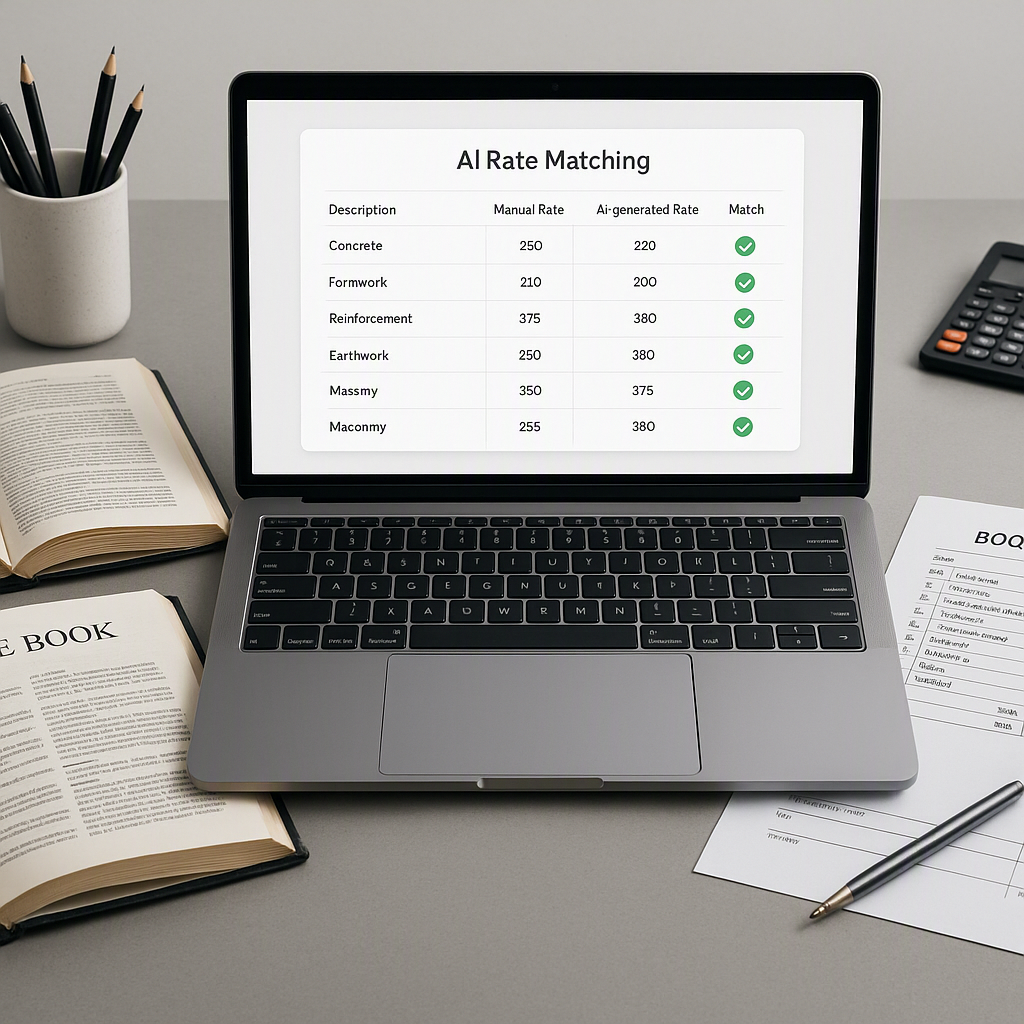
AI-powered rate matching changes this. EstimateNext’s semantic search can scan 78,000+ SOR items across catalogs and return a match in seconds. For a recent client, this cut rate-matching time by 90%. It also flagged mismatches—like when a sub quoted a generic HVAC system instead of the required high-efficiency unit.
Case Study: Avoiding Costly Mistakes
One GC saved over $500,000 on a bid after the AI flagged a subcontractor’s exclusion of a key fire suppression system. Without this insight, the GC would have been liable for the oversight, significantly reducing their profit margins.
Actionable Steps to Nail Rates
- Build a Centralized Rate Library: Use AI tools to create a searchable database of your most common rates.
- Automate Rate Matching: Save time by letting AI compare rates against scope requirements.
- Review AI Suggestions: Always double-check flagged mismatches to ensure accuracy.
Sub Bid Leveling: 7 Quotes, 1 Decision
Here’s another headache: subcontractor bids. For a project of this scale, you’re likely fielding quotes from 5-7 subs per trade. Normalizing those bids by hand takes 6+ hours per package, especially when scopes aren’t clearly defined. A single missed exclusion—like a sub omitting fire alarm cabling—can result in costly change orders down the line.
EstimateNext’s AI-powered sub bid leveling automates this. It normalizes scope, flags exclusions, and ranks L1/L2/L3 in under 30 minutes. For example, if one electrical sub excludes fire alarm wiring, the system flags it instantly. No more surprises after contracts are signed.
Real-World Impact
One GC director we spoke to said, "The AI caught scope gaps I didn’t even know to check for. That saved us $500K on a single bid." Another noted that automating bid leveling allowed them to submit bids for two additional projects in the same month—doubling their pipeline opportunities.
Actionable Steps to Simplify Bid Leveling
- Standardize Bid Templates: Ensure all subs submit quotes in a consistent format to streamline AI processing.
- Use AI for Scope Gaps: Let the tool flag exclusions, then verify them directly with your subs.
- Prioritize Transparency: Share flagged issues with subs to foster collaboration rather than conflict.
What-If Scenarios: The Stadium Curveball
Stadium projects are notorious for last-minute changes. Maybe the client decides to upgrade to a retractable roof. Or the city mandates additional ADA compliance features. In Excel, a single change can mean hours of rebuilding formulas and recalculating costs.
Why Instant Updates Matter
With EstimateNext, rate changes propagate instantly. Adjust one rate, and the system updates your entire BOQ in real-time. There’s even a full audit trail, so you can justify every number to the client.
This flexibility is a game-changer for stadium projects. It lets you adapt to curveballs without blowing your schedule—or your budget.
Comparison Table: Manual vs AI-Driven Preconstruction
| Task | Manual Method | AI-Driven Method | Time Saved |
|---|---|---|---|
| Takeoffs | 40+ hours per trade | 10 minutes per trade | 90% |
| Rate Matching | Hours per catalog | Seconds with AI | 90% |
| Sub Bid Leveling | 6+ hours per package | 30 minutes per package | 80% |
| Handling Revisions | Hours per revision | Instant with real-time updates | 100% |