The Hidden Time Sink in Preconstruction: Sub Bid Leveling
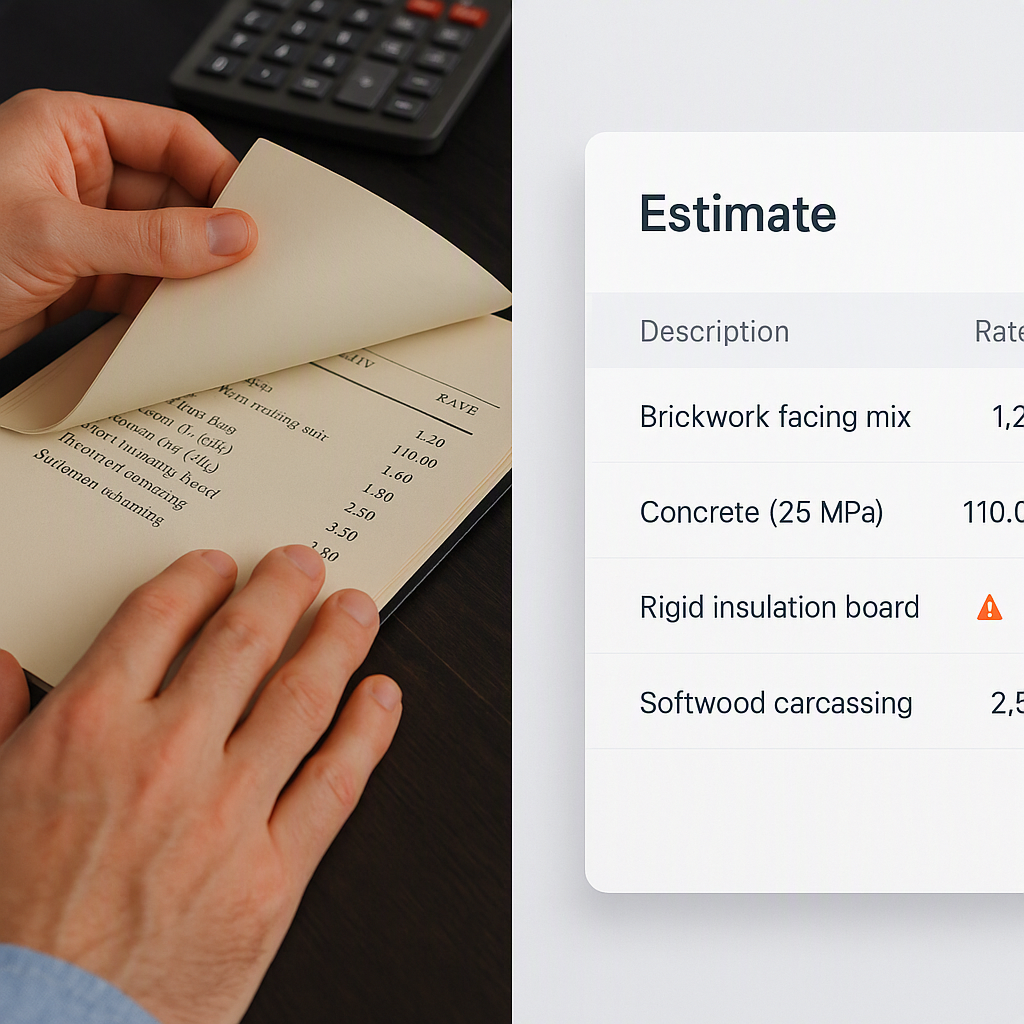
Let’s talk about something every estimator dreads—normalizing subcontractor bids. You know the drill. Seven subs send over quotes for the same scope, and no two look alike. One includes materials, another doesn’t. Labor rates vary wildly. And everyone uses their own units and descriptions.
What happens next? Hours of back-and-forth emails, manual comparisons, and a ton of guesswork. For most GCs, it’s a 6-hour grind per bid. Multiply that by 20 bids a year, and you’re looking at 120 hours wasted—per estimator. That’s three full workweeks per person spent just trying to make sense of apples-to-oranges quotes. Not ideal.
But here’s the kicker: this isn’t just a time problem. It’s a risk problem. When you’re rushing to normalize bids, things get missed. Scope gaps sneak through, leading to painful change orders later. Or worse—you accidentally award to the wrong sub because their quote looked cheaper but wasn’t.
Why Manual Sub Bid Leveling Fails
The manual approach to bid leveling is broken for three reasons:
- It’s inconsistent: Different estimators interpret quotes differently. One might spot an excluded line item, another might miss it.
- It’s inefficient: Sorting through PDFs and Excel sheets is slow, error-prone, and mind-numbing.
- It doesn’t scale: As project complexity grows (think multi-trade packages or international bids), the manual process collapses under its own weight.
Example: The Domino Effect of Missed Scope
Consider a GC bidding on a multi-story office building. A mechanical subcontractor’s bid excludes duct insulation, but the estimator misses it during the manual leveling process. Fast forward to project execution: the GC realizes the gap, issues a change order, and incurs an additional $25,000 cost. Beyond the financial hit, the project is delayed by two weeks. Mistakes like this ripple through the entire timeline, hurting margins and client relationships.
So, what’s the alternative? AI.
How AI Fixes Sub Bid Leveling
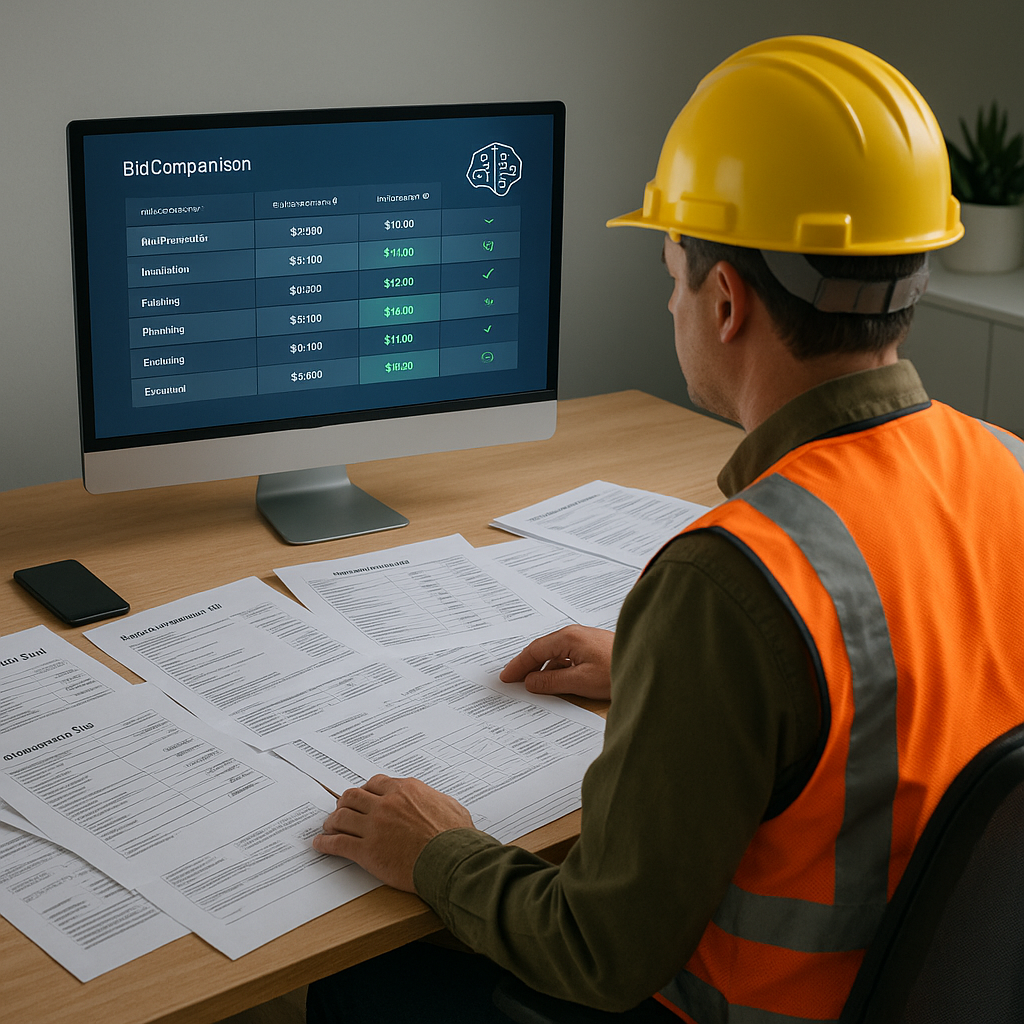
AI-powered tools like EstimateNext tackle this problem head-on. Instead of manually comparing quotes, you upload them into the platform. The AI does the heavy lifting:
- Scope Matching: The system reads each quote, identifies line items, and compares them against the BOQ. If a sub misses a scope, the AI flags it.
- Unit Normalization: AI converts mismatched units (e.g., square feet vs. square meters) into a common standard automatically. No more manual math.
- Cost Comparisons: The platform ranks subs by total cost, breaking down material, labor, and overhead for transparency.
Here’s the best part: what used to take 6 hours now takes 30 minutes. That’s a 12X speed improvement. And because the system learns from your feedback, it gets smarter with every project.
Real-World Example: Saving 36 Hours on a High-Rise Bid
One mid-sized GC shared their story. They were bidding on a $150M high-rise project with seven subcontractor quotes for MEP. Normally, this would take three estimators a full day to level. Using EstimateNext, they did it in under two hours. The AI flagged scope gaps (like a missing fire suppression system) that they might’ve missed manually. In their words, “It’s like having a junior estimator who never gets tired or distracted.”
Case Study: Small GC Competes with the Big Players
A small general contractor bidding on a municipal water treatment facility faced significant pressure from larger competitors. Using AI tools like EstimateNext, they reduced bid leveling time by 65%, allowing them to focus on crafting a tailored proposal. The result? They won the bid against a top-tier GC, attributing their success to the time saved and the precision of their bid package.
Actionable Steps to Optimize Sub Bid Leveling with AI
- Evaluate Your Current Process: Track how long it takes your team to level bids manually and identify consistent bottlenecks.
- Test an AI Tool: Start with a free trial of a platform like EstimateNext. Use a recent project to see how it handles your data.
- Customize the System: Upload custom rate catalogs, unit preferences, and past bid data to train the AI for your specific needs.
- Integrate Feedback Loops: Encourage your team to flag errors and make manual overrides. This ensures the AI improves over time.
- Measure ROI: Track time saved and errors avoided to quantify the value of the tool. Use these insights to refine your workflows further.
Comparison Table: Manual vs. AI-Powered Bid Leveling
| Feature | Manual Process | AI-Powered Process |
|---|---|---|
| Time Required | 6+ hours per bid | 30 minutes per bid |
| Error Rate | High | Low (with manual override) |
| Scalability | Poor | Excellent |
| Consistency | Varies by estimator | Uniform results |
| Cost of Implementation | None (but labor-intensive) | $99/month per user |
The ROI of AI-Powered Sub Bid Leveling
Time savings are obvious, but let’s talk dollars. Say you’re a GC with a team of four estimators, each earning $130/hour. If you’re saving 5 hours per bid across 20 bids a year, that’s $52,000 in labor costs avoided. And that’s before factoring in the cost of missed scope or change orders.
At $99/month per user, tools like EstimateNext pay for themselves in weeks.
Additional Financial Benefits
- Reduced Change Orders: By catching scope gaps early, you avoid costly mid-project changes.
- Improved Bid Competitiveness: Faster bid processing lets you refine your pricing and submit more bids per year.
- Lower Risk: Consistency in bid leveling reduces the chance of awarding contracts to unqualified subcontractors.
The Skeptic’s Corner: “Can AI Really Understand Our Bids?”
You might be thinking, “Sure, AI is fast, but it doesn’t understand the nuances of construction.” Fair point. AI isn’t perfect, and it won’t replace your expertise. But it doesn’t have to. The goal isn’t to eliminate human judgment—it’s to make your job easier.
For example, EstimateNext includes a manual override. If the AI gets something wrong, you can correct it. Those adjustments feed back into the system, so it gets better over time. It’s a partnership, not a replacement.