The Problem: Takeoffs Eat Time and Budgets
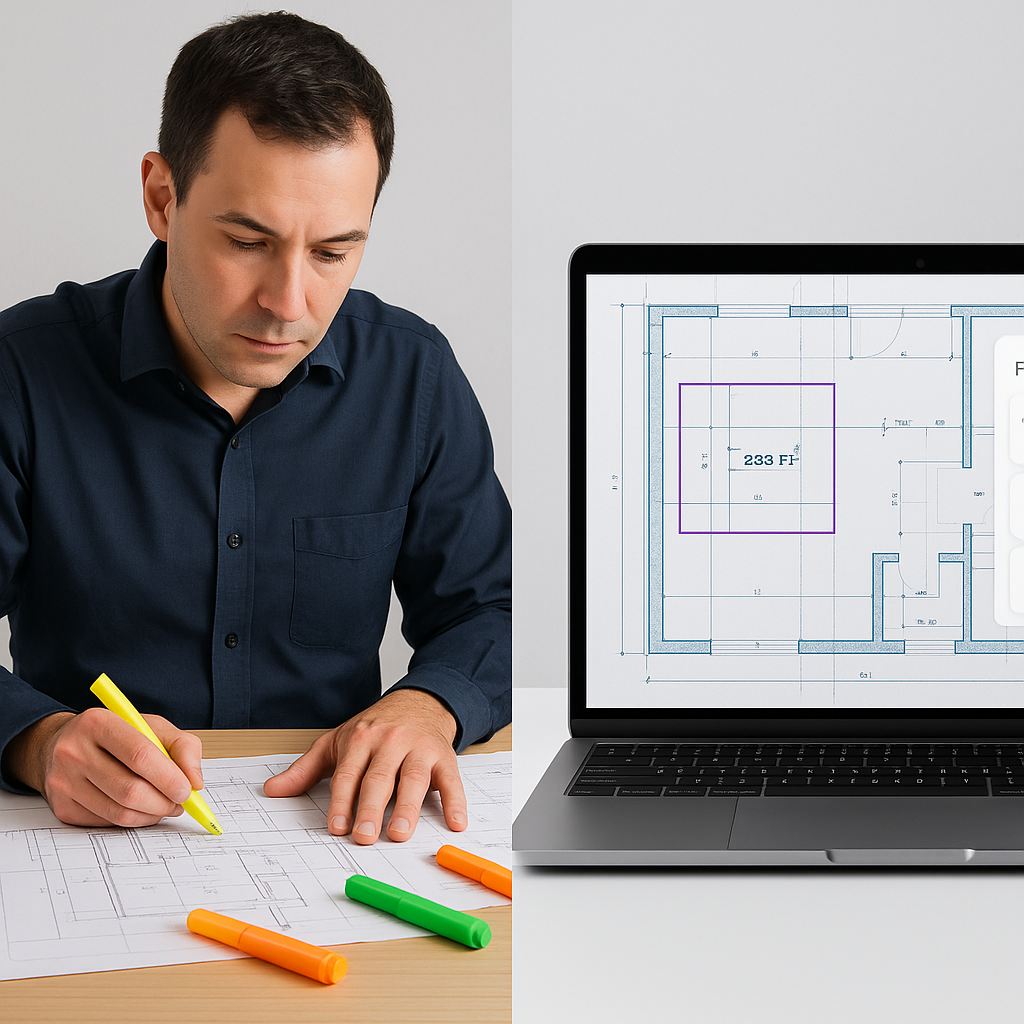
If you’ve ever worked in preconstruction, you know the drill. Two estimators spend two full days doing manual takeoffs for a mid-size project. That’s 40 hours per bid, just to measure walls, count doors, and calculate room areas. And let’s be honest—mistakes happen. A missed line on a PDF or a wrong scale setting can throw off the entire estimate.
Now, imagine doing this for five bids in a month. That’s 200 hours sunk into just one part of the process. For small to mid-sized contractors, that could represent a significant chunk of their staff’s available hours. The inefficiencies don’t just cost time; they eat into budgets, push deadlines, and increase stress across teams.
Real-World Example of Inefficiency
Take a mid-sized general contractor working on a $5 million office renovation. They assign two estimators to complete the takeoffs over three days. Labor costs for these estimators run an average of $65 per hour. That’s $3,120 in labor costs just to get the takeoff done—and this is before they even start value engineering or negotiating with subcontractors. If errors are made, the cost of rework during construction could add tens of thousands to the total project budget.
Why Manual Takeoffs Are Outdated
Manual takeoffs rely on human effort and judgment, which makes them prone to error. According to a report by FMI, rework caused by inaccurate estimates accounts for 5% to 12% of a construction project’s costs. For a $1 million project, that’s $50,000 to $120,000 potentially wasted simply because the process hasn’t been modernized. In an industry where margins are already slim—often hovering between 2% and 5%—those inefficiencies can be the difference between profit and loss.
What’s the Alternative?
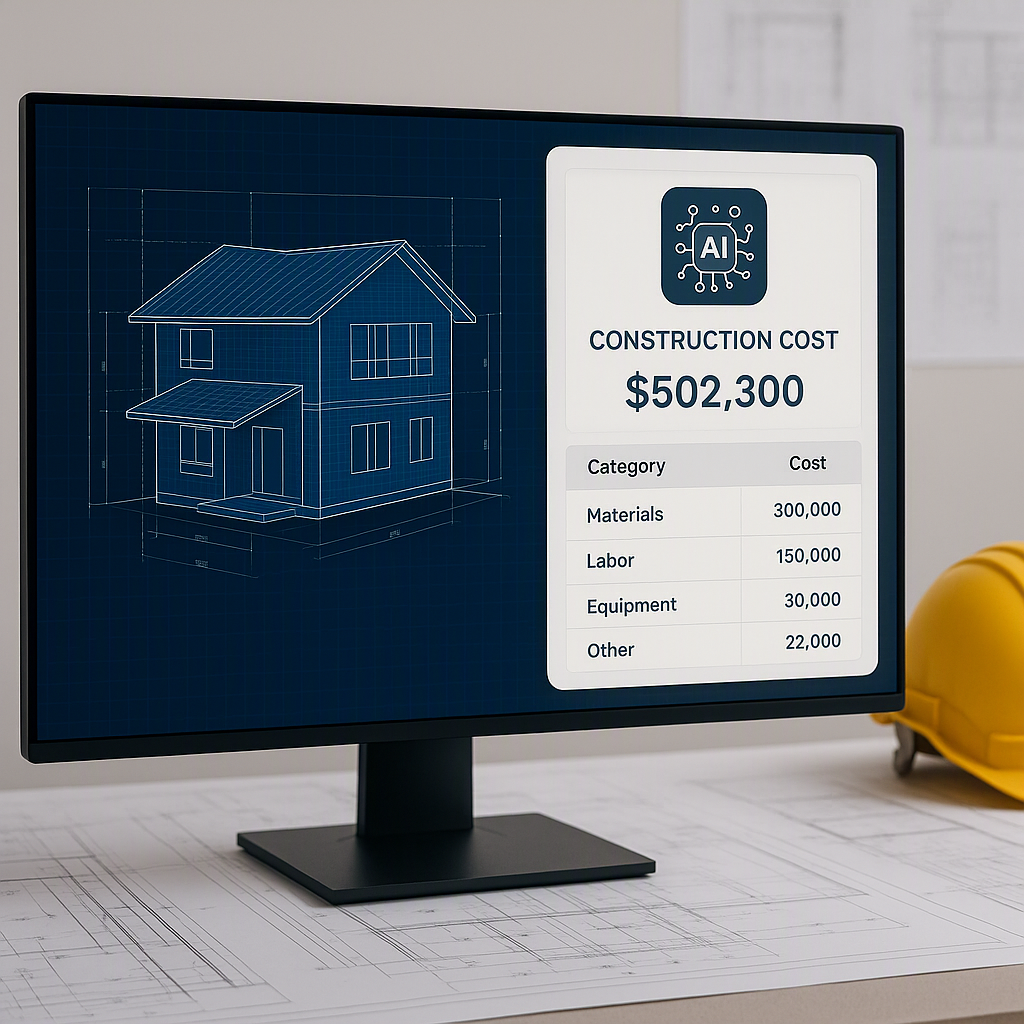
AI-powered tools like EstimateNext are changing the game. Instead of spending two days on takeoffs, you can upload a PDF and get accurate quantities in 10 minutes. Yes, 10 minutes. That’s a 10X speed improvement.
AI tools don’t just save time—they also improve accuracy. A missed wall section or an improperly scaled drawing in a manual process could mean thousands of dollars in unexpected costs. With AI, those risks are dramatically reduced. For example, one general contractor we worked with on a $1 billion rail project saved 56 hours per bid using AI takeoffs. They didn’t just save time—they avoided costly rework caused by manual errors. It’s like hiring an extra estimator, minus the payroll.
Concrete Savings Example
Let’s break it down:
- Traditional process: 40 hours x $65/hour = $2,600 per bid
- AI-powered takeoff: 10 minutes x $65/hour = $10.83 per bid
Even if the AI tool costs $300 per month, the savings from just one bid could pay for the tool for an entire year. Multiply that by 10 or 20 bids annually, and the ROI is undeniable.
How It Works
Here’s what happens when you use AI for takeoffs:
- Upload Your Drawings: Any format works—PDFs, DWGs, you name it. The flexibility means you don’t have to worry about file compatibility.
- AI Scans the Drawings: The tool reads the plans, calculates areas, counts fixtures, and more. For example, it can identify different wall types, count electrical outlets, or measure flooring square footage.
- Review and Adjust: If the AI flags low-confidence areas, you can remeasure with a simple click. This ensures that human expertise still plays a role where needed.
- Export Quantities: Push the data directly into your bill of quantities (BOQ), complete with an audit trail. This integration streamlines workflows and reduces data entry errors.
Built-In Accuracy Features
AI tools come with built-in confidence scoring. For example, if the system is unsure about a dimension due to poor image quality, it flags it for review. This transparency allows estimators to make informed decisions rather than guessing. Additionally, some tools allow you to train the AI based on your specific needs, so it improves over time.
The Obvious Pushback: “AI Can’t Think Like an Estimator”
True. AI doesn’t negotiate with subs or decide on markup. But that’s not the point. AI handles the grunt work so you can focus on higher-value tasks. Estimators aren’t being replaced—they’re being amplified.
Think about it. If you save 36 hours per estimate, what could your team do with that time? Maybe respond to more bids. Maybe spend more time on bid/no-bid decisions. Or maybe just go home on time for once.
Task Shifting: From Repetitive to Strategic
When estimators spend less time measuring and calculating, they can dedicate more time to activities like:
- Bid Strategy: Analyzing competitor pricing and market conditions.
- Supplier Negotiation: Securing better material costs.
- Risk Assessment: Identifying potential project challenges earlier in the process.
This shift not only improves project outcomes but also boosts employee satisfaction. After all, no one enters construction to spend their days counting doors on a PDF.
Real-World Results
A mid-sized contractor used EstimateNext’s Vision AI on a high-rise bid. Here’s what happened:
- 120 Hours Saved: That’s two full weeks of labor costs avoided.
- Fewer Errors: AI caught a missed section of drywall that would’ve cost $15,000 to fix during construction.
- Better Margins: With more accurate quantities, they reduced the contingency buffer, making their bid more competitive.
Case Study: AI Adoption by a Small Firm
A small contractor specializing in custom homes tested AI-powered takeoffs on a $2 million project. Initially skeptical, they ran the AI results alongside their manual process for comparison. By the third project, they had fully transitioned to AI, reporting:
- 40% Reduction in Bid Turnaround Time
- Increased Accuracy, with errors dropping from 7% to 2% of total project cost
- Higher Win Rate, as faster bids allowed them to compete for more projects
What If You’re Not Ready for Full Automation?
You don’t have to go all-in on day one. Start small. Test AI tools on one project. Compare the results to your manual process. Most teams see accuracy improvements by their third project as the system learns from feedback.
Actionable Steps to Get Started
- Select a Pilot Project: Choose a project that’s representative of your typical workload.
- Run Parallel Processes: Use AI tools alongside your manual process for comparison.
- Evaluate Results: Measure differences in time, accuracy, and cost savings.
- Train Your Team: Ensure your estimators understand how to use the tool effectively.
- Scale Gradually: Once you’re confident in the results, expand usage to more projects.
Why It Matters Now
In 2024, construction costs are up 22% year-over-year, driven by inflation and material shortages. Efficiency isn’t just nice to have—it’s survival. The firms that adopt AI aren’t just faster; they’re more profitable. According to McKinsey, early adopters of AI in construction save 10-20% per project.
Comparison: Manual vs. AI Takeoffs
| Feature | Manual Takeoffs | AI-Powered Takeoffs |
|---|---|---|
| Time Required | 40 hours per bid | 10 minutes per bid |
| Accuracy | Prone to human error | High, with confidence scoring |
| Labor Costs | $2,600 per bid | ~$10 per bid |
| Scalability | Limited by team size | Scales across projects |
| Integration with BOQ | Manual entry required | Automatic export |
The Bottom Line
Manual takeoffs are a time sink. AI-powered tools like EstimateNext cut that time from 40 hours to 10 minutes, freeing your team to focus on what actually matters—winning bids and maximizing margins.