The Hidden Cost of Manual Takeoffs
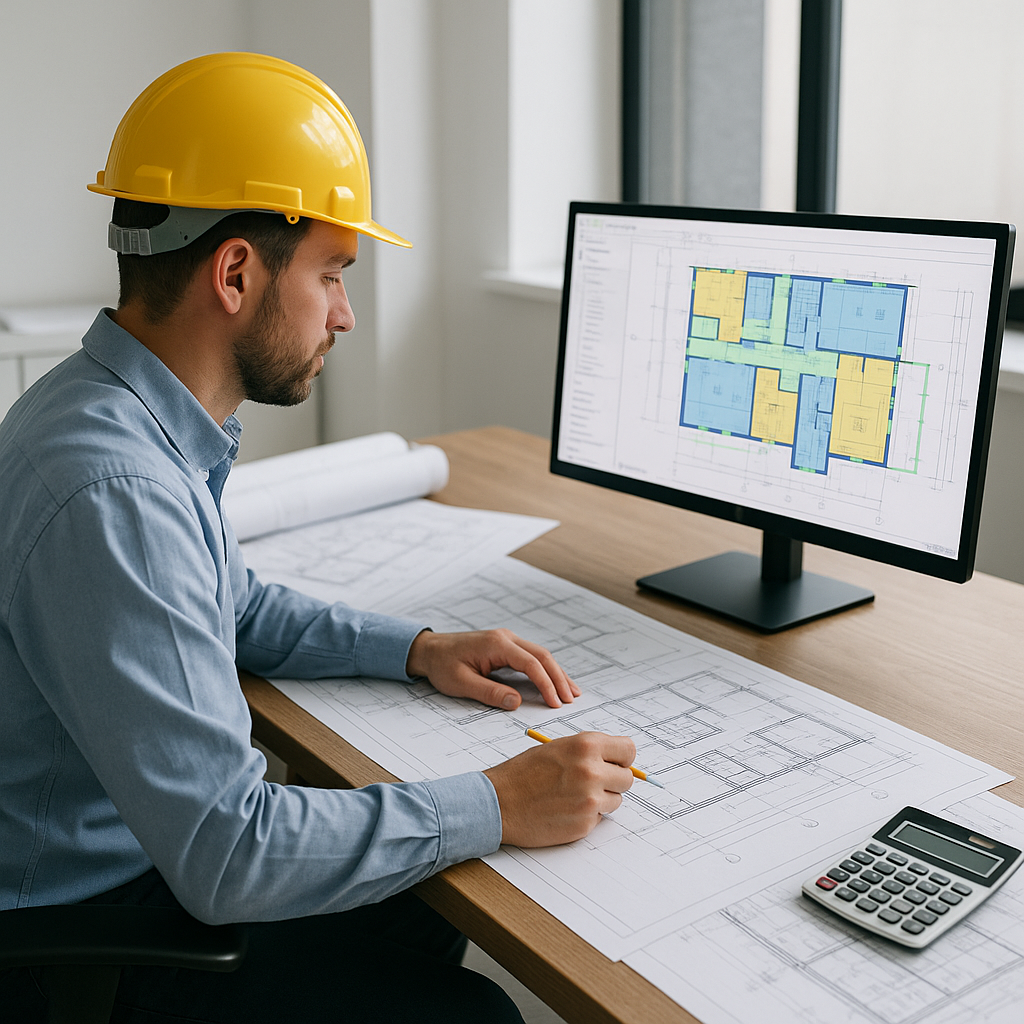
Every estimator knows the pain of manual takeoffs. You’re stuck with a pile of drawings, a ruler, some highlighters, and hours of mind-numbing counting. For a typical mid-size project, it’s not unusual to spend 40 hours—or more—just extracting quantities from PDFs. That’s two full days of labor for two estimators. And here’s the kicker: even after all that effort, errors still creep in.
A case study on a $1 billion rail project illustrated this perfectly. The team spent over 56 hours doing manual takeoffs for items like concrete columns and rail decks. With AI tools, that same work was completed in 10 minutes. Yes, 10 minutes. Source: EstimateNext Blog
So why are we still clinging to methods that burn time and budget? Let’s break down the problem—and the solution.
Why Manual Takeoffs Are a Bottleneck
Manual takeoffs aren’t just slow; they’re risky. Here’s why:
- Human Error: Miscounted items, misread dimensions, or skipped sheets. One mistake can snowball into a blown bid. For example, in a 2019 study published by Dodge Data & Analytics, contractors reported that human error during preconstruction accounted for over 20% of project cost overruns.
- Repetitive Work: For every bid, you’re starting from scratch. Revision requests mean starting over. Case in point: a Texas-based GC shared they spent over 30% of their preconstruction hours redoing takeoffs after design updates.
- Opportunity Cost: Those 40 hours? They could’ve been spent refining your bid strategy, coordinating with subs, or pursuing more projects. For example, one estimator team that transitioned to AI tools said they were able to increase their bid submissions by 25% year-over-year because they freed up time to chase additional projects.
The obvious objection is, "But AI can’t think like an estimator." True. AI doesn’t replace your expertise; it augments it. It handles the grunt work so you can focus on the parts of estimation that require judgment and experience.
How AI Changes the Takeoff Game
Tools like EstimateNext’s Vision AI are designed to eliminate these inefficiencies. Here’s how it works:
- Upload Your Drawings: Any PDF or image file works. Upload the set, and Vision AI gets to work.
- Automatic Quantity Extraction: The AI identifies room areas, wall lengths, door/window counts—you name it. For example, a Canadian subcontractor using Vision AI reported extracting quantities for a 25-story mixed-use project in under 15 minutes—work that would have taken 3 days manually.
- Confidence Scoring: Not every takeoff will be perfect, so the system flags low-confidence areas for manual review.
- Real-Time Updates: Revision sets? No problem. Upload the changes, and the AI recalculates quantities instantly.
This isn’t just marketing fluff. A mid-sized GC recently saved 120 hours on a high-rise bid using Vision AI to handle takeoffs. That’s two full weeks of effort avoided while still meeting tight deadlines. Source: EstimateNext Blog
The ROI of AI Takeoffs
Let’s talk numbers. If an estimator costs $130/hour, 40 hours per project adds up fast. For a GC pursuing 5-8 GMP bids per year, that’s $26,000-$41,600 annually—just on takeoffs. With tools like EstimateNext, that cost drops to almost nothing. At $99/month, you’re looking at under $1,200/year per seat. That’s a 52X ROI.
And it’s not just about saving money. Faster takeoffs mean more bids submitted, better subcontractor coordination, and fewer late nights revisiting quantities. For example, a California-based contractor reported that adopting AI-based takeoff software helped them increase their win rate by 15% simply by allowing them to submit more competitive bids faster.
What About Accuracy?
Skeptics often ask, "Can AI really be trusted?" The short answer: yes, but with oversight. AI takeoff tools come with built-in review features. Confidence scoring highlights areas that might need a second look, and manual overrides ensure you stay in control. In fact, most users report that accuracy improves significantly after just a few projects, thanks to the system’s learning curve. Source: EstimateNext Blog
For example, a commercial builder in New York leveraged AI tools on a 12-school renovation project, reporting a 95% accuracy rate on their first attempt. After refining their process over three additional projects, they pushed that accuracy to 99%, virtually eliminating the risk of overages from miscalculated quantities.
When AI Isn’t the Answer
AI isn’t perfect. It struggles with poor-quality drawings or overly complex formats. For example, handwritten notes on scanned PDFs often require more manual input. A small-scale residential contractor in Florida shared that they still manually input quantities for custom home projects with highly customized, artistic blueprints.
But here’s the thing: even if the AI gets 80% of the work done, that’s still a massive time saver. You’re only stepping in for the edge cases.
Why This Matters Now
Preconstruction is getting more competitive. Clients expect faster turnarounds, tighter budgets, and zero excuses. If your team is spending two days on manual takeoffs while your competitor gets it done in an hour, you’re already at a disadvantage. AI isn’t a luxury anymore—it’s table stakes.
What’s Next?
If you’re tired of wasting hours on manual takeoffs, it’s time to act. Tools like EstimateNext don’t just save time; they give your team the bandwidth to focus on what really matters—winning bids. Upload a BOQ and see how fast you can get a priced estimate.
Decision Framework: Manual Takeoffs vs AI Takeoffs
| Feature | Manual Takeoffs | AI-Powered Takeoffs |
|---|---|---|
| Time Required | 40+ hours per project | 10-30 minutes |
| Accuracy | Prone to human error | High (80-99%, with review) |
| Cost | $26,000-$41,600/year per team | ~$1,200/year per seat |
| Revision Handling | Time-intensive | Instant |
| Scalability | Limited by human resources | High |
| Integration with Tools | Limited | Seamless with Procore, etc. |
In a high-stakes, fast-paced industry like construction, sticking with manual methods is no longer sustainable. AI takeoff tools offer a clear path to faster, more accurate, and cost-effective preconstruction workflows. The real question isn’t whether you should adopt AI—it’s how long you can afford not to.


