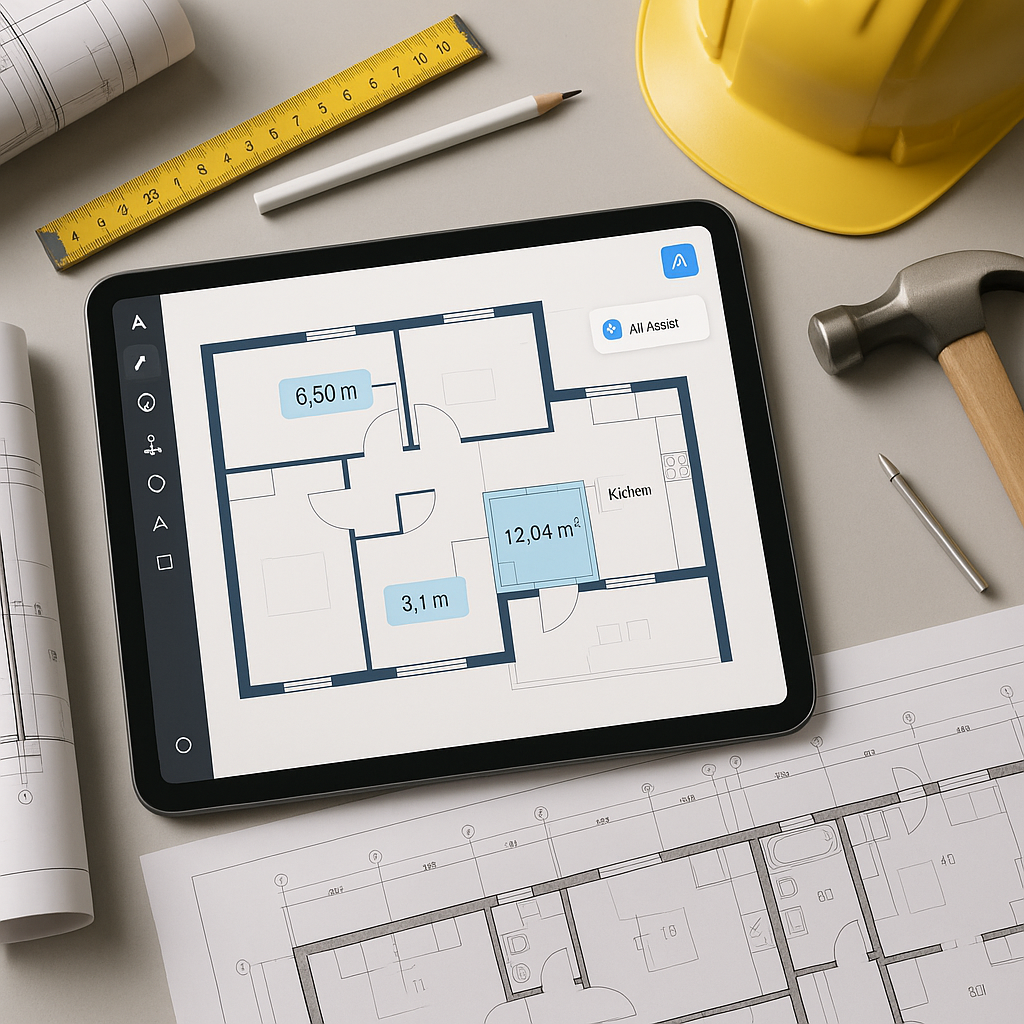
The Problem: Manual Takeoffs Are a Time Sink
If you've ever spent hours manually measuring drawings, you know the drill: linear measurements, area calculations, and counting objects. The process is tedious, repetitive, and prone to errors. A typical takeoff for a mid-sized project can eat up 40 hours. That’s two estimators working full-time for two days—time that could be better spent on higher-value tasks like strategy, vendor negotiations, or bid optimization.
A Real-World Example of Manual Inefficiency
Consider a regional contractor bidding on a $2 million school renovation project. Their team spent 35 hours meticulously measuring floor plans, window counts, and wall dimensions—only to realize they missed a revision in the drawing set. This mistake cost them an additional 15 hours to correct and recalibrate their bid. By the time they submitted their proposal, they were barely scraping the deadline, and their margin of error was higher than they were comfortable with.
Let’s face it: this isn’t where you want to spend your team’s energy. But the good news? There’s a better way.
The AI Fix: Vision AI Cuts Takeoff Time from 40 Hours to 10 Minutes
EstimateNext’s Vision AI changes the game. Upload a PDF set of drawings, and the AI extracts quantities for areas, lengths, and counts in just 10 minutes. Need to measure room areas for a high-rise bid? Done. Wall lengths for an office fit-out? Easy. It’s like having an extra estimator on your team—but without the payroll cost.
Case Study: Cutting 120 Hours on a High-Rise Bid
A mid-sized general contractor bidding on a $50 million high-rise project saved 120 hours using Vision AI. Their team uploaded the drawings, reviewed the quantities, and completed the estimate in record time. Two weeks of labor costs—roughly $15,600—were avoided, and they still met a tight bid deadline. That saved time allowed them to focus on value engineering, which ultimately helped them win the project.
Why Manual Methods Fail
Manual takeoffs aren’t just slow—they’re risky. Human error creeps in, especially when deadlines loom. Miscounting windows or overestimating floor areas can skew your entire bid. Worse, it’s easy to miss revisions in the drawing set, leading to costly mistakes and potentially losing the bid.
Key Risks of Manual Takeoffs:
- Inconsistent results: Measurements can vary based on who performs the takeoff, especially when multiple team members are involved.
- Missed drawing revisions: Failure to account for updated plans can lead to inaccuracies that throw off the entire estimate.
- Labor-intensive: Estimators are tied up in low-value tasks, leaving less time for strategic oversight.
AI doesn’t eliminate errors entirely, but it reduces them by up to 80%. Confidence scoring flags low-confidence measurements for review, ensuring you have the final say.
Source: 10 Hours to 1: How AI Saves Residential Contractors Time
The ROI Math: Why AI Tools Pay for Themselves
Let’s crunch the numbers. If your team saves 40 hours per estimate—at an average estimator cost of $130/hour—that’s $5,200 saved per project. Multiply that by 5-8 GMP bids per year, and you’re looking at $26,000-$41,600 in annual savings.
Now compare that to EstimateNext’s cost—$99 per month for the GC plan. That’s a 52X ROI. Even for smaller firms handling fewer projects, the cost savings are staggering.
A Comparative Example: Manual vs. AI Takeoff Costs
| Scenario | Manual Takeoff | AI-Powered Takeoff |
|---|---|---|
| Time Spent | 40 hours | 10 minutes |
| Cost per Estimate (Labor) | $5,200 | $99/month subscription |
| Annual Cost for 6 Estimates | $31,200 | $1,188 |
The numbers speak for themselves. AI tools like EstimateNext are designed to pay for themselves within the first project or two.
What About Smaller Projects?
You might be thinking, “Sure, this works for big bids, but what about smaller jobs?” The good news is, AI scales. Whether you’re pricing a $1 million renovation or a $1 billion infrastructure build, the time savings apply.
Why Smaller Projects Benefit Even More:
- Tighter Margins: Smaller jobs leave less room for error. AI helps you stay competitive by ensuring precision.
- Faster Turnaround: When competing for smaller jobs, speed often matters more than anything else. AI lets you deliver bids days ahead of your competitors.
For example, a subcontractor pricing a $500,000 office fit-out reduced takeoff time from 20 hours to 30 minutes. That time saved allowed them to submit three additional bids that month, increasing their chances of securing more work.
The Obvious Objection: “AI Can’t Think Like an Estimator”
You’re right—AI doesn’t replace human expertise. It’s a tool, not a replacement. You’re still making the judgment calls, negotiating with subs, and deciding on markup. AI handles the grunt work: takeoffs, rate matching, and real-time recalculations.
Think of it this way: AI is like having a junior estimator who works tirelessly and never makes arithmetic errors. You remain the decision-maker, but now you have more time to focus on strategic tasks.
Call to Action
If you’re tired of wasting 40 hours on manual takeoffs, AI tools like EstimateNext can help. Whether you’re bidding on a small renovation or a massive infrastructure project, AI saves you time, reduces errors, and boosts your bottom line.


