Why Manual Takeoffs Are Killing Your Margins
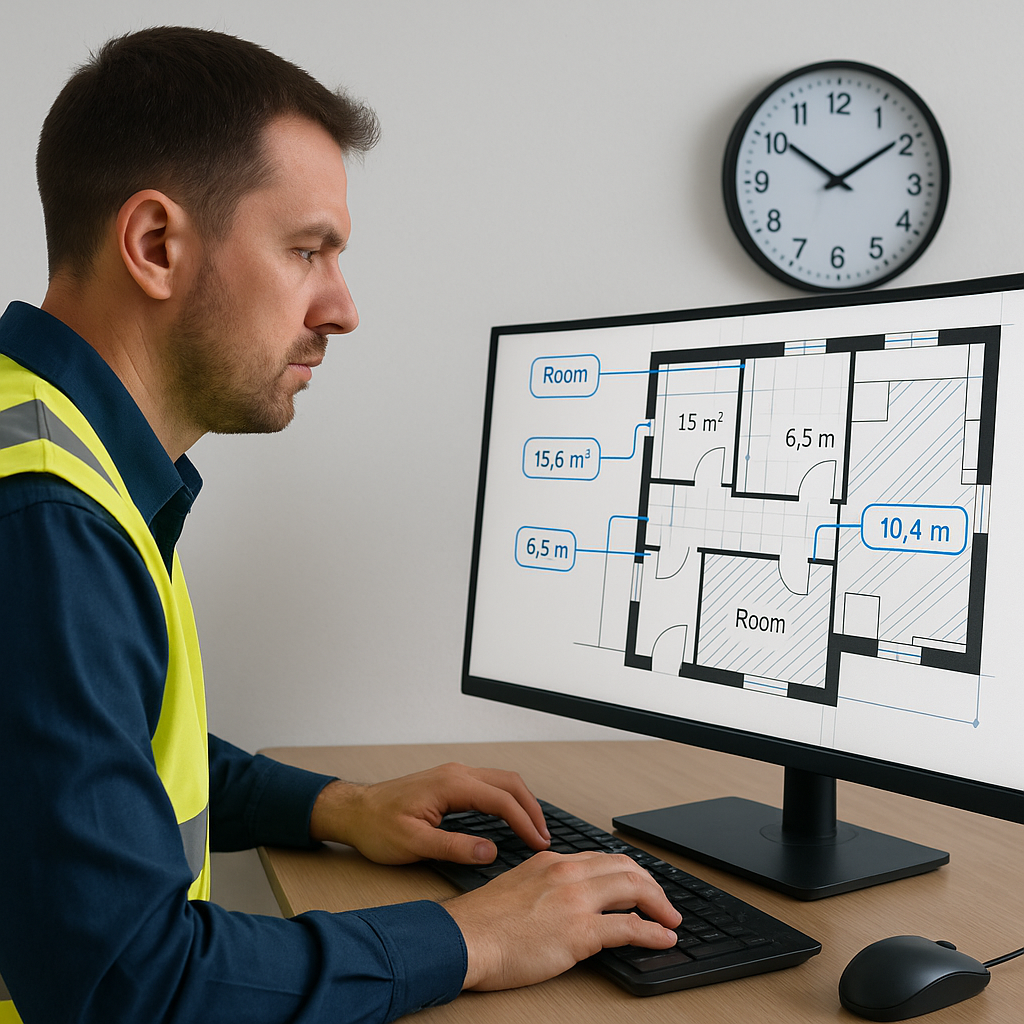
Let’s not sugarcoat it—manual takeoffs are a time sink. If you’re spending 40 hours (two full workdays for two estimators) just to extract quantities from drawings, you’re not alone. But here’s the kicker: this isn’t just about time. It’s about opportunity cost.
Every hour wasted on manual work is an hour you’re not refining your bid, negotiating with subs, or chasing more projects. And when deadlines are tight, corners get cut. Mistakes happen. You underbid or overbid, and either way, you lose.
The Hidden Costs of Manual Takeoffs
It’s tempting to think of manual takeoffs as just another task in the preconstruction process, but consider the ripple effects:
- Human Error: Manual takeoffs are prone to mistakes—missing quantities, misreading scales, or overlooking revisions. According to an industry study, 1 in 4 construction bids contains errors due to manual takeoff inaccuracies[^3].
- Labor Costs: If a senior estimator earns $80/hour and spends 40 hours on manual takeoffs, that’s $3,200 in just labor costs for one project.
- Burnout: Repetitive tasks like manual takeoffs can lead to estimator fatigue, reducing their ability to focus on high-value activities like bid strategy or subcontractor negotiations.
The AI Takeoff Advantage
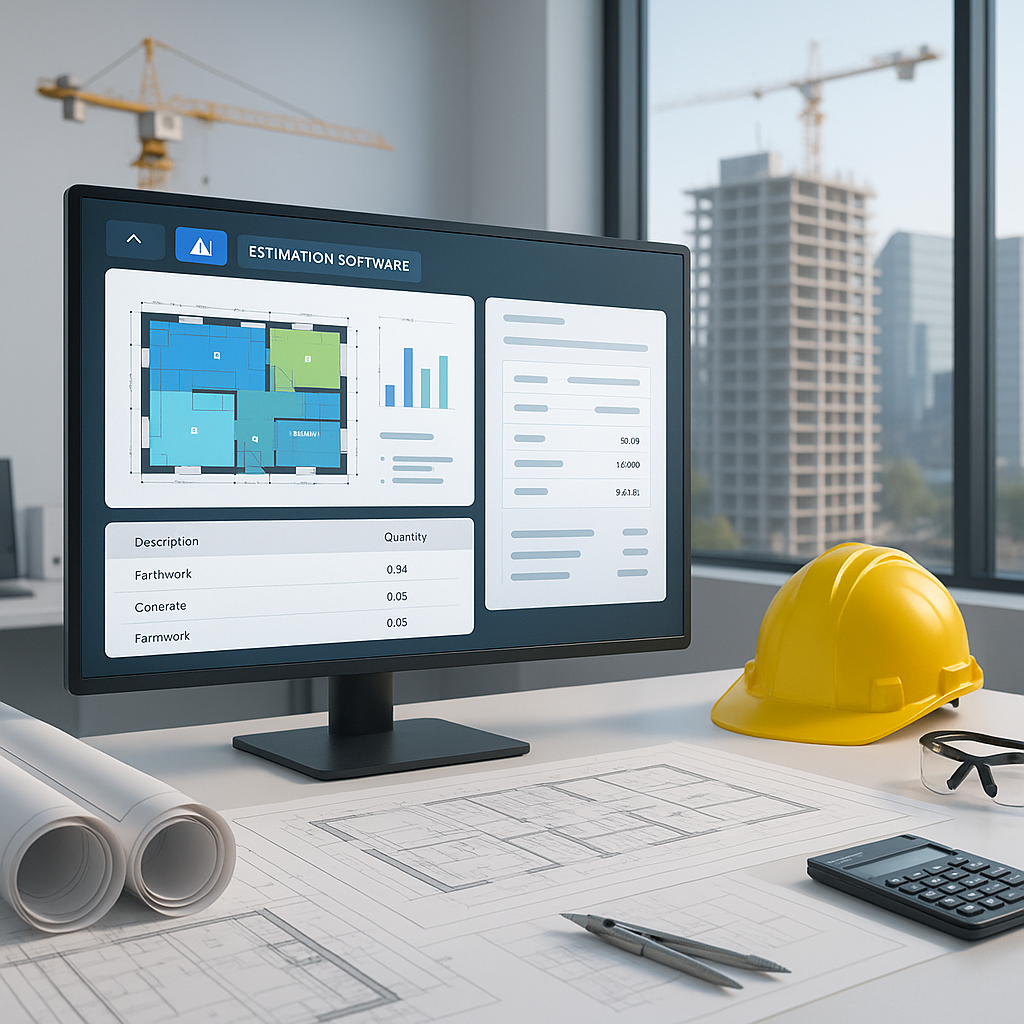
Enter AI-powered tools like EstimateNext. These platforms use Vision AI to extract quantities from PDF drawings in just 10 minutes[^6]. That’s a 10X speed improvement. Imagine handing over a high-rise bid where takeoffs were completed in the time it takes to grab a coffee.
How AI Works in Takeoffs
Here’s what makes AI-powered takeoff tools like EstimateNext so effective:
- AI Reads Drawings Like a Pro: Vision AI doesn’t just look for lines and shapes. It understands context—walls, doors, windows, even revisions. For example, if a drawing includes different wall types (e.g., drywall versus concrete), AI can differentiate between the materials while noting dimensions.
- Confidence Scoring: Not all extractions are perfect, and that’s okay. The system flags low-confidence areas for manual review. For instance, if AI isn’t certain about a mislabeled dimension, it highlights the ambiguity for human validation.
- Scales to Any Project: Whether it’s a $1M renovation or a $1B rail project, the process is the same. Upload the drawings, calibrate the scale, and watch the quantities roll in[^1][^9].
Case Study: Speeding Up Takeoffs
Consider a regional general contractor bidding on a $50M mixed-use development. Previously, they spent 72 hours manually extracting quantities. After switching to AI-powered takeoffs, the same project took just 3 hours—including manual reviews. The result? They submitted their bid early and won the job due to a more competitive pricing structure.
“But AI Can’t Think Like an Estimator”
You might be thinking, “Sure, AI is fast, but it doesn’t get the nuances of construction.” That’s partially true. AI won’t decide if a design spec is realistic or if a sub’s quote feels inflated. But that’s not the point.
AI handles the grunt work—like takeoffs—so you can focus on what you’re actually good at: making judgment calls, fine-tuning costs, and winning bids. Think of it as an extra pair of hands, not a replacement for your expertise[^8].
Actionable Tip: Pair AI With Human Oversight
To maximize the benefits of AI, integrate it into your workflow with a hybrid approach:
- Start Small: Test AI tools on a few projects to get a feel for the process.
- Manual Review: Use the flagged low-confidence areas as a checklist for your team.
- Iterate: Provide feedback to your AI vendor to improve future accuracy.
Real-World Case: The $342K Lesson
A mid-sized GC recently used AI takeoffs on a $10M residential project. Normally, their team would spend 56 hours pulling quantities manually. With Vision AI, they completed the takeoff in under two hours, including manual reviews. The result? $342K saved in labor and overhead costs[^10].
Additional Case Study: Winning a Competitive Bid
In a market where margins are razor-thin, a small subcontractor used AI takeoffs to prepare bids for five projects simultaneously. The AI tool not only saved time but also identified overlooked quantities in initial drawings. This attention to detail helped them win three of the five bids, boosting their revenue by 25% for the quarter.
What About Accuracy?
No system is perfect, and AI is no exception. But here’s the thing: AI tools like EstimateNext include features like manual override and audit trails for disputed quantities. This hybrid approach—AI speed with human oversight—reduces takeoff discrepancies by up to 80%[^1].
Comparison Table: Manual vs. AI Takeoffs
| Feature | Manual Takeoffs | AI-Powered Takeoffs |
|---|---|---|
| Speed | 40-72 hours per project | 10-60 minutes per project |
| Accuracy | Prone to human error | Confidence scoring + manual review |
| Scalability | Limited by manpower | Scales to any project size |
| Cost | High labor costs | One-time or subscription fee |
| Revision Handling | Manual rework required | Automated revision tracking |
Why It Matters Now
We’re in a labor crunch. Preconstruction teams are being asked to do more with less. Deadlines are tighter, projects are more complex, and every mistake feels magnified. AI tools aren’t just nice-to-have anymore—they’re essential. They free up your team’s time for high-value tasks, like subcontractor negotiations and bid strategy[^2].
FAQs
Q: Can AI tools handle revisions?
A: Yes. EstimateNext lets you upload revision sets and compare changes automatically. No more guessing what’s changed[^6].
Q: What if my drawings are messy?
A: Vision AI includes tools to remeasure low-confidence areas and add manual adjustments with an audit trail[^6].
Q: How long does it take to learn?
A: Most teams are up and running in under two weeks, thanks to intuitive interfaces and training support[^1].
Q: Will AI replace estimators entirely?
A: No. AI is designed to assist, not replace. It handles repetitive tasks so estimators can focus on judgment-intensive activities like cost optimization and bid strategy[^8].
Q: What’s the ROI for AI takeoffs?
A: The ROI depends on your project volume. For a company handling $100M in projects annually, AI tools can save hundreds of hours and reduce labor costs by tens of thousands[^10].
The Bottom Line
Manual takeoffs are outdated. They waste time, money, and mental energy. If you’re still relying on them, you’re leaving money on the table. AI-powered tools like EstimateNext won’t just save you time—they’ll give you a competitive edge when it comes to winning projects.