Walsh-Turner’s $580M Utility Plant Deal: Why Estimation AI Isn’t Optional Anymore
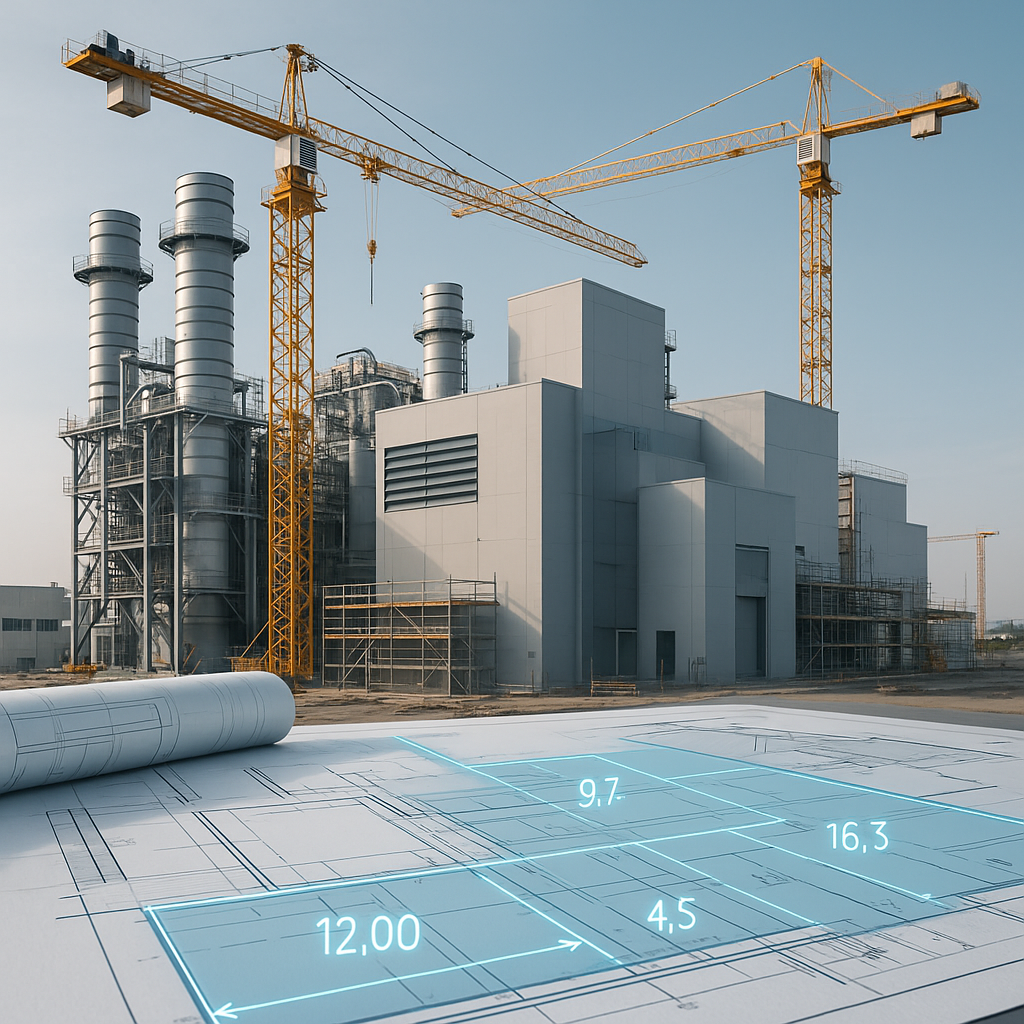
The Walsh-Turner JV just landed a $580M utility plant project, and it’s making waves in the construction world. Why? Because projects of this scale don’t just challenge your execution—they test your preconstruction process to the limit. Every decision, from material rates to subcontractor scopes, needs to be airtight.
But here’s the problem: traditional estimation methods don’t cut it anymore. And if you’re still flipping through rate books or slogging through manual takeoffs, you’re leaving money—and margin—on the table. Walsh-Turner isn’t.
Why This Project Shows What’s Broken
Utility plants are beasts. They combine civil, MEP, and structural work in ways most projects don’t. Walsh-Turner’s JV will juggle excavation, reinforced concrete, HVAC systems, electrical grids, and fire protection under a single roof. Each trade has its own quirks, and coordination gets messy fast.
Here’s the kicker: it’s not just about building the plant. It’s about pricing it right—before the bid even hits the client’s desk. And that means solving problems like:
- Takeoff Bottlenecks: Hundreds of drawings, each with intricate details. Manual takeoffs could take weeks.
- Scope Creep: Missing a single line item in subcontractor quotes can blow the budget.
- Rate Variability: Material and labor rates can swing wildly between trades and regions. Guess wrong, and you’re done.
Real-World Example: The Trouble with Manual Takeoffs
Imagine tackling a hospital renovation project. A mid-sized GC recently reported that their team spent over 60 hours manually extracting quantities from architectural PDFs for a $20M project. That doesn’t even include the time spent checking for errors or redoing parts of the takeoff when drawings were revised. Now scale that to Walsh-Turner’s $580M utility plant. Without automation, this bottleneck would cripple their bid timeline.
The AI Edge: How Estimation Tools Like EstimateNext Solve This
This is where AI-powered estimation platforms change the game. Let’s take one specific feature: Vision AI Takeoff. For a $580M project like this, manual drawing takeoffs are a nightmare. Walsh-Turner likely dealt with hundreds of PDFs—floorplans, sections, MEP layouts. Extracting data like pipe lengths, wall areas, or duct volumes by hand isn’t just slow; it’s error-prone.
With AI, all that changes. Vision AI can process a full set of drawings in minutes, pulling quantities directly into a BOQ. It flags low-confidence areas (like ambiguous wall boundaries) for human review, so you’re not flying blind. Think about the time saved: what used to take 40 hours now takes 10 minutes. That’s not just faster—it’s smarter.
Actionable Steps to Leverage AI Tools
Here’s how teams can start integrating AI into their workflows:
- Start with a Pilot Project: Choose a mid-sized project to test AI tools. Compare the results against your traditional methods.
- Train Your Team: AI tools are powerful, but they’re only as good as the people using them. Invest in training sessions to maximize ROI.
- Review and Adjust: Use the confidence scores AI provides to double-check flagged areas. Treat the tool as an assistant, not a replacement for expertise.
Sub Bid Leveling: The Silent Killer of Margins
Here’s another challenge Walsh-Turner likely faced: leveling subcontractor bids. For a project of this scale, they probably had 5-10 subs quoting each major trade. The problem? No two subs scope their bids the same way. One might include excavation in their concrete package; another might leave it out entirely.
AI-powered tools like EstimateNext tackle this head-on. Sub Bid Leveling normalizes quotes by comparing scope line items side by side. It flags outliers (like suspiciously low rebar rates) and ranks subs by overall value—not just price. This isn’t just about speed; it’s about protecting your margins. A missed scope gap can cost you millions.
Case Study: A $12M Scope Gap
In 2021, a large general contractor on a $300M airport terminal project discovered a $12M scope gap after awarding their subcontractor bids. The issue? Misaligned scopes in bid submissions led to duplicate coverage in some areas and complete omissions in others. Had they used an AI tool to level the bids, this costly oversight could’ve been flagged before contracts were signed.
Rate Lookup: The Brutal Math Behind Big Bids
Utility plants also push rate accuracy to the forefront. Walsh-Turner would’ve needed to price everything from HVAC ductwork to underground utilities with precision. But flipping through PDFs or Excel sheets for rates? That’s a recipe for disaster.
EstimateNext’s 78,000-item rate library changes the game here. It’s searchable, localized, and updated with inflation data. Plus, every match comes with a confidence score and audit trail. So if you’re pricing 1,000 feet of 24-inch duct, you know exactly where that rate came from—and why.
Data Point: The Cost of Rate Errors
According to a study by Navigant Construction Forum, 8-12% of project overruns are tied to inaccurate cost estimates. For a $580M project, that’s $46M to $69M in potential losses. Automated rate lookups can eliminate human error and reduce these risks significantly.
Why This Matters for Your Team
You might be thinking, “Sure, AI sounds great, but is it worth it for my projects?” Here’s the reality: you don’t need to be bidding on $580M utility plants to see the ROI. Even for smaller GCs or MEP subcontractors, the math holds up.
ROI Comparison Table
| Type | Savings/Revenue Opportunity | Example |
|---|---|---|
| General GCs | Save 40 hours per estimate. $130/hour = $5,200/project. | Five GMP bids/year = $26,000/year in savings. |
| Subcontractors | Respond to 50% more bid packages. Win 4 more projects/year = $800K in revenue. | Adds flexibility for smaller firms to scale. |
| QS Firms | Replace CostX ($15K/year) with a tool that’s 1% of the cost. | Achieve 100x faster processing while cutting costs. |
The bottom line? AI isn’t a luxury anymore. It’s table stakes.
What’s Next for AI in Construction Estimation?
Walsh-Turner’s deal isn’t an outlier. From Virginia’s $518M floodwater project to Dallas’ $108M water initiative, big projects are leaning heavily on AI for preconstruction. And it’s not just about speed or cost savings. It’s about risk. The teams that minimize errors, close scope gaps, and price with precision will win.
If you’re still relying on Excel and PDFs, it’s time to rethink your process. The competition isn’t waiting.
FAQ: Common Questions About AI in Estimation
1. Do AI tools replace estimators?
No. AI tools are not replacements for skilled estimators—they’re assistants. They automate repetitive tasks, like takeoffs and bid leveling, so estimators can focus on strategy and decision-making.
2. How accurate are AI-generated estimates?
Accuracy depends on the quality of the input data. AI tools like EstimateNext come with confidence scores and audit trails, which help teams cross-check and refine results.
3. Are AI tools cost-effective for smaller firms?
Yes. Many AI platforms offer scalable pricing. Even for a subcontractor responding to $1M bids, saving 20 hours per estimate can add up over time.
4. How secure is my data on an AI platform?
Most reputable platforms use encryption and cloud security protocols. Always check for certifications like SOC 2 compliance.
5. What happens if drawings are revised mid-project?
AI tools can reprocess revised drawings quickly, flagging changes and updating quantities without starting from scratch.
If you’re dealing with takeoff bottlenecks or sub bid leveling nightmares, EstimateNext can help. Get started free →