A $711M Reality Check: Why GCs Can’t Rely on Gut Instinct Anymore
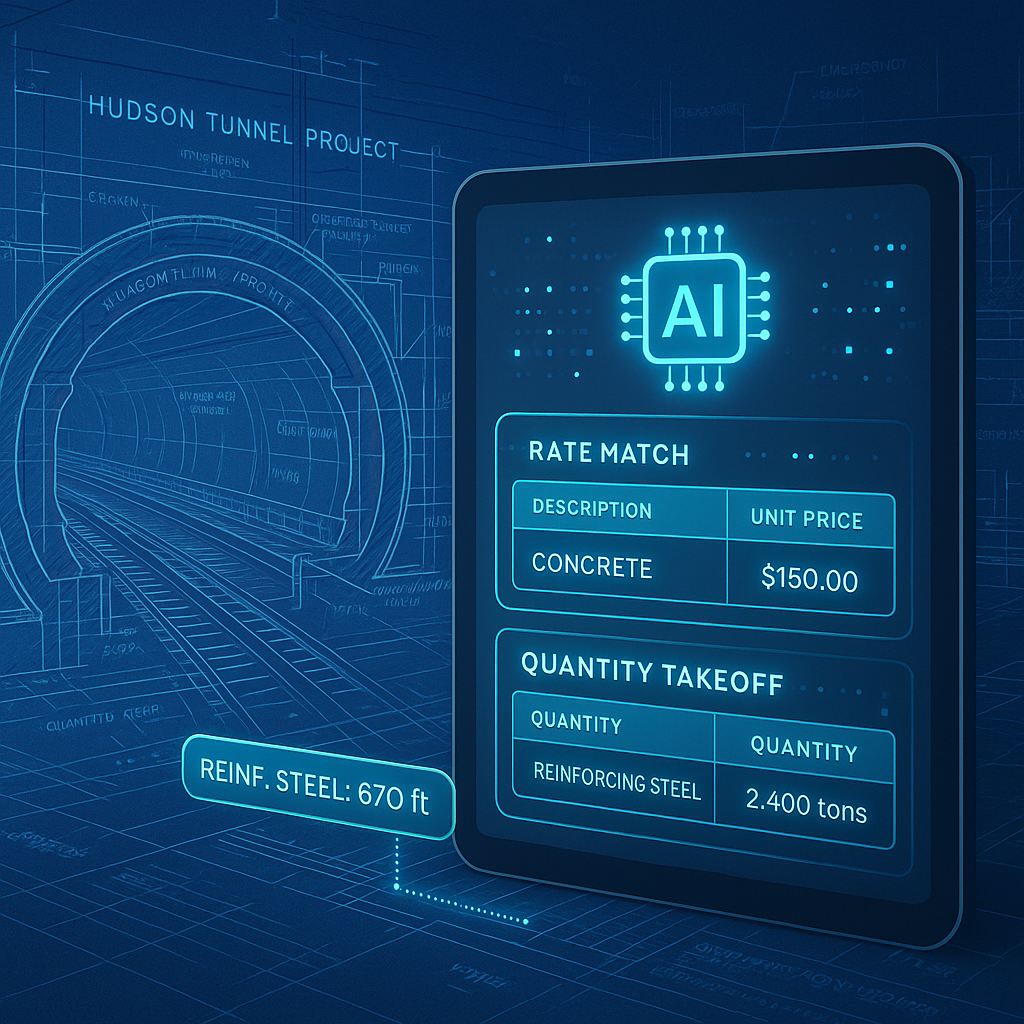
When a major infrastructure agency awarded the $711M Hudson Tunnel Project to a large contractor joint venture, one thing was clear: this wasn’t just about construction. It was about precision.
Think about the scale. A rail tunnel connecting New York and New Jersey, designed to fix one of the most critical infrastructure bottlenecks in the U.S. Every delay costs millions. Every misstep risks federal funding. And here’s the kicker: the proposal process alone was a full-contact sport. Winning this project wasn’t about charm or handshakes—it came down to numbers. Tight estimates. Fast iterations. And that’s where AI steps in.
The Problem: Manual Estimation is Too Slow—and Too Risky
Manual estimation isn’t just slow; it’s error-prone. Let me paint you a picture:
- Drawing takeoff: Two estimators spend 40 hours tracing blueprints for QTO (quantity takeoff). That’s 40 hours per bid.
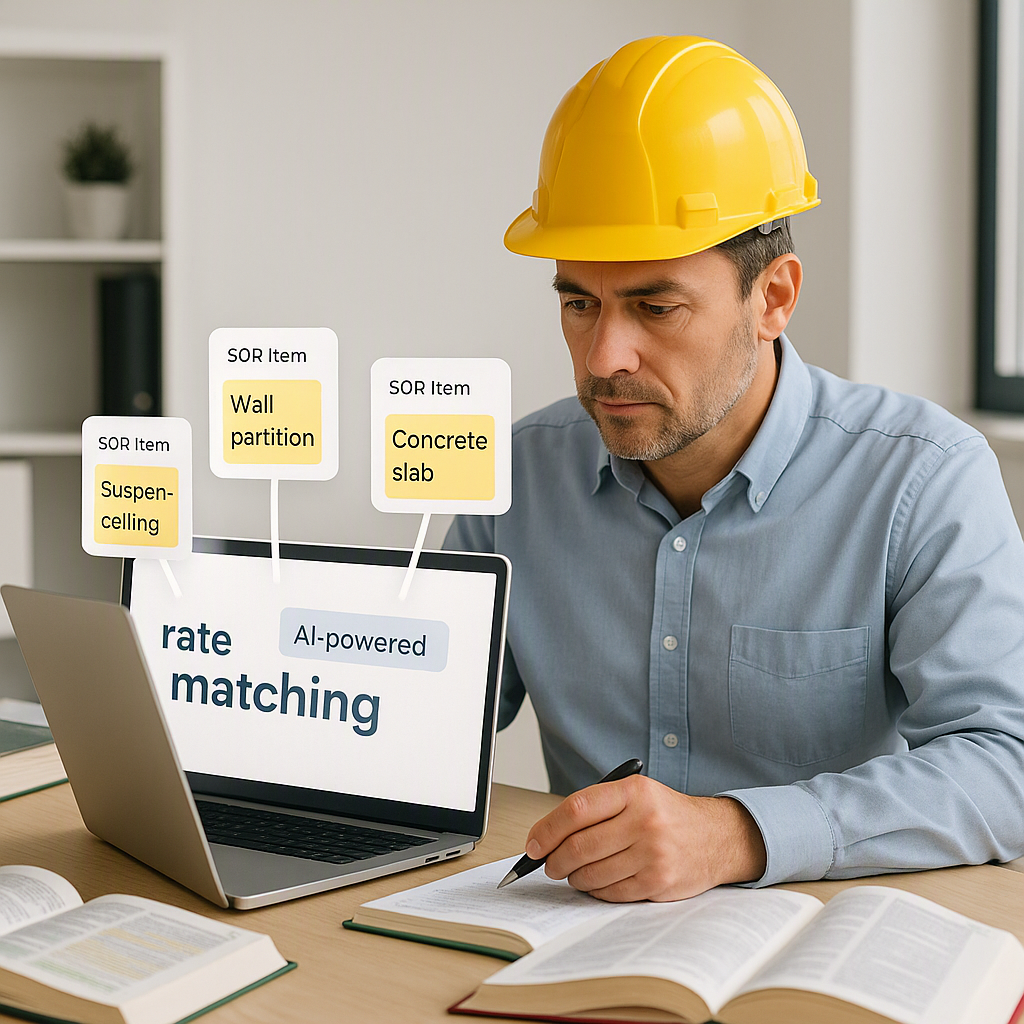
- Rate lookups: Flipping through a 2,000-page RSMeans book to find the right SOR (schedule of rates)? Add another 12 hours.
- Sub bid leveling: Normalizing quotes across 7 subcontractors? Six hours, easy.
By the time you’ve built a complete estimate, your competitor—armed with AI—has already submitted theirs. Faster. Cheaper. More accurate.
A Real Example: How Manual Errors Almost Cost a $50M Project
Take the example of a mid-sized regional contractor bidding on a $50M healthcare facility. Their team spent over 60 hours on manual takeoffs and rate matching. Unfortunately, they missed a key scope item: HVAC ductwork in a secondary wing. The mistake wasn’t caught until after submission, leading to a $2.3M underbid. They lost the job—and the opportunity to bid on future projects for the same client.
This isn’t just theory. Industry examples highlight how AI tools cut weeks off preconstruction workflows. You think these mega-projects get won by guessing?
How AI Changes the Game
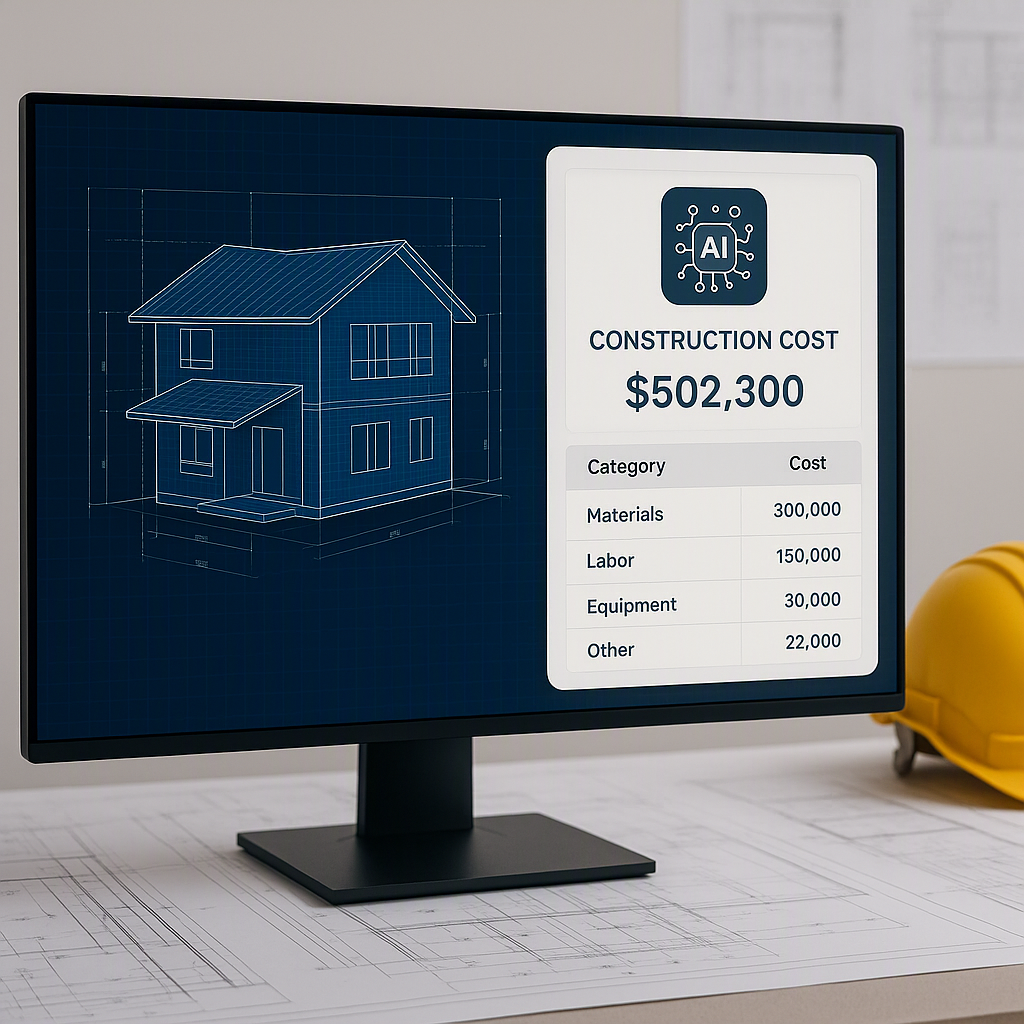
Here’s what AI-powered estimation tools like EstimateNext bring to the table:
- Smart BOQ Parsing: Upload a bill of quantities in Excel, and the system detects merged cells, hierarchies, and section headers—automatically. No more spreadsheet gymnastics.
- Vision AI Takeoff: Forget the hours spent tracing drawings. AI reads PDFs, extracts quantities, and flags low-confidence areas for human review—all in 10 minutes.
- Rate Matching at Scale: Instead of flipping through rate books, semantic search across 78,000+ SOR items finds matches in seconds. Searching for “8-inch ductile iron pipe”? Done. Need labor rates for New Jersey? Instant.
- What-If Scenarios: Changing a single rate in Excel used to mean rebuilding your entire workbook. With AI, changes propagate in real-time, with a full audit trail.
Case Study: Virginia’s $518M Floodwater Project
A large national contractor used similar AI tools on a major regional floodwater-control project. Their secret? Cutting manual workflows by weeks. Their experience shows that time saved in preconstruction translates directly into winning more bids. They reported a 15% reduction in estimation errors and a 25% increase in their bid submission rate.
The Hudson Tunnel: A Case for Speed and Accuracy
The Hudson Tunnel Project is a perfect example. With federal funding deadlines and political pressure mounting, GCs bidding for this project couldn’t afford guesswork. Missing a key scope item would’ve been catastrophic. Overpricing it? Just as bad.
A Breakdown of What Was at Stake:
- Federal Funding: Missing deadlines would mean losing access to critical federal grants.
- Political Scrutiny: High-profile projects attract intense oversight. Errors risk public backlash.
- Complex Scope: Coordinating across multiple subcontractors and agencies demands precision.
AI tools, like the ones used by major national general contractors, are built for this kind of high-stakes environment. By automating takeoffs, normalizing sub bids, and enabling rapid pricing iterations, they remove the bottlenecks that traditional workflows create.
“But My Projects Aren’t $711M…”
Fair point. Most of us aren’t chasing billion-dollar megaprojects. But the principles scale down. Whether you’re responding to a $500K interior fit-out or a $10M MEP package, the same challenges apply:
- How fast can you go from BOQ to priced bid?
- How accurate are your rates?
- How many bids can you respond to in a week?
Small-Scale Example: A Residential Contractor’s AI Transformation
A residential contractor pricing $250K remodels struggled to process more than three bids a week. After adopting AI estimation tools, they increased their capacity to seven bids weekly while reducing errors by 30%. This translated into an additional $750K in annual revenue.
MEP subcontractors, for example, often struggle to price packages in under three days. AI cuts that to four hours. That’s not just time saved—it’s 50% more bids submitted annually. Case studies show the revenue impact is huge: 4-8 additional wins per year, at $200K+ average value per project.
AI Isn’t a Luxury Anymore
If you’re still relying on Excel and manual workflows, you’re behind. Tools like EstimateNext aren’t just faster—they’re smarter. They learn. Every estimate you run, every rate you tweak, every bid you submit makes the system better for the next one.
The Hudson Tunnel Project and others like it show us where the industry is headed. Faster preconstruction. Data-driven decisions. And yes, AI at the center of it all. The question isn’t whether you need it—it’s how long you can afford to wait.
Comparison Table: AI vs. Manual Estimation
| Feature | Manual Estimation | AI-Powered Estimation |
|---|---|---|
| Drawing Takeoff | 40 hours | 10 minutes |
| Rate Lookup | 12 hours | Instant |
| Sub-Bid Leveling | 6 hours | 1 hour |
| Error Propagation | High | Low |
| Scalability | Limited | Unlimited |