78% Faster Estimation: AI's Fix for Manual Takeoff Bottlenecks
Let’s face it: manual drawing takeoffs are awful. Flipping through dozens of drawings, calibrating measurements, and manually extracting quantities isn’t just slow—it’s error-prone. If you’ve ever spent an entire week on one project only to miss the bid deadline, you know the pain.
But the good news? AI-powered preconstruction tools can cut takeoff time from 40 hours to just 10 minutes. That’s not marketing fluff—it’s a real stat backed by case studies, like the $1 billion rail project EstimateNext powered Source.
Why Manual Takeoffs Are a Bottleneck
The Brutal Math Behind Manual Takeoffs
Here’s the harsh reality: a typical mid-sized general contractor (GC) runs 5–8 GMP (Guaranteed Maximum Price) pursuits per year. For each project, two estimators spend an average of 40 hours each on manual takeoffs. That adds up to 80 hours per bid—or 640 hours annually.
Let’s break that down into dollars. At $130/hour (a standard estimator rate), that’s $83,200 per year spent just on takeoffs. And this doesn’t even factor in the cost of errors.
Imagine missing a line item while manually tracing a PDF. That mistake could lead to an inaccurate bid, forcing you to absorb additional costs or risk losing the client’s trust. Errors in manual takeoffs often cascade, affecting labor estimates, material orders, and the overall profitability of a project.
Why Automation Has Lagged
Despite the inefficiency, manual takeoffs remain the industry norm. Why? Two primary reasons:
- Reliance on legacy tools: Most teams rely on Bluebeam and Excel. While these tools are helpful, they aren’t complete solutions. They still require tedious manual input, which introduces the risk of human error.
- Skepticism toward AI: Many contractors doubt that AI can match the precision of an experienced estimator. There’s also a fear of losing control over the process.
How AI Fixes the Problem
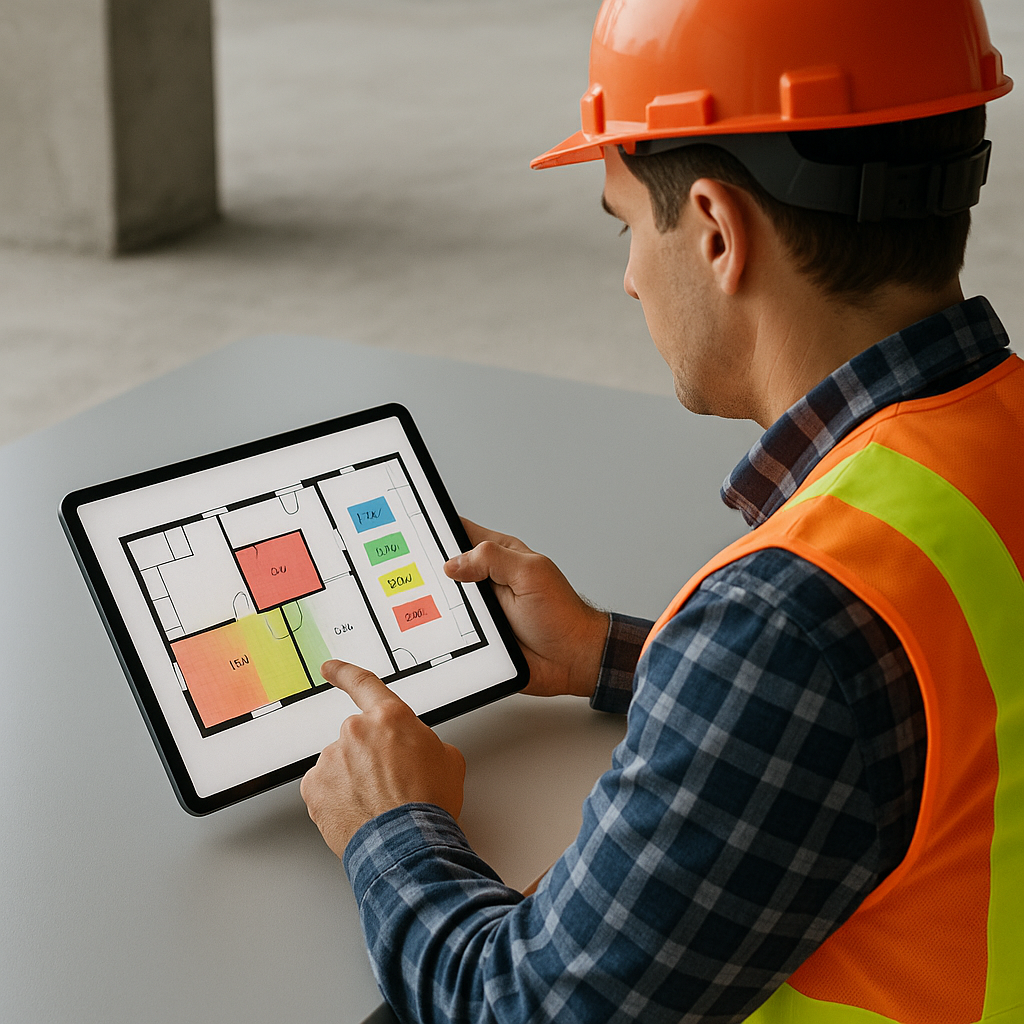
AI-powered estimation tools, such as EstimateNext, use Vision AI to extract quantities directly from PDF drawings. No more calibration. No more endless manual tracing. Simply upload the drawing set, and the system identifies areas, lengths, counts, and dimensions in minutes.
Example: Pricing a High-Rise Office Building
Imagine you’re bidding on a high-rise office project. Traditionally, you’d need to measure room areas, wall lengths, door/window counts, and more—across hundreds of sheets. This would take days or even weeks. With AI, the same process is completed in minutes.
For example, let’s look at a mid-sized GC that used EstimateNext for a similar project. They saved 120 hours on takeoffs alone—equivalent to two weeks of labor. In their own words, “It’s like hiring a full-time estimator without the overhead.” Source.
Actionable Steps to Implement AI Tools
Here’s how you can get started:
- Audit your current process: Track how long manual takeoffs take and identify the high-friction parts.
- Test AI on a small project: Start with a low-stakes bid. Upload drawings into a tool like EstimateNext and compare the AI results to your manual takeoff.
- Integrate with your workflow: Most AI tools integrate with platforms like Bluebeam, Procore, and Excel, so you can import/export seamlessly.
- Train your team: Most platforms are intuitive, but a brief onboarding session ensures everyone is comfortable with the tool.
Accuracy Concerns: Does AI Really Work?
Addressing Common Misconceptions
A common concern is that AI sacrifices accuracy for speed. Here’s the truth:
- AI doesn’t replace expertise: Estimators still review low-confidence results flagged by the system.
- AI improves over time: Tools like EstimateNext include feedback loops, meaning the more you use them, the smarter they get. By the third project, most users report significant accuracy improvements.
Data-Driven Performance
A 2022 study found that AI-powered takeoff tools achieved 98% accuracy rates compared to manual processes. And because AI doesn’t get tired or distracted, it’s less prone to oversight. Source.
What If You’re Using Custom Standards?
Many firms use proprietary measurement standards, which raises the question: Can AI accommodate custom workflows? The answer is yes. Tools like EstimateNext offer configurable profiles, enabling you to upload your own catalogs and measurement rules.
Supported Standards
Out of the box, platforms like EstimateNext support:
- CSI MasterFormat
- NRM2 (New Rules of Measurement)
- CPWD DSR (India-specific)
- CESMM3
- AIA G703
If your firm uses a unique standard, you can create a custom profile. The system will integrate these rules into future projects, ensuring consistency and accuracy.
The ROI of AI Takeoffs
Let’s revisit the math, but with concrete personas:
| Persona | Annual Savings from AI Takeoffs | Additional Benefits |
|---|---|---|
| GC Director | $31,200 (6 GMP pursuits x $5,200 saved per bid) | Faster bids improve win rates |
| MEP Contractor | $41,600 (8 bids x $5,200 saved per bid) | Respond to 50% more bids, leading to higher revenue |
| Quantity Surveyor | 200+ hours saved annually by avoiding manual catalog searches | Focus on high-value tasks like vendor negotiations |
Try AI-Powered Takeoffs Today
Manual takeoffs are a bottleneck you can’t afford to keep. AI-powered tools like EstimateNext can save you time, reduce errors, and improve your bottom line. The future of preconstruction is here—don’t get left behind. Get started free →


