The Challenge of Manual Quantity Takeoffs
If you’ve ever done manual quantity takeoffs, you know the process: reviewing PDF drawings, tracing every beam, door, and square foot of drywall by hand. It’s repetitive, error-prone, and time-consuming.
While tools like Bluebeam have replaced vellum, the core process remains largely manual. Tight deadlines only increase the risk of mistakes, making this a critical bottleneck in preconstruction workflows.
How AI Transforms Quantity Takeoffs
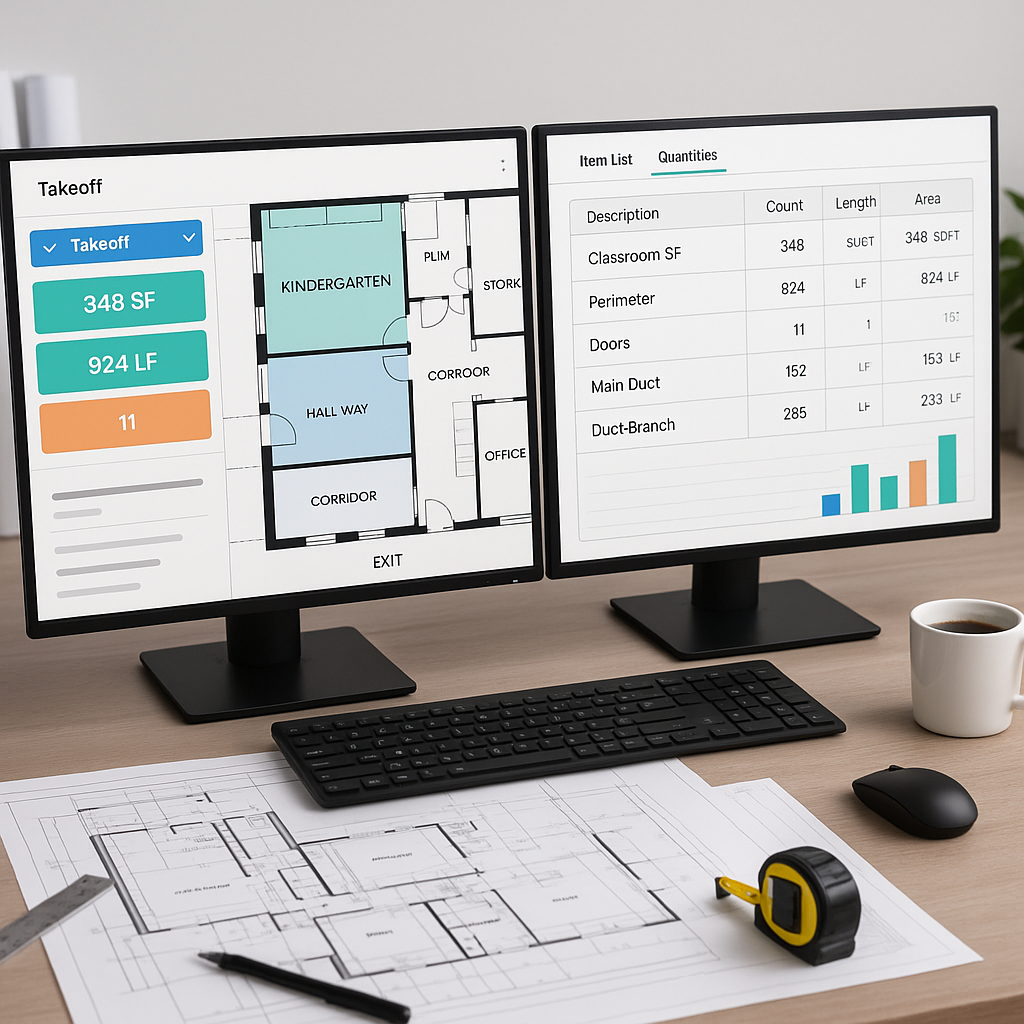
AI-powered takeoff tools streamline this process. Instead of manually measuring quantities, you upload your PDF drawings, and the software extracts quantities automatically. These tools use machine learning trained on large datasets to recognize patterns like wall symbols or door swings, converting them into actionable data.
However, AI doesn’t replace human expertise. Estimators still review, adjust, and validate the results. The AI handles repetitive tasks, freeing up time for higher-value activities like pricing strategies or subcontractor negotiations.
Benefits of AI-Powered Takeoffs
AI-powered tools offer several advantages:
- Speed: Automating the takeoff process significantly reduces the time required.
- Consistency: Machine learning algorithms ensure uniformity in measurements.
- Focus on Strategy: With less time spent on manual tasks, teams can focus on refining bids and exploring competitive strategies.
Key Considerations When Using AI Tools
While AI tools can be transformative, there are important factors to keep in mind:
- Input Quality: Clean, legible drawings yield the best results.
- Learning Curve: Familiarizing yourself with the platform may take some initial training.
- Edge Cases: Custom or unconventional designs may still require manual adjustments.
- Cost vs. ROI: Evaluate the cost of the tool against the time and labor savings it provides.
FAQ: Common Questions About AI Takeoffs
Q: Can AI handle revisions? Yes. Uploading updated drawings allows the software to highlight changes, eliminating the need to redo the entire takeoff.
Q: Does it work for small projects? Yes. AI tools are scalable and can be used for projects of varying sizes.
Q: What if my drawings are messy? AI tools often include options for re-measurement in areas where confidence is low, ensuring accuracy even with imperfect inputs.
Final Thoughts
AI-powered takeoff tools are revolutionizing preconstruction estimation. By automating repetitive tasks, these tools save time and allow teams to focus on strategic priorities like refining bids and maximizing project margins. If you’re still relying on manual takeoffs, now is the time to explore how AI can enhance your workflow.