Streamlining Rate Lookups in Construction Estimation
Rate lookup is often one of the most tedious tasks in construction estimation. Whether you're flipping through CPWD DSR catalogs or scrolling through PDFs of RSMeans, the process can be slow, error-prone, and time-consuming. Many estimators find this task to be a significant bottleneck in their workflow.
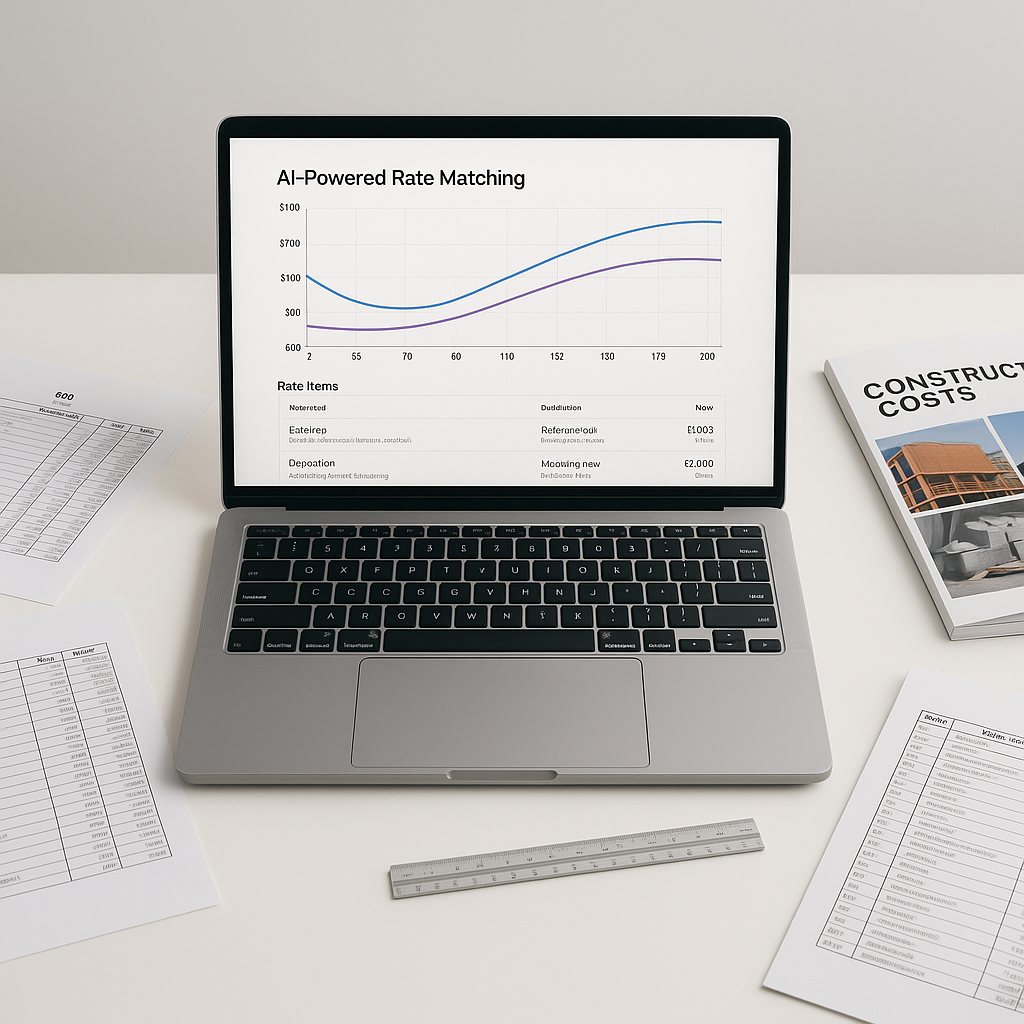
AI-powered rate matching tools aim to address this challenge by automating the process of finding relevant rates from extensive catalogs. Instead of relying on manual searches, these tools can quickly analyze and match items from a Bill of Quantities (BOQ) to the appropriate rates, saving time and reducing errors.
How Does AI Rate Matching Work?
Here’s a general overview of how AI-powered rate matching tools function:
-
Smart BOQ Parsing: You upload your BOQ in formats like Excel, CSV, or PDFs. The tool identifies item descriptions, quantities, units of measurement (UOMs), and hierarchies automatically.
-
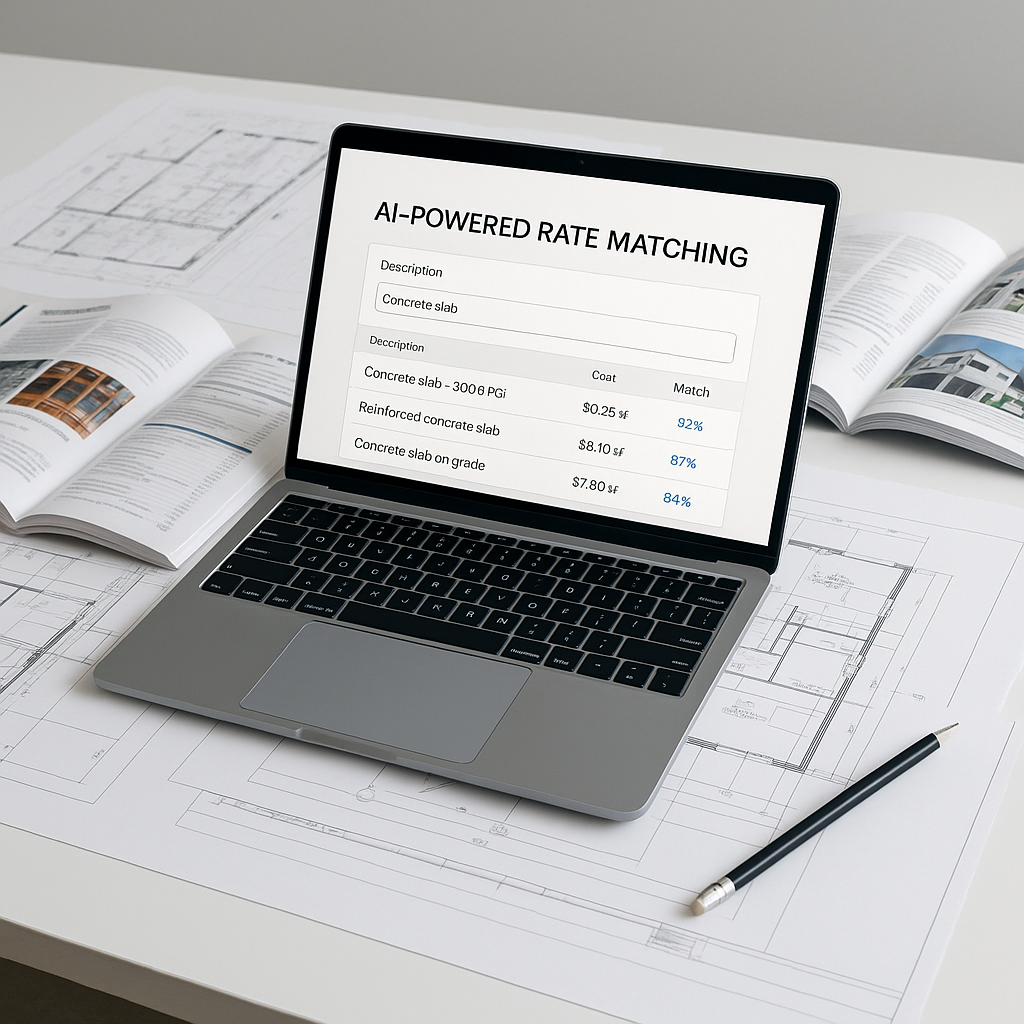
Semantic Search: The AI uses semantic search to understand the intent behind BOQ descriptions. For example, if your BOQ specifies “install reinforced concrete slab”, the tool can match it with relevant items in catalogs like CPWD DSR or RSMeans, even if the phrasing differs.
-
Custom Catalogs: You can upload your own rate databases or project-specific costs. The AI integrates these inputs and learns from them for future matches.
-
Audit Trails: Each rate match includes a detailed trail explaining how the AI arrived at its recommendation. This allows you to verify and adjust rates as needed.
Why It Saves Time
Pricing a large project with hundreds or thousands of BOQ line items can involve significant manual effort. Traditional methods require estimators to:
- Search for matching rates in catalogs.
- Cross-check against regional cost indices.
- Adjust for factors like inflation or project-specific conditions.
AI-powered tools automate much of this process. By quickly identifying and suggesting relevant rates, these tools allow estimators to focus on higher-value tasks, such as refining bid strategies or negotiating with subcontractors.
Illustrative example — Imagine a BOQ with 1,500 line items. If each manual lookup takes a few minutes, the total time spent on rate matching can add up to several hours. With AI, this process is significantly accelerated, as matches are generated almost instantly.
Addressing Common Concerns
Some professionals may have reservations about adopting AI for rate matching. Here are a few common concerns and how they are addressed:
-
“AI doesn’t know my custom rates.” While AI tools may not initially include your specific rates, they allow you to upload custom catalogs. Over time, the AI learns from your adjustments, improving its recommendations.
-
“What about edge cases?” AI tools often flag low-confidence matches for manual review, ensuring you retain control over critical decisions.
-
“Is it accurate?” AI tools are designed to complement human expertise. They provide recommendations that can be verified and adjusted, helping you work more efficiently without compromising accuracy.
Practical Example: Automating Rate Matching
Consider a scenario where you’re pricing a high-rise project. Your BOQ includes an item for “supply and install structural steel columns.” Using traditional methods, you would:
- Open your rate book.
- Search for “structural steel columns.”
- Cross-check against regional cost indices.
- Adjust for material inflation manually.
Each step takes time and introduces potential for error. With AI-powered tools, you simply upload the BOQ, and the system:
- Matches the item to a pre-built cost library (e.g., RSMeans or a custom catalog).
- Factors in regional adjustments and inflation.
- Displays the rate along with an audit trail for verification.
This streamlined process reduces the time spent on repetitive tasks, allowing you to focus on more strategic aspects of the project.
Key Considerations for AI Rate Matching
While AI-powered rate matching offers significant benefits, there are a few things to keep in mind:
- Data Quality: The accuracy of AI recommendations depends on the quality of your BOQ. Clear and consistent descriptions lead to better matches.
- Learning Curve: It may take a few projects for the AI to fully adapt to your specific needs. Be patient as the system learns.
- Verification: Always review the AI’s output, especially for high-value or complex items. Use the audit trail to ensure accuracy.
FAQs
Q1: Can AI rate matching handle multi-market projects?
Yes. Many platforms are designed to adjust for different measurement standards (e.g., CSI, CPWD, NRM2), currencies, and tax regimes, making them suitable for multi-market projects.
Q2: How does it handle inflation?
AI tools often incorporate inflation adjustments based on catalog year data and regional indices, helping you account for cost changes over time.
Q3: Can I trust AI with my project-specific rates?
Yes. By uploading your custom catalogs, you can ensure the AI integrates your specific rates into its recommendations. Over time, the system becomes more tailored to your needs.
Conclusion
AI-powered rate matching tools offer a practical solution to one of the most time-consuming aspects of construction estimation. By automating rate lookups and improving accuracy, these tools enable estimators to focus on tasks that add greater value, such as strategy and negotiation. If you’re looking to streamline your workflow and reduce errors, exploring AI-powered solutions could be a worthwhile investment.