How AI-Powered Rate Matching Enhances Construction Estimation
Manual rate lookup can be a tedious and error-prone process. If you've ever spent hours flipping through extensive catalogs or scrolling through digital rate schedules, you know how challenging it can be. The process is not only time-consuming but also susceptible to mistakes. Selecting the wrong rate can negatively impact a bid or lead to financial losses. Fortunately, AI-powered rate matching offers a more efficient solution.
The Problem: Challenges of Manual Rate Lookup
Construction estimators often face the daunting task of finding accurate rates for every item in a Bill of Quantities (BOQ). This involves identifying specific rates for labor, materials, and equipment across multiple catalogs or compliance standards. The manual process can be slow and prone to errors, such as misreading rates or overlooking inflation adjustments. These mistakes can compound, especially on large and complex bids, leading to costly inaccuracies.
The Solution: AI Rate Matching
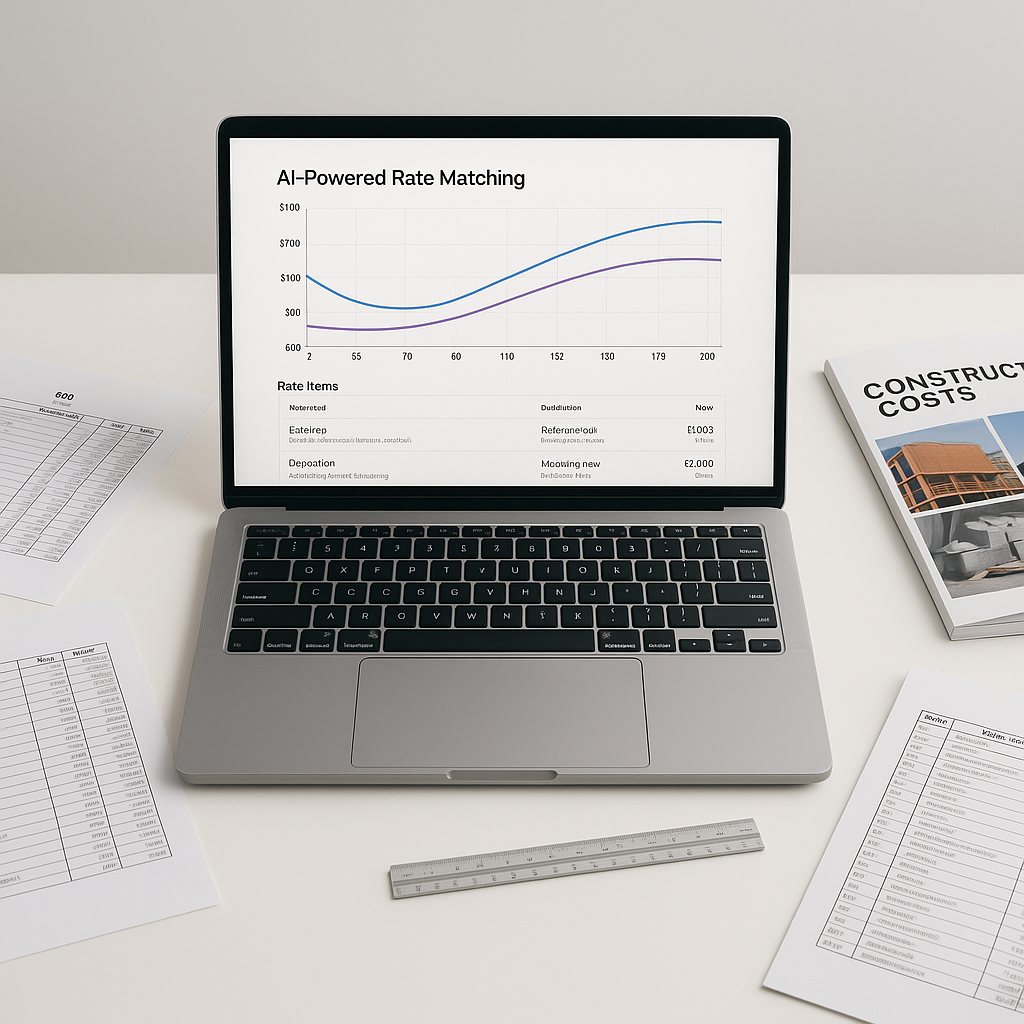
AI-powered rate matching tools automate the rate lookup process, making it faster and more reliable. Here’s how these tools typically work:
- BOQ Parsing: You upload your BOQ file in formats like Excel, CSV, or PDF. The AI identifies merged cells, hierarchies, and section headers automatically.
- Catalog Search: The system scans for semantic matches across thousands of Schedule of Rates (SOR) items from catalogs such as RSMeans, CPWD DSR, and state-specific schedules.
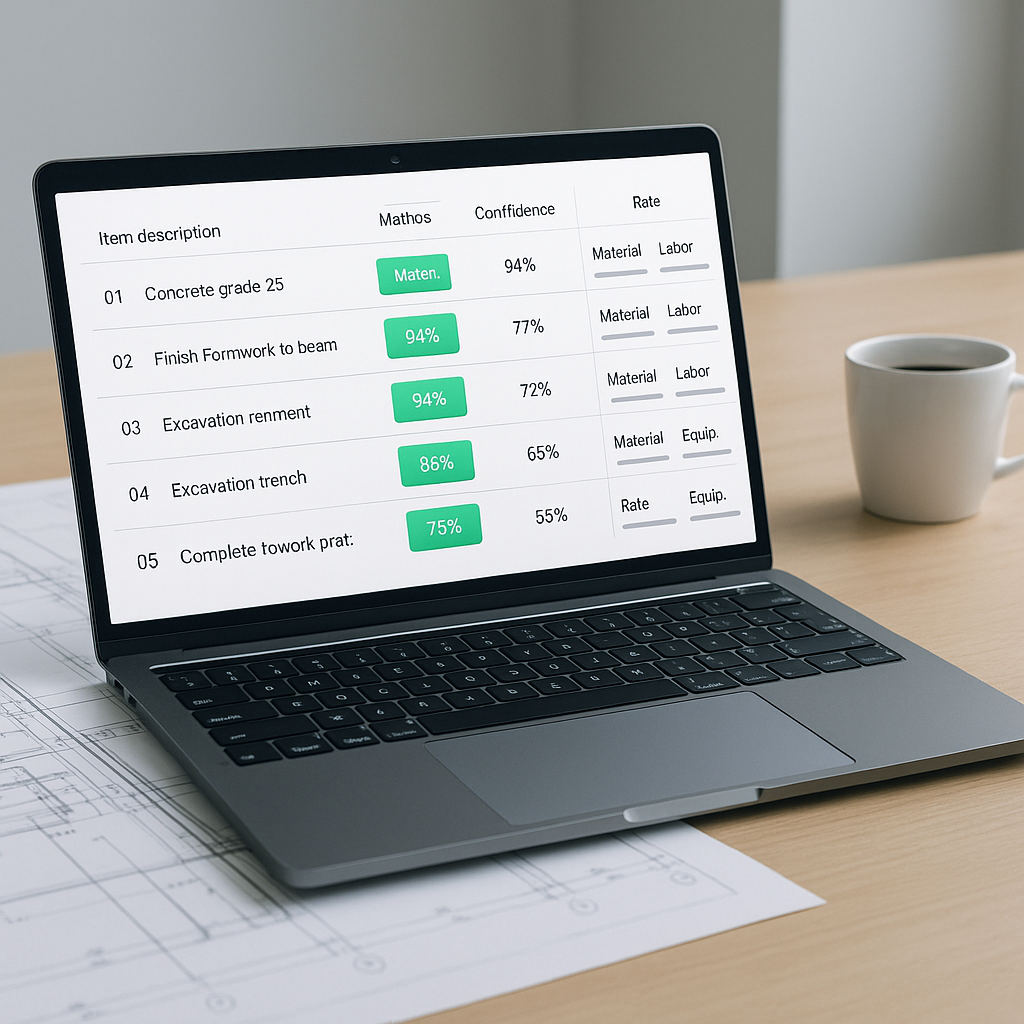
- Fallback Logic: If no exact match is found, the AI suggests the closest alternatives based on historical data, user-defined catalogs, or regional standards.
- Audit Trail: Each matched rate includes a detailed breakdown of materials, labor, and equipment, along with an inflation adjustment log. Users can review and override any suggested rates.
Why AI Rate Matching Works
AI-powered rate matching is effective because it leverages advanced algorithms to process large datasets quickly and accurately. Here are some key benefits:
- Speed: Semantic search algorithms match rates in seconds, significantly reducing the time required for manual lookup.
- Accuracy: By cross-referencing rates against compliance standards, AI minimizes human errors.
- Continuous Improvement: Many AI tools improve over time as they learn from user feedback and project data.
Common Objections (and Answers)
“AI won’t understand my custom rates.” While AI tools may not initially include custom rates, most allow users to upload their own catalogs. These custom rates are then integrated for future use.
“What about edge cases?” If the AI doesn’t find an exact match, it flags the item and provides alternative suggestions. Users retain full control over the final decision.
“Is it hard to learn?” AI tools are designed for ease of use, with intuitive interfaces and minimal training requirements.
FAQ
Q: How accurate is AI rate matching? A: Accuracy depends on the quality of the input data. Users should always review flagged items to ensure correctness.
Q: Can AI handle multi-market complexity? A: Yes, many AI tools support multiple standards, such as CPWD, CESMM3, and CSI MasterFormat.
Q: What if I need manual overrides? A: All matched rates come with an audit trail, allowing users to make manual adjustments as needed.
What to Watch For
- Inflation Adjustments: Always verify the AI’s inflation uplift suggestions, as they depend on the latest catalog updates.
- Scope Completeness: Ensure that the BOQ scope is comprehensive before relying on AI-generated matches.
- Feedback Loops: Provide detailed feedback after each project to improve the tool’s accuracy over time.
Conclusion
AI-powered rate matching offers a practical solution to the challenges of manual rate lookup in construction estimation. By automating BOQ parsing and catalog searches, these tools save time, reduce errors, and improve overall efficiency. If you’re looking to streamline your estimation process, consider exploring AI rate matching tools to enhance your workflow.