The Challenge of Manual Takeoffs
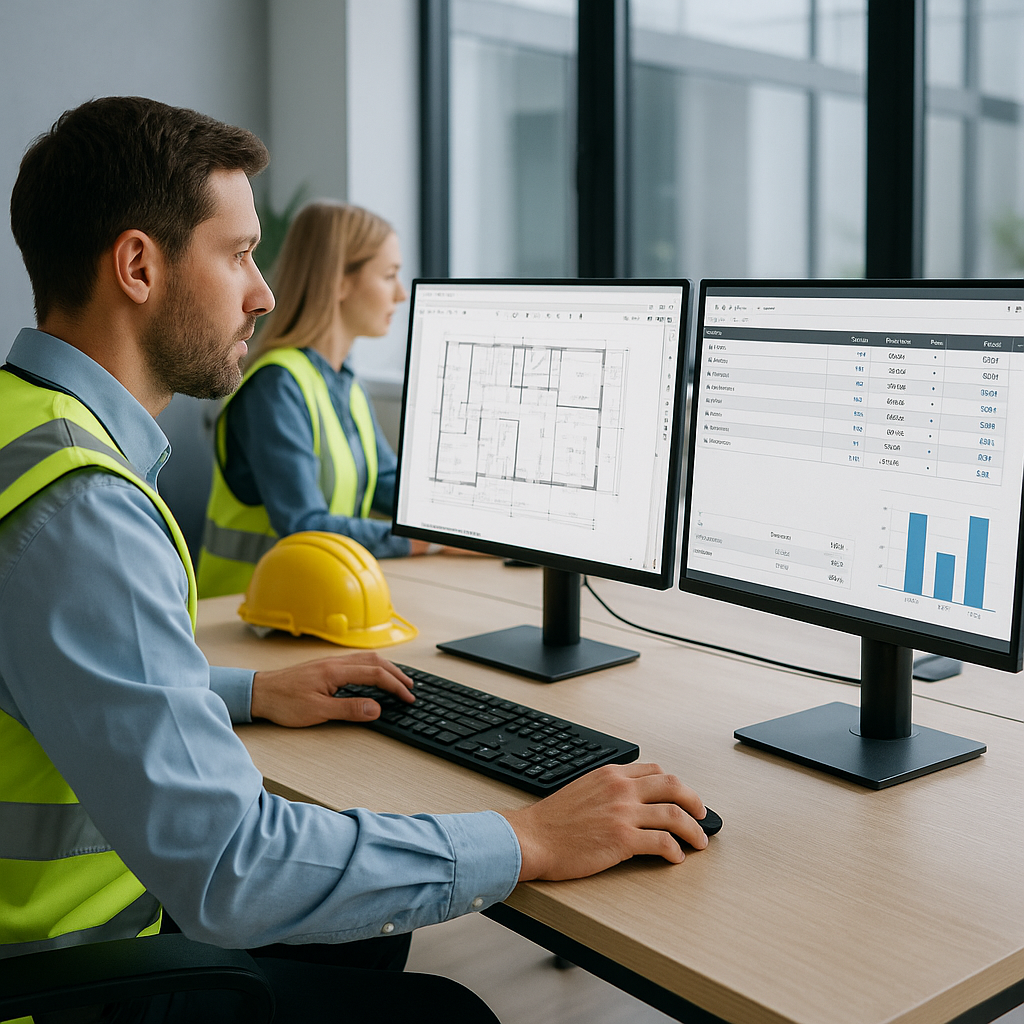
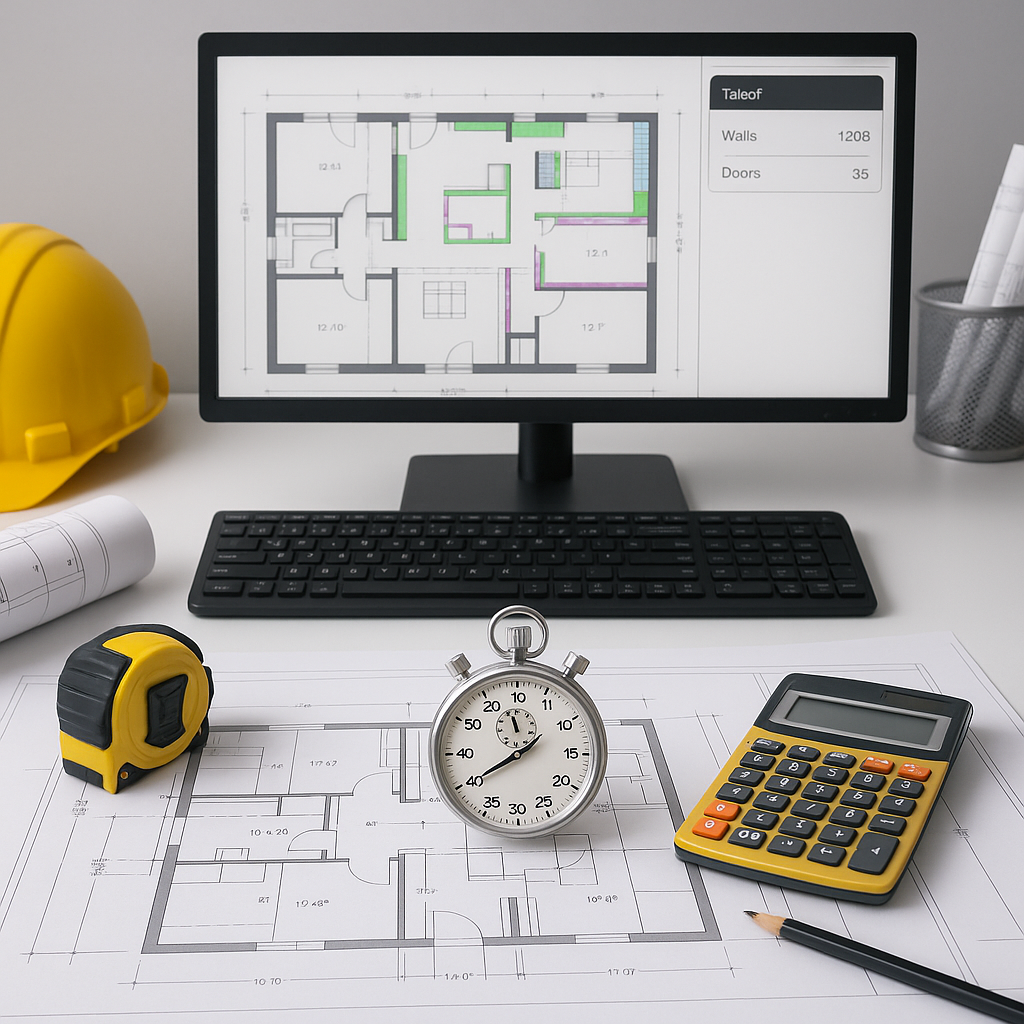
Drawing takeoffs are a time-intensive task for estimators. With PDF sets of drawings, scale rulers, and digital tools, the process involves tracing beams, calculating areas, and counting fixtures. This manual approach requires precision, and errors—like missing a column or miscalculating an area—can lead to inaccurate estimates and costly consequences.
Manual takeoffs are slow because they rely on human effort to measure, record, and cross-check every detail. However, advancements in AI-powered tools are transforming this process, offering a faster and more efficient alternative.
How AI Tools Streamline Takeoffs
AI-powered tools for takeoffs are designed to extract quantities directly from PDF drawings, automating much of the manual work. Here’s a general workflow for how these tools operate:
- Upload the PDFs: Users upload their drawing sets into the tool.
- AI Detection: The AI scans the drawings for measurable elements, such as walls, beams, or fixtures, identifying and categorizing them.
- Review and Adjust: The tool highlights areas where human review may be needed, allowing users to make corrections or adjustments.
- Export: Once reviewed, the quantities can be exported into formats compatible with estimating software or spreadsheets.
Illustrative example — A medium-sized project that might take dozens of hours for manual takeoffs could see significant time savings by automating the process with AI tools. This allows estimators to focus on higher-value tasks, such as refining strategies or negotiating with subcontractors.
Addressing Concerns About AI in Estimation
Some professionals may worry that AI lacks the nuanced understanding of construction that experienced estimators bring. While it’s true that AI doesn’t inherently understand specific project requirements—like a preference for certain materials or unique design considerations—it excels at handling repetitive, time-consuming tasks.
AI tools are not meant to replace human expertise but to complement it. They handle the "grunt work" of takeoffs, enabling estimators to focus on decision-making and quality control. Additionally, most AI tools include manual override features, allowing users to correct any misinterpretations or errors in the AI’s output.
Common Pitfalls and How to Avoid Them
Even with AI, there are potential challenges to be aware of:
- Poor Input Quality: Low-resolution or incomplete PDFs can lead to inaccurate results. Ensure that input files are clear and complete.
- Over-Reliance on AI: While AI tools are highly efficient, they are not infallible. Always review the outputs for accuracy.
- Lack of Training: Familiarizing your team with the tool’s features and workflows can maximize its effectiveness. A quick training session can help users understand how to review and adjust outputs.
FAQ
1. How accurate are AI-powered takeoffs compared to manual methods? AI tools can achieve high levels of accuracy, but the quality of the input data and human oversight are critical to ensuring reliable results.
2. Can AI tools integrate with existing software? Yes, many AI tools are designed to export data into formats compatible with popular software like Bluebeam, Procore, and Excel.
3. What are the benefits of adopting AI for takeoffs? AI-powered takeoffs save time, reduce errors, and allow estimators to focus on strategic tasks, potentially improving overall project efficiency and competitiveness.
Final Thoughts
AI-powered tools for preconstruction estimation are transforming the industry by automating the most time-consuming aspects of takeoffs. By adopting these tools, estimators can save time, reduce errors, and focus on higher-value activities that contribute to winning bids and growing their businesses. If you’re still relying solely on manual methods, it may be time to explore how AI can enhance your workflow.