Why Manual Takeoffs Impact Preconstruction Efficiency
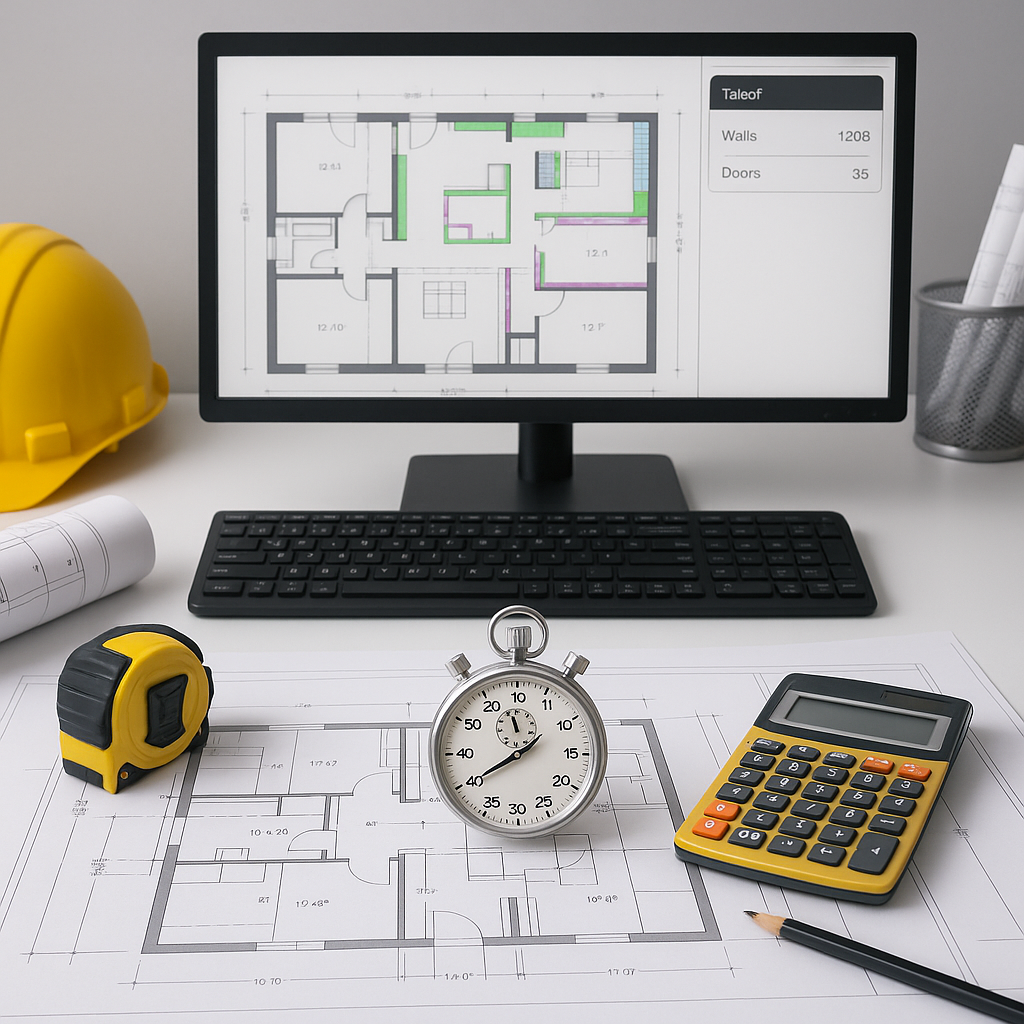
Manual takeoffs can be a significant bottleneck in preconstruction workflows. Estimators often spend hours tracing beams, wall lengths, and door counts from drawings, leaving limited time for pricing the Bill of Quantities (BOQ). This process is not only time-consuming but also prone to errors. Missing a column or miscalculating a window count can lead to underpriced bids or even rejection.
How AI Changes the Takeoff Process
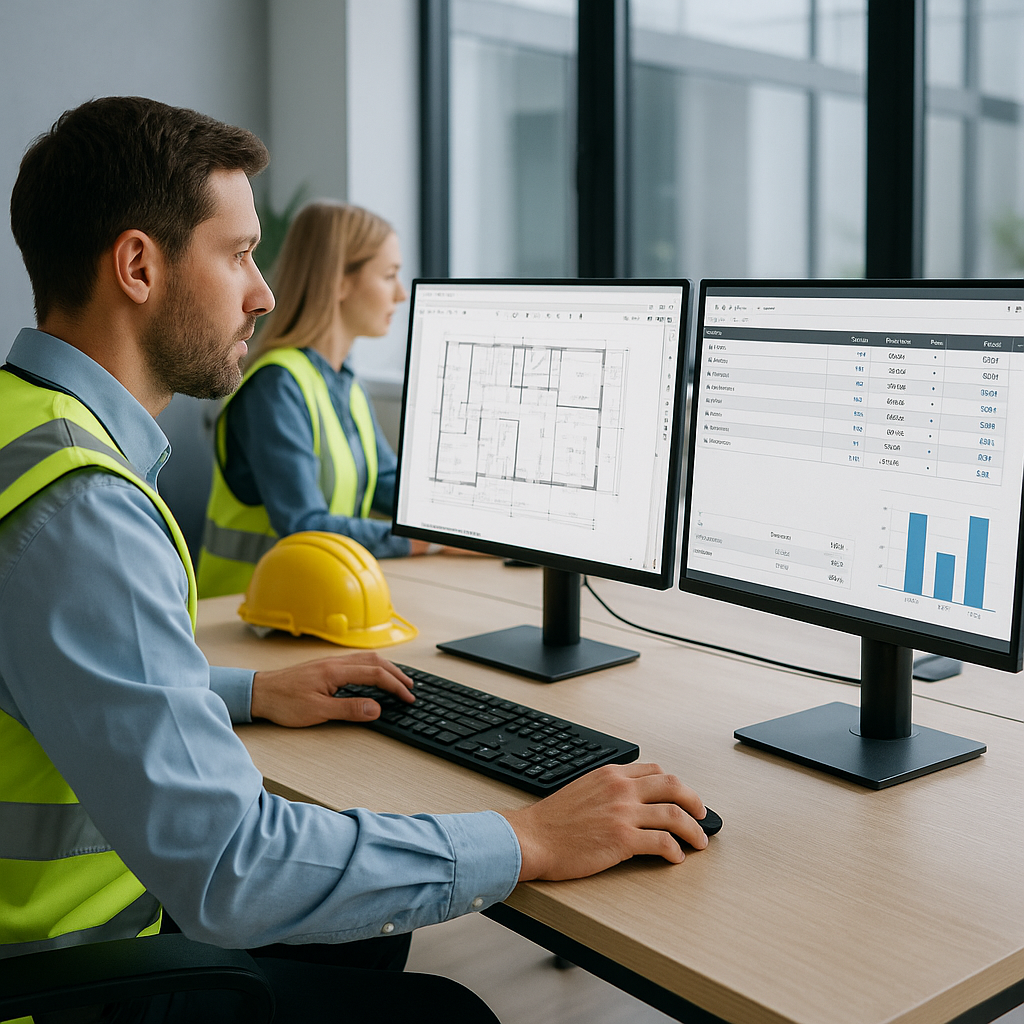
AI-powered tools address these inefficiencies by automating the extraction of quantities from drawings. Instead of manually tracing elements, estimators can upload PDF sets, and the AI extracts quantities such as room areas, wall lengths, and beam counts in a fraction of the time.
Illustrative example — If a manual takeoff process typically takes several hours, AI tools can reduce this to minutes, freeing up significant time for other critical tasks like refining rates, negotiating with subcontractors, or running what-if scenarios to protect margins.
What Makes AI Takeoffs Reliable?
While AI cannot replace the judgment of an experienced estimator, it complements their expertise. AI tools often include features to flag low-confidence lines or ambiguous elements, allowing estimators to manually review and override them. This ensures a balance between speed and accuracy.
Additionally, AI tools are scalable, handling projects of varying sizes—from small renovations to large infrastructure projects—while maintaining efficiency.
Practical Steps to Start with AI Takeoffs
- Test the Tool on a Small Project: Begin with a smaller BOQ to evaluate the tool’s accuracy and ease of use.
- Train Junior Staff: Equip junior estimators with AI tools to free up senior staff for more complex tasks.
- Integrate with Existing Software: Many AI tools export data directly into platforms like Procore or Excel, streamlining workflows.
- Monitor Output: Regularly review flagged quantities to ensure quality control and maintain accuracy.
Common Mistakes When Transitioning to AI
- Skipping Training: Proper training is essential to avoid mistakes, even if the tools are user-friendly.
- Ignoring Data Quality: Ensure that uploaded PDFs are clear and complete, as poor input quality can affect results.
- Overreliance: While AI speeds up takeoffs, human oversight remains crucial for reviewing flagged items and ensuring accuracy.
FAQ: AI Takeoffs
Q: How accurate are AI-powered takeoffs?
A: Accuracy depends on the quality of input data and the tool used. AI tools often include features to flag discrepancies for manual review.
Q: Can I use AI for specialized trades like HVAC or plumbing?
A: Yes, many AI tools include modules for specialized trades such as HVAC, electrical, and plumbing.
Q: Do AI tools work for smaller projects?
A: Yes, AI tools are scalable and can be cost-effective for projects of any size.
Q: What’s the ROI for AI estimation tools?
A: While ROI varies, AI tools can save significant time and reduce errors, leading to cost savings over multiple projects.
Conclusion
AI-powered takeoff tools offer a transformative way to improve efficiency and accuracy in preconstruction estimation. By automating repetitive tasks, these tools free up estimators to focus on higher-value activities, ultimately enhancing project outcomes. If manual takeoffs are slowing your team down, exploring AI solutions could be a worthwhile investment.