The Pain of Manual Rate Lookups
If you’ve ever flipped through a 2,000-page RSMeans book or browsed a CPWD DSR PDF trying to find the right rate, you know how frustrating it is. Every estimator has been there—searching for the perfect match for labor costs, material rates, or equipment charges, only to end up with a guess or a questionable rate.
Why does this matter? Because rate mismatches aren’t just inconvenient—they can be costly. A wrong rate can impact your bid or reduce your margin. Worse, manual lookup is slow and time-consuming, taking up valuable hours that could be spent on other critical tasks.
AI Rate Matching: How It Works
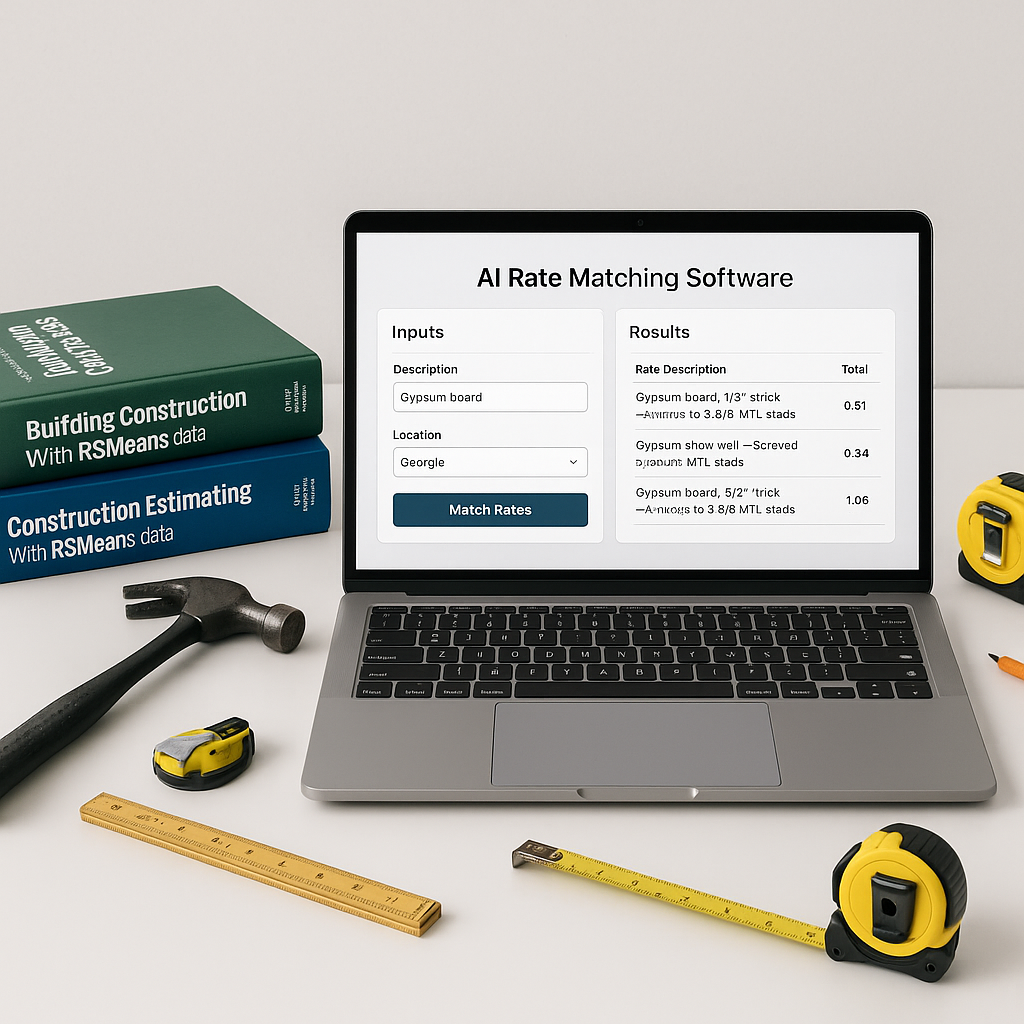
AI-powered rate matching changes the game. At its core, it’s a semantic search engine for construction rates. Instead of flipping pages or scrolling PDFs, you type what you need. For example: “Labor rate for installing reinforced concrete beams.” In seconds, the system scans thousands of SOR items across catalogs like CPWD, RSMeans, or AECOM Middle East and returns the most relevant matches.
Here’s what makes it smart:
-
Contextual Matching: AI understands the nuances of item descriptions. It doesn’t just match keywords; it looks at the context. For instance, it knows the difference between “installation labor” and “demolition labor.”
-
Custom Catalog Integration: Got your own rates? Upload them. The AI incorporates them into its database so future searches include your specific costs.
-
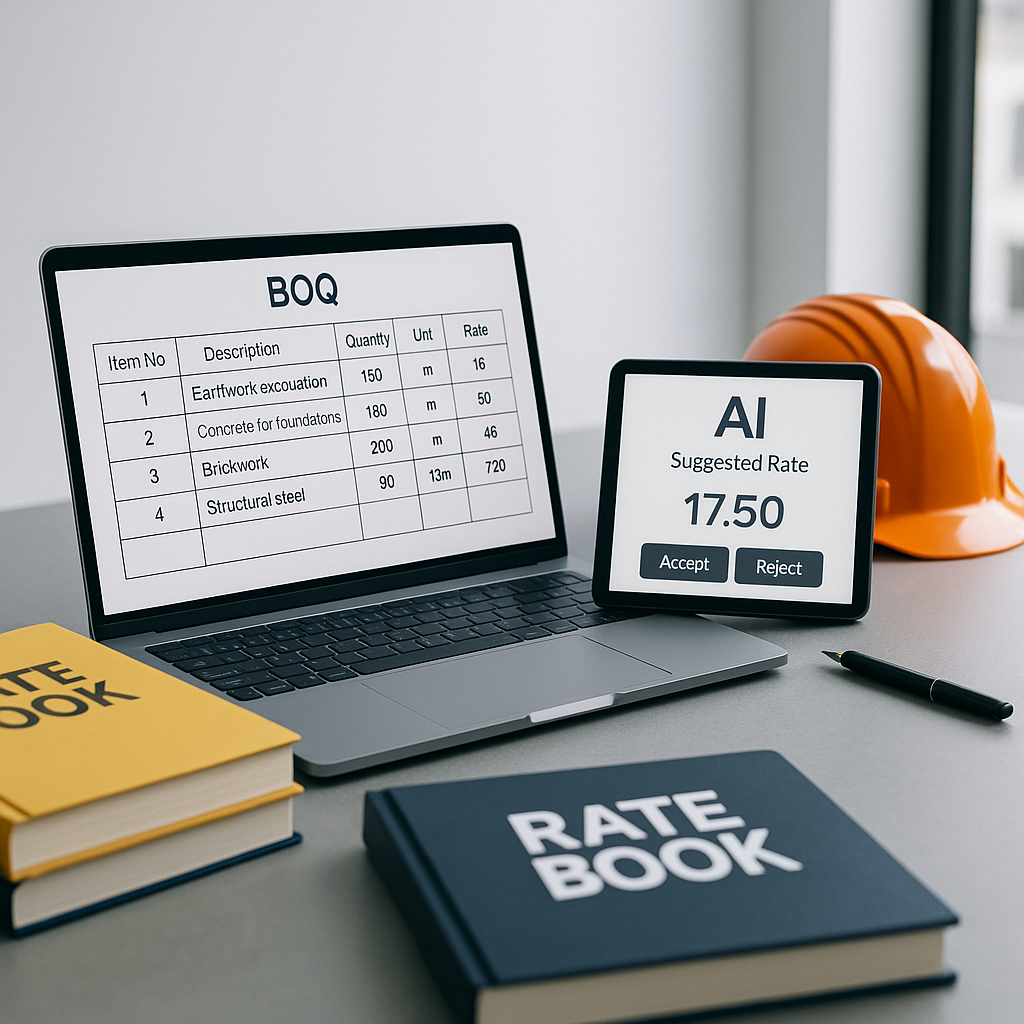
Feedback Loops: The more you use it, the better it gets. Estimators who reject or accept matches refine the system’s accuracy over time.
Why It Matters
The obvious benefit is speed—what used to take hours now takes seconds. But it’s not just about saving time. Accurate rate matching builds trust. When you submit an estimate backed by reliable rates, clients and subcontractors are less likely to question your numbers.
Illustrative example — Imagine a large infrastructure project requiring hundreds of rate lookups. By automating this process, a team could save significant time that can be redirected toward refining bids or negotiating better subcontractor terms.
Common Objections
You might be thinking: “AI can’t understand my specific needs. It’s just a tool.” True—but that’s the point. AI doesn’t replace your expertise; it amplifies it. You’re still the one making judgment calls and tweaking the final numbers. The AI just handles the repetitive tasks.
Another question: “What if my rates are unique?” That’s where custom catalog integration comes in. Upload your proprietary rates, and they’re searchable alongside standard ones. It’s like having your spreadsheets on steroids.
What to Watch For
Using AI doesn’t mean you can skip human oversight. Here are a few things to keep in mind:
-
Input Quality Matters: Garbage in, garbage out. If your catalogs are outdated or inconsistent, even the smartest AI will struggle.
-
Double-Check Edge Cases: AI might miss niche items—like custom finishes or rare materials. Always review low-confidence matches.
-
Start Small: Test AI on smaller projects before scaling up. This lets you calibrate its accuracy and build trust.
FAQ
Q: How accurate are AI rate matches?
A: AI tools are designed to be highly accurate, improving over time with feedback loops. However, human review is still essential for edge cases.
Q: Can I use AI with existing software?
A: Yes. Many tools integrate with platforms like Excel, Bluebeam, and Procore, allowing you to export matches directly into your workflows.
Q: Is it hard to learn?
A: Not at all. Most users find AI tools intuitive and easy to use within a short period.
Conclusion
Manual rate lookups can be a bottleneck in construction estimation, but AI-powered tools offer a faster, more accurate alternative. By automating repetitive tasks, these tools allow estimators to focus on higher-value activities, improving both efficiency and trust in the process.