Manual Takeoffs: A Time-Consuming Process
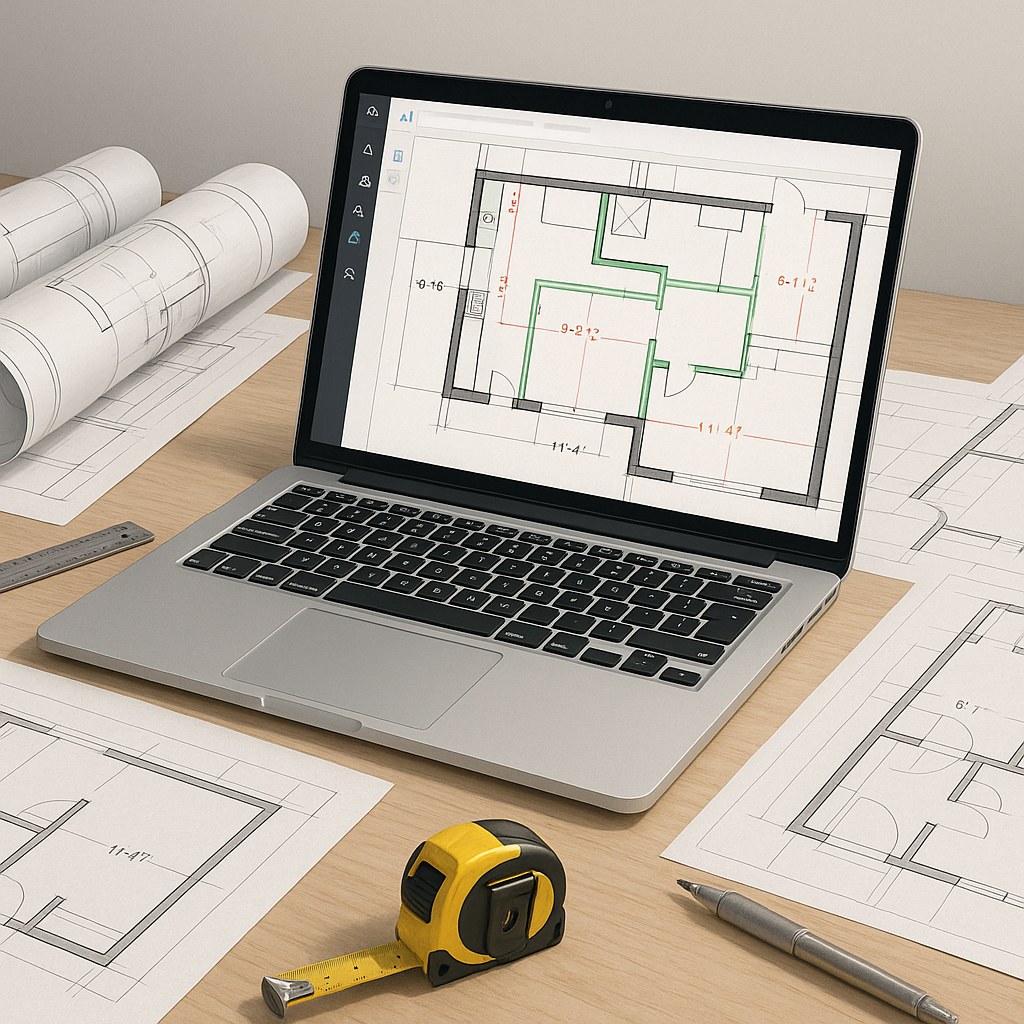
Every estimator is familiar with the effort required for manual takeoffs. You sit down with a stack of PDF drawings, a highlighter, and measuring software. Hours later, you’ve traced every room, wall, and beam just to get quantities.
This process is not only time-consuming but also prone to human error. Missing a wall length or misreading a scale can lead to underbidding, overbidding, or losing margins entirely.
How AI Takeoffs Work
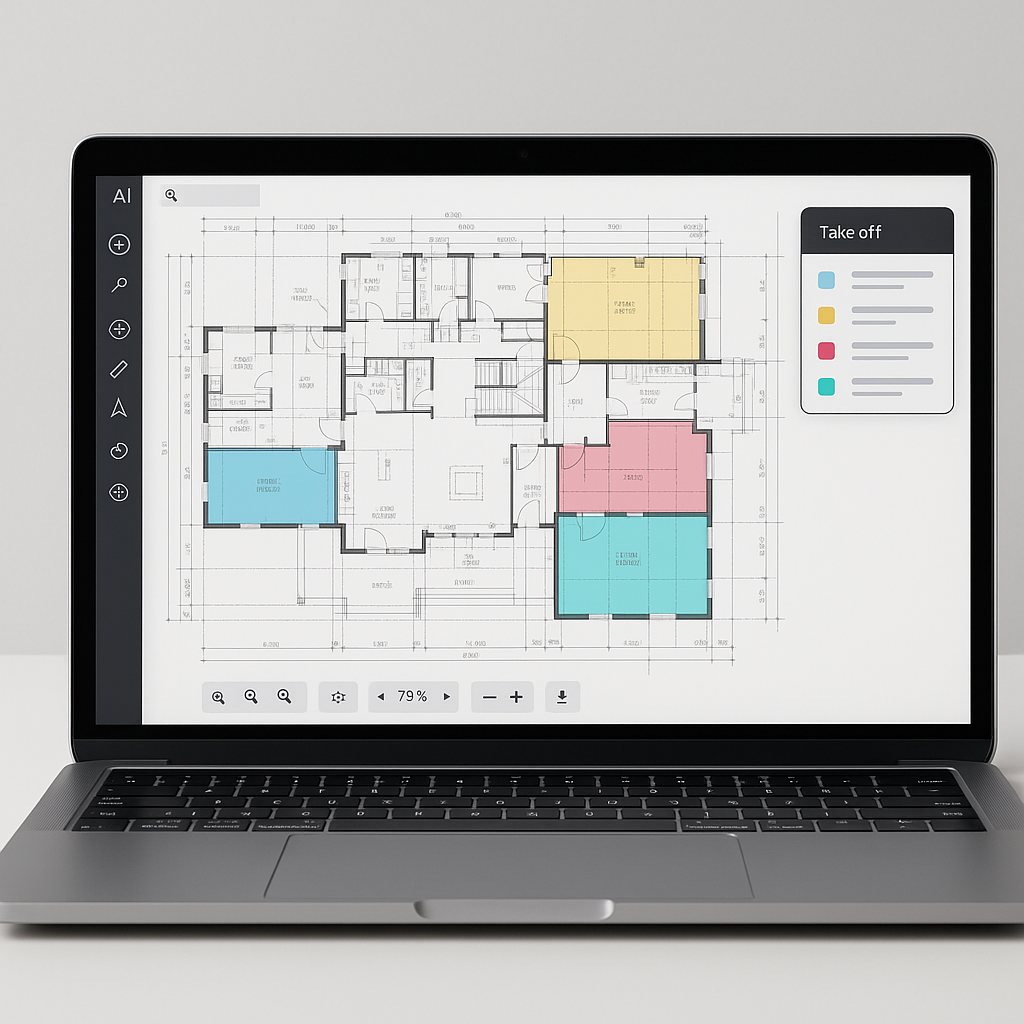
AI-powered tools transform the takeoff process by automating the extraction of quantities from drawings. Instead of manually tracing drawings, AI scans the PDFs and identifies quantities, scales, and revisions.
Here’s a general workflow:
- Upload the drawings: Most formats, including PDF and DWG, are supported.
- AI extracts quantities: Room areas, wall lengths, and door/window counts are identified.
- Review flagged items: The system highlights areas requiring manual review.
- Export: A clean quantity takeoff (QTO) is generated, formatted to your preferred standard (e.g., NRM2, CPWD DSR, CESMM3).
This process significantly reduces the time required for takeoffs compared to manual methods.
Benefits Beyond Time Savings
While saving time is a major advantage, AI-powered takeoffs offer additional benefits:
- Increased bidding capacity: Faster takeoffs allow teams to handle more bids within tight deadlines.
- Reduced errors: Automated processes minimize the risk of human error in measurements.
- Scalability: The workflow adapts to projects of varying sizes, from small renovations to large infrastructure projects.
Addressing Concerns About AI in Estimation
A common concern is that AI lacks the nuanced understanding of an experienced estimator. While this is true to some extent, AI is designed to complement, not replace, human expertise.
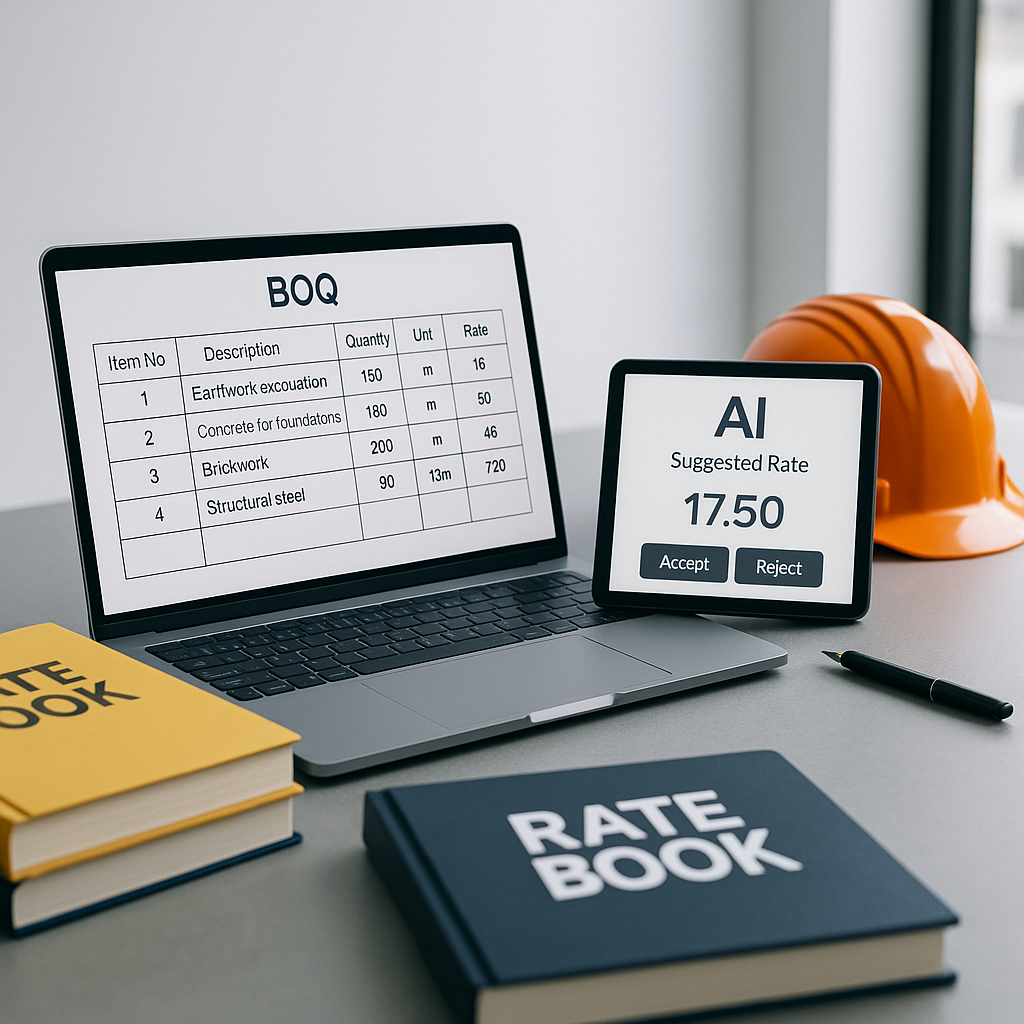
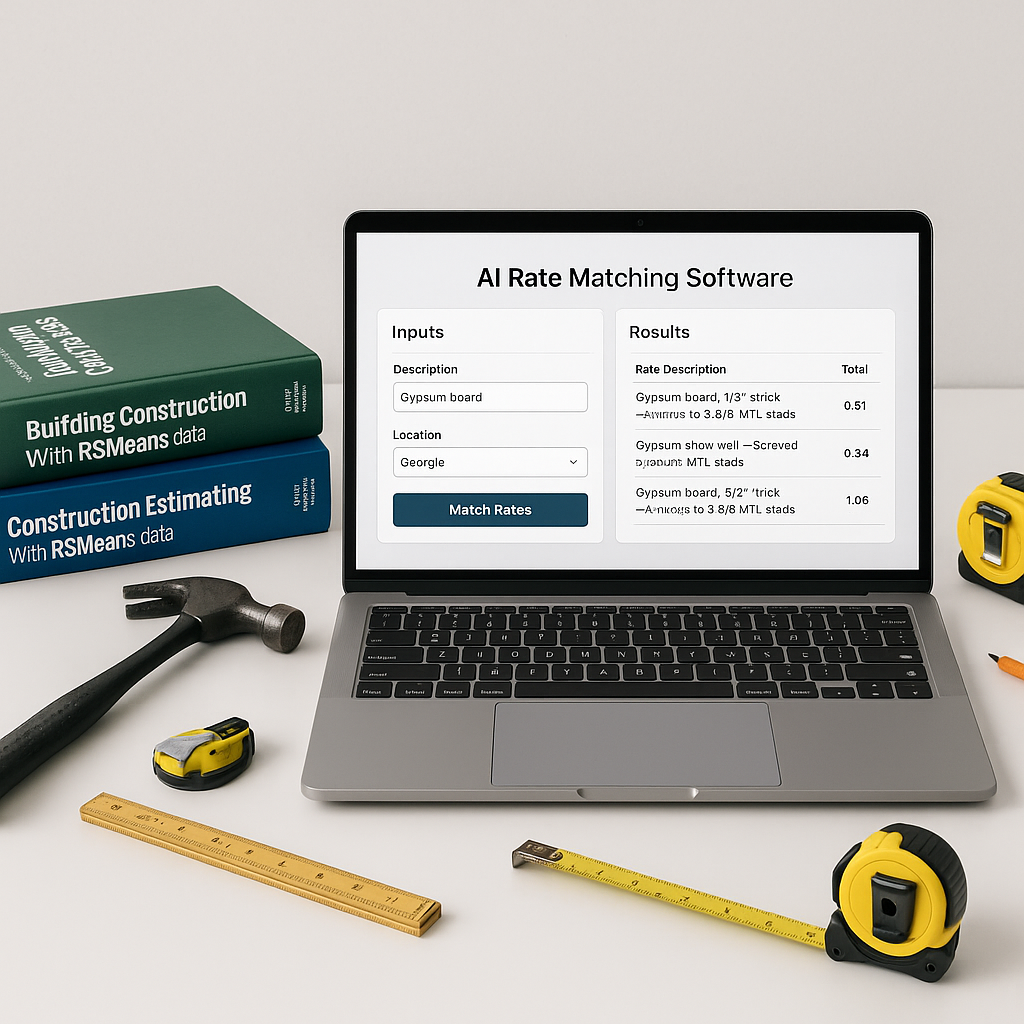
AI handles repetitive tasks like takeoffs and rate matching, freeing up estimators to focus on high-value activities such as judgment calls, negotiations, and strategic decisions. Think of AI as an assistant that amplifies your efficiency.
Considerations When Using AI Takeoff Tools
AI takeoffs are not without limitations. Here are some factors to keep in mind:
- Input quality matters: Poorly labeled or blurry drawings can affect accuracy. Always review flagged items.
- Human oversight is essential: While AI speeds up the process, critical measurements should still be double-checked.
- Training improves performance: AI tools learn from feedback. The more projects you run, the more accurate the system becomes over time.
FAQ
Q: How accurate are AI-generated takeoffs?
AI tools are generally accurate but require human oversight for edge cases and critical measurements.
Q: Can AI handle drawing revisions?
Yes, many AI tools can compare revisions and highlight changes automatically.
Q: Is AI suitable for small contractors?
Yes, AI tools scale to meet the needs of both small and large contractors.
Conclusion
If you’re still relying on manual takeoffs, it may be time to explore AI-powered tools. These tools streamline the estimation process, saving time and reducing errors, allowing you to focus on strategic tasks that drive project success.