Manual Takeoffs Are Time-Consuming and Error-Prone
If you've ever spent hours poring over drawings with a scale ruler, you know how tedious manual takeoffs can be. It's not just time-intensive—it’s also prone to errors. Missing a single doorframe or wall segment can throw off your entire estimate, which is critical for large-scale projects.
Manual takeoffs are becoming outdated. They’re akin to using a flip phone in the age of smartphones. But what’s the alternative? AI-powered tools are transforming the process, offering faster and more accurate quantity takeoffs. Let’s explore how they work.
How AI-Powered Takeoffs Work
Think of AI as an assistant that handles repetitive tasks with precision. The process typically involves:
- Uploading Your PDF or Drawing Set: Whether it’s a single-page floorplan or a multi-sheet drawing set, the AI processes it efficiently.
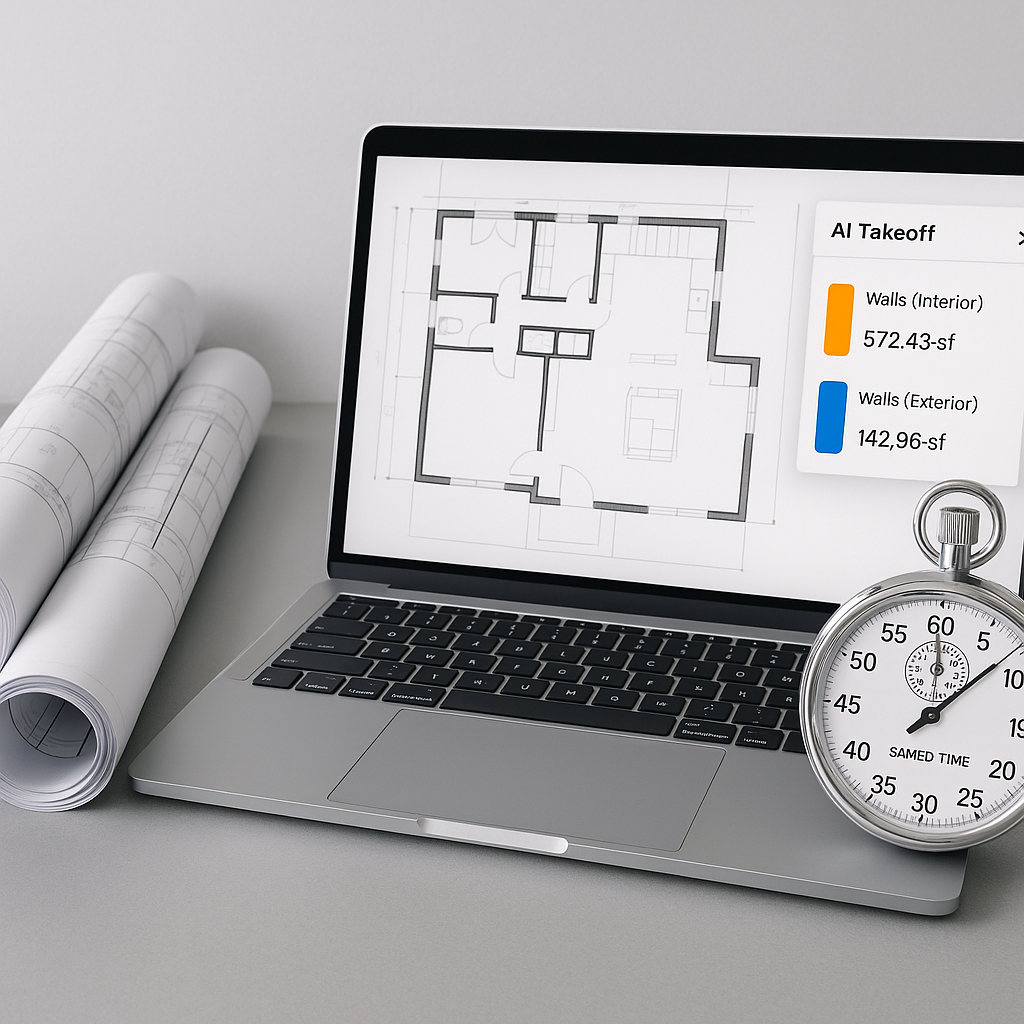
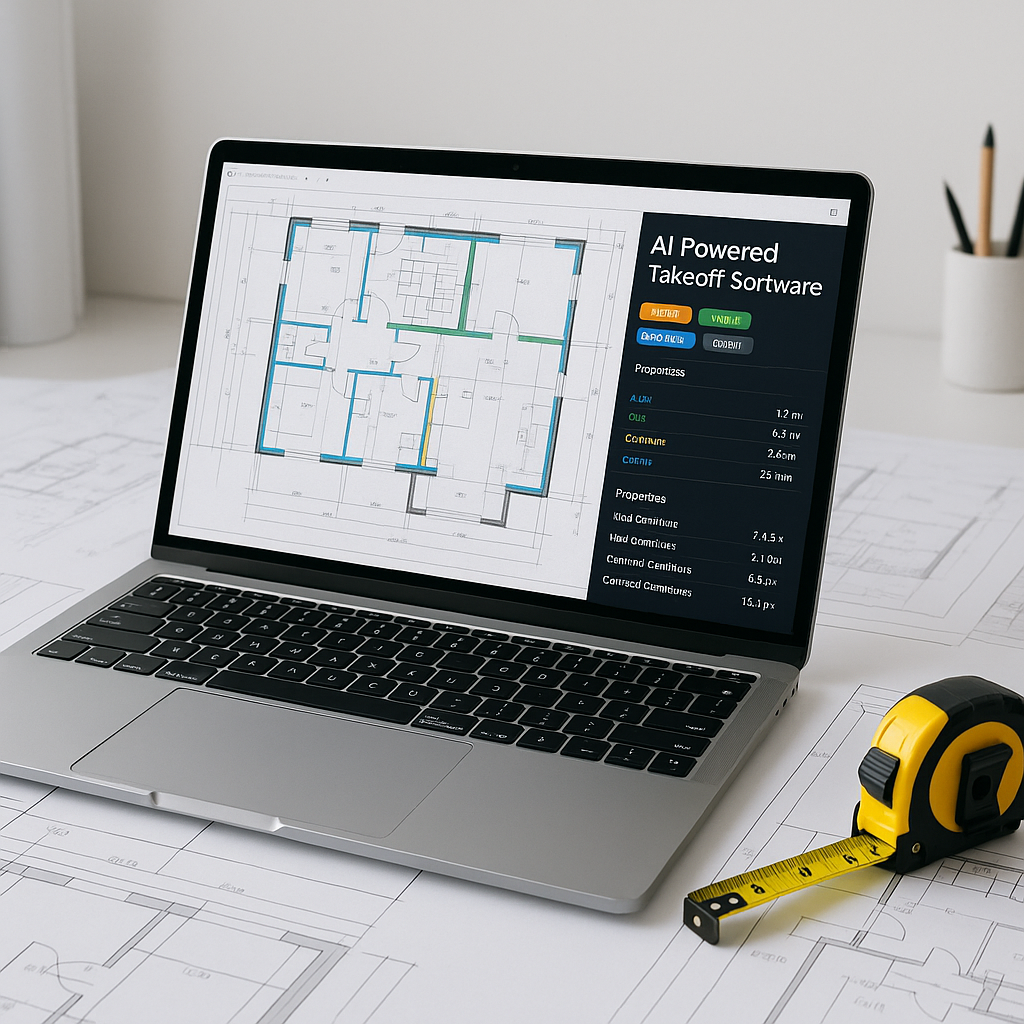
- AI Reads the Drawings: Advanced AI tools use computer vision to identify room areas, wall lengths, door counts, and other elements from technical drawings. They can even recognize symbols for windows or electrical outlets.
- Generating Quantities: The system produces a quantity takeoff (QTO) with dimensions like linear feet, square footage, and counts. It may also flag areas requiring human review.
This approach reduces the time spent on manual tasks while maintaining accuracy.
Benefits of AI-Powered Estimation
The advantages of using AI tools extend beyond just saving time:
- Bid More Projects: By automating repetitive tasks, your team can focus on preparing more bids without additional resources.
- Reduce Errors: AI tools deliver consistent results, minimizing the risk of costly mistakes.
- Focus on Strategy: Freeing up your team from manual work allows them to concentrate on high-value tasks like optimizing bid margins or building subcontractor relationships.
AI tools don’t replace your expertise—they enhance it. You remain in control of the final review, markup, and strategic decisions.
Addressing Common Concerns
Some contractors worry that AI can’t think like an estimator. While true, that’s not the purpose of these tools. AI provides raw data, leaving judgment calls and strategic adjustments to human estimators. For example, you decide whether to apply a waste factor or adjust for regional labor costs.
Accuracy is another concern. While no system is perfect, many AI tools include features like flagged low-confidence areas for manual review. This ensures you can verify and adjust as needed without starting from scratch.
Best Practices for Using AI Takeoff Tools
- Ensure Clean Inputs: AI relies on clear and complete drawings. Blurry or incomplete PDFs may require additional review.
- Review Flagged Areas: Always double-check sections flagged as low-confidence by the AI.
- Allow for a Learning Curve: While most tools are user-friendly, your team may need some time to get fully comfortable with the software.
FAQ: AI-Powered Estimation Tools
Q: Are AI tools expensive?
Costs vary, but many platforms are designed to be affordable compared to hiring additional staff. The return on investment often comes from the time saved and the ability to bid on more projects.
Q: Can AI handle complex projects?
Yes. AI tools are scalable and can manage projects of varying sizes and complexities.
Q: Does AI eliminate the need for human estimators?
No. AI complements human expertise by automating repetitive tasks, allowing estimators to focus on strategic and decision-making aspects.
Conclusion
If you’re still relying on manual takeoffs, you might be missing out on significant efficiency gains. AI-powered tools can streamline your estimation process, reduce errors, and free up your team for higher-value tasks. Consider exploring these tools to stay competitive in today’s fast-paced construction industry.