The Challenge of Manual Takeoffs
Manual drawing takeoffs can be a time-consuming and error-prone process. They require significant focus and effort, often diverting resources from other critical tasks like reviewing subcontractor quotes or refining bid strategies.
How Vision AI Automates Drawing Takeoffs
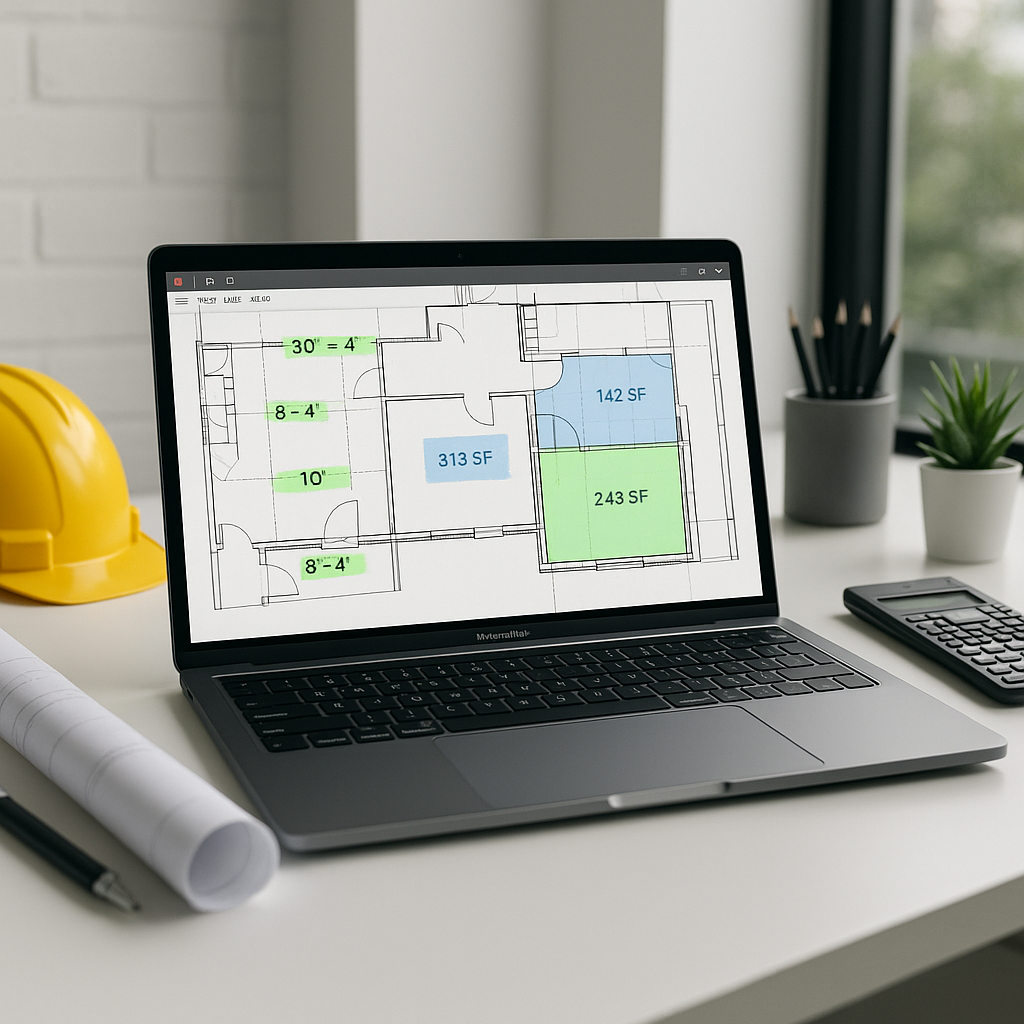
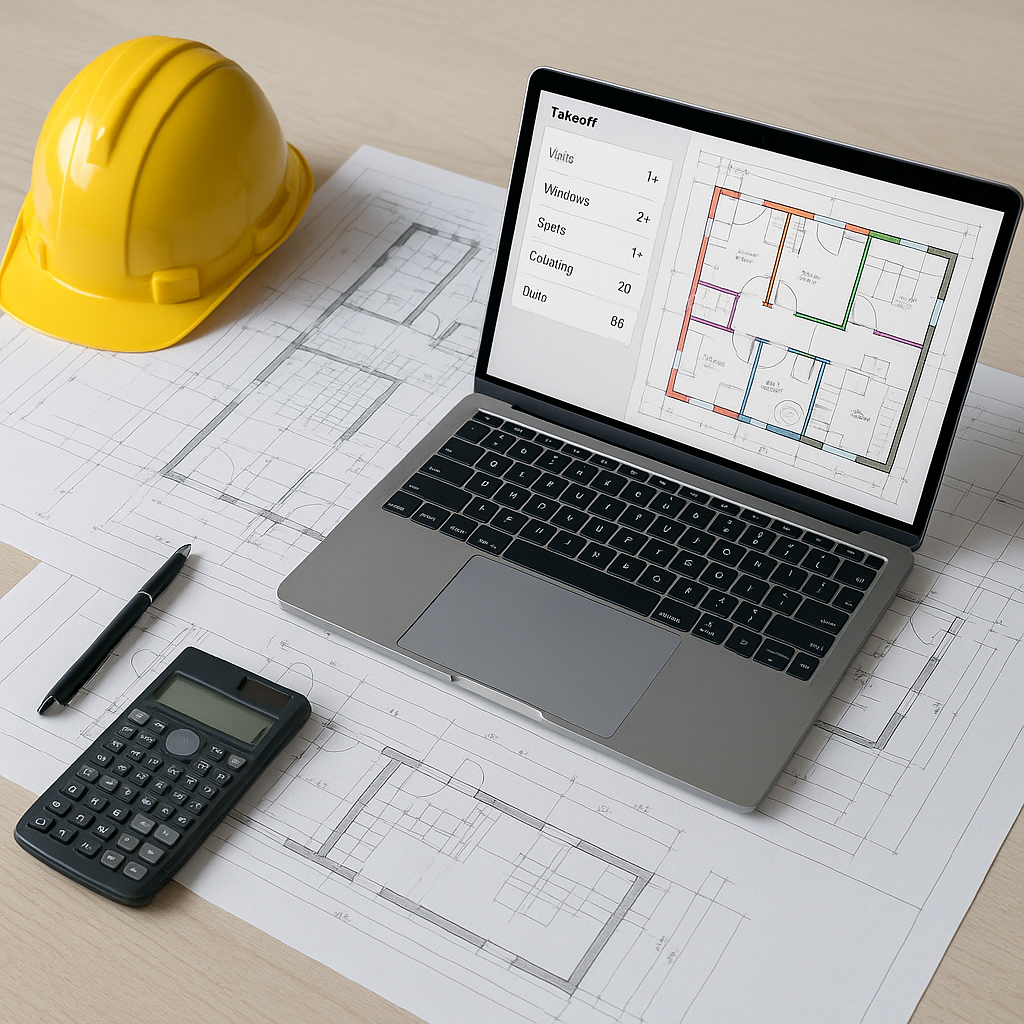
AI-powered tools like Vision AI streamline the takeoff process by analyzing drawings and extracting quantities automatically. Instead of manually measuring areas, lengths, or counts, these tools use advanced algorithms to handle the task efficiently.
For example:
- Concrete slabs: AI identifies dimensions and calculates total volume.
- Wall lengths: It traces lines and accounts for openings like doors and windows.
- Floor areas: Calibration is automated, reducing manual effort.
These tools also flag low-confidence measurements for review, ensuring that users can verify and adjust as needed. While the AI handles repetitive tasks, human oversight ensures accuracy and context.
Why Accuracy Matters More Than Speed
While speed is a significant advantage, accuracy is critical in preconstruction estimation. AI tools reduce discrepancies by automating calculations, but their effectiveness depends on the quality of input data. Human oversight remains essential to address unique project details or correct potential errors.
For instance, if the AI misses a custom feature like recessed lighting in a ceiling grid, users can manually adjust the takeoff. This collaborative approach combines the efficiency of AI with the expertise of human estimators.
Common Questions About AI-Powered Takeoffs
Q: Can AI handle complex drawings like MEP layouts?
Yes. Many AI tools are designed to parse detailed drawing sets, including specialized layouts for HVAC, plumbing, and electrical systems. They flag uncertain elements for manual review.
Q: Does it integrate with my existing tools?
Most AI tools integrate with popular software like Bluebeam, Procore, and Excel, allowing seamless export of takeoffs into existing workflows.
Q: How accurate are AI-generated takeoffs?
AI-generated takeoffs are highly accurate but still require human oversight. Many tools include features for manual adjustments to ensure precision.
Q: Is it worth the cost for smaller contractors?
AI tools are scalable and can be adapted to projects of various sizes. Subscription models often make them accessible to smaller firms.
What to Watch For
- Bad input data: Ensure your drawings are high-quality PDFs to maximize AI effectiveness.
- Over-reliance on AI: Always review flagged items and verify critical measurements.
- Learning curve: Allocate time for your team to adapt to the new tools.
- Custom details: Train the AI to recognize unique project requirements, such as specific materials or uncommon layouts.
The Bottom Line
AI-powered tools like Vision AI are designed to assist, not replace, estimators. By automating repetitive tasks, they free up time for strategic decision-making and detailed project planning. If manual takeoffs are slowing you down, exploring AI solutions could be a game-changer for your workflow.