AI-Powered Preconstruction Estimation: How Rate Matching Works
If you’re an estimator, you know the drill: hours flipping through rate books, cross-referencing PDFs, and searching for updated material costs. It’s a tedious and repetitive process that consumes valuable time. However, advancements in AI-powered rate matching tools are transforming this aspect of preconstruction estimation.
The Problem: Manual Rate Lookup is a Time Sink
Rate lookups have been part of the estimator's job for decades. Whether you're pulling labor rates from standard references, flipping through catalogs, or checking local supplier quotes, it's a time-intensive process. Beyond just finding the rate, you also have to:
- Verify if the rate matches your project scope (e.g., does the standard rate for “reinforced concrete” include rebar?)
- Adjust for inflation or regional pricing differences
- Document your source for audit purposes
Skipping any of these steps can lead to inaccurate estimates, which may result in underbidding or overbidding, both of which can negatively impact project margins.
The AI Solution: Smarter, Faster, Context-Aware Rate Matching
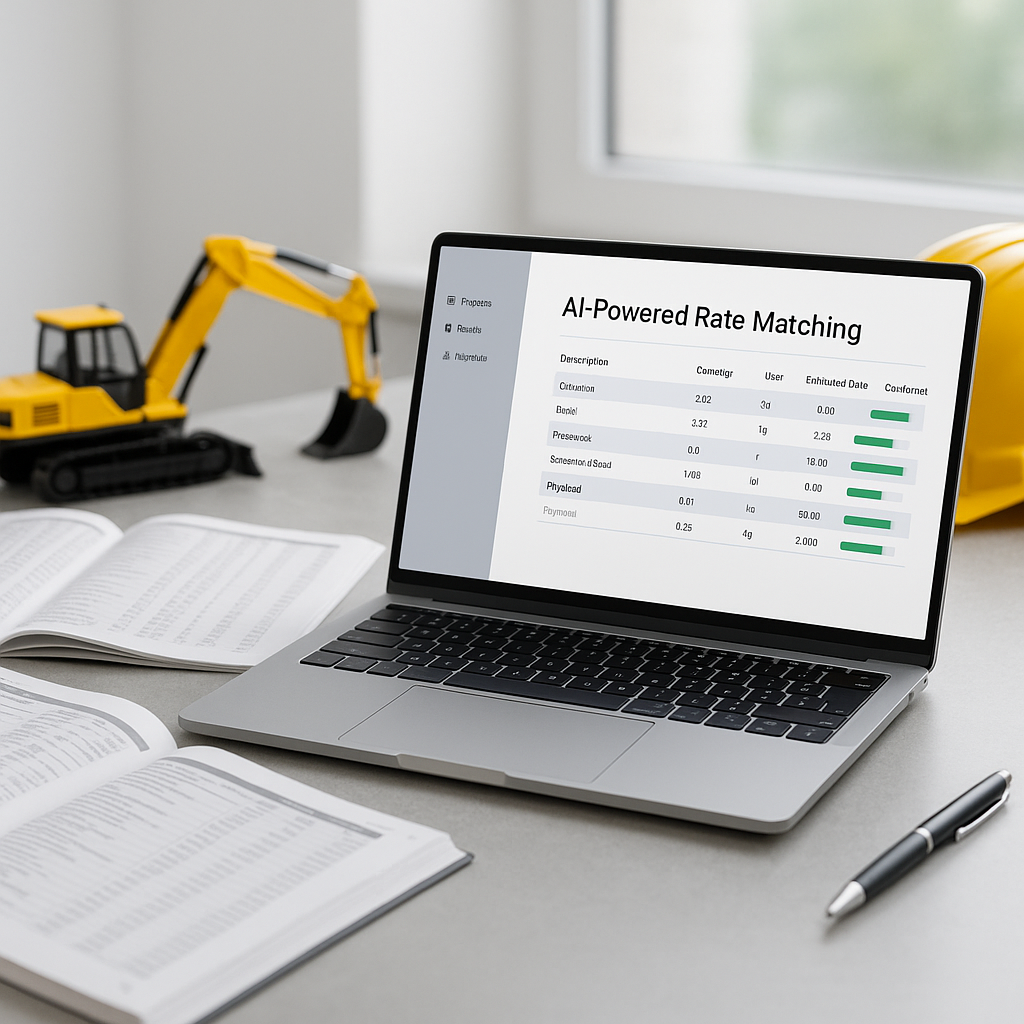
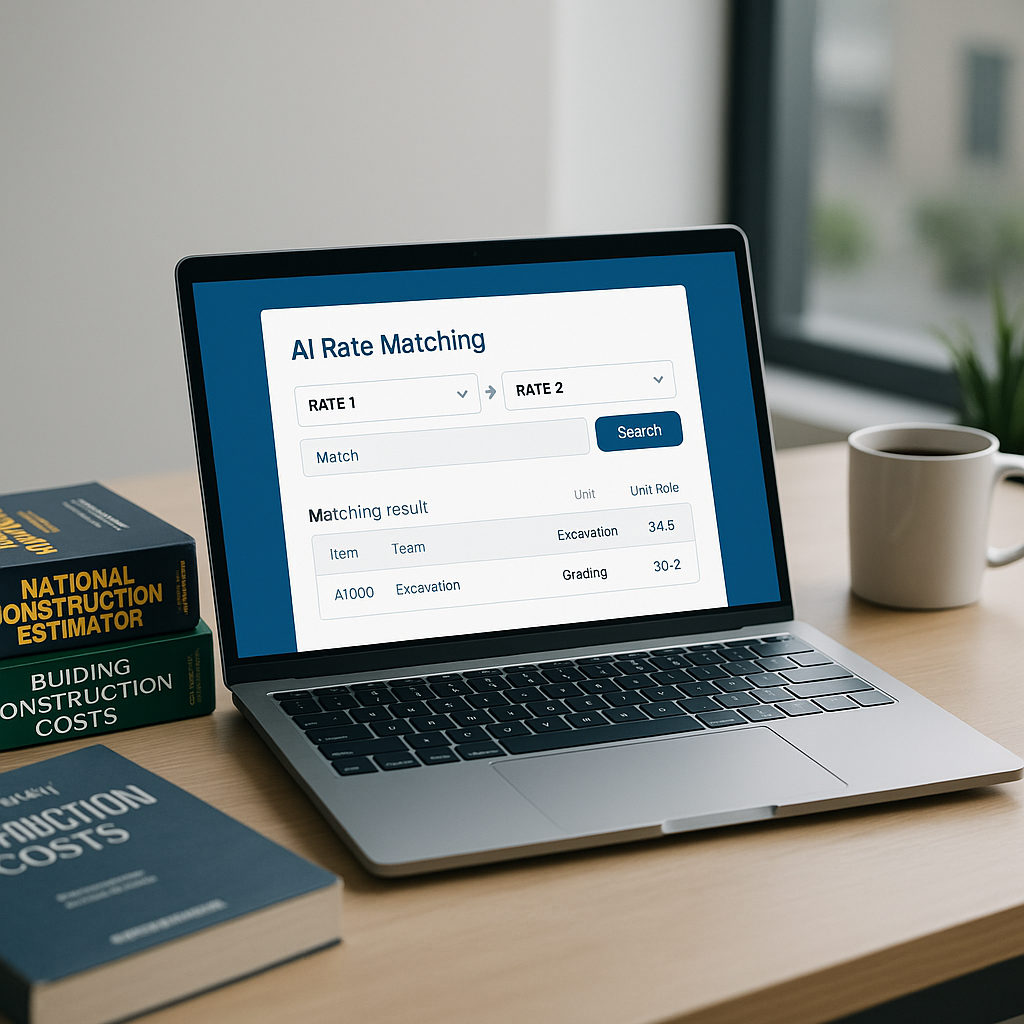
AI-powered rate matching tools streamline the process by acting as a specialized search engine for construction estimators. Instead of manually flipping through pages or scanning spreadsheets, you input your requirements, and the AI delivers a ranked list of options.
How It Works
- Enter the item description: Provide a detailed description of the material or task you’re estimating.
- Get matches: The AI searches across multiple data sources, including standard rate books and user-uploaded custom catalogs.
- Review contextual details: Each rate comes with metadata such as material breakdowns, regional adjustments, and inflation factors.
- Select and apply: Choose the most relevant rate, which can then be applied directly to your estimate.
This eliminates the need for manual searches and calculations, significantly speeding up the estimation process.
Why It Works: Semantic Search and Self-Learning
The effectiveness of AI rate matching lies in its ability to understand context. Unlike traditional keyword searches, which may return irrelevant results, AI tools use semantic search to interpret the meaning behind your query.
For example, if you search for “install gypsum board”:
- A basic search might return every rate containing the words “gypsum” or “board.”
- Semantic search considers related terms (e.g., “drywall installation”) and prioritizes results based on relevance, scope, and location.
Additionally, these systems improve over time. With each project, the AI learns from user feedback, refining its accuracy and relevance.
How to Get the Most Out of AI Rate Matching
To maximize the benefits of AI-powered rate matching, consider the following tips:
- Upload Custom Catalogs: If your company uses specific materials or negotiated vendor pricing, upload these rates into the system. This ensures the AI prioritizes your data.
- Leverage Inflation Adjustments: Many AI tools include built-in inflation calculators. Use these to apply accurate cost adjustments automatically.
- Review Results: While AI tools are highly efficient, always review flagged or low-confidence matches to ensure accuracy.
- Integrate with Your Workflow: Look for tools that integrate with your existing software, such as Excel or project management platforms, to streamline your workflow.
Common Objections to AI Rate Matching
“Won’t the AI miss the nuances of my project?”
AI tools are designed to handle repetitive tasks, not replace your expertise. You still make the final decisions, ensuring the estimate aligns with project-specific requirements.
“What if my rates are highly customized?”
Most AI platforms allow you to upload custom rate catalogs. Once uploaded, these rates are treated as a priority source, ensuring your estimates reflect your actual costs.
“Isn’t this just for large contractors?”
AI rate matching is scalable and benefits teams of all sizes. Smaller teams, in particular, often see significant time savings as they juggle multiple responsibilities.
What to Watch For
While AI rate matching offers numerous advantages, it’s important to keep the following in mind:
- Data Quality: The AI is only as good as the data it uses. Ensure your catalogs are accurate and up-to-date.
- Training Period: AI tools improve with use. Be patient and provide consistent feedback to enhance accuracy over time.
- Review Low-Confidence Results: Always double-check flagged results to avoid potential errors.
FAQ
Q: How accurate are AI rate matches compared to manual lookup?
AI tools are highly accurate but still require human oversight for nuanced decisions and edge cases.
Q: Can I use AI rate matching with existing software?
Yes. Many AI tools integrate with platforms like Excel and project management software, allowing seamless data transfer.
Q: How long does it take to train the AI?
Most users notice significant improvements in accuracy after a few projects, as the AI learns from feedback.
Conclusion
AI-powered rate matching tools simplify the estimation process by automating rate lookups and improving efficiency. By reducing the time spent on repetitive tasks, these tools allow estimators to focus on strategic decision-making and building competitive bids. If you’re still relying on manual methods, consider exploring AI solutions to enhance your workflow.