AI Rate Matching: A Game Changer for Estimators
If you've ever spent hours hunting for the right rate in a 2,000-page PDF, you're not alone. Rate lookups are a universal pain point for construction estimators. Whether you're pricing a $1B rail project or a small office fit-out, matching rates quickly and accurately is non-negotiable. AI-powered tools are finally offering a fix.
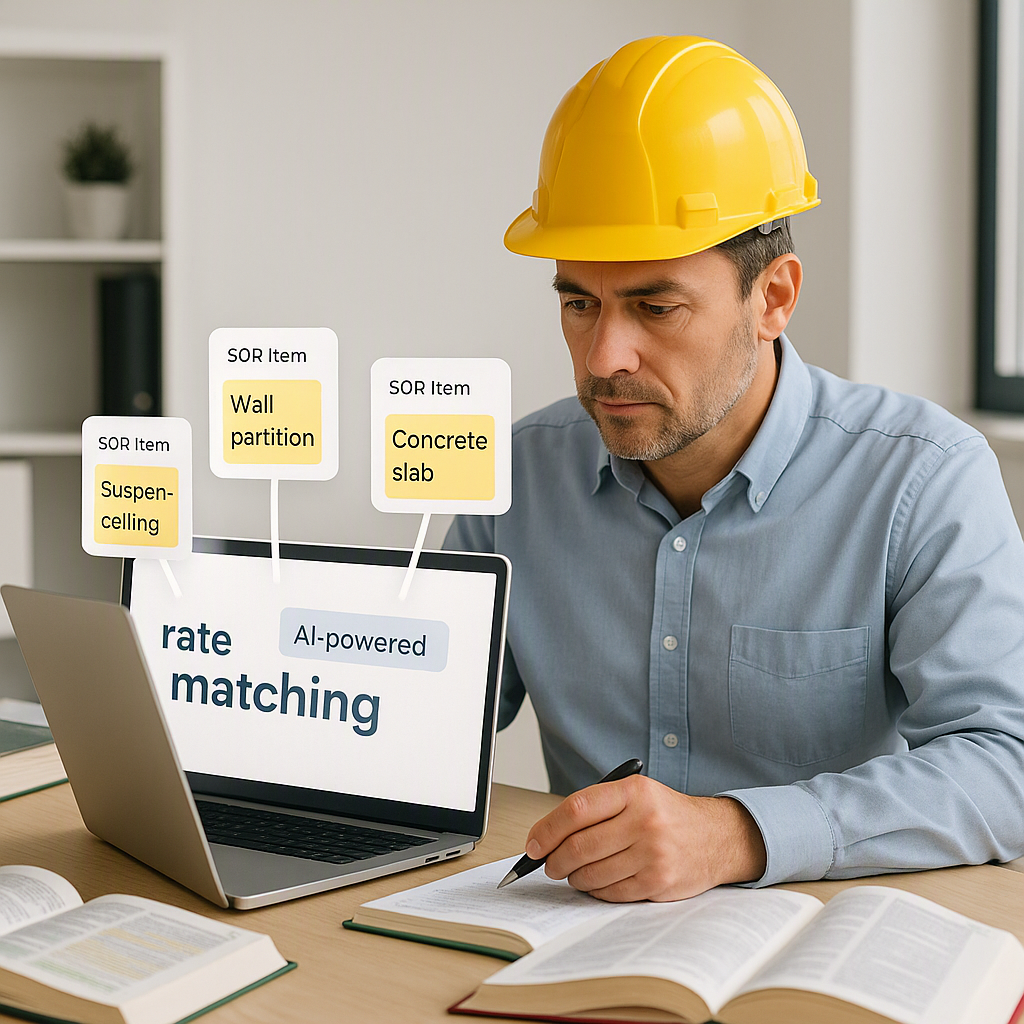
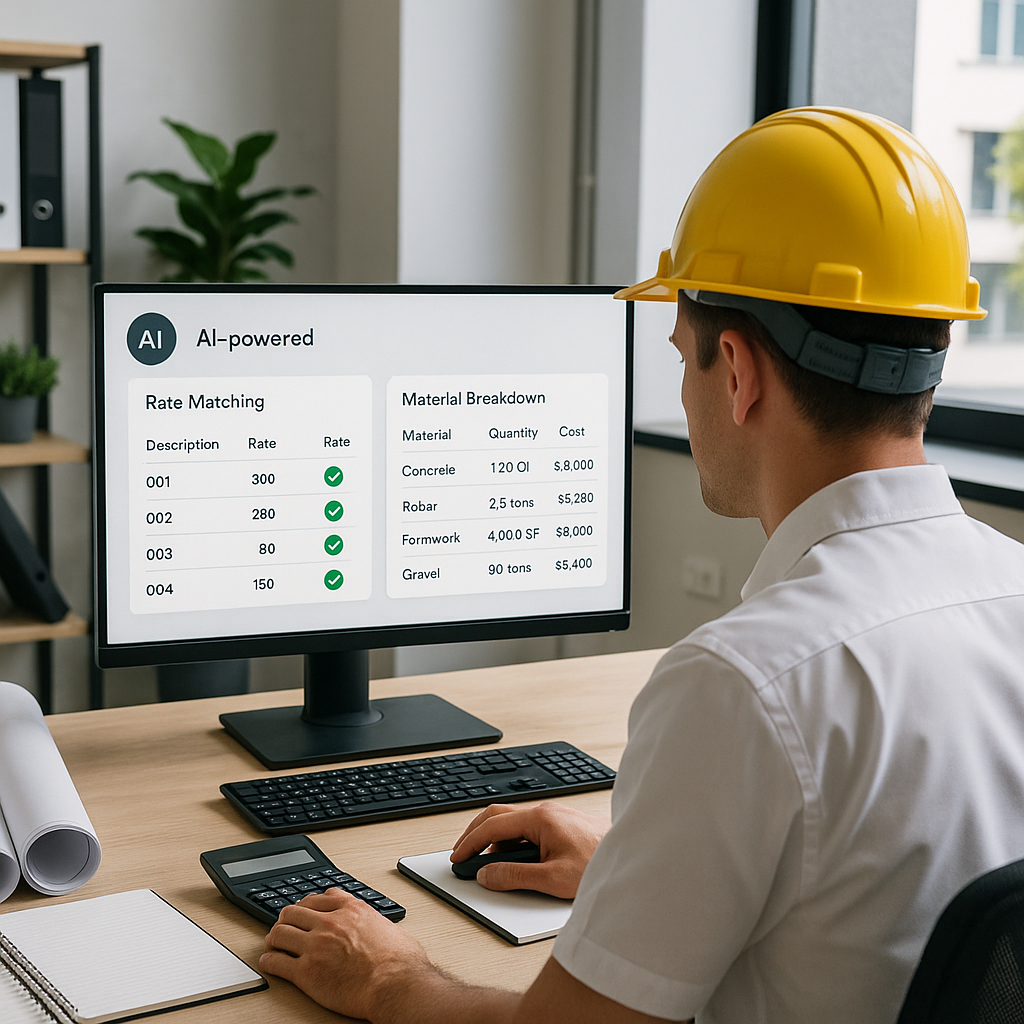
Take EstimateNext, for example. Their rate-matching engine scans 78,000+ Schedule of Rates (SOR) items across global catalogs and narrows results in seconds. Imagine searching for the installation cost of pre-stressed concrete girders. Instead of manually flipping through RSMeans or CPWD DSR books, you enter the term, and the AI delivers matches instantly. No wasted hours, no missed rates. Source
Why Manual Rate Lookups Are Holding You Back
Rate matching isn't just tedious—it’s risky. The more time you spend searching, the greater the chance of human error. Pick the wrong rate, and you could blow your bid’s margins or lose the contract entirely. Worse, manual lookups slow down your ability to respond to bid packages. If your competitor can price faster, you're already behind.
The Time Sink of Manual Lookups
Here’s a breakdown of the inefficiency:
- Time Spent: Searching for rates in catalogs like RSMeans or CPWD DSR can take hours, especially for complex or multi-line BOQs (Bill of Quantities).
- Error Risk: The longer you spend flipping pages, the higher the chance of missing a better-suited rate or misreading data.
- Cumulative Impact: According to EstimateNext, flipping through rate books eats up an average of 12 hours per estimate. Multiply that by five GMP pursuits per year for a mid-sized GC, and that's 60 hours lost annually.
These 60 hours could be spent generating additional bids, refining pricing strategies, or improving collaboration with subcontractors. Instead, they’re wasted on something that technology can now do in seconds.
The Competitive Disadvantage
If your competitor uses AI rate-matching tools and can price a bid in half the time it takes you, they have the upper hand. Faster pricing allows for:
- More time to negotiate with suppliers and subcontractors.
- Additional focus on fine-tuning the bid for competitiveness.
- The ability to respond to last-minute changes without delaying the submission timeline.
The bottom line: If you’re not adopting faster methods, you’re falling behind.
How AI Rate Matching Works
AI rate matching isn’t magic—it’s smarter search. It uses advanced algorithms to understand the context of what you’re searching for and deliver accurate, relevant results. Here’s how it works step-by-step:
Semantic Search
Unlike traditional keyword-based searches, semantic search in AI tools like EstimateNext understands the meaning behind your query. For example:
- Searching for “pre-stressed concrete girders” produces all relevant rates—labor, materials, and equipment—related to that item.
- It also recognizes synonyms, regional terminology, and abbreviations (e.g., "RC" for reinforced concrete).
Catalog Integration
AI tools integrate with vast databases of rate catalogs. EstimateNext, for example, pulls from 135+ catalogs, including:
- RSMeans (widely used in the U.S.)
- CPWD DSR (India’s key rates catalog)
- State DOT Feeds (U.S. Department of Transportation-approved rates)
This ensures that rates are tailored to your region and any compliance requirements.
Custom Catalogs
If you have proprietary pricing or tenant-specific rates, you can upload them into the system. Once uploaded, the AI incorporates these rates into future searches, making it a hybrid tool that adapts to both industry standards and your unique needs.
Confidence Scoring
AI rate-matching tools assign a confidence score to each result. This score reflects how closely the match aligns with your query, so you can prioritize reviewing high-accuracy results first.
Audit Trail
Every rate match includes detailed sourcing information. This transparency allows you to:
- Validate the origin of the rate.
- Justify pricing during bid submissions or claims.
- Maintain a record for future audits.
Practical Example: The $108M Dallas Water Project
On the $108M Dallas Water Project, estimators faced a massive challenge: finding rates for diverse items, from excavation to reinforced concrete. Normally, this would involve days of digging through DOT-approved catalogs, a process prone to fatigue and errors. With AI rate matching, they had accurate results in seconds.
Key Outcomes
- Time Savings: Instead of spending days, estimators could focus on refining their bid.
- Improved Accuracy: Confidence scoring helped prioritize the most accurate rates.
- Competitive Edge: Faster pricing allowed for tighter margins, which made their bid more attractive.
This project underscores the value of AI in delivering time and cost efficiencies, especially on high-stakes, large-scale projects.
What If the Rates Aren’t Perfect?
A common concern is that AI tools might not always get the rates right. It’s true—AI isn’t perfect. Here’s how to mitigate potential inaccuracies:
- Manual Overrides: Most AI tools allow you to adjust suggested rates manually. This is crucial for edge cases or unusual items.
- Data Calibration: Ensure the input data is accurate and up-to-date. Outdated or incomplete catalogs will lead to suboptimal results.
- Human Judgment: AI excels at narrowing down options, but final decisions should always involve a human touch, especially for high-value or high-risk items.
By combining AI’s speed with human expertise, you can achieve high accuracy without sacrificing control.
Common Mistakes to Avoid
Avoid these pitfalls when adopting AI rate-matching tools:
- Relying Solely on AI: Always review AI-generated rates. It’s a tool—not a replacement for expertise.
- Ignoring Regional Variations: Rates vary by location. Ensure your tool integrates catalogs relevant to your geographic area.
- Skipping Calibration: If you’re uploading custom rates, verify that they’re formatted correctly for seamless integration.
- Underestimating the Learning Curve: AI tools improve over time as they learn from feedback. Don’t expect perfection on Day 1.
Comparison: Manual Rate Matching vs AI Rate Matching
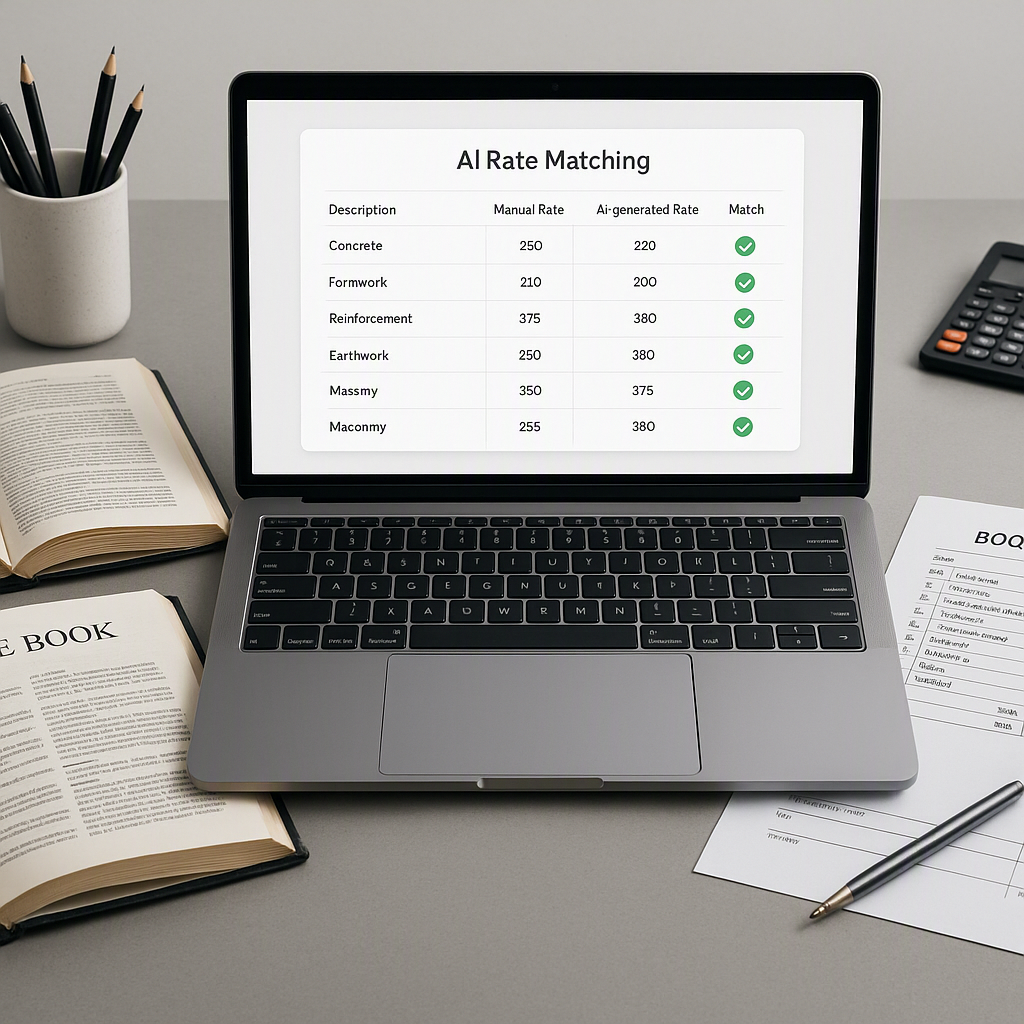
| Feature | Manual Rate Matching | AI Rate Matching |
|---|---|---|
| Time Required | Hours to days per estimate | Seconds to minutes |
| Error Risk | High (human fatigue, oversight) | Low (confidence scoring, audit trail) |
| Scalability | Limited (time-intensive) | High (handle large BOQs quickly) |
| Custom Rate Integration | Manual and time-consuming | Automated and seamless |
| Cost Over Time | Labor-intensive, higher cost | Initial investment, long-term savings |
Call to Action
If rate lookups are slowing you down, EstimateNext can help. Their AI-powered rate matching saves time, reduces errors, and keeps your bids competitive. Get started free →