A Problem Every Estimator Knows: Rate Lookup
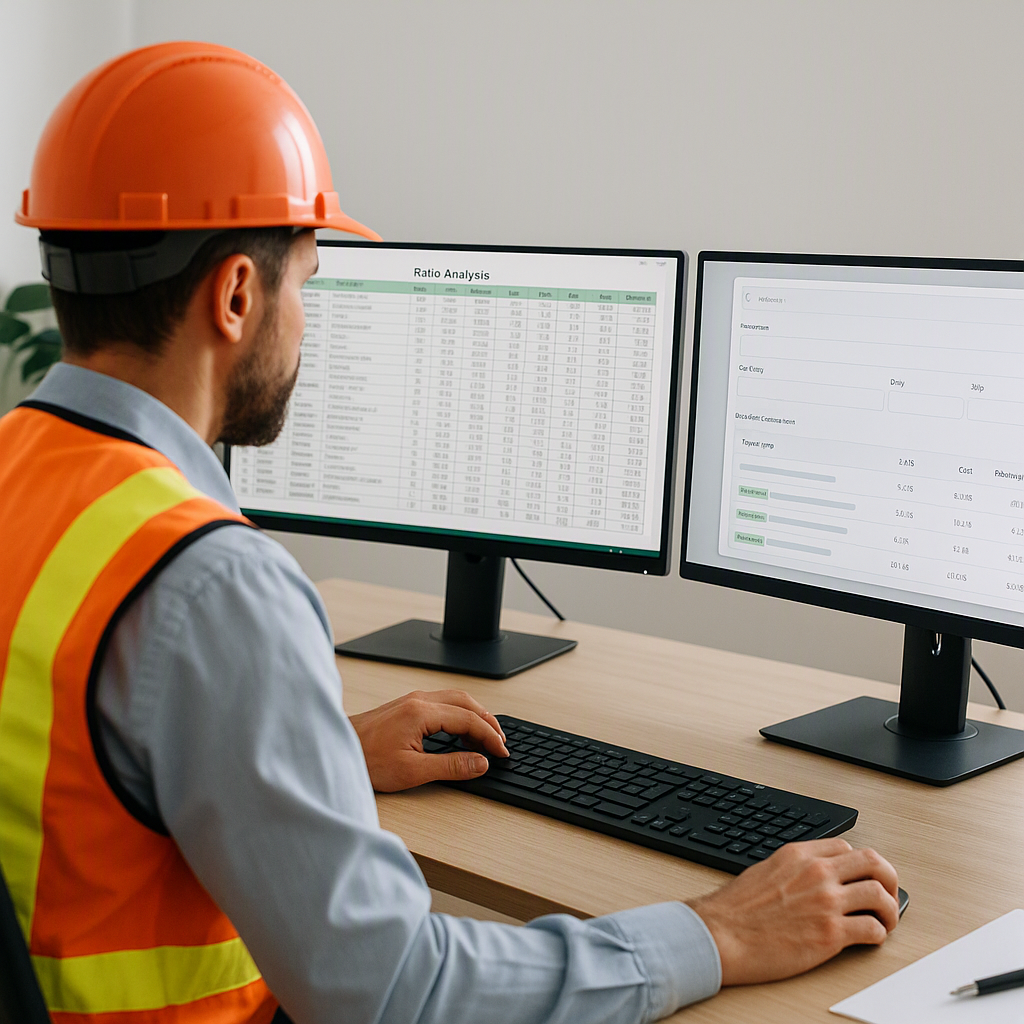
Imagine this: it’s Monday morning, and you’ve just received a bid package for a large infrastructure project. The BOQ is hundreds of rows deep. Your job? Find accurate labor, material, and equipment rates for every line item. If you’re using traditional methods—flipping through a massive RSMeans or CPWD DSR catalog—you’re looking at hours of manual effort. And that’s assuming you don’t miss anything.
Now factor in the pressure. Your competitors are pricing the same job, and every delay eats into your chances of submitting a competitive bid. Time isn’t just money—it’s the difference between winning and losing.
The AI Fix: Semantic Rate Matching
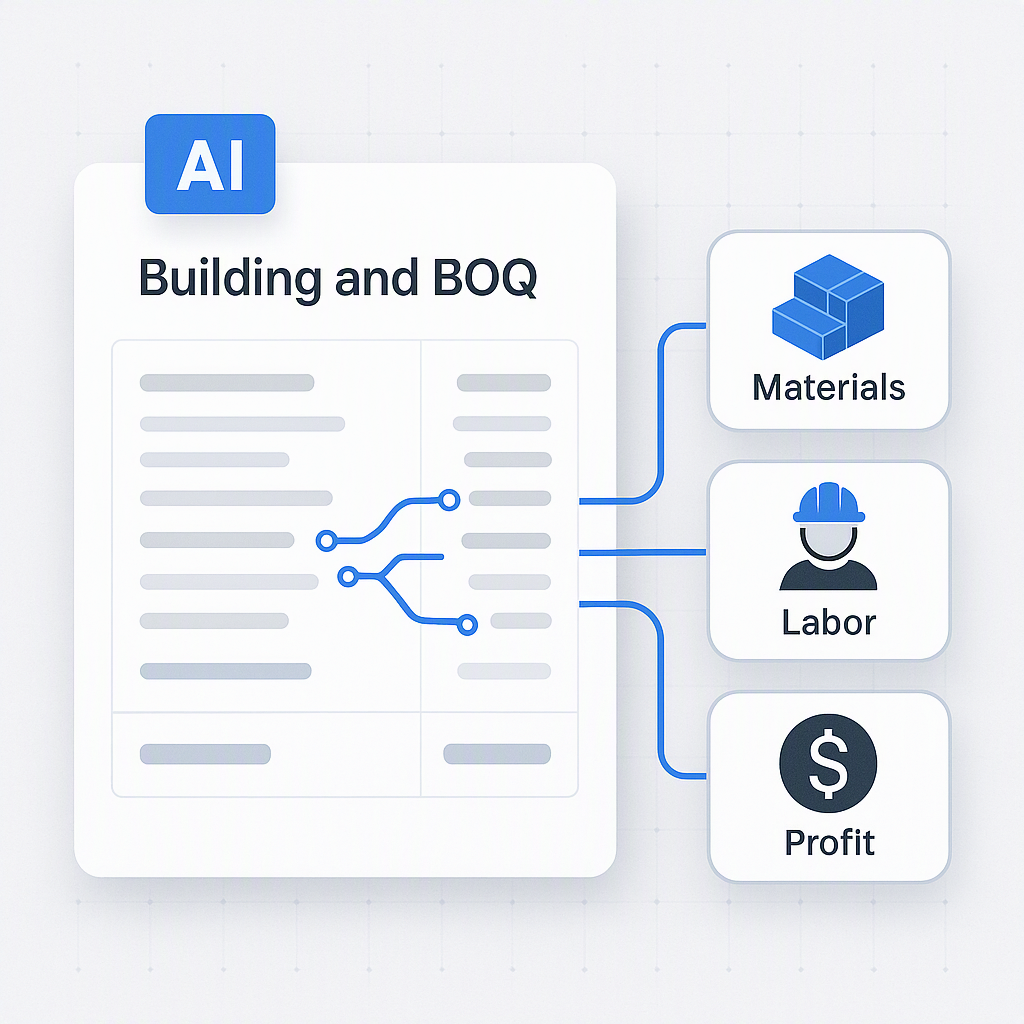
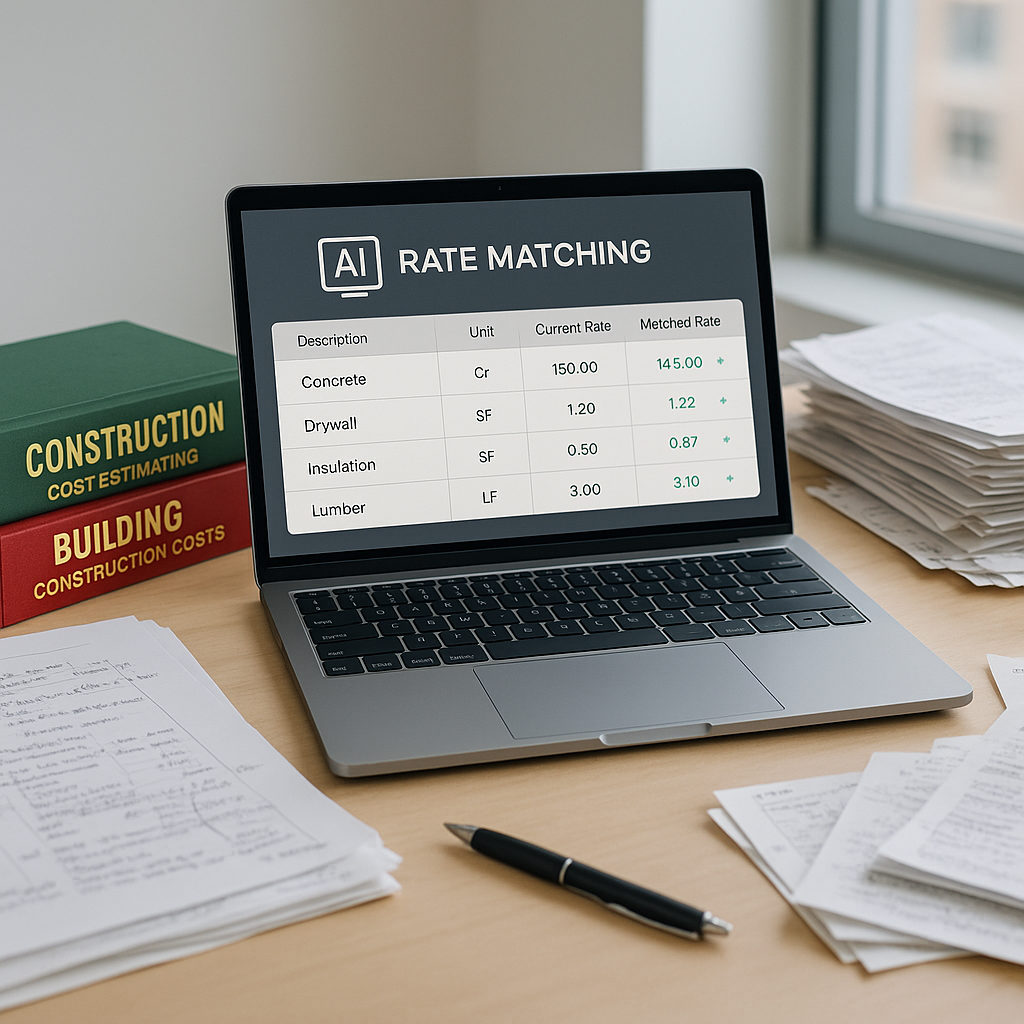
This is where AI rate matching steps in. Tools like EstimateNext use semantic search to match BOQ line items with rates from massive catalogs. Instead of manually flipping pages, you upload the BOQ, and the tool scans its database of thousands of SOR items across multiple catalogs. Rates for concrete works, HVAC systems, electrical installations, and more appear in seconds.
How does it work? The AI analyzes the description, unit, and context of each BOQ item and identifies the closest match in its database. For example, if your BOQ lists "pre-stressed concrete girders," the tool retrieves the relevant labor, material, and equipment costs from the appropriate catalog—whether it’s RSMeans, CPWD DSR, or even a custom rate file you’ve uploaded.
Benefits: Saving Time and Reducing Errors
AI rate matching can significantly reduce the time spent on manual rate lookups, allowing teams to focus on higher-value tasks like refining margins and negotiating subcontractor quotes.
But it’s not just about speed. Accuracy improves, too. Manual lookup often leads to errors—misreading a unit, skipping a page, or choosing the wrong year’s catalog. AI tools help minimize these mistakes by cross-checking multiple sources. While human review is still necessary, the heavy lifting is done by the tool.
Common Mistakes When Using AI Rate Matching
-
Not providing clean input data: AI tools are only as good as the data you feed them. If your BOQ has errors—like mismatched units or incomplete descriptions—the results will reflect that.
-
Ignoring the learning curve: While AI tools are intuitive, they still require some training. Don’t expect them to work perfectly on day one.
-
Over-reliance on AI: These tools don’t replace human judgment. Always review the results to ensure they align with project specifics.
Why It Matters
Rate lookup is one of the most repetitive and error-prone parts of construction estimation. AI-powered rate matching simplifies this process, saving time and reducing errors. For teams looking to scale operations efficiently, these tools can be a valuable addition.
If your team is struggling with manual rate lookup, EstimateNext can help. Upload your BOQ and get a priced bid package in minutes. Get started free →