Why Manual Takeoffs Are Challenging
Manual drawing takeoffs can be time-consuming and error-prone. Tracing PDFs, calculating areas, and counting fixtures for a bid often requires significant effort. For larger projects, the workload increases substantially.
This process can lead to human errors, missed quantities, and discrepancies that may only be identified during a bid review or, worse, on-site. These inefficiencies can delay project timelines and increase costs.
The AI-Powered Solution: Automating Takeoffs
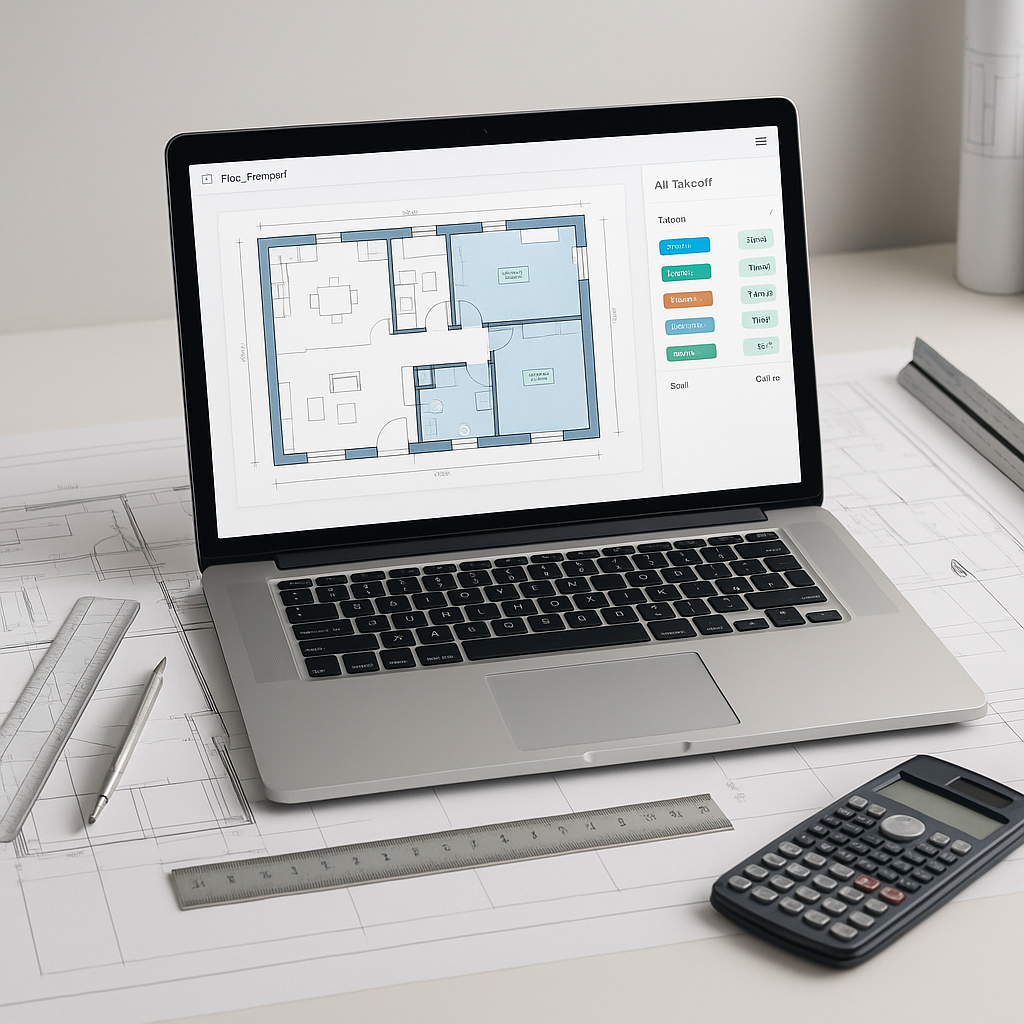
AI tools are transforming preconstruction estimation by automating the takeoff process. These tools can analyze drawings, extract quantities, and identify changes in revisions, significantly reducing the manual workload.
How It Works:
- Upload Your Drawings: AI tools can process PDFs or CAD files, scanning for room areas, wall lengths, and openings like doors and windows.
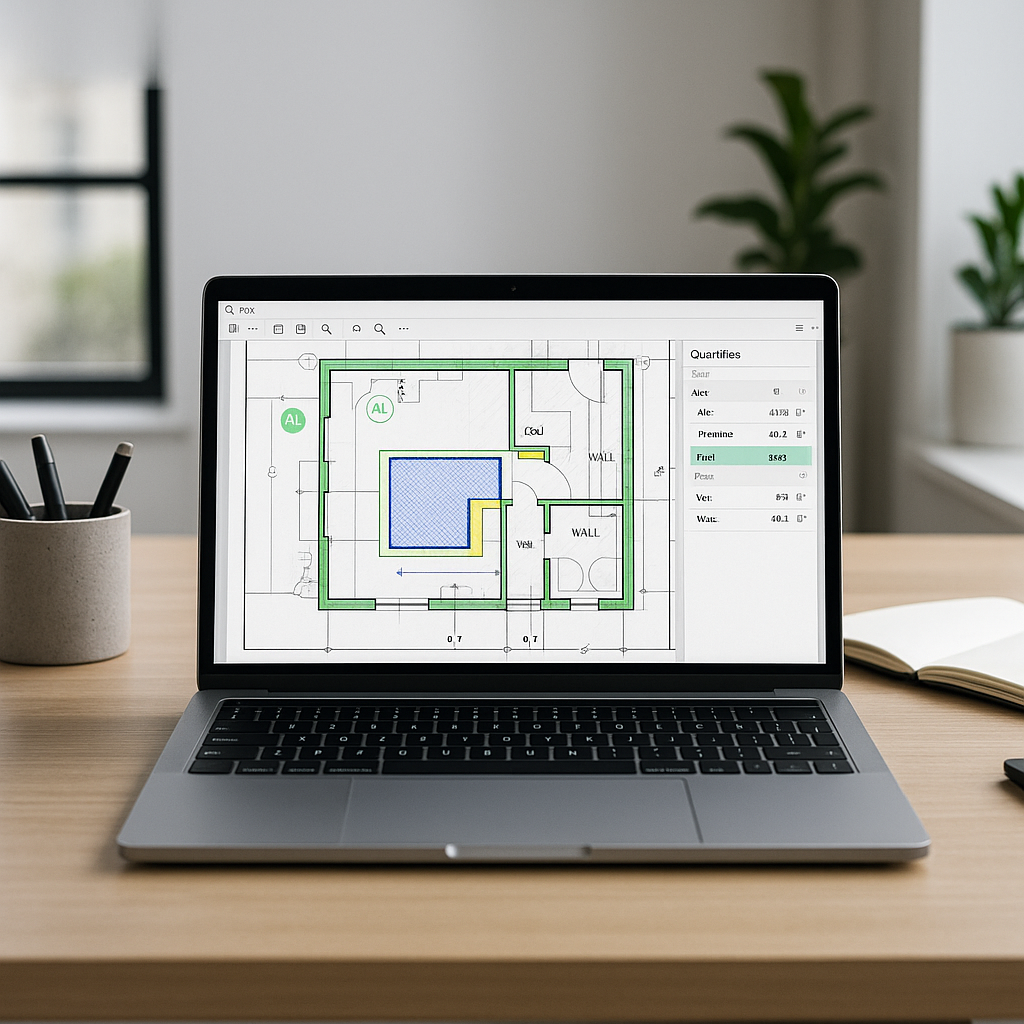
- Automated Quantity Extraction: Algorithms extract quantities for components such as concrete volumes, steel lengths, and fixture counts.
- Flagging for Review: The system highlights areas of low confidence for manual review, ensuring accuracy.
- Revision Comparison: AI identifies changes in updated drawings, eliminating the need to manually compare pages.
While AI tools streamline the process, human oversight remains essential to address issues like poor-quality drawings or missing dimensions.
Benefits of AI in Preconstruction Estimation
AI-powered tools offer several advantages:
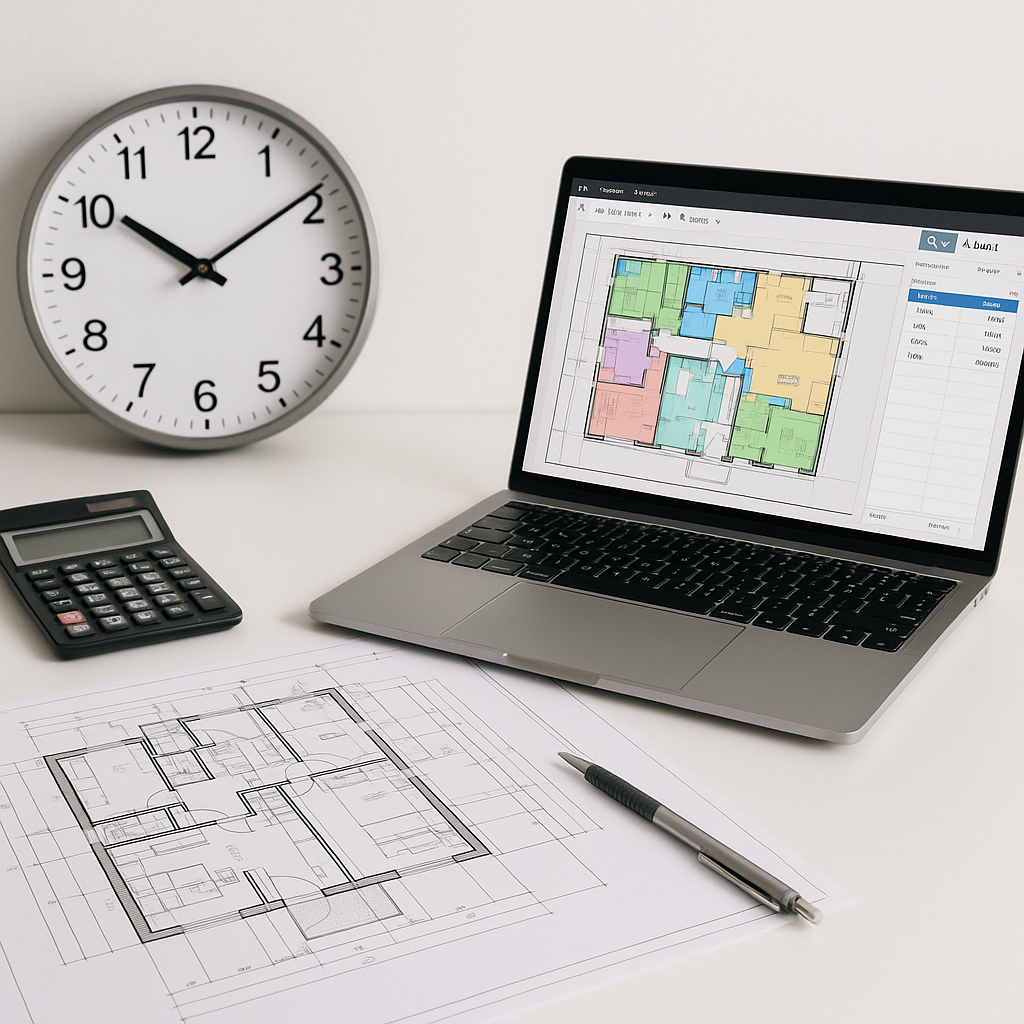
- Time Savings: Automating takeoffs reduces the time spent on repetitive tasks, allowing teams to focus on higher-value activities.
- Improved Accuracy: By minimizing human error, AI tools enhance the reliability of estimates.
- Scalability: AI can handle projects of varying sizes, from small renovations to large infrastructure bids.
Addressing Common Concerns
“AI doesn’t understand construction nuances.”
AI tools are designed to complement, not replace, human expertise. Estimators still make critical decisions on markups, negotiations, and finalizing bids. The AI handles repetitive tasks, freeing up time for strategic work.
“What if the AI makes mistakes?”
No system is perfect, which is why most AI tools include manual override features. Users can review flagged items, adjust quantities, and upload custom rates to ensure accuracy.
FAQ
Q: How accurate are AI-generated takeoffs? Accuracy depends on the quality of the input data. AI tools often include features to flag discrepancies for manual review.
Q: Can AI handle complex projects? Yes, AI tools are scalable and can manage projects of varying complexity.
Q: How long does it take to train staff on AI tools? Most platforms are user-friendly, with training typically taking a short period.
Q: Do AI tools integrate with existing software? Yes, many AI tools integrate with platforms like Bluebeam, Procore, and Excel.
Q: What if my rates are custom? Users can upload custom catalogs or define project-specific rates, which the AI can incorporate into future estimates.
Conclusion
AI-powered tools are revolutionizing preconstruction estimation by automating labor-intensive tasks, improving accuracy, and enabling teams to focus on strategic priorities. If you’re looking to enhance your estimation process, consider exploring AI solutions to streamline your workflow and improve efficiency.