The Hidden Time Sink in Construction Estimation
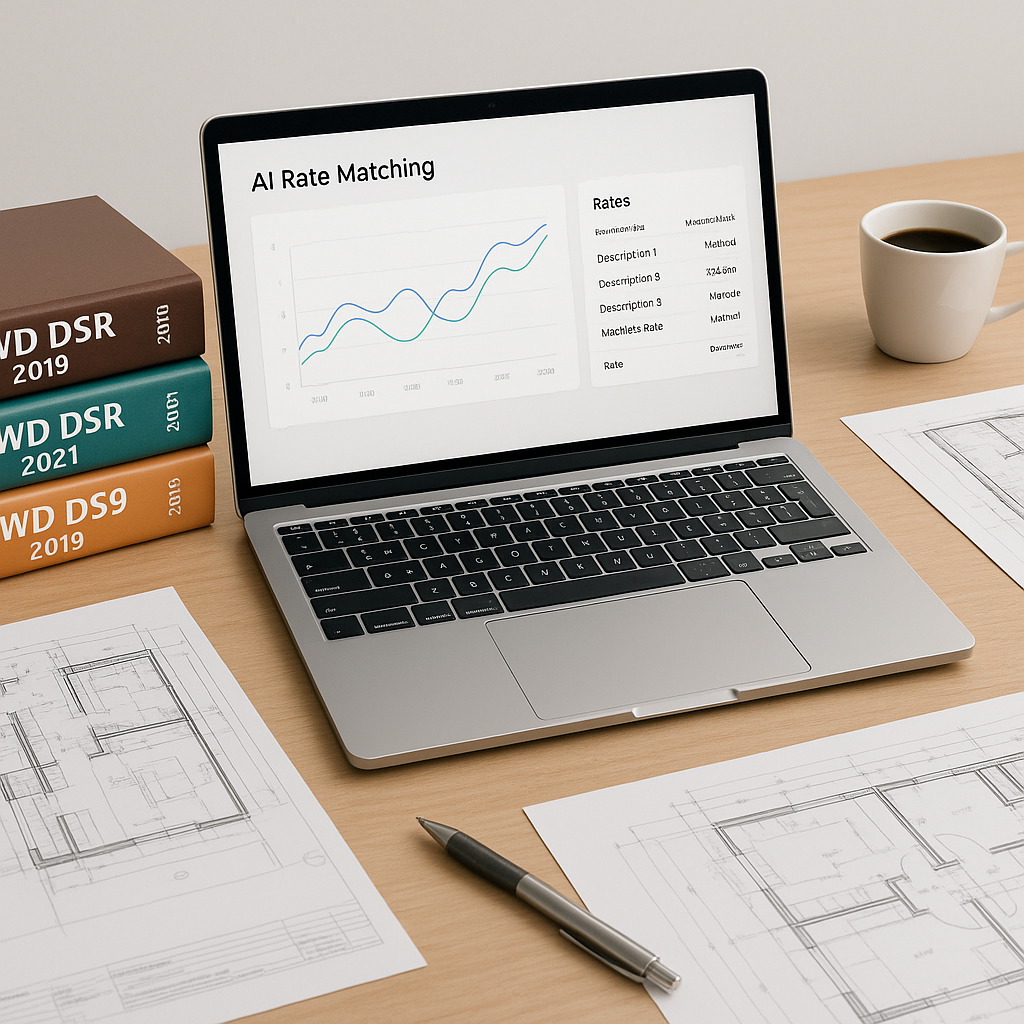
Manual rate lookup can be a tedious and time-consuming process. Estimators often need to sift through extensive catalogs like the CPWD DSR or RSMeans to find the appropriate rates for a Bill of Quantities (BOQ). This process not only consumes valuable time but also increases the likelihood of errors, which can impact the accuracy of bids and project costs. According to a 2023 McKinsey report, inefficiencies in preconstruction processes cost the global construction industry billions every year, and rate lookup is a significant contributor to these inefficiencies.
How AI-Powered Rate Matching Works
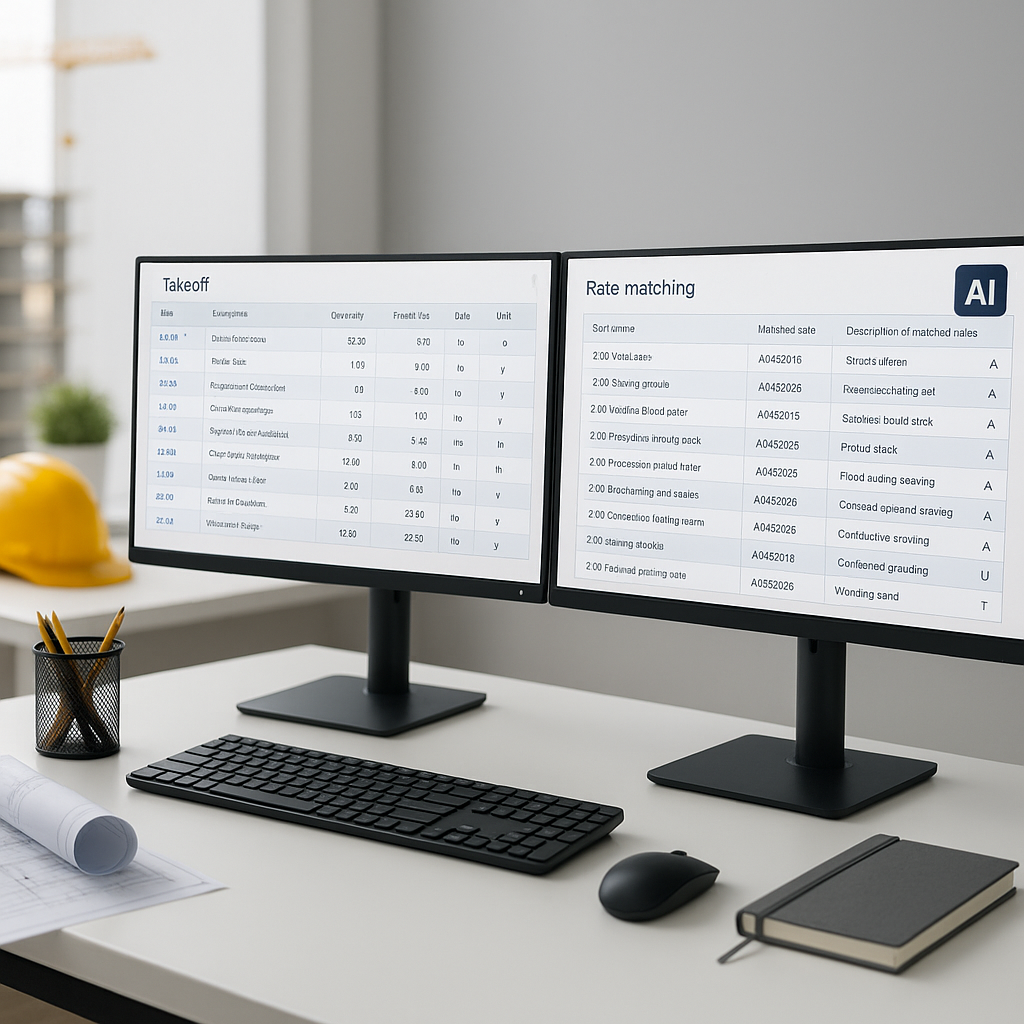
AI-powered rate matching offers a more efficient alternative to manual processes. Instead of manually searching through catalogs or PDFs, you can upload your BOQ into an AI platform. The AI scans the BOQ and matches line items to rates from a database of Standard Operating Rates (SORs) using advanced semantic search techniques.
For instance, if you need the labor rate for installing pre-stressed concrete girders, you can type a related term like “prestressed concrete girder install,” and the AI will identify the relevant rate for you. This eliminates the need to memorize exact catalog phrasing or spend time searching through documents.
Real-Time Adjustments
AI tools also allow for real-time adjustments. For example, if material costs increase due to supply chain issues, you can apply inflation uplifts or custom adjustments across your BOQ without having to manually update your calculations. This flexibility ensures that your estimates remain accurate and up-to-date.
Custom Catalogs for Niche Projects
For projects involving custom materials or finishes, AI platforms often allow users to upload their own rate catalogs. These custom catalogs integrate seamlessly with the system, enabling estimators to price unique projects efficiently. Additionally, the AI learns from user inputs, improving its accuracy and relevance over time.
The Benefits of AI-Powered Rate Matching
AI-powered rate matching can significantly reduce the time and effort required for preconstruction estimation. By automating the rate lookup process, estimators can focus on higher-value tasks such as refining bid strategies and optimizing project plans.
Moreover, AI tools help minimize human errors in rate selection, improving the overall accuracy of estimates. This increased accuracy builds trust with clients and subcontractors, enhancing the credibility of your bids.
Common Mistakes to Avoid
-
Blindly trusting AI: Always review the AI’s matches. While the technology is highly accurate, it’s essential to verify its outputs to ensure they align with project requirements.
-
Ignoring feedback loops: Providing feedback to the AI improves its performance over time. Correcting errors or adding custom rates helps the system learn and adapt to your specific needs.
-
Using outdated rates: Ensure that the rate catalogs you use are current. An AI tool is only as reliable as the data it processes.
FAQ
Q: Can AI handle custom rates for unique projects?
A: Yes. Many AI platforms allow users to upload custom rate catalogs, which can be integrated into the system for specialized projects.
Q: Do I need to replace my existing tools?
A: Not necessarily. Most AI-powered tools integrate with commonly used software like Bluebeam, Excel, or Procore.
Q: How long does it take to learn an AI tool?
A: Most platforms are designed for ease of use, and training typically takes a short amount of time.
Q: What if the AI gets a rate wrong?
A: Users can manually override AI matches. Additionally, the system learns from corrections to improve future estimates.
The Bottom Line
Manual rate lookup is a time-intensive process that can hinder efficiency and accuracy in construction estimation. AI-powered rate matching offers a smarter, faster alternative, enabling preconstruction teams to focus on strategic tasks that add value.
If you’re looking to streamline your estimation process, consider exploring AI tools that can help you save time and improve accuracy.