Let’s Talk About the Real Problem: Manual Rate Lookups
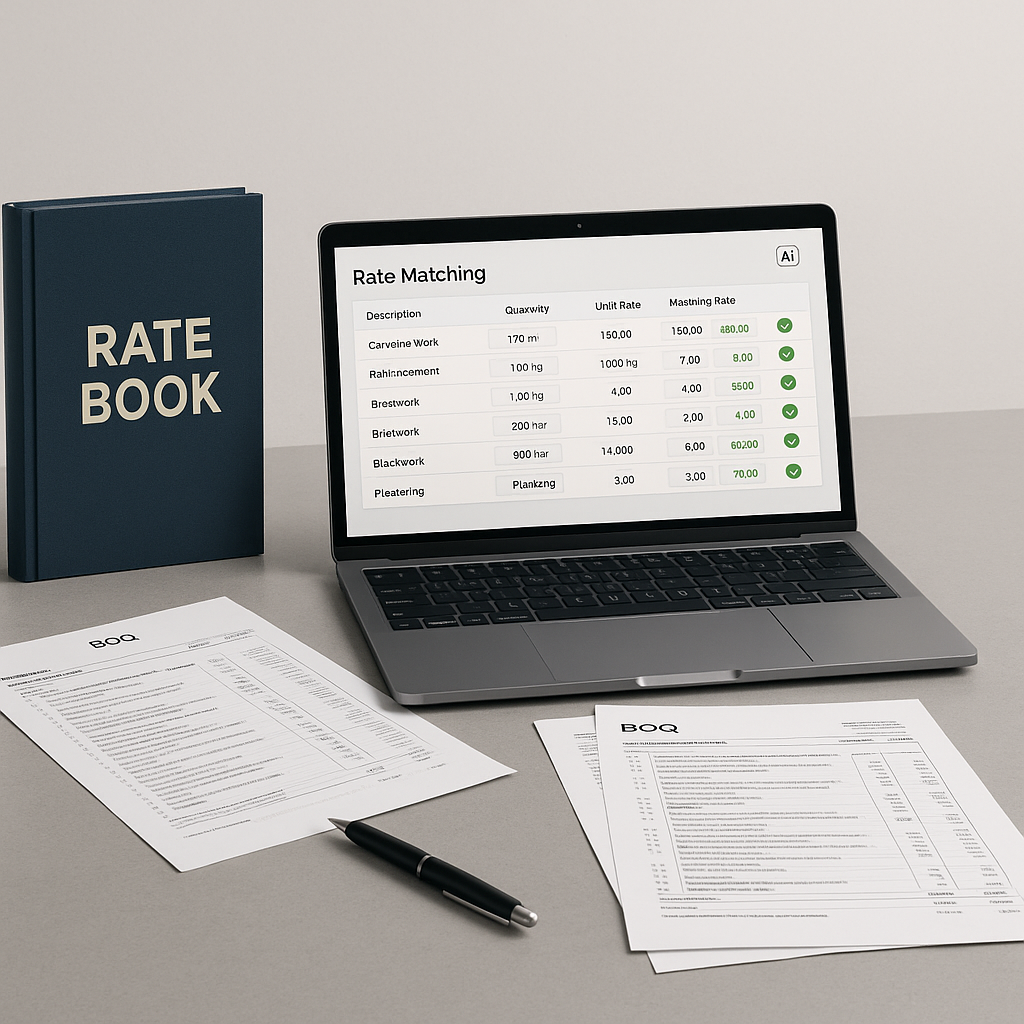
Every estimator knows the drill. You’re knee-deep in a massive BOQ, and now you need to hunt down rates. You pull out your trusty rate books, PDFs, or spreadsheets. Maybe you even dig through emails or call a supplier. Hours later, you’ve got a patchwork of numbers, but are they accurate? Are they even current?
This is where most estimates start to go sideways. A single outdated rate can ripple through your calculations and destroy your margins. And when you’re working against the clock for a bid deadline, who has time to double-check every line?
According to a 2023 McKinsey report, inefficiencies in construction processes contribute significantly to project cost overruns, with estimation errors being a key factor. Manual rate lookups are one of the common culprits.
But here’s the good news: AI-powered rate matching can help address this challenge.
What is AI-Powered Rate Matching?
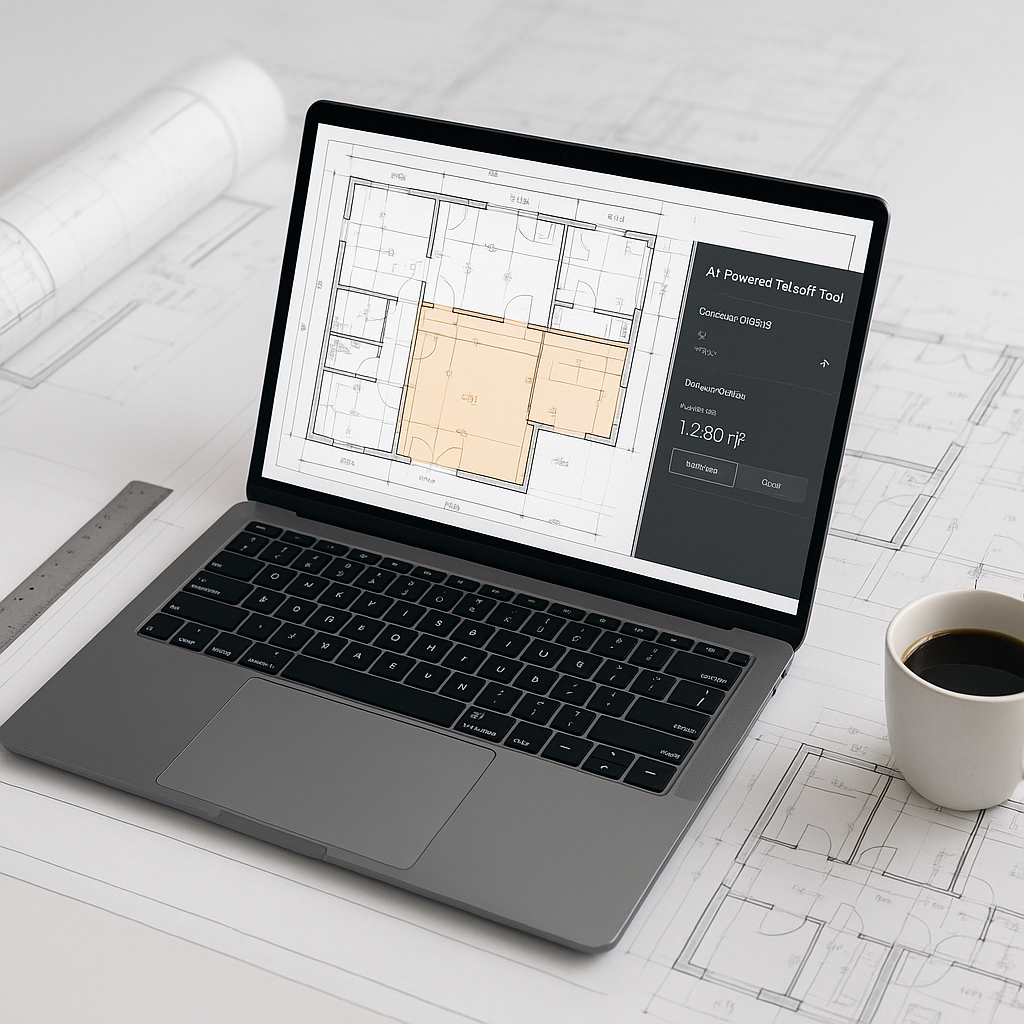
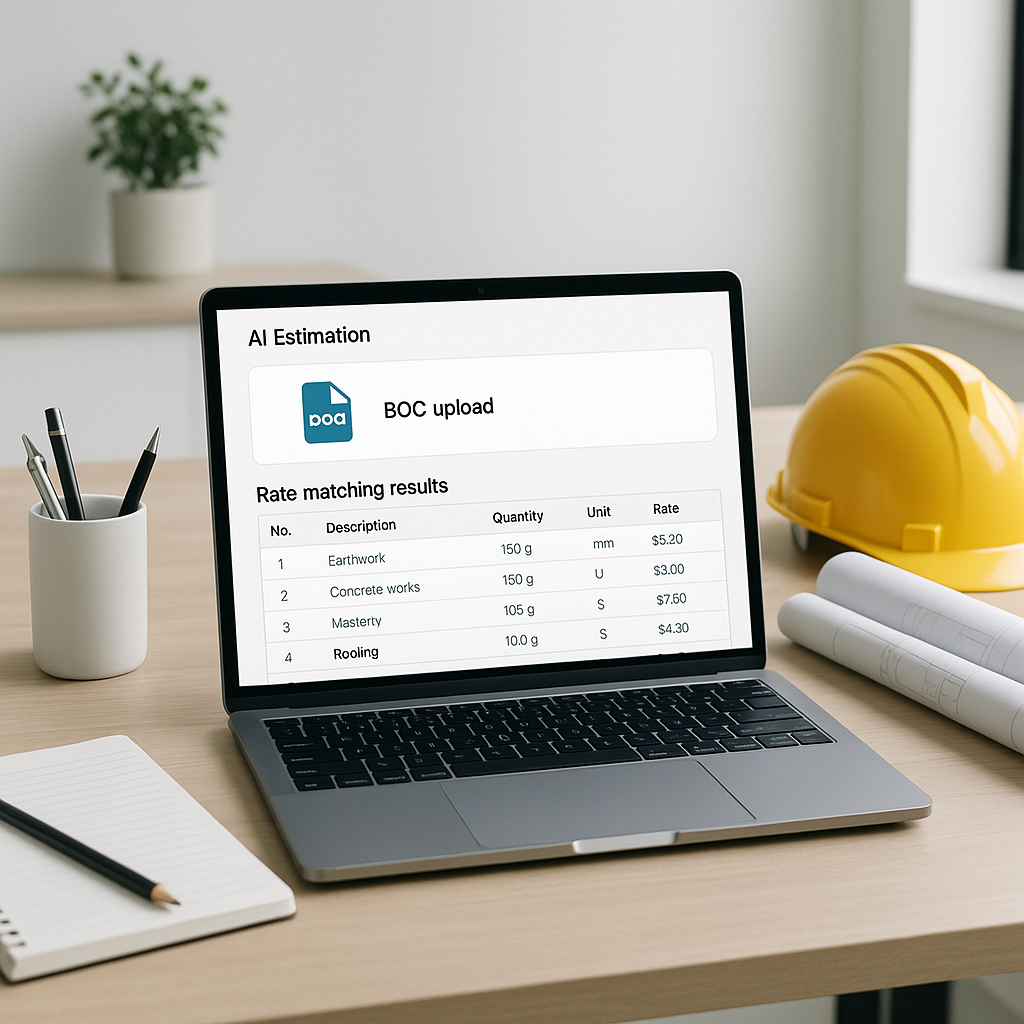
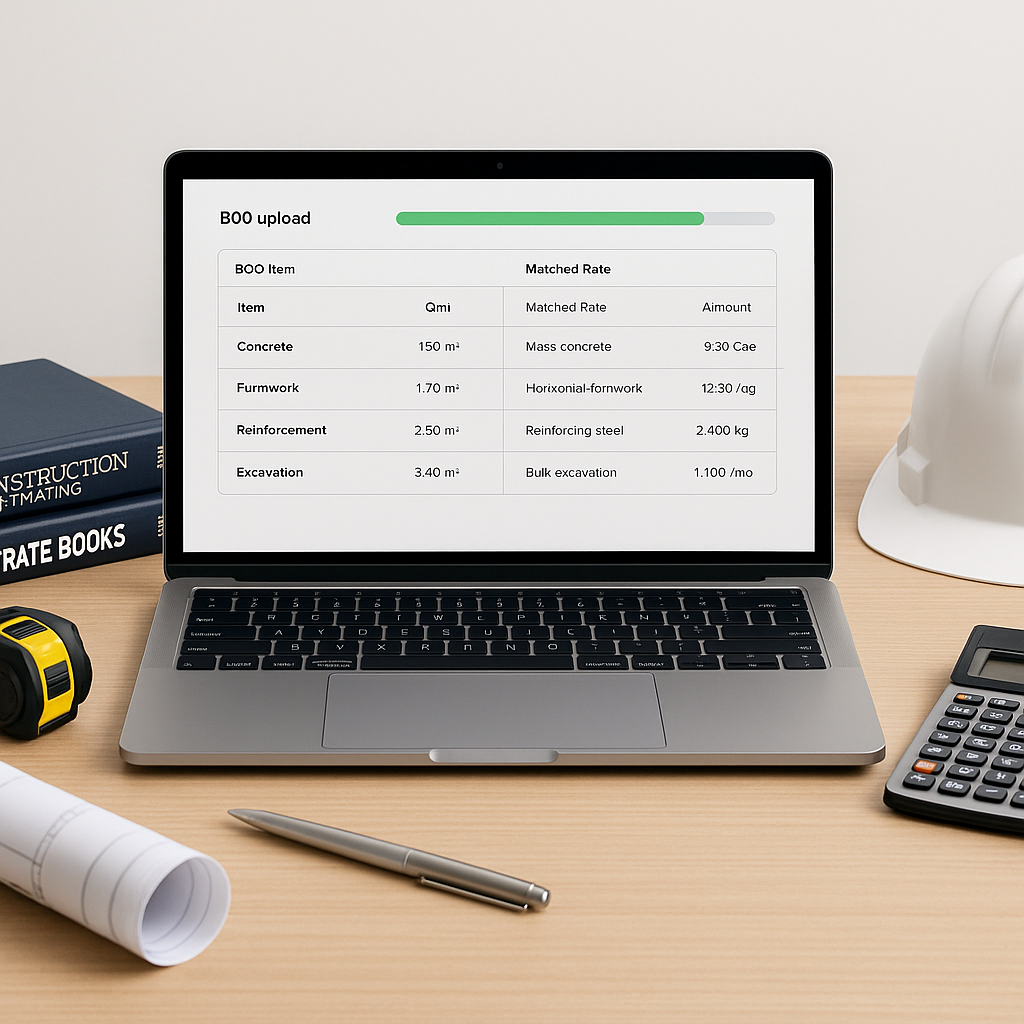
At its core, AI-powered rate matching does exactly what you’d hope: it finds the right rates for your BOQ items quickly and efficiently. Platforms leveraging semantic search technology can sift through massive rate databases—like RSMeans, CPWD’s DSR, or even your custom catalogs—and match the right rate to each line item.
How does it work? Let’s break it down:
- Upload Your BOQ: AI tools can ingest Excel, CSV, or even scanned PDFs. They auto-detect columns, headers, and hierarchies—no manual cleanup required.
- Semantic Search: Instead of flipping through 2,000-page rate books, you type in a keyword or description. The AI understands context, whether you’re pricing “concrete pouring” or “PVC piping.”
- Customized Matches: The system learns from your past projects and preferences. It prioritizes your local rates, custom materials, or frequently used suppliers. The more you use it, the smarter it gets.
- Audit Trail: Every rate comes with a source and calculation breakdown. No guesswork, no “I think I used this rate last time.”
In practice, this means a task that used to take hours can now be completed in a fraction of the time. And the results are not just faster—they’re more consistent and accurate.
Common Pushbacks (and Why They Miss the Mark)
Objection #1: “AI can’t know my local rates.”
You’re right—AI doesn’t magically know your exact costs out of the box. But modern platforms let you upload your own rate catalogs, define custom materials, and even adjust for regional variations. Over time, the system learns and adapts to your inputs. The result? Rates that are as local as your favorite supplier.
Objection #2: “My projects are too niche for AI.”
Niche projects actually benefit the most from AI. Why? Because AI doesn’t get “overwhelmed” by complexity. Whether you’re pricing a hospital HVAC system or a high-rise curtain wall, AI tools can pull rates from specialist trade catalogs that align with your specs.
Objection #3: “This will replace estimators.”
Let’s set the record straight. AI doesn’t replace your expertise—it amplifies it. You’re still the one deciding on markups, negotiating with subs, and making strategic calls. AI just takes the grunt work off your plate. It’s a tool, not a threat.
Common Mistakes When Using AI Rate Matching
- Skipping the Review: AI is accurate, but it’s not perfect. Always review flagged “low confidence” matches. A missed spec detail can still sneak through.
- Ignoring Customization: If you don’t upload your own rates or preferences, you’re leaving money on the table. Take the time to set up your custom catalogs.
- Trusting Outdated Data: AI tools are only as good as their inputs. Make sure your rate databases are updated regularly—especially in volatile markets.
FAQ
Q: How much time can AI really save on rate lookups?
A: Illustrative example — A task that might traditionally take several hours could potentially be reduced to minutes, depending on the complexity of the BOQ and the tool used.
Q: What if my BOQ has inconsistent formatting?
A: AI tools often include smart parsers that auto-detect merged cells, headers, and hierarchies. You don’t need a perfectly formatted file.
Q: Can AI handle multi-market projects?
A: Yes. Many platforms support multiple measurement standards (e.g., CSI, CPWD, CESMM3) and currencies. You can switch between profiles seamlessly.
Q: Is training required?
A: Minimal. Most users find the interfaces intuitive and can start using the tools effectively with little to no formal training.
The Bottom Line
Manual rate lookups are a relic. They’re slow, error-prone, and draining for your team. AI-powered rate matching not only saves time but also ensures your estimates are accurate and competitive.
If you’re still flipping through rate books or rebuilding spreadsheets for every bid, it’s time to rethink your approach. AI tools can help you streamline your process and focus on what really matters—winning bids and delivering successful projects.