Streamlining Preconstruction Estimation with AI Tools
If you’ve ever done a manual takeoff, you know the process can be tedious. You get a massive set of drawings, print them out (or pull them up on screen), and start measuring. You’re counting doors, running your ruler along walls, and squinting at tiny details. Multiply that across dozens of pages, and it’s a significant time investment.
Manual takeoffs also introduce the risk of errors, as data is manually input into spreadsheets. In 2023, advancements in AI-powered tools offer a more efficient alternative.
How AI-Powered Takeoffs Work
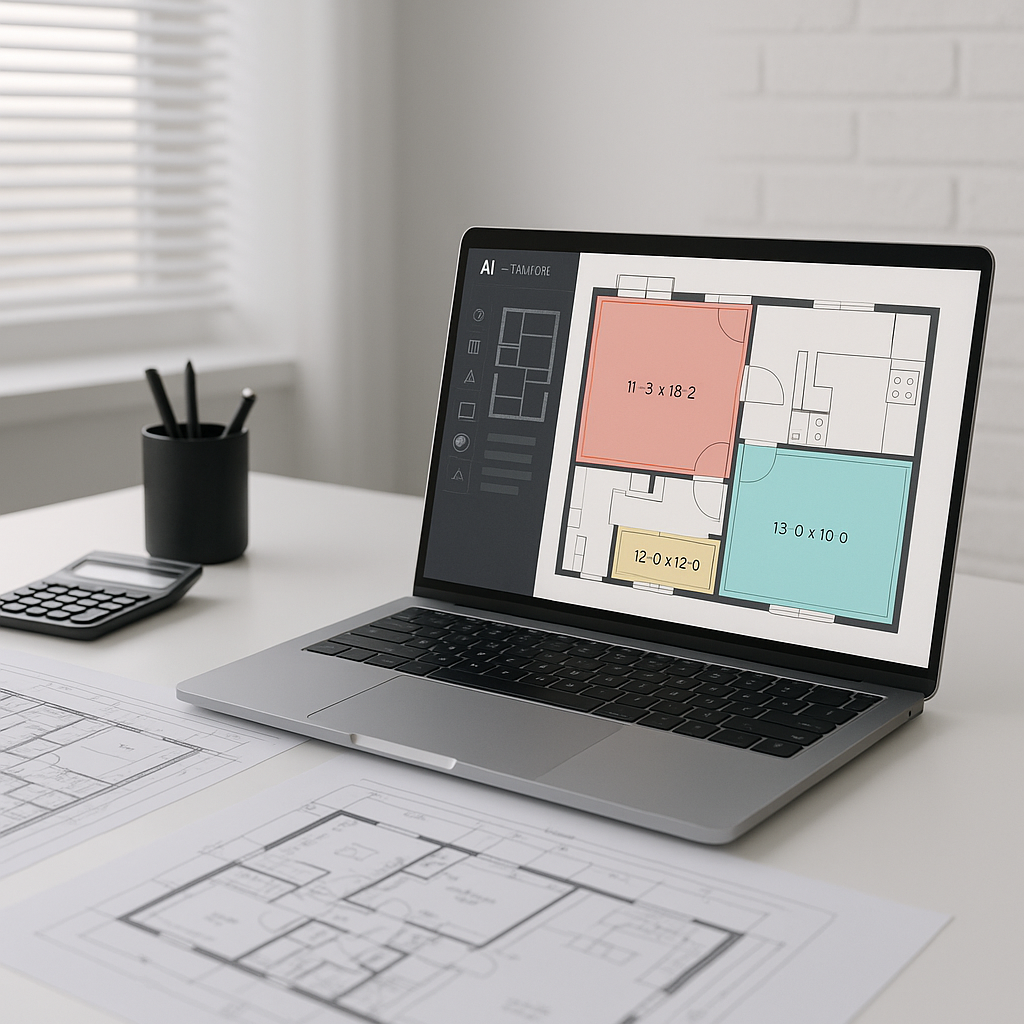
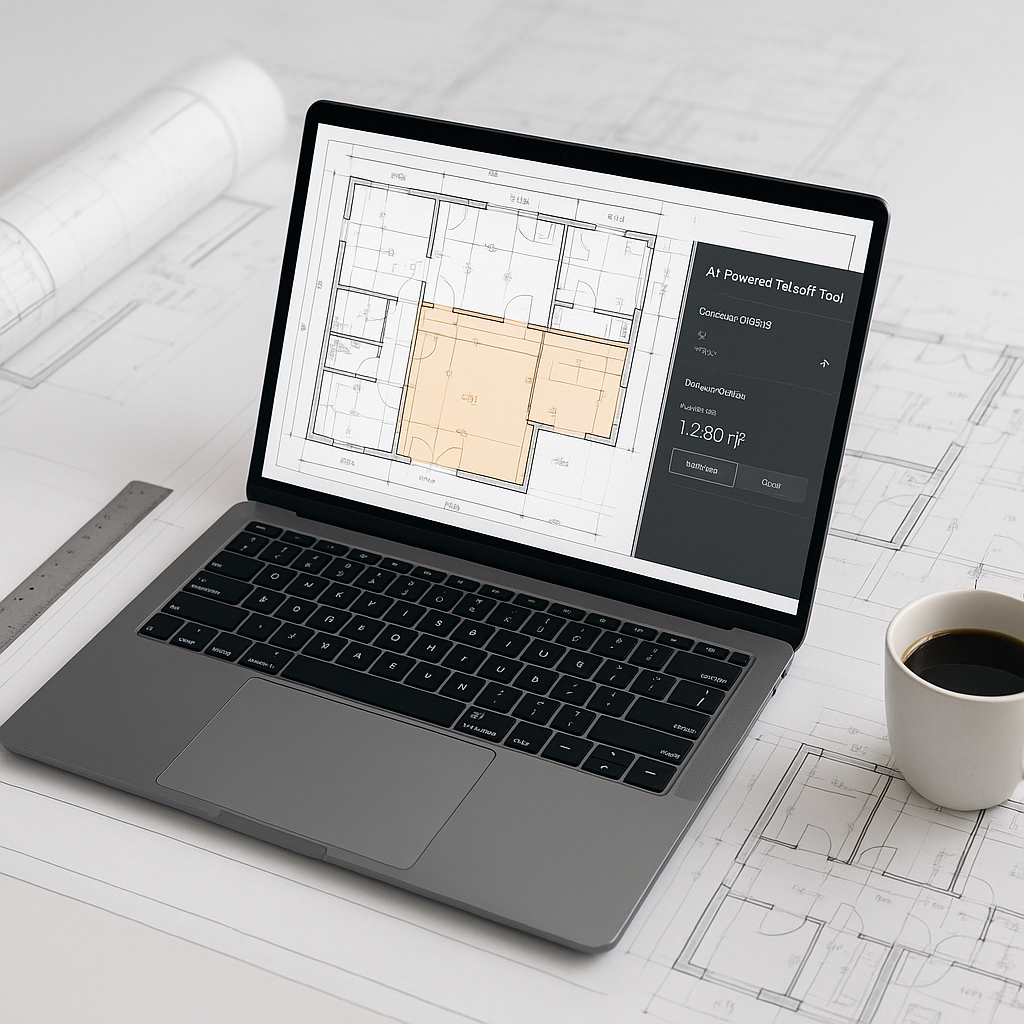
AI tools analyze your PDF drawings and extract quantities automatically. The process typically involves uploading the drawings, calibrating the scale, and letting the AI handle the measurements. These tools can identify door counts, wall lengths, room areas, and more.
While no system is perfect, many AI tools include features like flagged low-confidence areas and manual overrides. This allows users to review and adjust as needed, ensuring accuracy while saving time.
Illustrative example —
Before AI: Two estimators manually measure a set of drawings for a mid-sized office building.
- Time: Significant manual effort required.
- Cost: Labor-intensive process.
With AI: Upload the same drawings to an AI-powered tool. The tool provides a detailed quantity takeoff in a fraction of the time.
- Time: Drastically reduced.
- Cost: Lower due to automation.
The principle is clear: AI tools save time and reduce the manual workload.
Why This Matters for General Contractors
In preconstruction, time is critical. The ability to respond to more bids increases the chances of landing projects. However, manual takeoffs can slow teams down, leading to missed deadlines or rushed estimates that may contain errors.
AI-powered takeoffs offer several benefits:
- Increased bid capacity: Teams can handle multiple bids simultaneously.
- Strategic focus: Freed-up time can be used to refine bid strategies, negotiate with subcontractors, or analyze project risks.
- Error reduction: Automation minimizes the risk of human error in repetitive tasks.
A McKinsey report highlights that early adopters of AI in construction have seen cost savings and efficiency improvements, underscoring the potential of these tools.
Addressing Common Objections
“AI can’t think like an estimator.”
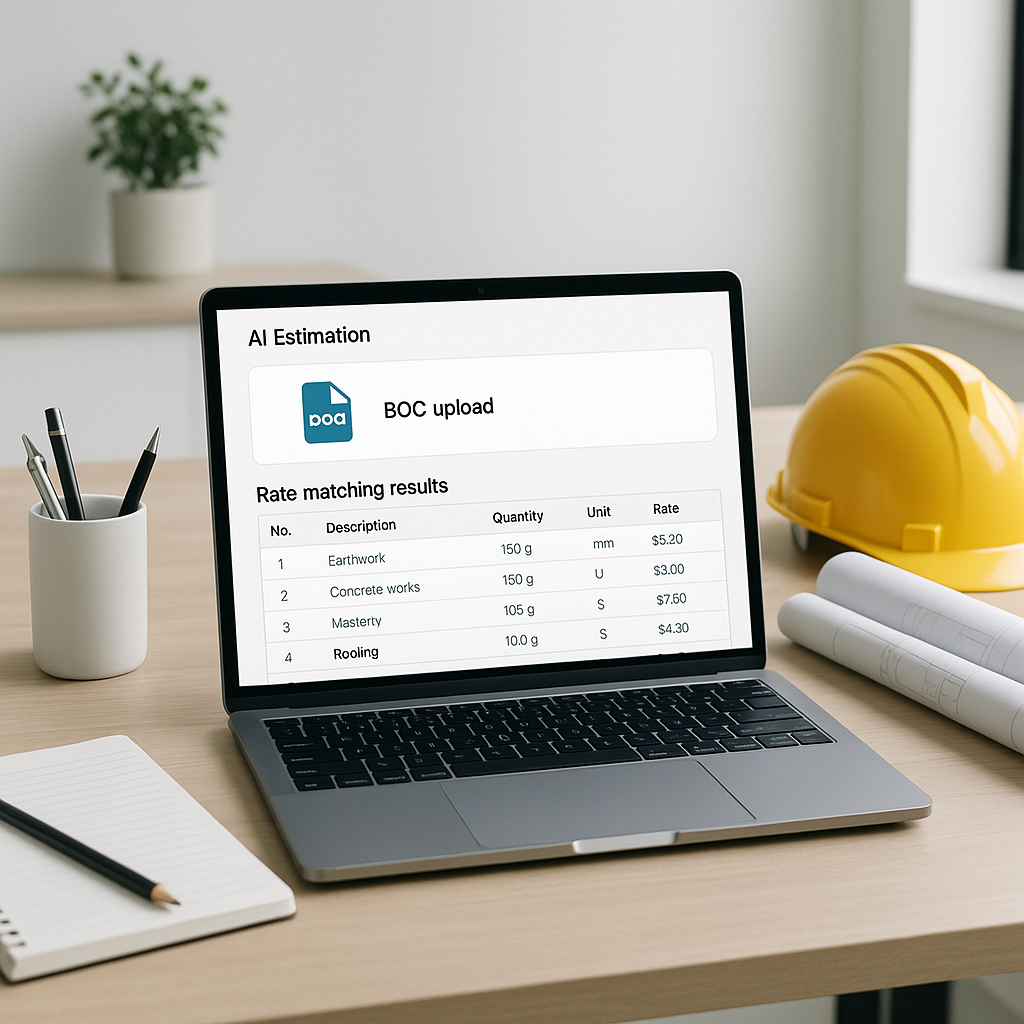
That’s true, but it doesn’t need to. AI handles repetitive, time-consuming tasks like takeoffs and rate lookups. Estimators remain in control of critical decisions, such as markup, subcontractor negotiations, and final pricing. Think of AI as a tool that enhances expertise rather than replacing it.
“It’s too complex to learn.”
Most AI platforms are designed to be user-friendly, with training typically taking a short amount of time. Once up and running, the time savings make the learning curve worthwhile.
“What if my projects are too unique for AI?”
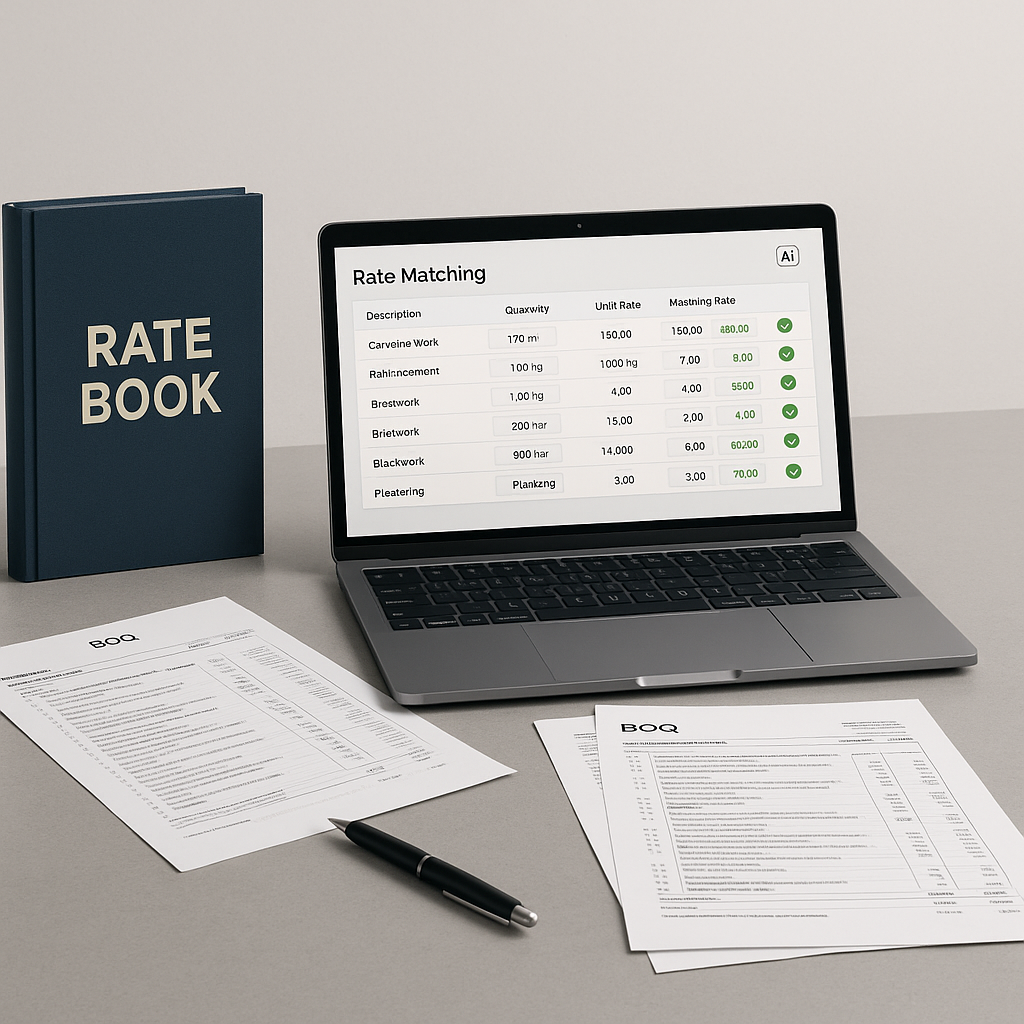
Many AI tools allow users to upload custom rate catalogs and project-specific parameters. The software learns from adjustments, improving accuracy over time.
Common Mistakes to Avoid
- Skipping the calibration step: Ensure the scale is set correctly to avoid inaccurate quantities.
- Blindly trusting the AI: Review flagged areas for accuracy. The software is a tool, not a substitute for oversight.
- Not involving your team: Engage estimators early to demonstrate how the tool complements their work rather than replacing them.
FAQ
Q: Can AI tools work with my current software stack?
A: Yes. Most AI estimation tools integrate with platforms like Bluebeam, Procore, and Excel, allowing seamless export of takeoffs into existing workflows.
Q: Are AI-powered takeoffs reliable for large projects?
A: Yes. AI tools are designed to process drawings at scale, making them suitable for projects of varying sizes.
Q: What’s the ROI on AI takeoff tools?
A: The ROI depends on factors like labor cost savings and project volume. By automating repetitive tasks, these tools often pay for themselves quickly.
Ready to Streamline Your Estimation Process?
If you’re looking to save time and reduce errors in preconstruction estimation, AI-powered tools offer a compelling solution. By automating takeoffs, your team can focus on strategic tasks that drive project success.