How AI-Powered Rate Matching Enhances Construction Estimation
The Problem
Estimators know the drill: you’re pricing a project, and the BOQ has dozens—or hundreds—of line items. Every material, labor, and equipment rate needs to be accurate, or you risk blowing your margins. But the process to get there? It’s time-consuming and prone to errors.
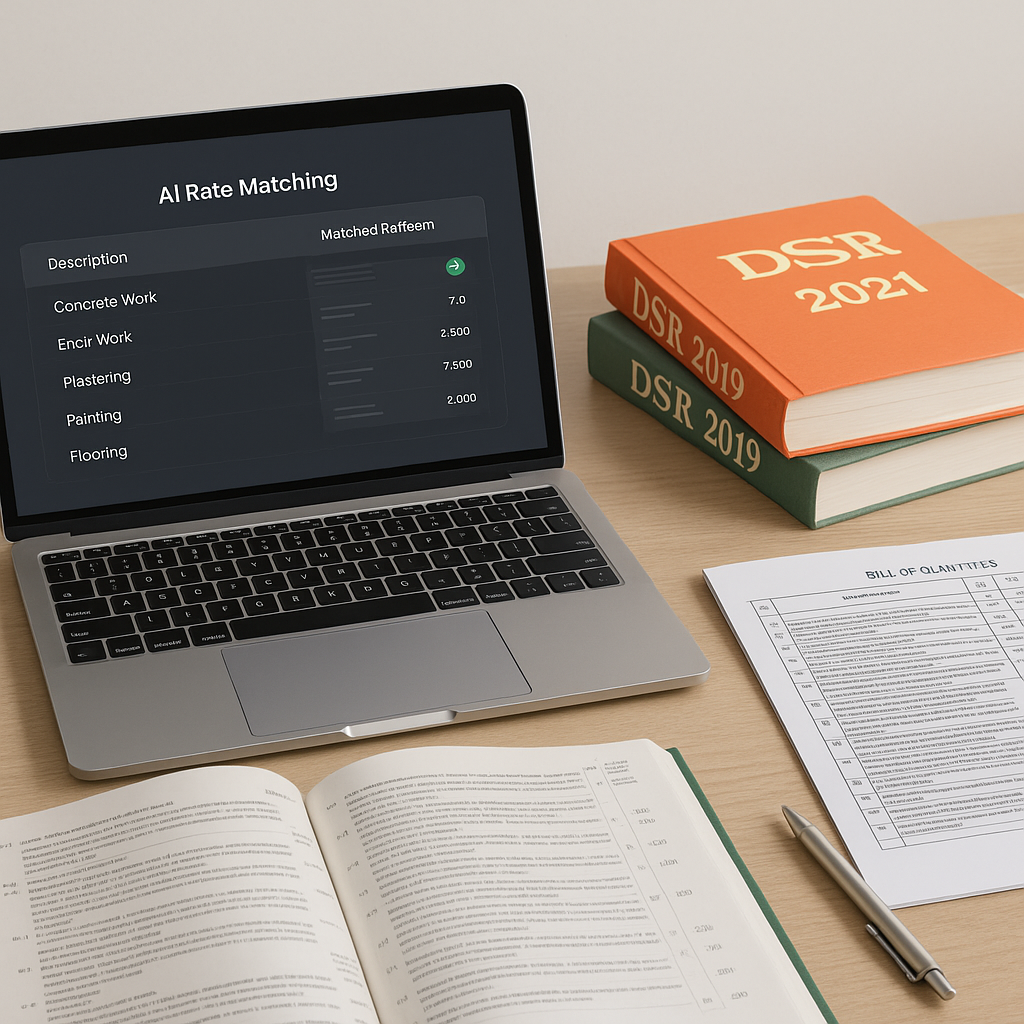
For example, you might need rates for gypsum partitions, acoustic ceilings, custom millwork, and HVAC ducting. Using traditional methods, you could be flipping through pages of catalogs like RSMeans or CPWD DSR, or relying on outdated Excel sheets. This manual process is not only slow but also increases the risk of errors, such as missing regional cost factors or outdated rates.
Enter AI Rate Matching
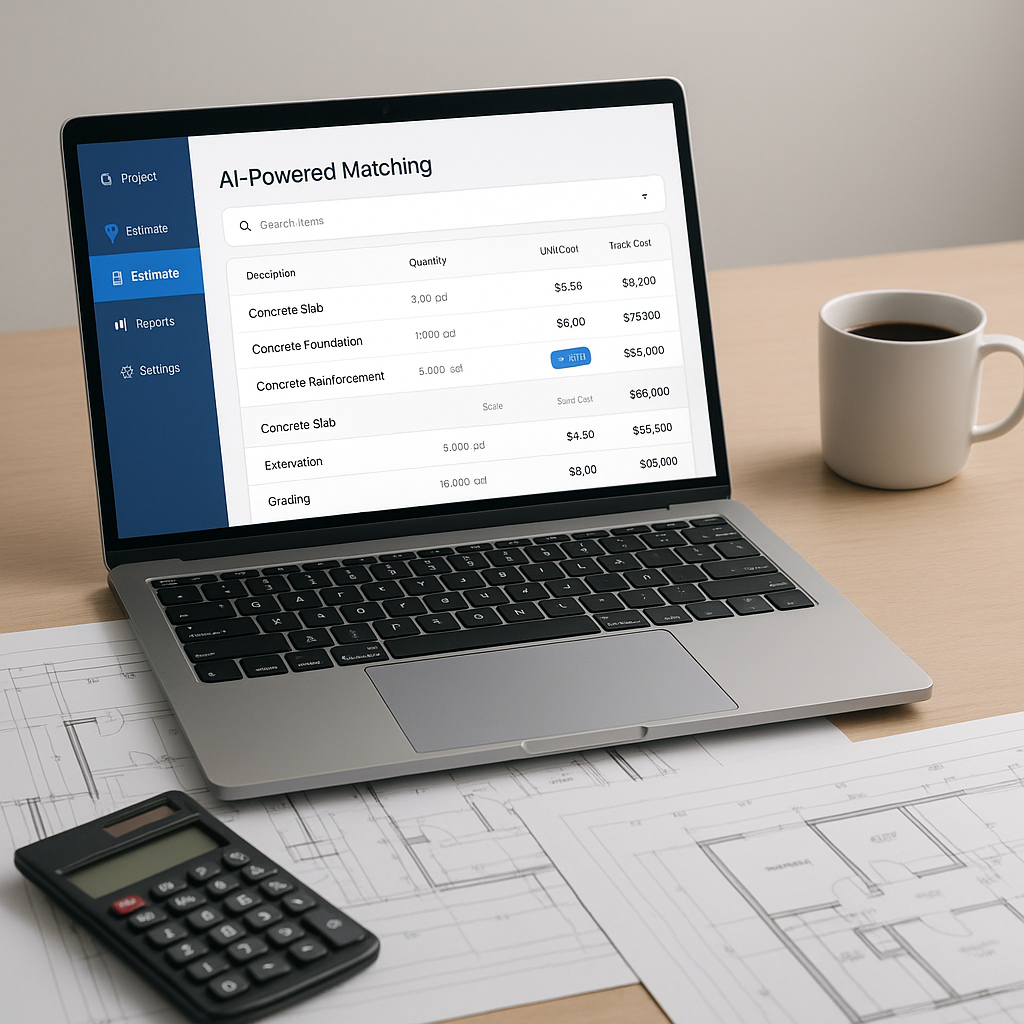
AI rate matching offers a solution by automating the process of finding relevant rates for BOQ items. These platforms use advanced search algorithms to match BOQ descriptions with rates from extensive databases. Instead of manually searching for a labor rate to install a 2x4 gypsum partition, you input the item, and the system retrieves the most relevant rate from its database.
Illustrative example — Suppose you’re pricing a high-rise project and need rates for curtain walls. By uploading the BOQ to an AI platform, the system scans the line items and suggests rates based on available data, while also considering factors like inflation and regional cost adjustments. This process can save significant time compared to manual lookups.
Why It Works
AI improves efficiency and reduces errors by leveraging semantic search, which understands the context of BOQ items. For instance, it recognizes that terms like “gypsum board” and “drywall” are synonymous and retrieves the appropriate rate accordingly.
Additionally, many AI platforms allow users to upload custom rate catalogs. This is particularly useful for firms that use proprietary rates for premium finishes or specialized labor. Over time, the system learns from user corrections, further enhancing its accuracy and relevance.
Common Objections
“AI can’t think like an estimator.”
That’s true, but it doesn’t need to. AI handles repetitive tasks like rate lookups and catalog matching, freeing up estimators to focus on strategic decisions such as negotiating with subcontractors or refining project markups.
“What if my rates are project-specific?”
AI platforms often allow for customization. Users can manually input specific rates for unique items, such as imported materials, and save them for future use.
Practical Steps to Get Started
- Upload Your BOQ: Start with a smaller project to test the system’s capabilities. Most AI platforms support formats like Excel, CSV, or PDFs.
- Review AI Matches: While AI can automate much of the process, it’s important to manually review high-cost or critical items to ensure accuracy.
- Add Custom Rates: If your firm uses proprietary rates, upload them to the system for better alignment with your projects.
- Track Feedback: Correct mismatches and monitor how the system improves over time based on your inputs.
FAQ
Q: Can AI rate matching handle inflation adjustments?
Yes. Many platforms apply inflation adjustments based on catalog year and regional economic data.
Q: How do I integrate AI tools with my existing workflow?
Look for platforms that offer API integrations with tools like Procore, Bluebeam, or Excel.
Q: What if my project spans multiple countries?
Some AI tools include multi-market databases that account for different currencies, tax regimes, and measurement standards.
Common Mistakes
- Skipping Manual Review: AI isn’t infallible. Always double-check high-value items.
- Ignoring Regional Factors: Ensure your AI tool accounts for location-specific costs.
- Failing to Update Catalogs: Regularly update your rate catalogs to maintain accuracy.
- Relying Solely on Defaults: Customize inflation rates and profit margins to reflect your firm’s standards.
The Bottom Line
Manual rate lookup is time-intensive and prone to errors, which can lead to financial losses. AI-powered rate matching streamlines this process, making it faster and more accurate. While it’s not a replacement for human expertise, it’s a powerful tool that can enhance efficiency and allow estimators to focus on higher-value tasks.
If you’re looking to improve your construction estimation process, consider exploring AI-powered tools to see how they can fit into your workflow.