The Estimation Bottleneck Nobody Talks About
If you've ever spent hours squinting at drawings, manually measuring wall lengths or counting fixtures, you know how quickly takeoffs can consume your time. Manual quantity takeoffs are not only tedious but also prone to errors—miscounted beams, missed wall sections, incorrect scaling. These mistakes can lead to costly overruns or missed opportunities.
AI-powered takeoff tools offer a faster, more efficient alternative. By automating the repetitive aspects of takeoffs, these tools allow estimators to focus on higher-value tasks like pricing strategies and subcontractor negotiations.
How AI Takeoffs Work (Without the Marketing Fluff)
AI takeoff tools use advanced Vision AI technology to extract quantities directly from your drawings. Here’s how the process typically works:
- Upload Your Drawings: Whether it’s a single PDF or a large package with multiple sheets, the system ingests your files quickly.
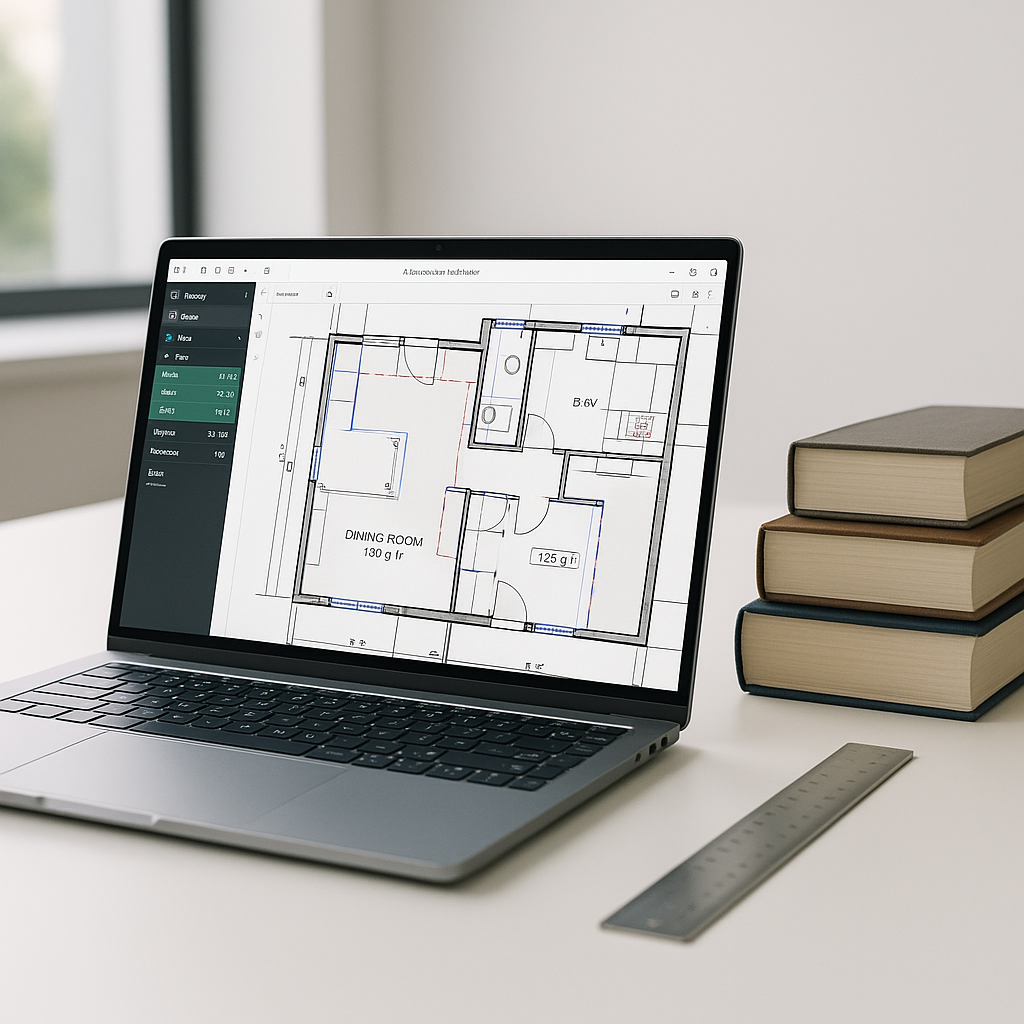
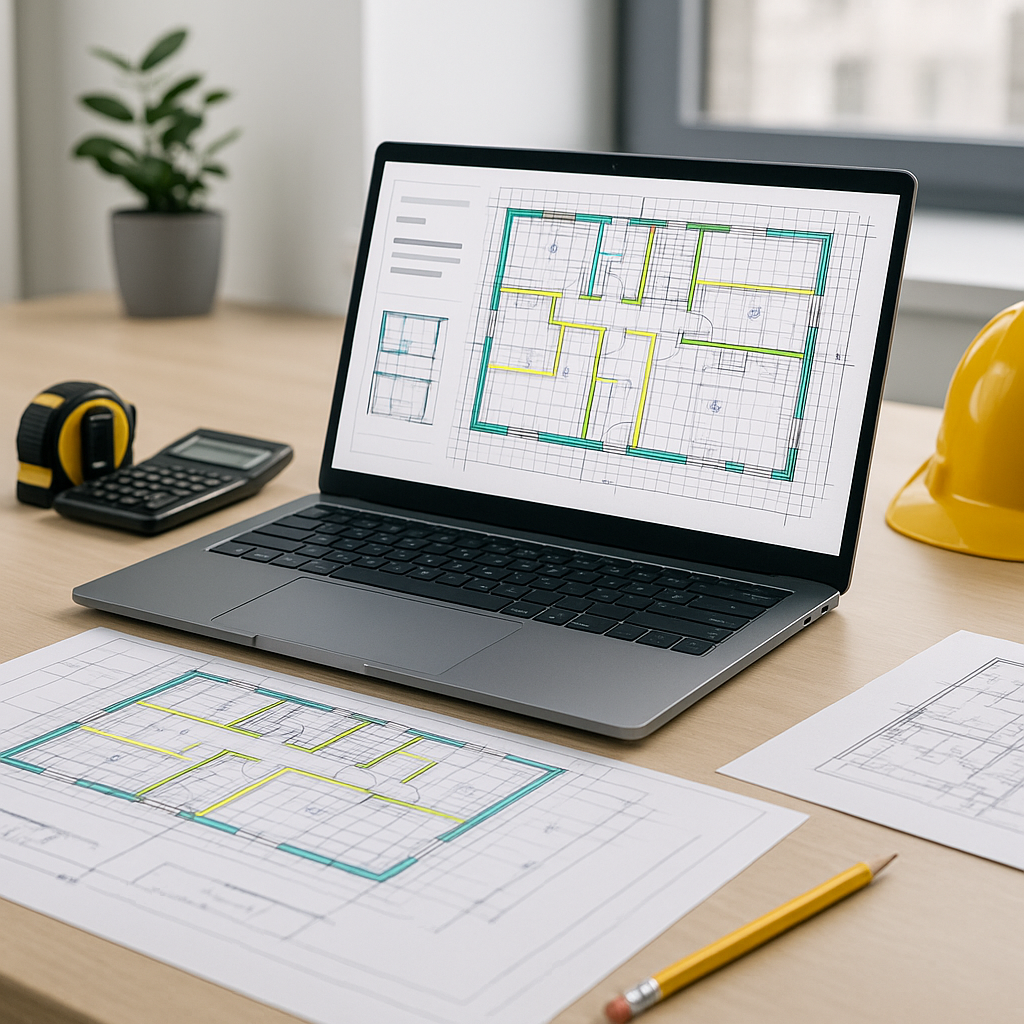
- AI Reads the Drawings: The tool scans for key elements—rooms, walls, windows, doors, and more. It uses pattern recognition and machine learning to identify and quantify these features.
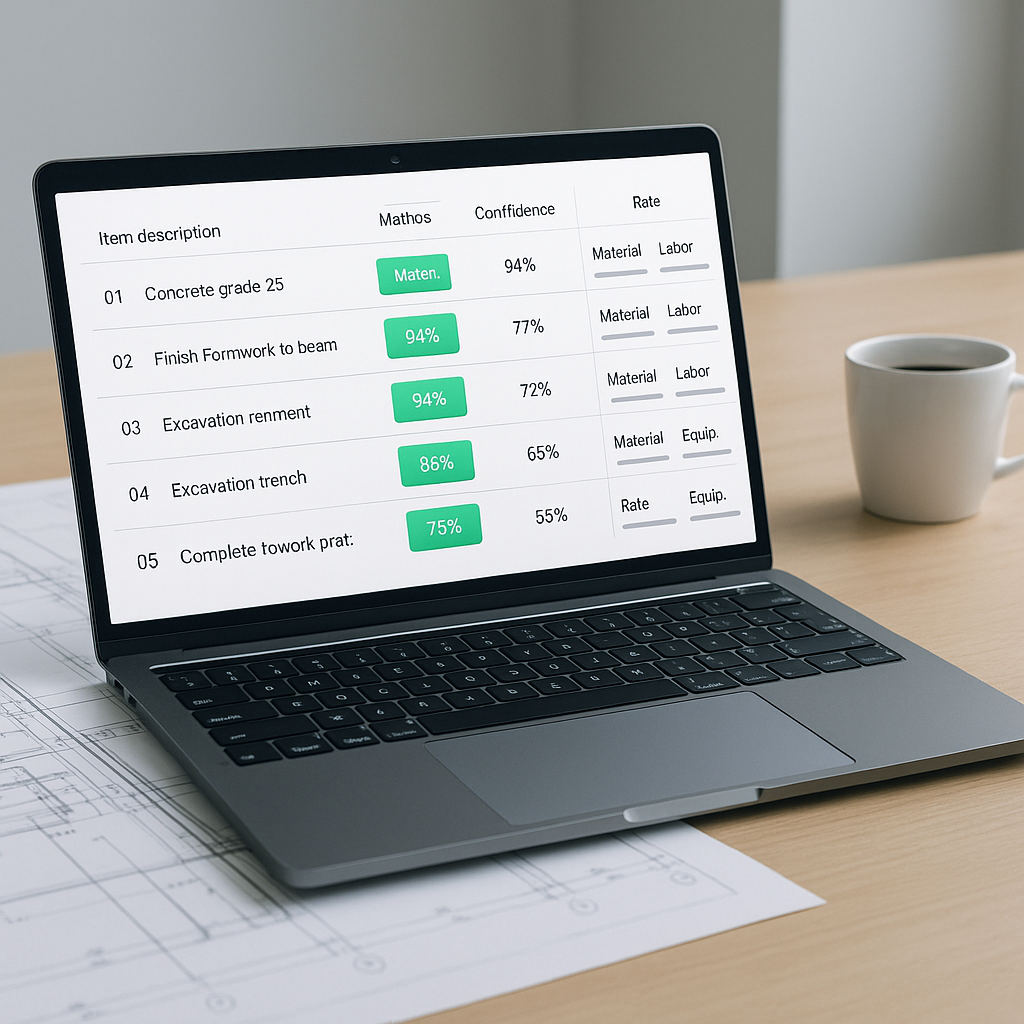
- Flagging Uncertainties: The AI highlights elements it isn’t fully confident about, so you can review and make adjustments as needed.
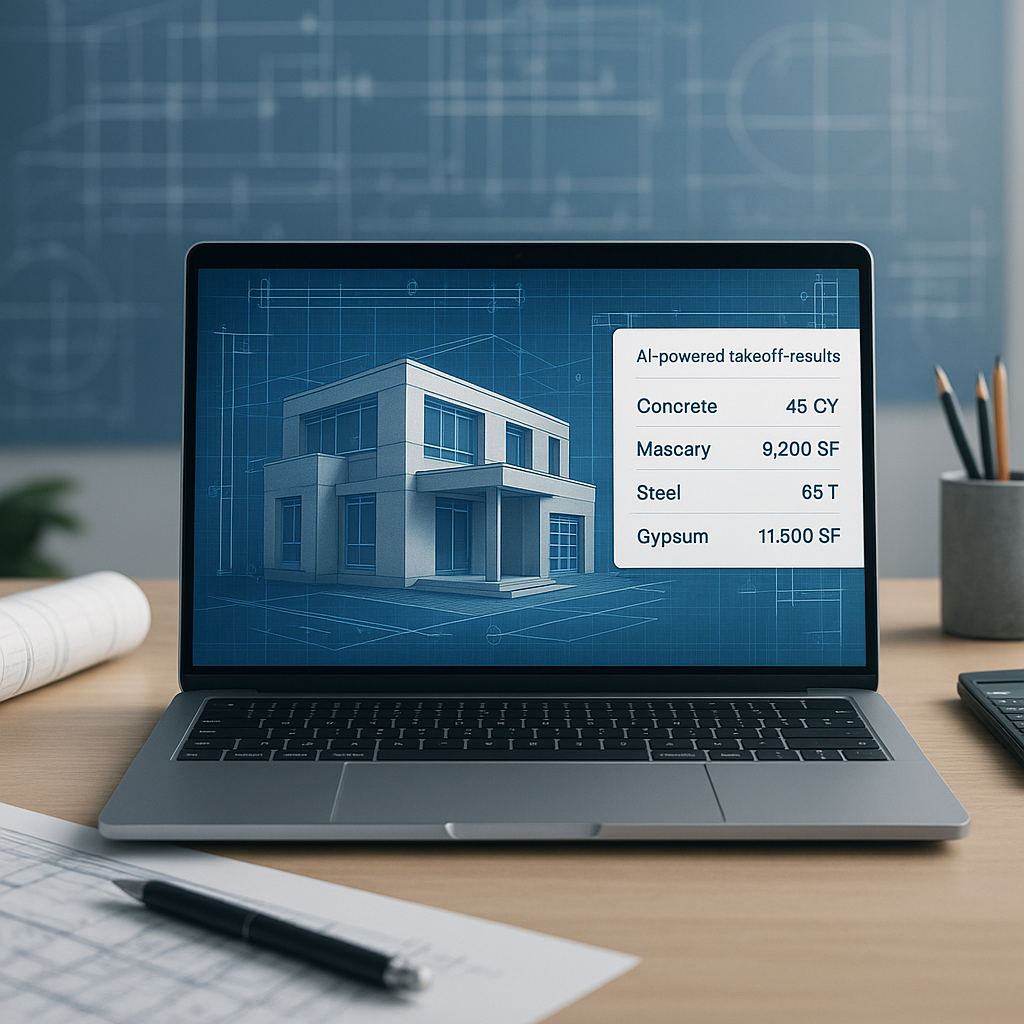
- Export Your QTO: Once the takeoff is complete, export the quantities directly into your Bill of Quantities (BOQ) or pricing software.
While AI tools can handle much of the heavy lifting, they still benefit from human oversight to ensure accuracy and account for project-specific nuances.
Why Speed Matters
Speed in preconstruction estimation is not just a convenience—it’s often a competitive advantage. Faster takeoffs allow teams to:
- Respond to more bids without overburdening staff.
- Perform multiple “what-if” scenarios to optimize pricing.
- Meet tight deadlines without compromising on quality.
By automating repetitive tasks, AI-powered tools free up time for strategic decision-making, enabling teams to refine their bids and improve their chances of winning projects.
Common Skepticism: “Can AI Really Be Trusted?”
A common concern is whether AI tools can handle the complexities of real-world projects. While no tool is perfect, many AI solutions include features like confidence scoring and manual override options. These allow users to review flagged elements and make corrections as needed. Over time, as the AI learns from user feedback, its accuracy improves.
For those hesitant to fully adopt AI, starting with smaller projects or using free trials can help build trust in the technology.
What to Watch For
Not all AI tools are created equal. When evaluating options, consider the following:
- Integration: Can the tool export data to your existing software stack (e.g., Procore, Bluebeam, Excel)?
- Customization: Does it allow you to upload your own rate catalogs or define custom measurement standards?
- Learning Curve: How intuitive is the interface? Can your team start using it with minimal training?
- Support: What kind of customer support and resources are available if issues arise?
FAQ
Q: How accurate are AI-generated takeoffs?
AI tools are highly accurate but not perfect. The combination of confidence scoring and manual overrides ensures you catch any discrepancies before they become costly mistakes.
Q: Does AI work for smaller projects?
Yes, AI scales to projects of any size, whether you’re pricing a small renovation or a large infrastructure bid.
Q: How long does it take to learn an AI tool?
Most platforms are designed for ease of use, with intuitive interfaces that minimize the learning curve. Training requirements vary by tool but are generally manageable.
The Bottom Line
Manual takeoffs are increasingly becoming a thing of the past. AI-powered tools streamline the process, saving time and reducing errors. By automating repetitive tasks, these tools enable construction professionals to focus on strategic, high-value activities, ultimately making their estimates faster, smarter, and more competitive.
Ready to explore AI-powered takeoffs?
Learn more about how these tools can transform your preconstruction process and improve your efficiency.