Manual Rate Lookups Are Time-Consuming and Error-Prone
If you've ever spent hours flipping through RSMeans, CPWD DSR, or any other giant rate book, you know the challenges. It’s not just time-consuming—it’s error-prone. Missing a line item or using an outdated rate can lead to bids that are either uncompetitive or financially risky.
Many estimators spend significant time searching for the right rates because it’s the traditional way of working. But what if there was a better approach?
What Is AI Rate Matching?
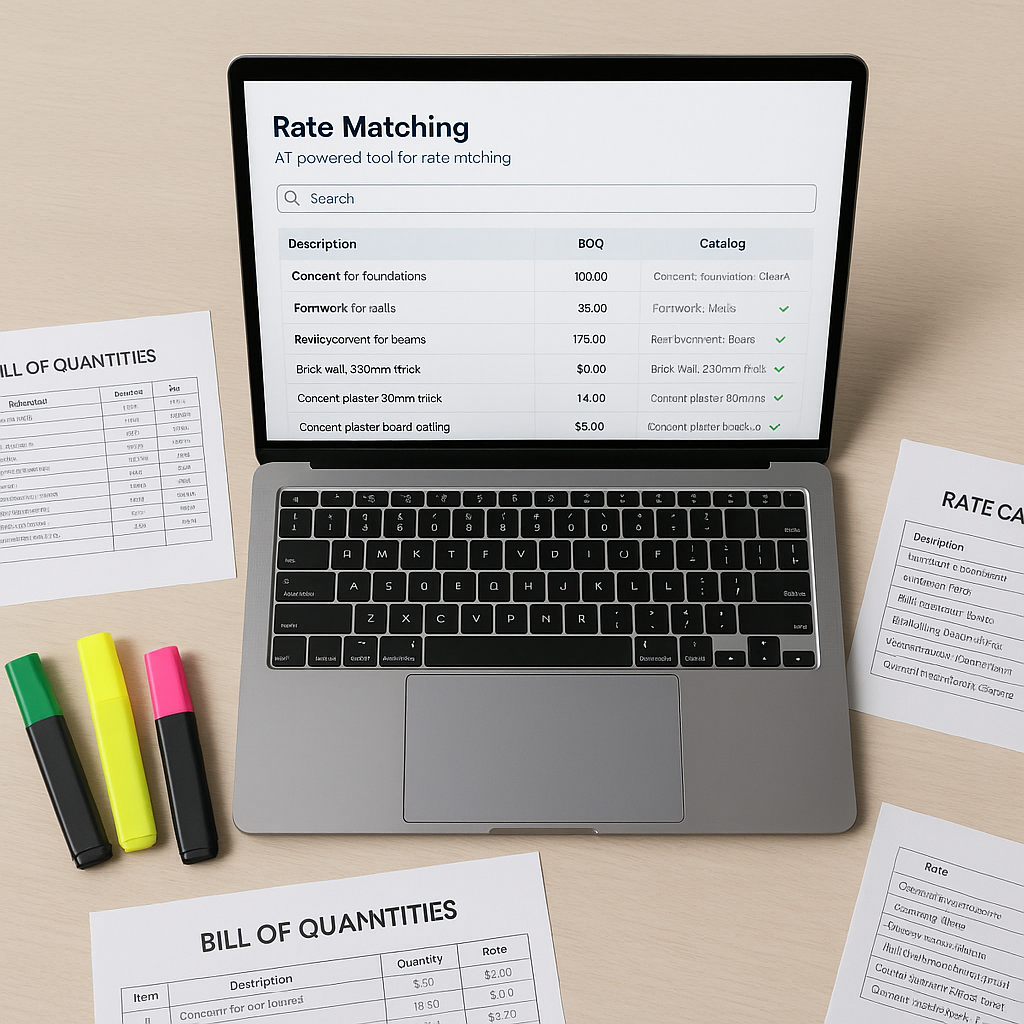
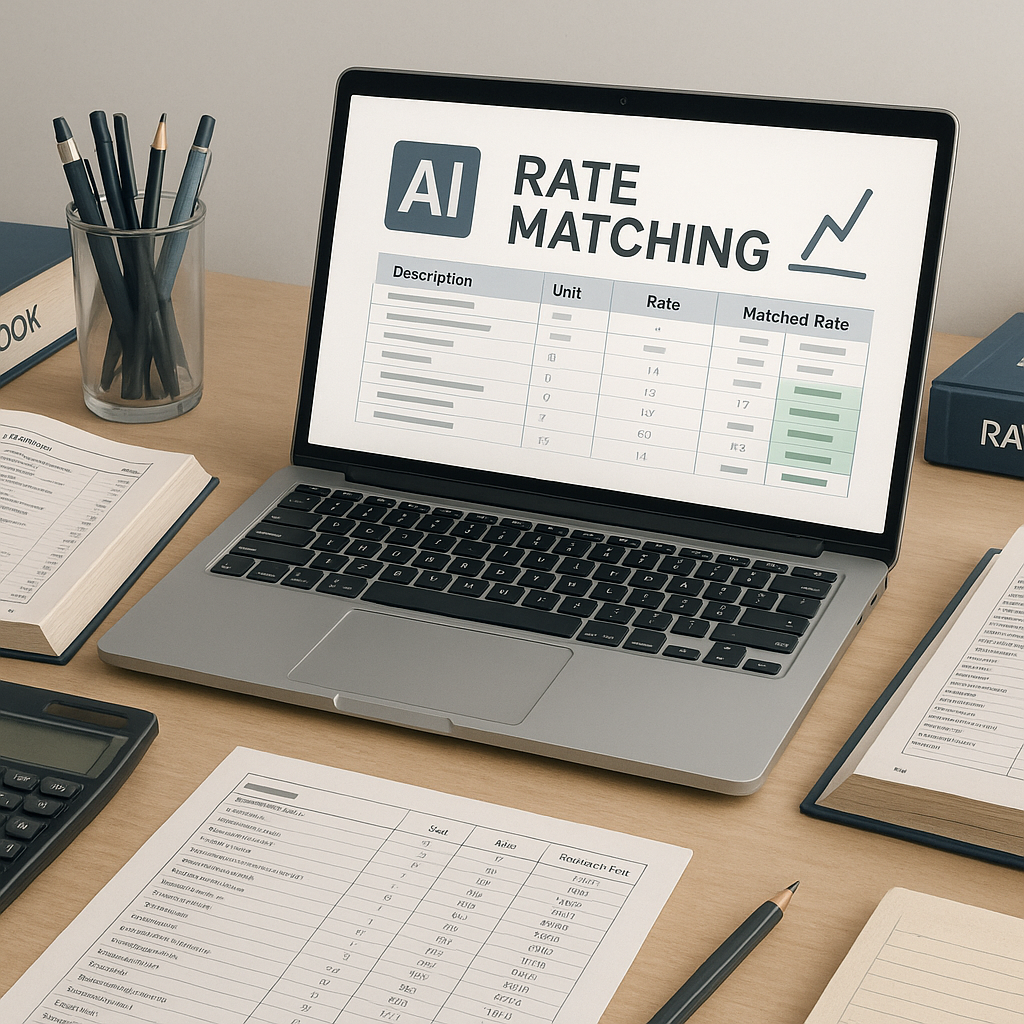
AI-powered rate matching allows you to type a description like "concrete, Grade M25, 1:2:4 mix, per cubic meter" into a search bar and quickly retrieve the most relevant rate from a database. This could include standard catalogs like RSMeans, CPWD DSR, or even your own custom data.
The technology uses semantic search, which understands the context and intent behind your input rather than just matching keywords. For example, if you type "install HVAC ducting," it identifies labor, material, and overhead costs specific to your region, project type, and even adjusts for inflation.
AI rate matching systems often prioritize historical data (your past projects), user-defined custom catalogs, and country-specific databases to ensure the results are both fast and relevant.
Why Does This Matter?
1. Speed
Estimators often spend a significant amount of time finding and verifying rates. AI rate matching can reduce this process to seconds, allowing you to focus on other critical tasks like fine-tuning bids or managing multiple projects.
2. Accuracy
Manual processes are prone to errors, such as copying the wrong rate or using outdated data. AI-powered tools reduce these risks by combining historical data with real-time catalog updates. Custom rates can also be integrated for consistency.
3. Scalability
Whether you're pricing a small office fit-out or a large infrastructure project, AI-powered tools scale effortlessly, enabling your team to handle more bids without additional strain.
How It Works in Practice
Illustrative example — You’re bidding on a mid-rise residential project with a BOQ that includes 15 items, such as M25-grade concrete and UPVC windows. Normally, you would:
- Open your rate book.
- Search for the correct section and rate.
- Adjust for inflation and copy the rate into your estimate.
- Repeat this process for each item.
With AI rate matching, you could:
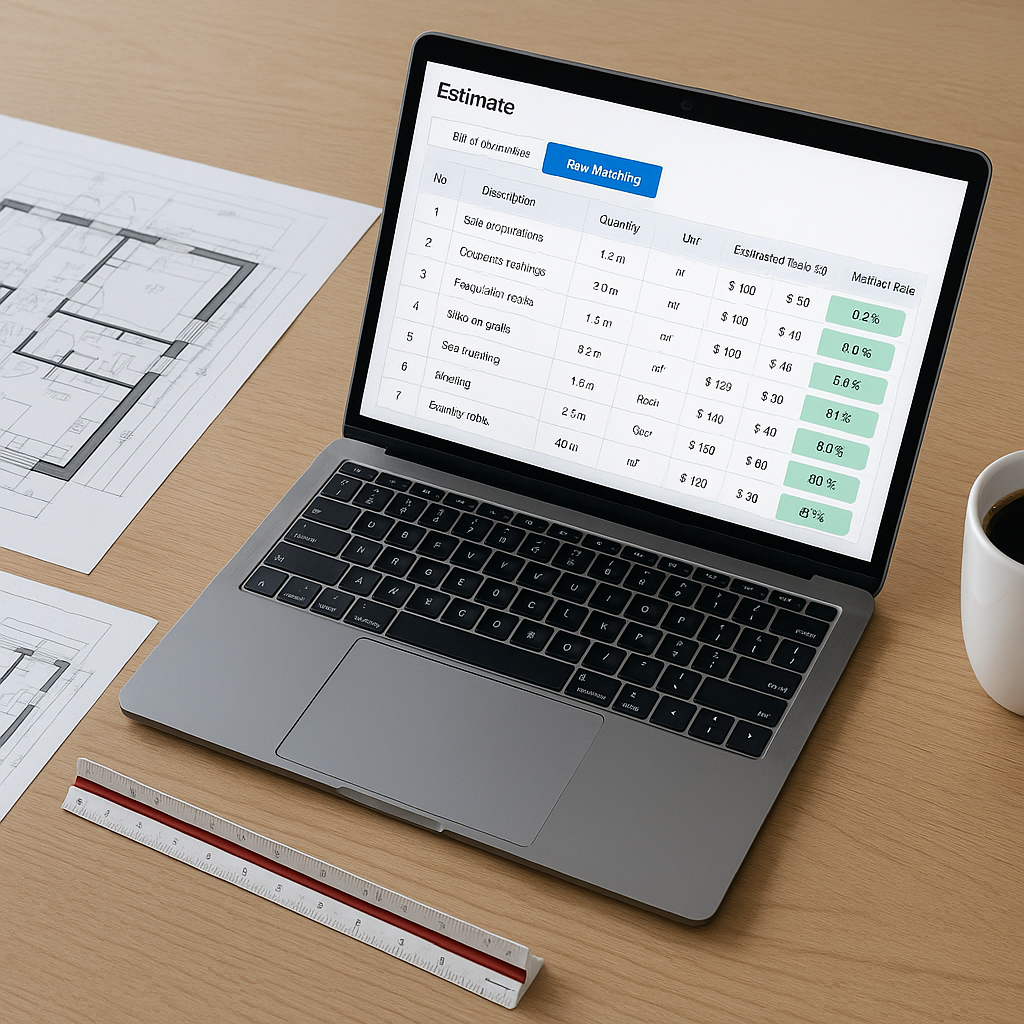
- Upload the BOQ into the platform.
- Let the AI auto-match each line item to the correct rate.
- Review and approve the results in minutes.
This streamlined process saves time and reduces the likelihood of errors.
Common Questions About AI Rate Matching
Q: What if the AI gets it wrong?
No system is perfect. Many AI tools include features like confidence scoring and manual override options. If the AI is uncertain, it flags the item for review, ensuring you remain in control.
Q: Can I use my own rates?
Yes. Custom rate catalogs can be uploaded, and the AI will prioritize them over generic databases. This ensures your estimates reflect your actual costs.
Q: Does it work with my existing tools?
Most AI platforms integrate with popular preconstruction tools like Procore, Bluebeam, and Excel. For example, you can export a fully priced BOQ and incorporate it into your existing workflow seamlessly.
What to Watch For
- Outdated Data: Ensure your rate catalogs are up-to-date for accurate results.
- Blind Trust: Always review AI-generated results and use manual override features when necessary.
- Team Training: Provide adequate onboarding to ensure your team can use the platform effectively.
Final Thoughts
AI rate matching is a tool designed to assist estimators, not replace them. By eliminating repetitive tasks, it allows you to focus on strategy, relationships, and winning more bids. In a competitive market, these advantages can make a significant difference.
If you’re looking to streamline your rate lookup process, consider exploring AI-powered solutions to enhance your workflow.