Flipping Through Rate Books Is Wasting Your Time
If you've ever spent hours searching for the right rate in a 2,000-page CPWD DSR or RSMeans book, you know how frustrating it is. Multiply that by multiple projects a year, and you're looking at significant wasted time. And that's just rate lookups—what about when the rates don't exactly match? Then you’re stuck tweaking line items manually.
Here's the thing: this process is broken. It's slow, prone to error, and a terrible use of your expertise. What if you could offload it to AI?
What Is AI-Powered Rate Matching?
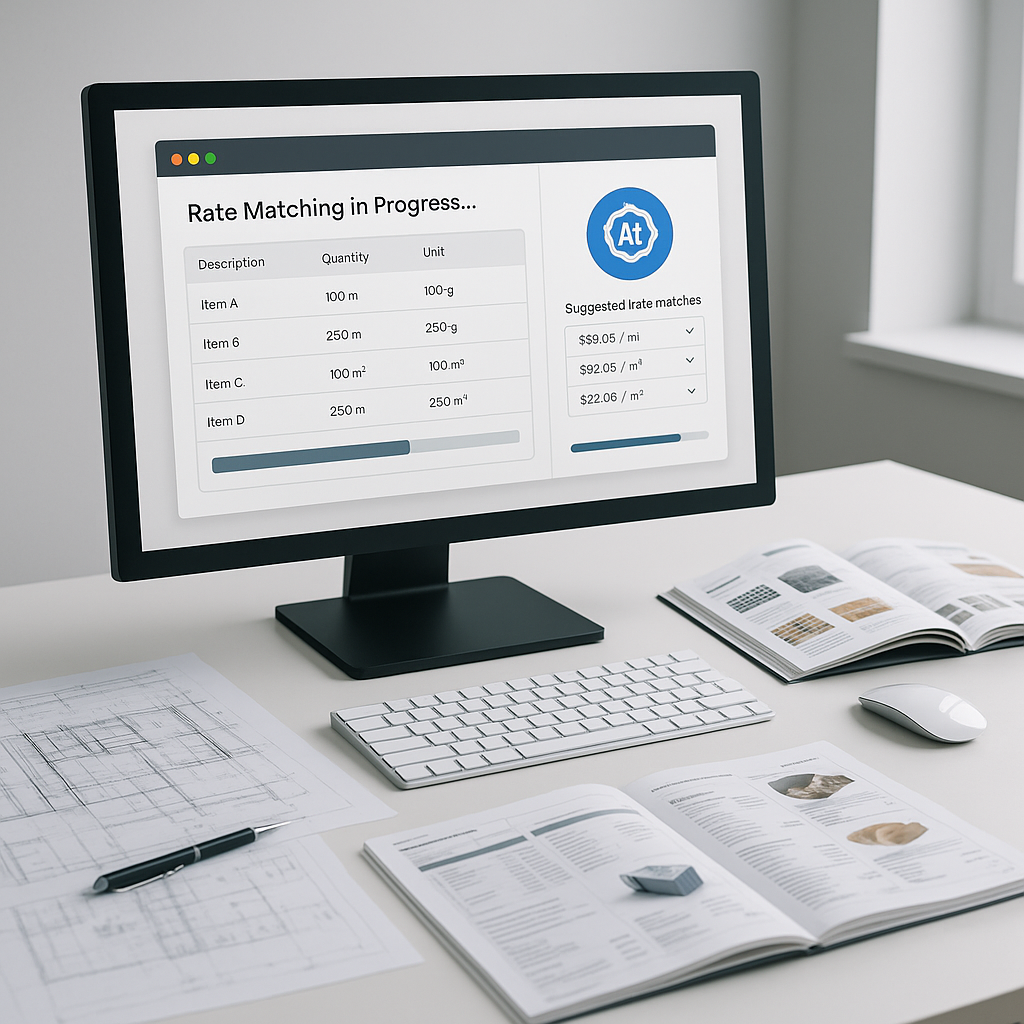
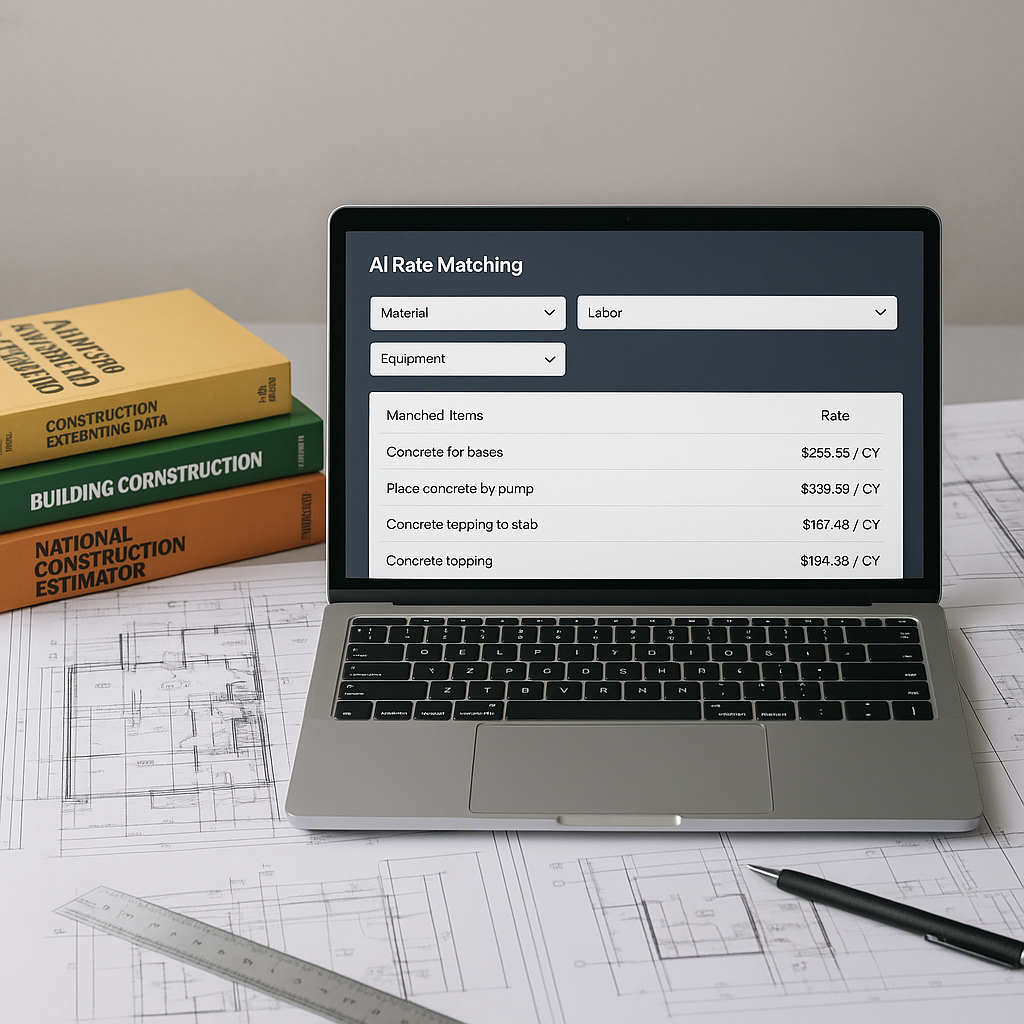
AI-powered rate matching is exactly what it sounds like. Instead of manually flipping through catalogs, AI uses semantic search to find the closest match for your line items. For example, if you're estimating costs for "pre-stressed concrete girders," you can type it in. The AI scans its database and returns approved rates for labor, materials, and equipment.
These tools often support a wide range of catalogs, such as CSI MasterFormat, CPWD DSR, or even custom rate books. They can also learn from your past projects to improve accuracy over time.
Why Does This Matter?
1. It Saves You Time
Manual rate lookups can take hours per estimate. AI-powered tools reduce this process to seconds. This time savings allows you to focus on more strategic tasks, such as pricing more bids or refining project scopes.
2. It Reduces Errors
Manual rate matching is prone to mistakes. A single error can throw off an entire estimate. AI tools minimize this risk by pulling directly from approved catalogs and providing an audit trail for every rate, so you can trace exactly where each number came from.
3. It Handles Complexity
Not all rates are straightforward. Sometimes, you need to adjust for inflation, regional labor variations, or project-specific factors. Good AI tools account for these variables, allowing you to configure cost factors like overhead and profit percentages or adjust for inflation rates.
How It Works in Practice
Let’s say you’re pricing an office fit-out. Your BOQ includes line items for custom doors, HVAC systems, and high-end finishes. Here’s how you’d handle it with AI-powered rate matching:
- Upload Your BOQ: Drag and drop your Excel sheet into the tool. The AI parses it, recognizing section headers, merged cells, and hierarchies.
- Search Rates: Type in "custom oak doors" or "VRF HVAC system." The AI scans its database and returns the closest matches, complete with labor, material, and equipment breakdowns.
- Adjust as Needed: If the rate isn’t perfect, tweak it. The system learns from your edits and improves for future projects.
- Export Your Estimate: Once you’re satisfied, export the final estimate in your preferred format—Excel, CSI MasterFormat, or CPWD DSR.
Common Objections
You might be thinking, “This sounds great, but can AI really understand my specific needs?”
Here’s the honest answer: AI isn’t perfect. It’s not going to replace your judgment or expertise. But it doesn’t have to. The goal isn’t to automate everything; it’s to handle the grunt work so you can focus on higher-value tasks.
Another concern is the learning curve. Most platforms are designed to be user-friendly. With a little training, you can quickly get up and running, and the time savings can be significant.
What to Watch For
Not all AI tools are created equal. Here’s what to look for:
- Catalog Coverage: Does the tool have the catalogs you need? For example, does it support CPWD DSR, RSMeans, or other relevant catalogs?
- Customizability: Can you upload your own rates or adjust existing ones?
- Accuracy: Does the tool offer features like an audit trail to verify rate sources?
- Integration: Can it export to your existing workflows, like Procore or Excel?
If the answer to any of these is “no,” keep looking.
FAQ
Q: Can AI handle custom rates? Yes. Most tools let you upload your own rate catalogs or define project-specific rates.
Q: What about projects in multiple regions? Good AI tools account for regional variations in labor and material costs. They often include features to adjust for these differences.
Q: How accurate are AI-generated rates? AI tools are generally accurate, especially after being fine-tuned with user feedback over time. However, it’s always a good idea to review the results.
Q: Do I still need to check the AI’s work? Yes. Think of AI as an assistant, not a replacement. Always review the results before submitting a bid.
Ready to Streamline Your Estimation Process?
If you're tired of wasting time on manual rate lookups, AI-powered platforms can help. By automating repetitive tasks, these tools allow you to focus on what truly matters—delivering accurate and competitive bids.