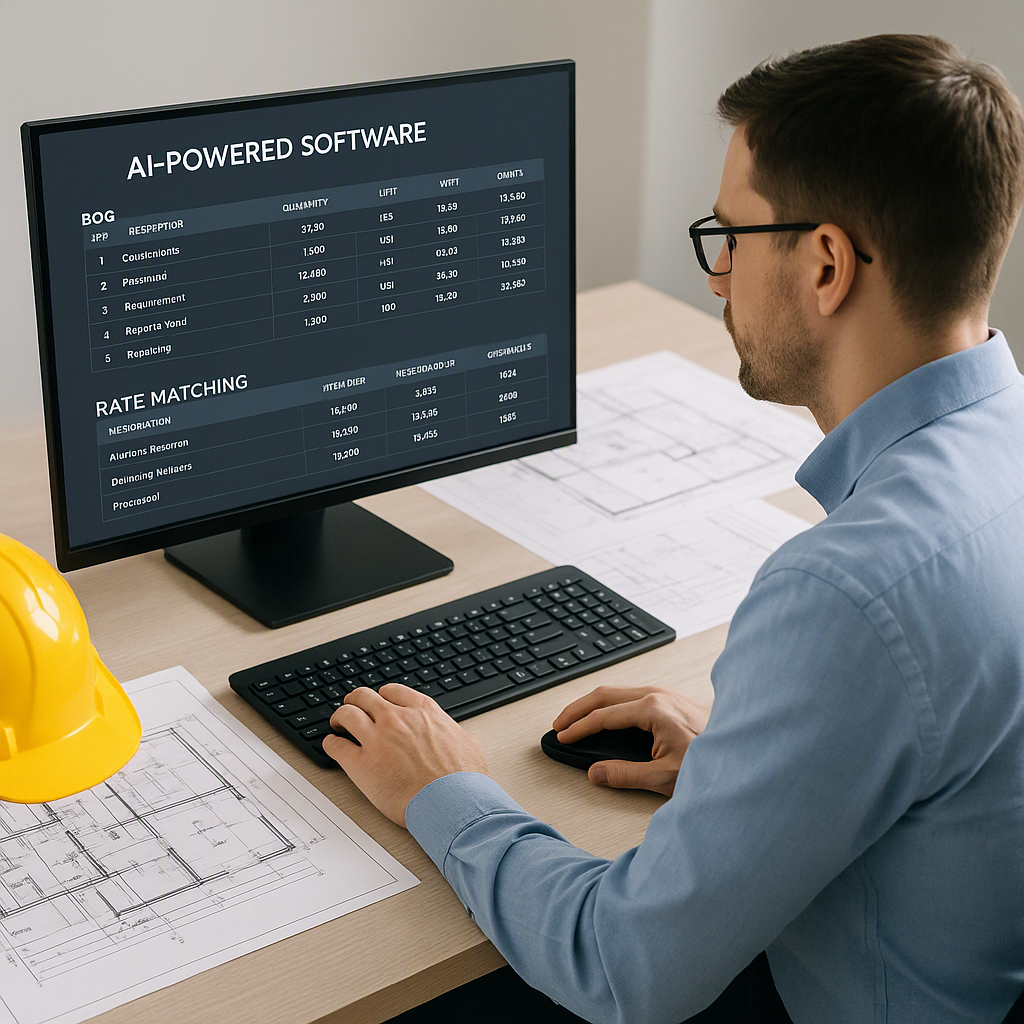
The Problem: Hours Wasted on Manual Rate Lookup
If you’ve ever spent hours flipping through a 2,000-page rate book, you know the pain. Whether it’s CPWD’s DSR, RSMeans, or a custom vendor catalog, manual rate lookup isn’t just tedious—it’s a productivity killer. Estimators often split the BOQ into chunks and spend significant time finding and validating rates, which delays pricing scenarios and impacts overall efficiency.
Here’s the thing: your competition has the same problem. The difference? Some of them are already solving it with AI-powered rate matching tools. Tools like EstimateNext streamline manual lookup by searching thousands of Schedule of Rates (SOR) items in seconds. You type in a description—say, “M20 concrete”—and get a rate suggestion, complete with material, labor, and equipment breakdowns.
Why Manual Rate Lookup Always Seemed Necessary
Construction estimation is full of variables. Rates differ based on location, market fluctuations, project size, and even client relationships. Flipping through those giant rate books felt like the only way to ensure accuracy. Plus, there’s a certain comfort in seeing the numbers right there on the page. It feels tangible, reliable. But comfort doesn’t win bids. Speed and accuracy do.
How AI Rate Matching Actually Works
Here’s how tools like EstimateNext tackle rate lookup:
-
BOQ Parsing: You upload your Bill of Quantities (BOQ) file—whether it’s in Excel, CSV, or even a messy PDF. The system’s Smart BOQ Parser identifies line items, merges cells, and organizes section headers automatically. No more manual cleanup.
-
Semantic Search: The AI doesn’t just look for exact matches; it understands context. For instance, if your BOQ says “reinforced concrete slab,” it’ll find all relevant SOR items, even if the phrasing isn’t identical. This is a massive upgrade over CTRL+F in a PDF.
-
Rate Analysis: Once it finds a match, the tool breaks down the rate into material, labor, and equipment components. This transparency is critical when you’re building trust with clients or negotiating with subcontractors.
-
Self-Learning Matcher: Over time, the system gets smarter. Each time you approve or reject a suggested rate, it adjusts its algorithm to improve future matches.
Why It’s Not a Magic Wand (And That’s Okay)
Let’s address the elephant in the room: AI isn’t perfect. No tool can replace human judgment entirely, especially in an industry as variable as construction. But tools like EstimateNext incorporate safeguards like manual override options. You’re still in control—AI just handles the grunt work.
In practice, the key is to treat AI as a collaborator, not a replacement. Pair junior estimators with AI tools to free up senior staff for high-value tasks like client negotiations and risk analysis. Think of it as having an extra set of hands, not a new brain.
The Bottom Line
If you’re still relying on manual rate lookup, you’re leaving time and money on the table. AI-powered tools like EstimateNext don’t just save time—they let you win more bids, improve accuracy, and focus on what really matters. It’s not about replacing your expertise; it’s about amplifying it.