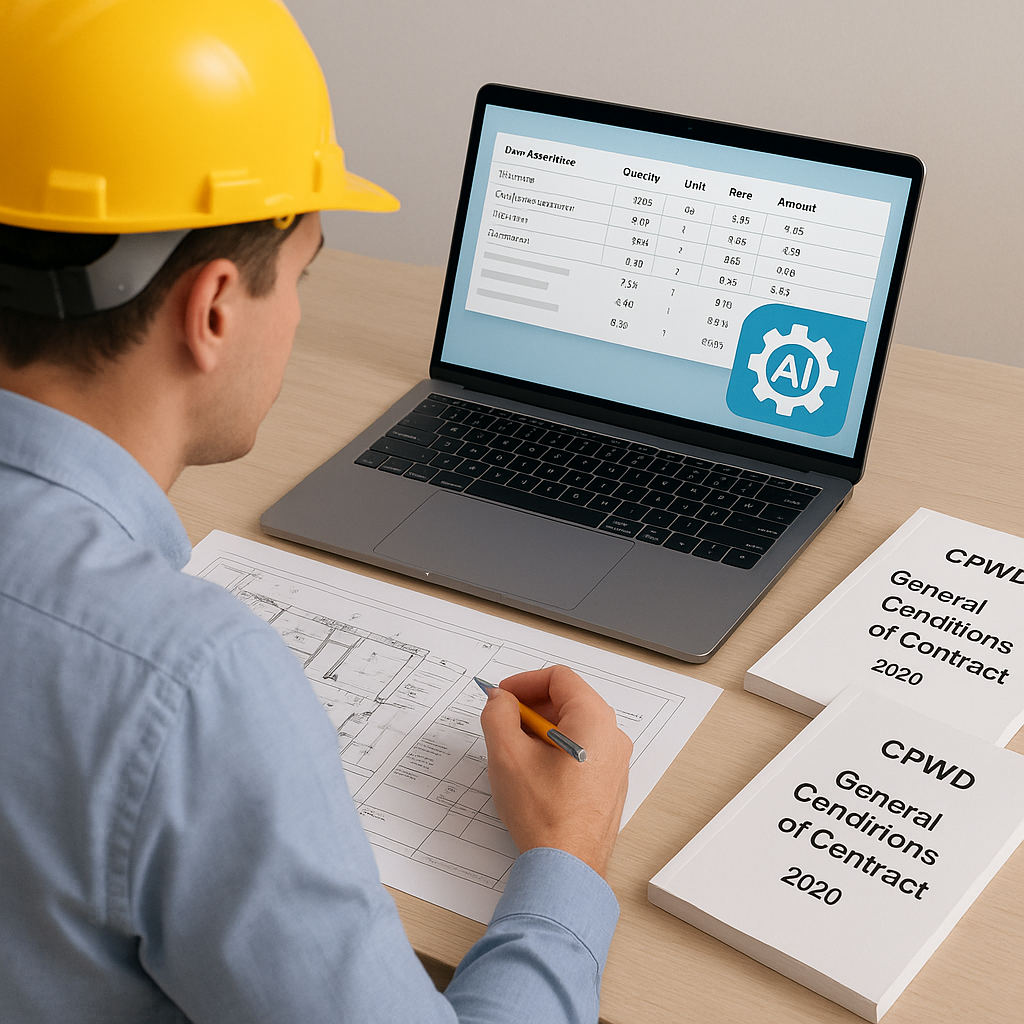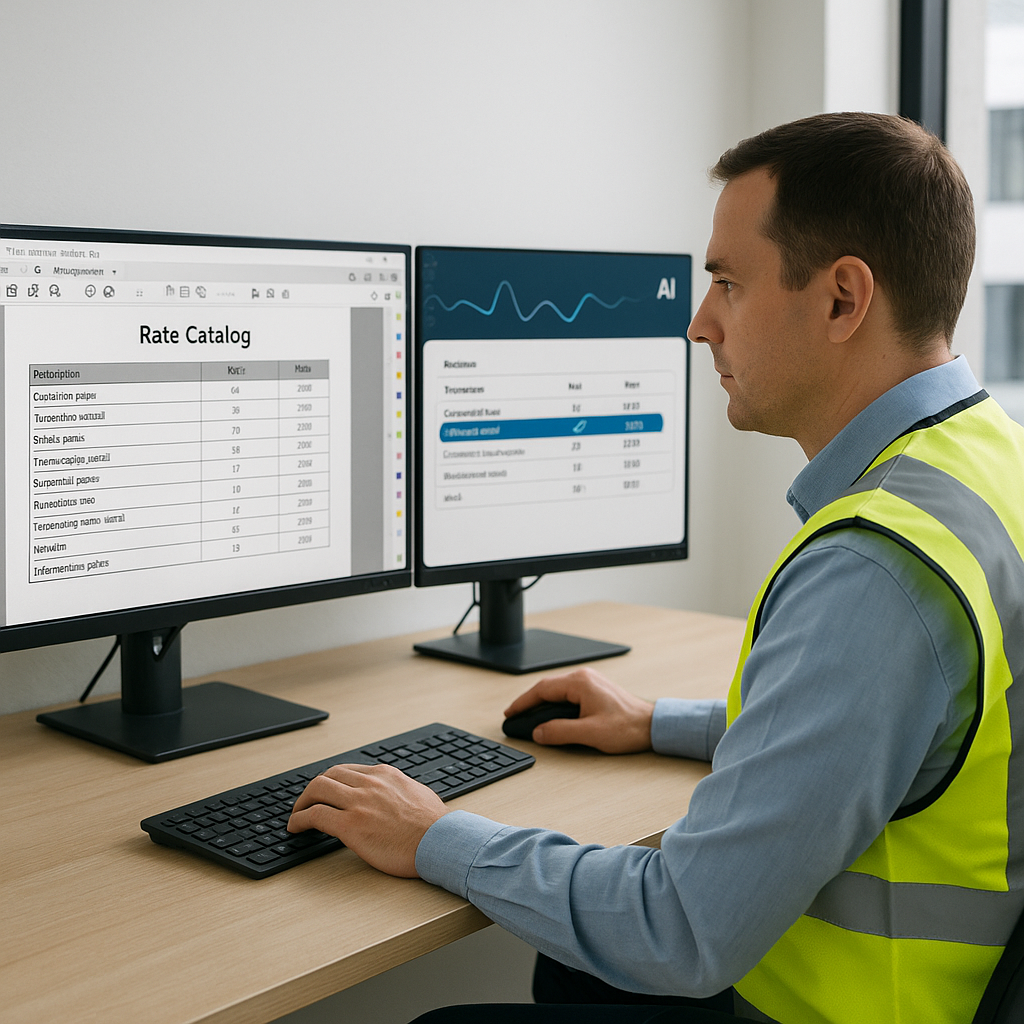
The Problem: Flipping Through Rate Books Wastes Time
Picture this: you're estimating a mid-sized project. The BOQ lands on your desk, and now you need to match rates from a 2,000-page PDF catalog. Maybe it's RSMeans, CPWD DSR, or your custom rate sheet. You spend hours scrolling, flipping, and guessing. It's tedious. Worse, it's error-prone. Miss one line item, and your bid could be significantly off.
Manual rate lookup is a bottleneck that can hinder productivity. A McKinsey report highlights that preconstruction inefficiencies account for a significant portion of wasted time in the construction lifecycle. Rate matching is one such challenge.
So, what’s the fix? AI-powered rate matching.
The Solution: Semantic Search Across Rate Catalogs
AI-powered tools use semantic search to address this problem. Instead of manually flipping through PDFs, you type in your query—e.g., “labor rate for installing pre-stressed concrete girders.” The AI scans its database of thousands of items (across catalogs like CPWD DSR, RSMeans, and more) and delivers the best match in seconds.
How does it work? The AI doesn’t just look for keyword matches; it understands the context. For example, if your project involves custom finishes, the system adjusts its search to reflect your unique requirements. And it learns over time—every correction you make feeds back into the system, improving future matches.
Illustrative Example: Streamlining a High-Rise Bid
Illustrative example — A general contractor bidding on a high-rise project used manual methods to match rates for their BOQ. The process took several hours. By switching to an AI-powered tool, the same task was completed in a fraction of the time.
This time savings can translate into significant cost savings over multiple projects, as estimators can focus on higher-value tasks rather than repetitive manual work.
Common Objections to AI Rate Matching
“AI can’t be as accurate as a human.”
AI tools often include features like manual override options, allowing users to review and adjust results. This ensures that the estimator remains in control while the AI handles the repetitive tasks.
“Our rates are custom. AI won’t understand them.”
Custom rate catalogs can be uploaded into the system, enabling the AI to work with your specific data and provide tailored results.
“What about compliance?”
For markets like India, compliance with CPWD/state SORs is critical. AI tools often include databases with compliant items, reducing the risk of errors.
What to Watch For
- Input quality matters. Garbage in, garbage out. If your BOQ is poorly formatted, even the best AI will struggle.
- Review low-confidence matches. No system is perfect. Use the override feature for questionable results.
- Keep catalogs updated. Rates change, and so should your data. Make sure you’re working with the latest versions.
FAQ
Q: How long does it take to train the system?
A: Most users see significant improvements after a few projects. It’s a fast learning curve.
Q: Can I integrate this with my existing tools?
A: Yes, many AI-powered tools integrate with platforms like Procore, Bluebeam, and Excel. Export and import seamlessly.
Final Thoughts
Manual rate matching can be a significant drain on resources. AI-powered tools simplify the process, saving time and improving accuracy. If you’re still flipping through PDFs, it’s time to rethink your workflow.