The Rate Lookup Problem No One Talks About
If you've ever been in the middle of pricing a bid, you’ve probably experienced this: you're flipping through hundreds, maybe thousands, of pages in a rate book. CPWD DSR, RSMeans, state SORs—pick your reference. You spend hours hunting for the right unit rate for a specific task, only to find yourself second-guessing if it's even the most accurate one. Frustrating, right?
Now, multiply that by 50 items in your Bill of Quantities (BOQ). That’s the challenge estimators face every day. And let’s not ignore the other elephant in the room: human error. It’s easy to misread a rate, miss a page, or worse, apply the wrong one altogether.
The result? An inaccurate bid that either costs you the job or, worse, wins it and starts bleeding money the moment the project begins.
This is where AI-powered rate matching comes in. It doesn’t just save time—it improves accuracy and efficiency in the estimation process.
How AI-Powered Rate Matching Works
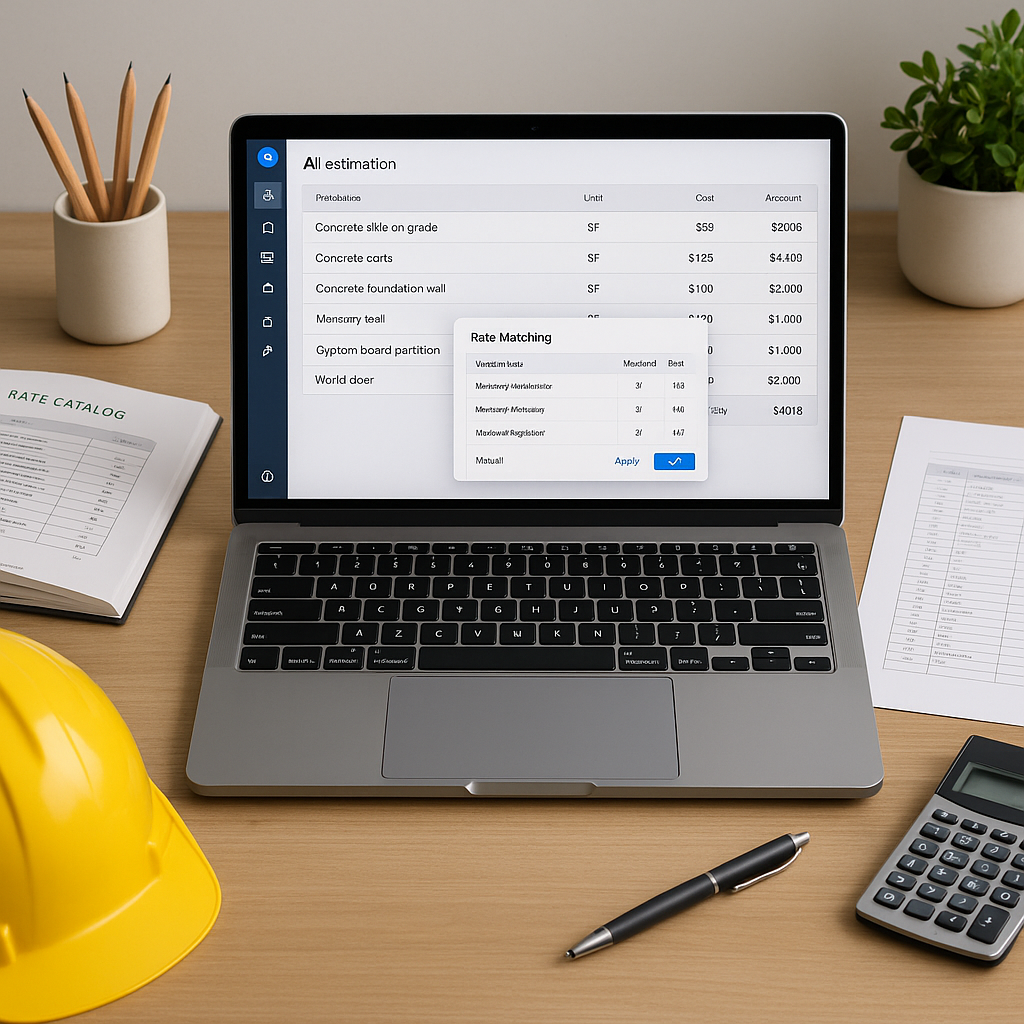
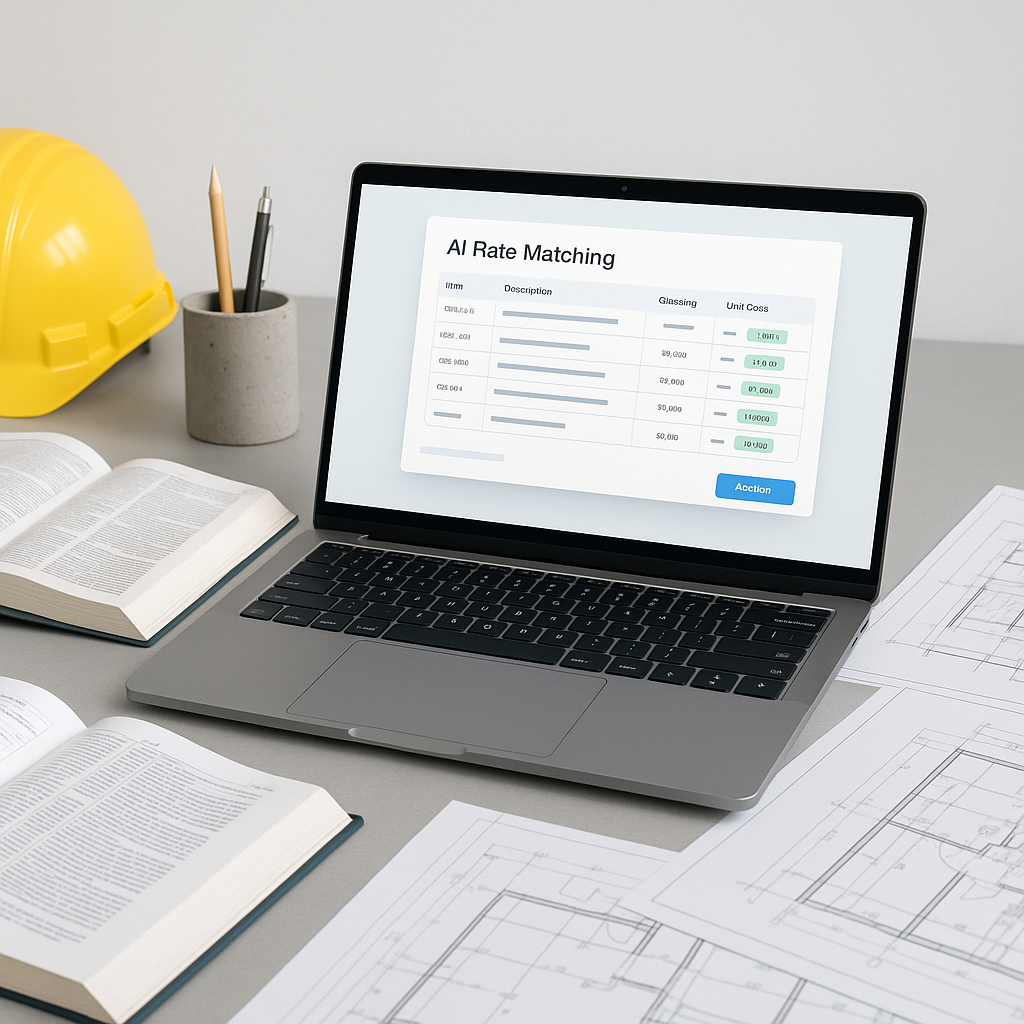
So, what does "AI-powered rate matching" even mean? At its core, it’s about eliminating the manual grunt work of searching for rates. AI tools use advanced algorithms to find the exact rate you need in seconds. Here’s how it works:
- Upload Your BOQ: You upload your BOQ in Excel, CSV, or even a scanned PDF. AI parses it, auto-detecting line items, hierarchies, and merged cells.
- Semantic Search: Instead of matching exact words, the AI understands the intent behind your line items. Need a rate for "plastering of internal walls"? It knows to look for "plaster, internal surfaces" or even regional terminology like "sand faced finish."
- Leverage Multiple Catalogs: The AI scans across multiple Schedule of Rates (SOR) items from various catalogs, including CPWD DSR and RSMeans. No flipping, no Ctrl+F.
- Custom Adjustments: If you have unique rates or materials in your own database, you can upload them. The AI remembers and improves with every project.
- Confidence Scoring: For each match, the tool provides a confidence score and highlights potential ambiguities so you can double-check critical items.
Why It’s a Game Changer
You might think, "Sure, it’s faster, but does it really matter?" It does. Here’s why:
- Time Savings: Flipping through rate books takes hours. AI-powered tools cut that down significantly, allowing you to focus on higher-value tasks.
- Improved Accuracy: Manual errors—like choosing the wrong rate or applying the wrong inflation factor—are common. AI reduces these errors by automating the process and flagging ambiguities.
- Scalability: Whether you’re pricing a small office fit-out or a large infrastructure project, the system scales. Large BOQs? No problem.
- Regional Adaptability: Different regions have different rate standards. AI tools can toggle between standards like CSI, CPWD, and CESMM3 seamlessly.
The Obvious Objection: "AI Can’t Think Like an Estimator"
This is a common concern. And it’s partially true. AI won’t replace your expertise. It won’t tell you how to negotiate with subcontractors or decide if the client wants marble or granite. But that's not what it's for.
AI is there to handle the repetitive tasks—the ones that don’t require your judgment but eat up your time. Rate lookup is grunt work, not strategy. By automating it, you free up hours to focus on the part that actually requires your expertise.
Common Mistakes to Avoid
Even with AI, you can trip up. Here’s what to watch for:
- Assuming AI Is Always Right: AI tools come with confidence scoring for a reason. Always review low-confidence matches.
- Ignoring Your Custom Rates: If you use custom materials or have negotiated supplier discounts, make sure to upload those rates. Otherwise, the AI can’t create an accurate estimate.
- Skipping Training: Yes, most AI tools are user-friendly, but a quick tutorial goes a long way. You don’t want to waste hours clicking around blindly.
FAQ
Q: Will AI replace human estimators?
A: No. AI tools are designed to assist, not replace. They handle repetitive tasks so you can focus on high-value work.
Q: How does the AI learn?
A: The system improves with every project. It uses feedback from your adjustments to refine its rate-matching accuracy.
Q: What if I use a rate catalog that’s not in the system?
A: You can upload custom catalogs, and the AI integrates them for future use. It’s like training a junior estimator who never forgets.
Closing Thoughts
In my experience, most estimators don’t realize how much time they waste on manual rate lookup until they stop doing it. AI-powered rate matching isn’t just faster—it’s smarter, more accurate, and scalable. If you’re still flipping through PDFs or Excel sheets, you’re working harder, not smarter.
AI tools can help you streamline your estimation process, reduce errors, and focus on what truly matters—winning bids and delivering successful projects.