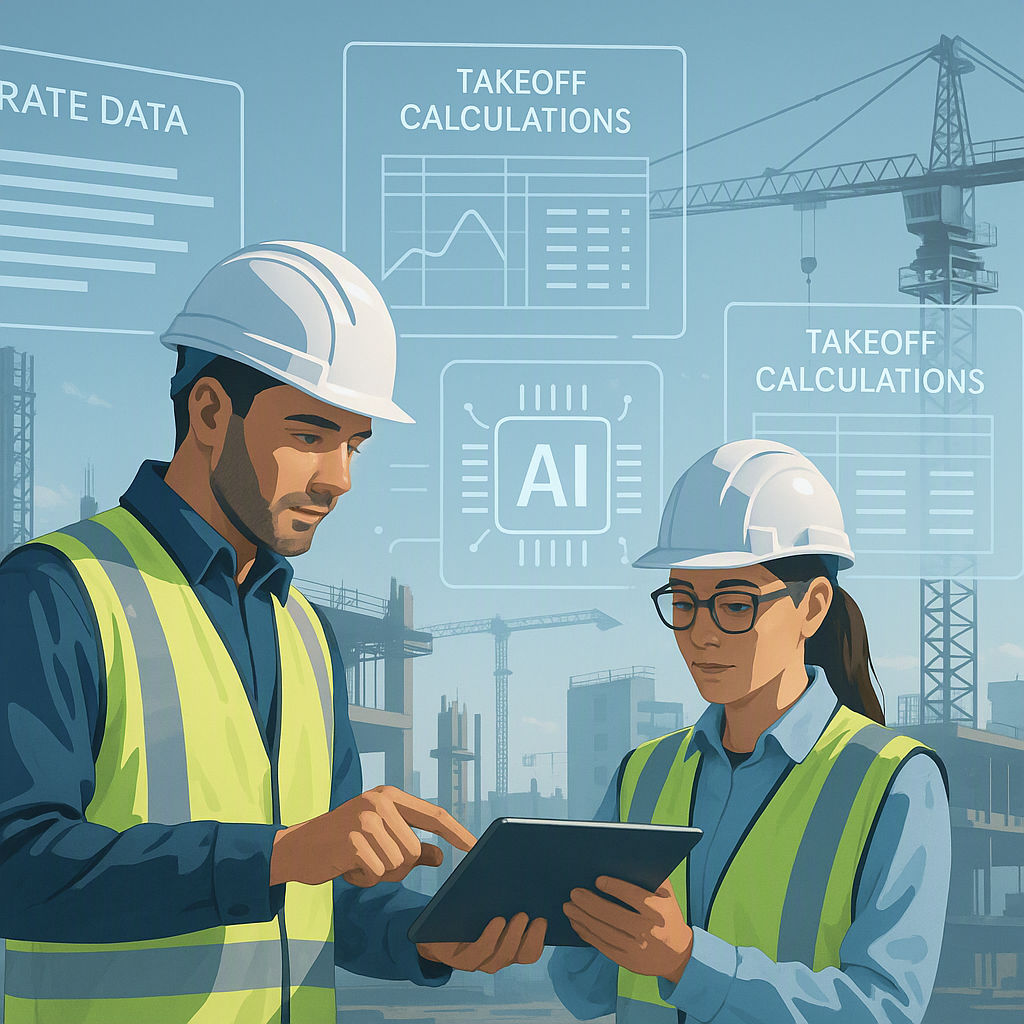
I Used to Think Manual Rate Lookups Were a Necessary Evil
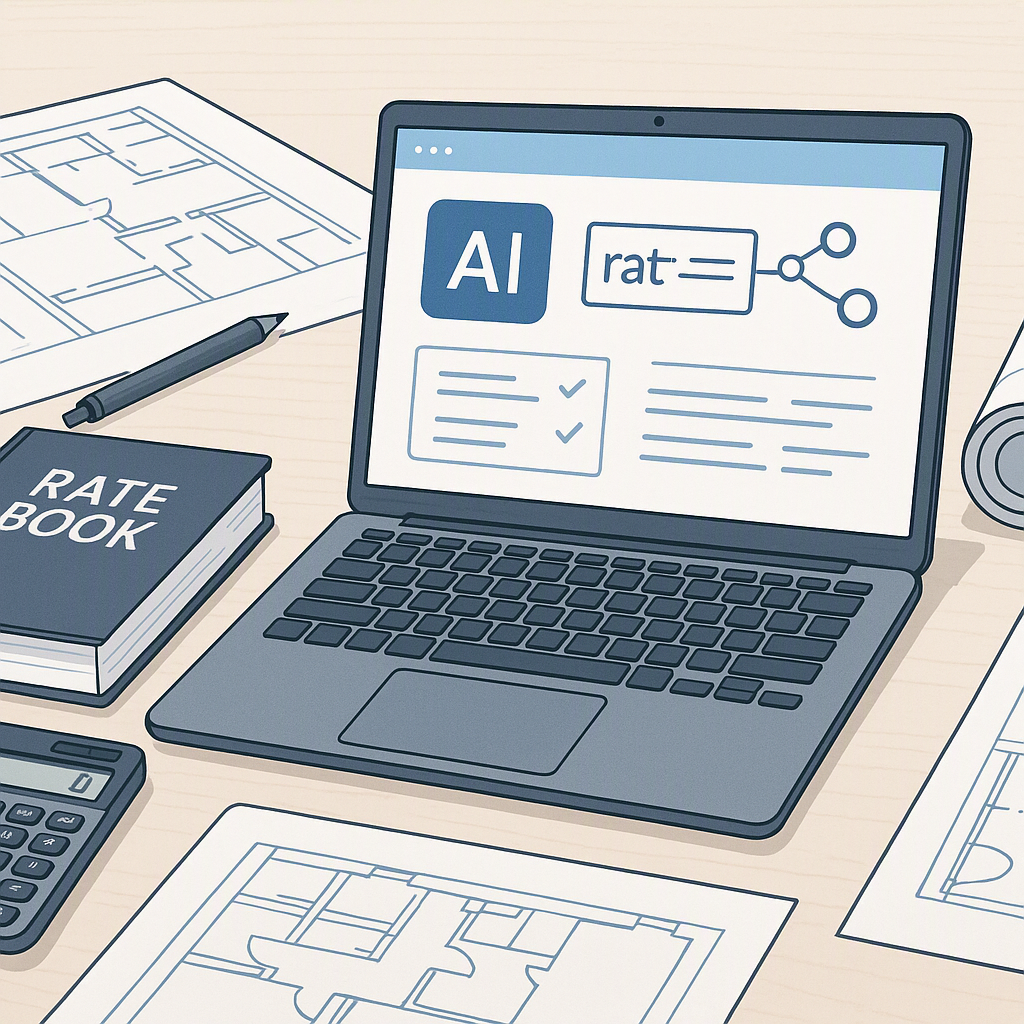
For years, flipping through rate books felt like a rite of passage for every estimator. Need the labor rate for installing pre-stressed concrete girders? Crack open the CPWD DSR (Central Public Works Department’s Delhi Schedule of Rates) or RSMeans. Want to update material costs for a high-rise bid? Expect to spend half a day cross-referencing outdated PDFs. Sure, it was tedious, but I thought, “This is just how it’s done.”
Honestly, I didn’t trust the idea of AI-powered estimation. It sounded flashy but impractical. Could a tool really understand the nuance of a BOQ (Bill of Quantities) item? I couldn’t picture AI distinguishing between a simple reinforced concrete beam and a post-tensioned slab, let alone applying the right regional rates. My skepticism wasn’t unique. Most estimators I know feel the same way—our work is too specific, too nuanced, for a machine to handle.
The Wake-Up Call: A 12-Hour Problem Solved in Seconds
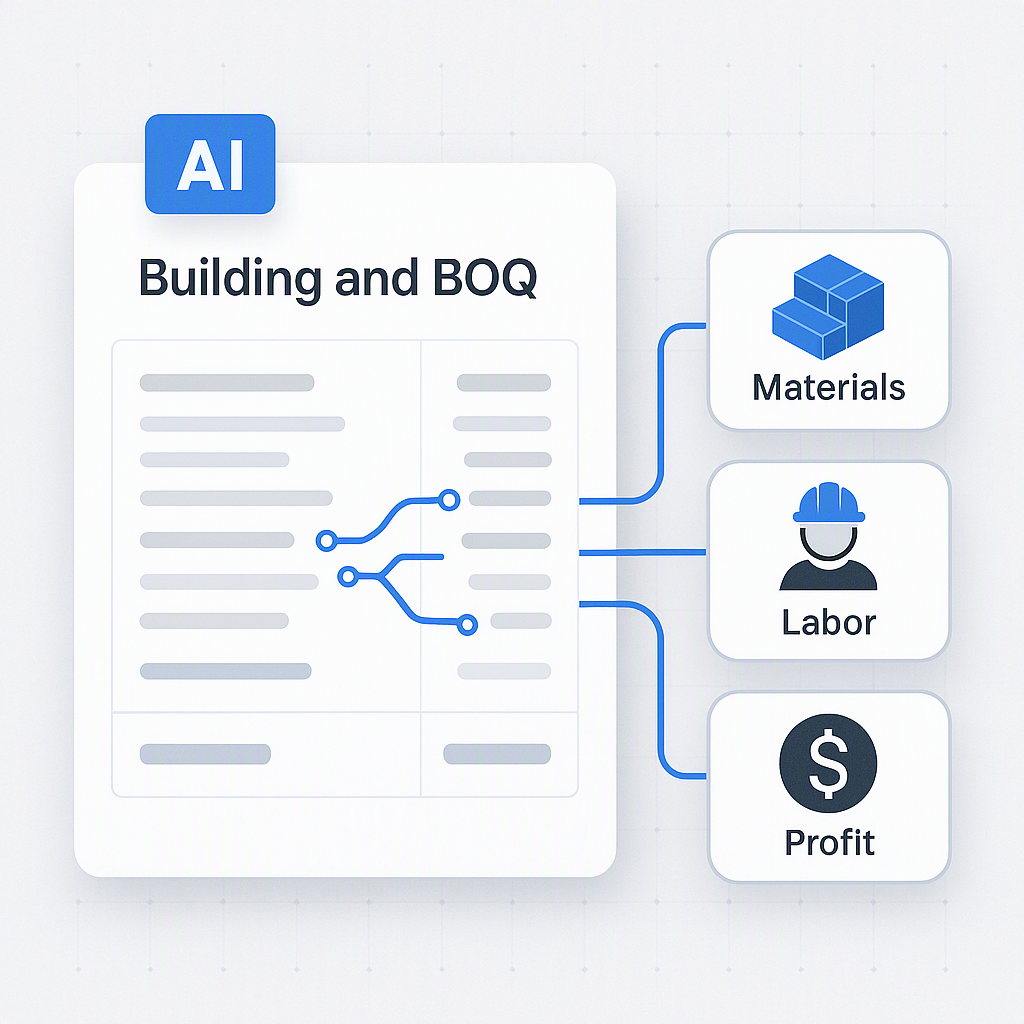
Then, in early 2025, I sat in on a demo of EstimateNext. The presenter showed how their rate-matching tool worked. They uploaded a BOQ with 128 line items—everything from excavation costs to HVAC ductwork. Instead of flipping through rate books, the system used semantic search to match each item to its corresponding rate in seconds across 78,000+ catalog entries.
I watched as it pulled a labor rate for installing pre-stressed concrete girders, matched material costs to the latest CPWD schedule, and even adjusted for regional variations. What would have taken me or any of my colleagues an entire day was done in about 30 seconds.
To put this into perspective, manual rate lookups involve multiple steps:
- Locating the right rate book or database.
- Identifying the relevant section (e.g., labor, materials, equipment).
- Matching the BOQ description with the closest item in the rate book.
- Adjusting for regional factors, inflation, or project-specific requirements.
- Repeating this process for every line item in the BOQ.
This process is not only time-consuming but prone to human error—especially when dealing with large or complex BOQs. Seeing the AI handle this effortlessly was a revelation.
To test its accuracy, I threw the system a curveball: a BOQ item for a custom glass façade. To my surprise, the AI flagged it as a low-confidence match and prompted me to manually override the rate. It didn’t pretend to know everything—it just made the grunt work faster and flagged anything unusual for review.
According to Start-Up Nation Finder, Ladder AI, another AI-powered platform, uses a similar approach for preconstruction estimation and risk analysis. Their focus on accuracy and adaptability has made tools like these more appealing to the construction industry in recent years.
Why I Held Onto My Old Belief for So Long
Looking back, my resistance to AI wasn’t really about the technology. It was about trust. Estimation is high-stakes work. A single miscalculation can shave thousands off a margin or cost you the bid entirely. When you’re carrying that responsibility, it’s easier to trust your own hands—and your well-worn rate book—than a tool you didn’t build yourself.
There’s also a cultural aspect. Estimators pride themselves on their expertise. The idea that a machine could do part of our job feels, frankly, insulting. Even if the AI saves time, it’s hard not to think, “What if it misses something?”
But the truth is, human estimators aren’t perfect either. We get tired. We make typos. We misread tables. During that demo, I realized the AI wasn’t replacing my judgment—it was amplifying it. It handled the repetitive, error-prone tasks so I could focus on the decisions that actually needed my expertise.
Human Error vs. AI Assistance
| Aspect | Human Estimator | AI-Powered Tool |
|---|---|---|
| Accuracy | Prone to typos, misreads, and fatigue | Consistent and precise calculations |
| Speed | Slow for large BOQs | Fast, even with thousands of items |
| Handling Edge Cases | Relies on experience and intuition | Flags low-confidence matches |
| Adaptability | Limited by personal expertise | Learns from large datasets |
This comparison helped me realize that I could still rely on my expertise while letting the AI handle the grunt work.
What I Do Differently Now
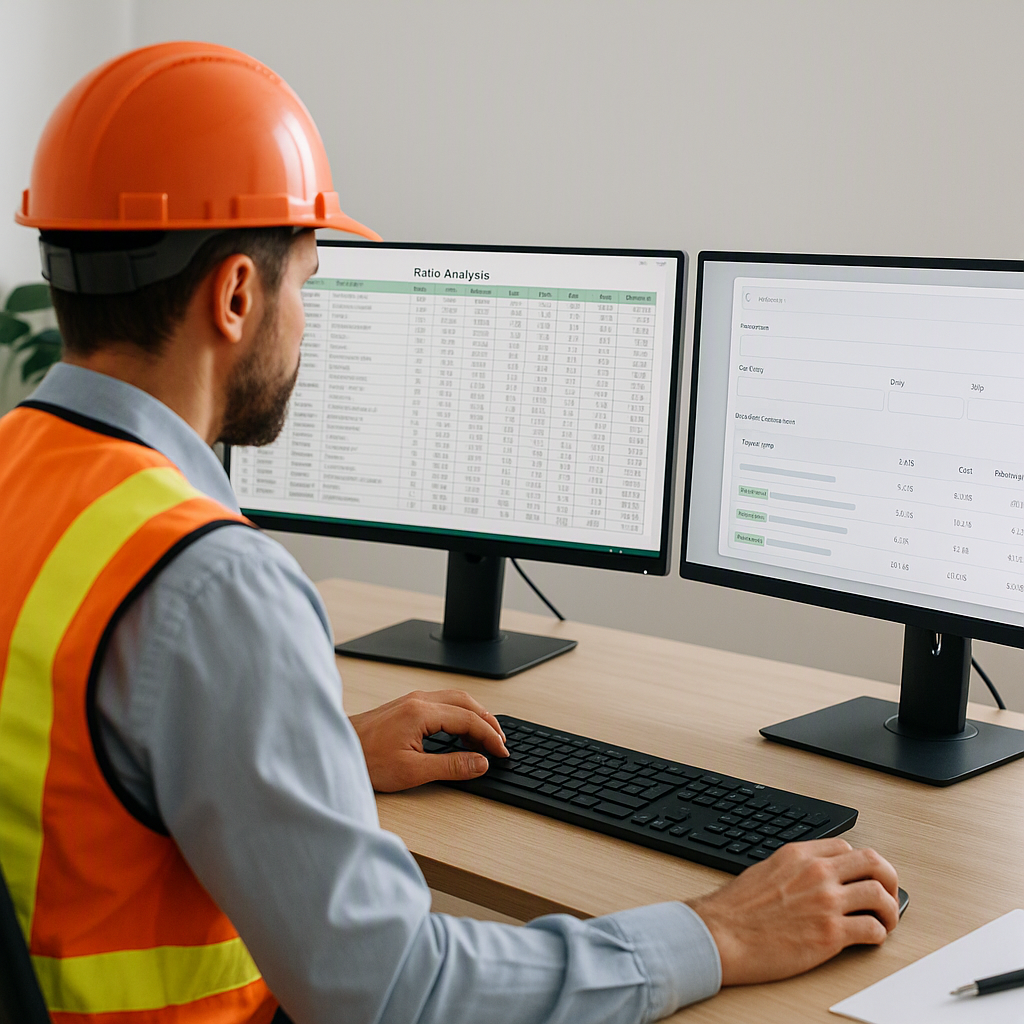
Since adopting EstimateNext’s rate-matching tool, my workflow has changed completely. I still review every rate, but I’m no longer wasting hours flipping through PDFs. Here’s what my process looks like now:
- Upload the BOQ. I export the client’s BOQ from Excel and upload it to the platform. The AI parses it instantly, identifying line items, hierarchies, and units.
- Run the rate match. The system matches each line item to a corresponding rate from CPWD, RSMeans, or my custom catalogs. It flags low-confidence matches for manual review.
- Adjust for regional factors. I use the platform’s inflation uplift feature to adjust rates for the project’s location and timeline. This accounts for factors like labor costs, material availability, and local economic conditions.
- Export the estimate. Once I’ve reviewed the rates, I export a complete estimate in Excel, ready to share with my team or client.
A process that used to take me two days now takes two hours.
SoftNext Solutions Pvt. Ltd., based in Navi Mumbai, highlights this efficiency as one of the core advantages of their AI-powered platforms. Their tools directly connect rates to BOQs, providing instant updates and saving significant time for estimators.
What I’m Still Figuring Out
I wish I could say switching to AI-powered rate matching has solved all my problems, but that wouldn’t be honest. There are still challenges. For one, the system’s accuracy depends on clean input data. If the BOQ I upload is poorly formatted or full of errors, the results won’t be useful. That means I still spend time cleaning up client files before uploading them.
I’m also cautious about over-relying on the AI. It’s easy to get complacent and assume the system will catch every mistake. But I’ve learned the hard way that human oversight is still essential—especially for complex or custom items.
Finally, there’s the question of adoption. Not everyone on my team is sold on the idea of using AI. Some senior estimators see it as a threat to their expertise. Others worry about the learning curve. Change is hard, even when the benefits are obvious.
Call to Action
If you’re tired of wasting hours on manual rate lookups, it’s time to rethink your approach. EstimateNext makes rate matching faster, smarter, and more accurate. Try it free today and see the difference for yourself.