How AI-Powered Takeoffs Improve Construction Estimation
Manual takeoffs are a productivity challenge. They often involve hours of measuring drawings by hand, flipping between scale rulers and PDF tools, and ensuring no critical details are missed. For most estimators, this is a time-intensive part of the job. But should it be?
AI-powered takeoffs are transforming this process. Instead of spending hours on tedious measurements, these tools can extract quantities from a full set of drawings quickly and efficiently. If you’re considering adopting AI for takeoffs, let’s explore why automating this task is a smart move for preconstruction teams aiming to stay competitive.
The Manual Takeoff Problem
Manual takeoffs are not only time-consuming but also prone to errors. Missing a dimension or overlooking a structural element can lead to costly mistakes in bids. Even experienced estimators can make errors when working under tight deadlines.
The larger the project, the more challenging the manual takeoff process becomes. Multi-phase developments or infrastructure bids can require significant time and effort, often stretching resources thin.
How AI Takeoffs Work
AI-powered tools streamline the takeoff process by automating key steps. Here’s how they typically work:
- Upload Your Drawings: Upload PDF or CAD files into the platform.
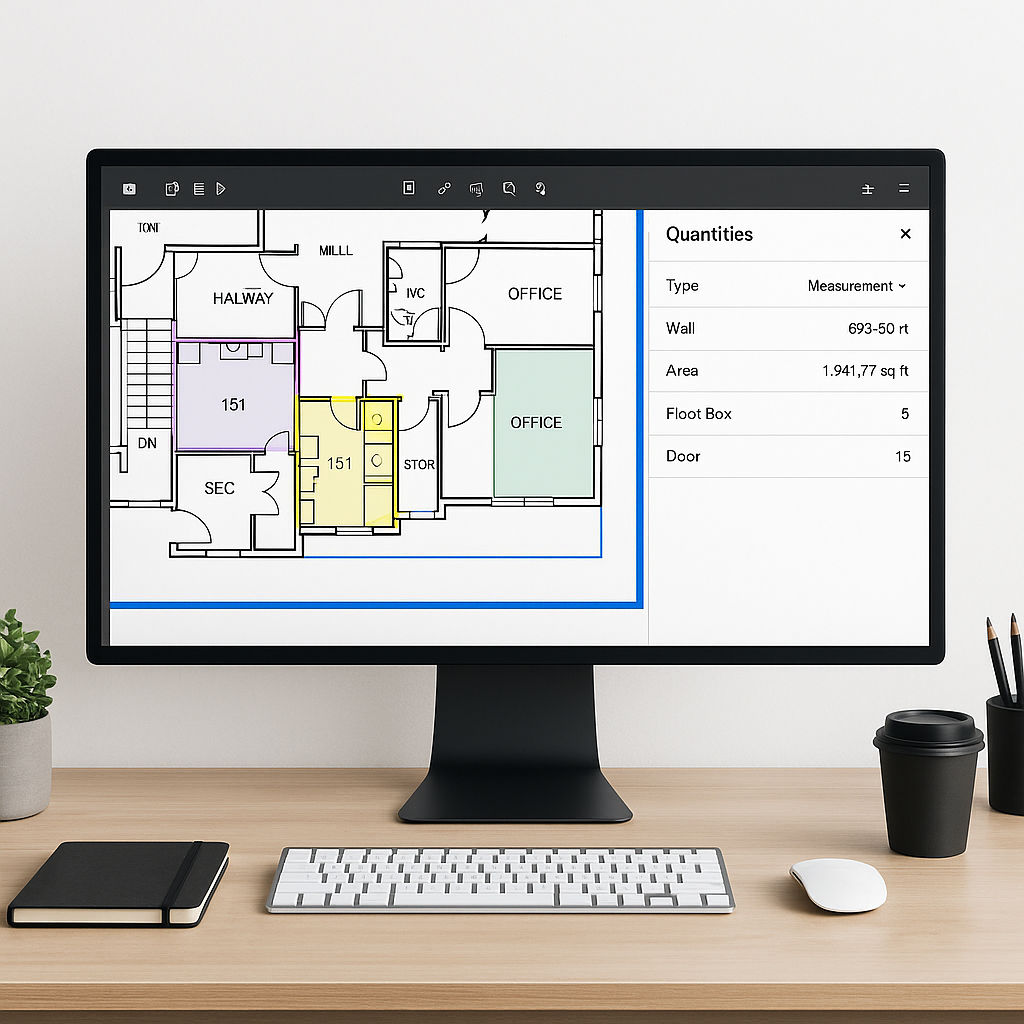
- AI Scans the Sheets: The tool uses computer vision to identify elements like walls, beams, doors, and windows.
- Auto-Extract Quantities: It calculates linear measurements, areas, and counts, automatically generating a structured quantity takeoff (QTO) report.
- Review and Adjust: Users can review the results and manually adjust any flagged areas for accuracy.
Illustrative example — A contractor using an AI-powered tool might reduce the time spent on takeoffs for a mid-sized project from several days to a fraction of that time. This allows teams to focus on higher-value tasks, such as refining bid strategies or negotiating with subcontractors.
The ROI of AI Takeoffs
Automating takeoffs with AI offers several benefits:
- Increased Efficiency: Teams can complete takeoffs faster, freeing up time for other critical tasks.
- Reduced Errors: Automation minimizes the risk of missing dimensions or miscalculating quantities.
- Improved Competitiveness: Faster takeoffs enable teams to respond to more bid opportunities.
While the exact return on investment will vary by organization, the time and labor savings can be significant, especially for larger projects.
Common Questions About AI Takeoffs
1. Are AI takeoffs accurate?
Yes, but they are not infallible. Most tools include features for manual review and adjustment, ensuring that users can verify and refine results as needed.
2. What about small projects?
AI tools are scalable and can handle projects of varying sizes, from small fit-outs to large infrastructure developments.
3. How steep is the learning curve?
Most AI takeoff tools are designed for ease of use, with intuitive interfaces and minimal training requirements. If your team is familiar with tools like Bluebeam or Excel, they can quickly adapt to AI-powered platforms.
What to Watch For
When selecting an AI takeoff tool, consider the following:
- Input Quality Matters: Ensure your drawings are clear and complete for the best results.
- Custom Formats: Look for tools that support specific standards or formats relevant to your market.
- Integration Options: Choose platforms that integrate seamlessly with your existing software, such as Procore or Bluebeam.
- Scalability: Ensure the tool can handle both small and large projects effectively.
The Future of Takeoffs
AI-powered takeoffs are becoming essential in the construction industry. As deadlines tighten, costs rise, and skilled labor becomes scarcer, automation offers a way to stay competitive. While AI doesn’t replace the expertise of an estimator, it handles repetitive tasks, allowing professionals to focus on strategic decision-making and bid optimization.
Ready to Try AI-Powered Takeoffs?
If you’re looking to streamline your estimation process, consider exploring AI-powered takeoff tools. They can help you save time, reduce errors, and improve your overall efficiency in preconstruction workflows.