Manual Takeoffs: The Time-Consuming Challenge
Manual drawing takeoffs are a well-known bottleneck in preconstruction. They require significant time and effort, often involving tedious processes like opening PDFs, calibrating scales, tracing every room, wall, and window, and manually calculating totals. Revisions, which are common, add to the workload as the process must often be repeated from scratch. Even with software tools like Bluebeam, the process remains labor-intensive and prone to human error.
AI-Powered Takeoffs: How It Works
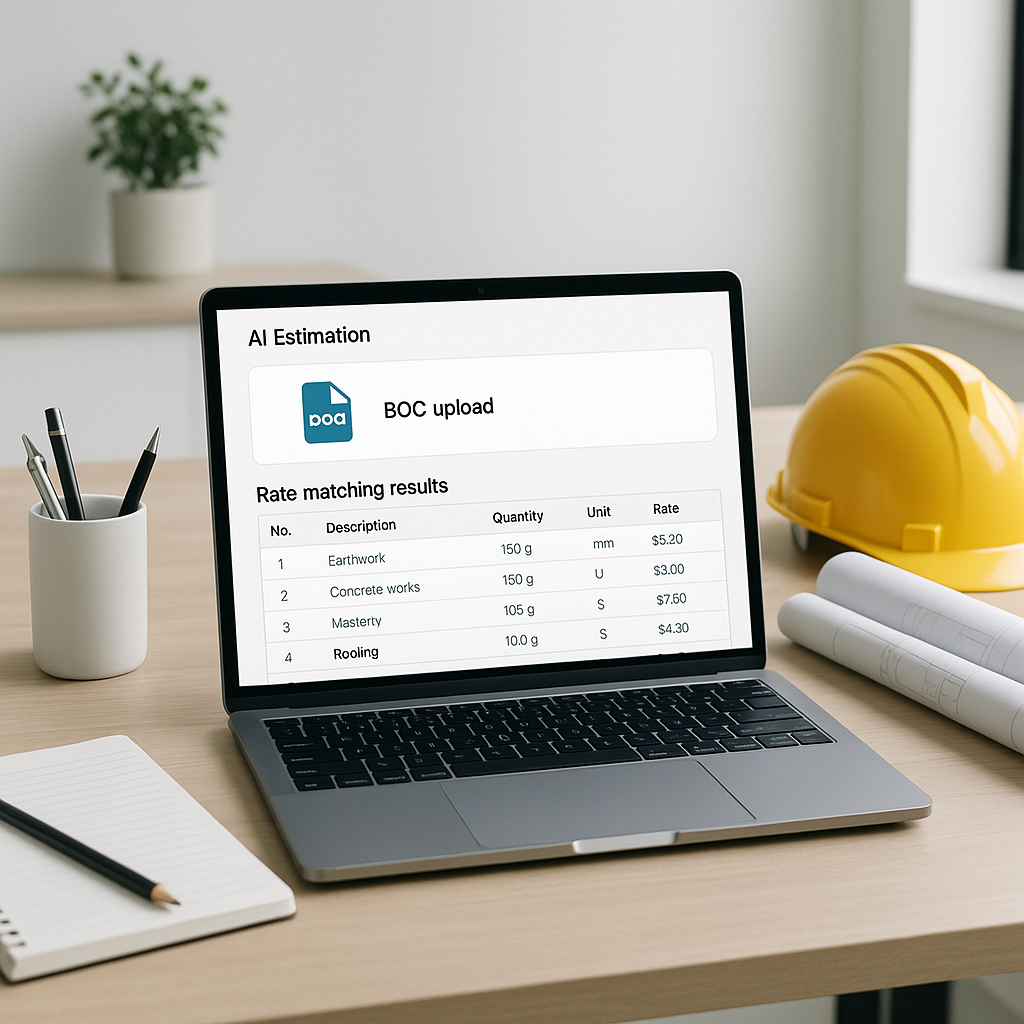
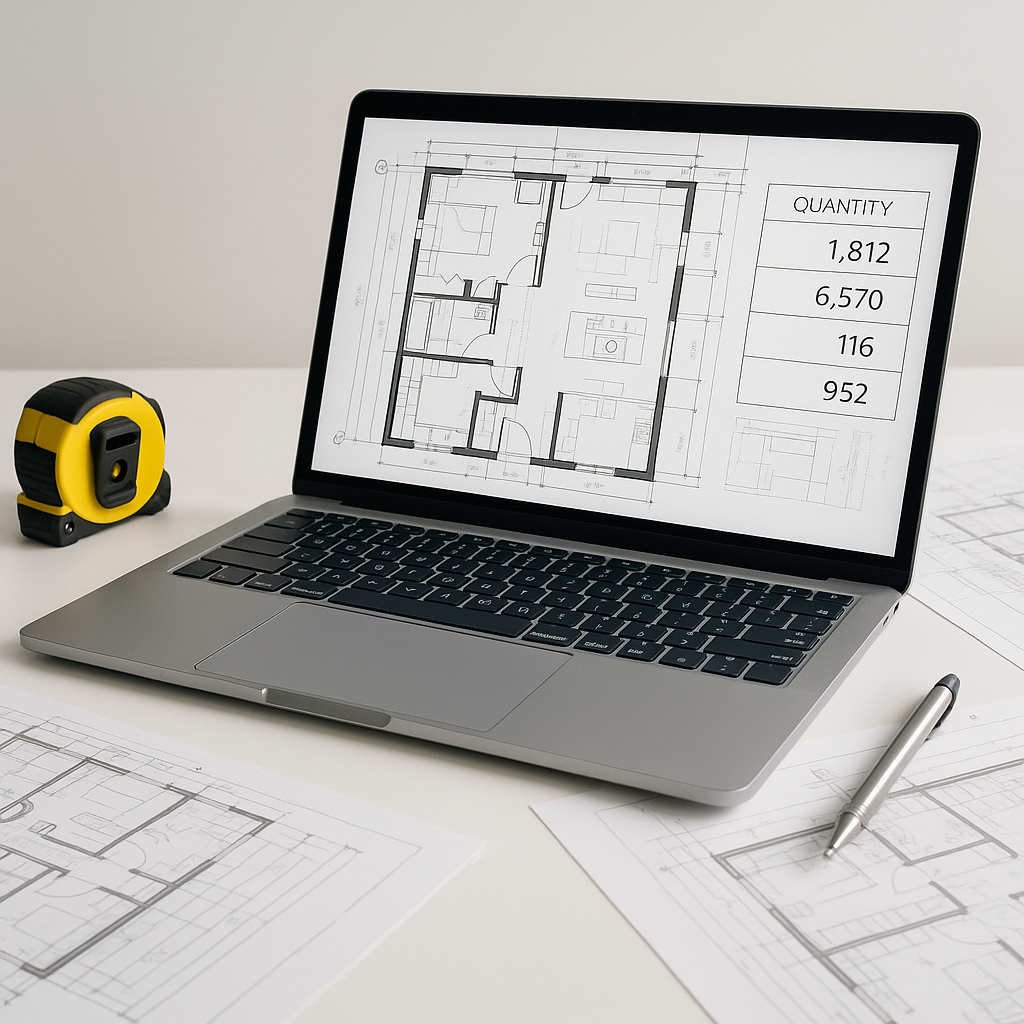
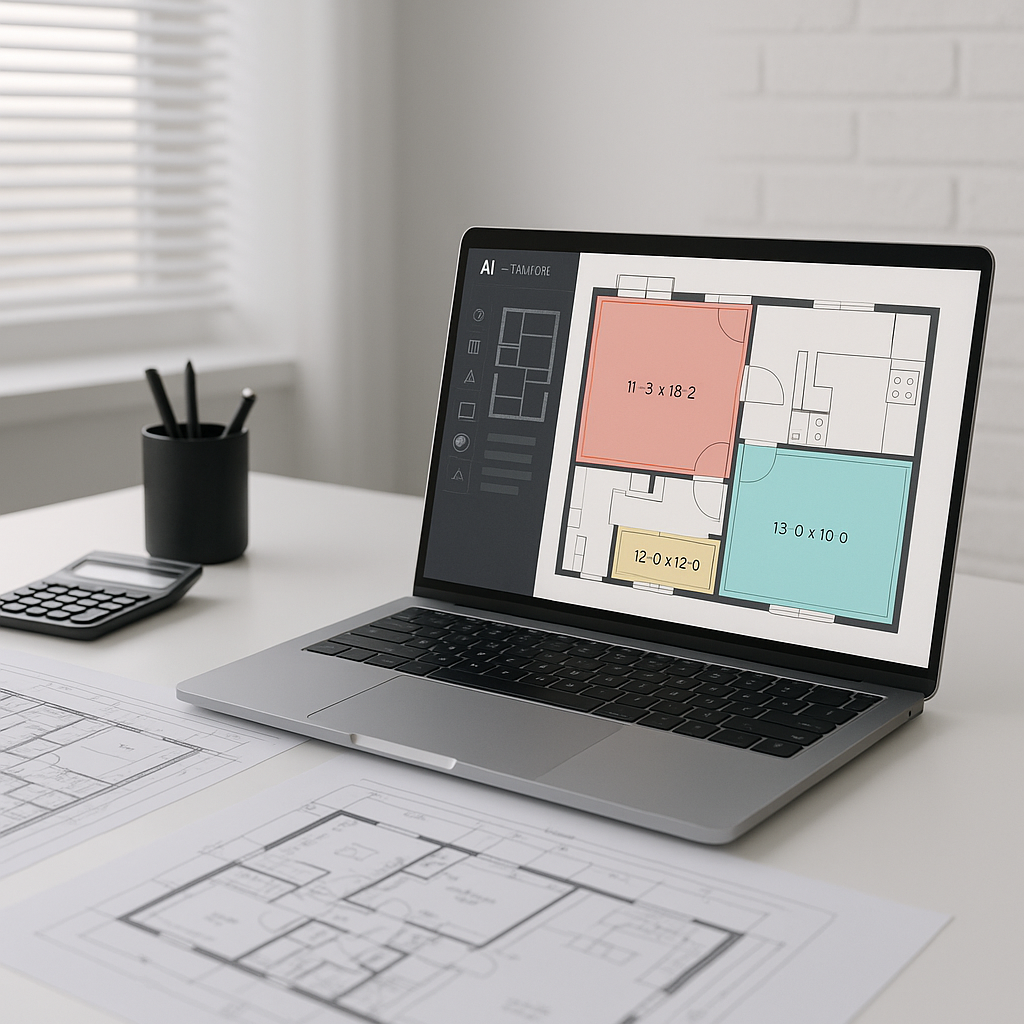
AI tools for takeoffs streamline this process by automating much of the manual work. These tools can scan drawings, extract quantities, and identify areas, lengths, and counts (e.g., doors and windows). Users upload a PDF, set the scale, and let the AI handle the bulk of the work. While AI can flag low-confidence measurements for manual review, it significantly reduces the time spent on repetitive tasks.
Why Speed Matters
Faster takeoffs allow teams to price more bids, respond to revisions quickly, and focus on higher-value activities like subcontractor negotiations or cost optimization. In competitive markets, meeting bid deadlines is critical, and delays can result in lost opportunities.
Accuracy Without Overhead
AI tools enhance accuracy by eliminating common human errors such as arithmetic mistakes or overlooked quantities. However, human oversight remains essential for edge cases, such as unusual specifications or poor-quality drawings. While AI doesn’t replace the judgment of an experienced estimator, it provides clean, auditable data that can be reviewed and adjusted as needed.
Common Mistakes to Avoid
- Skipping Calibration: Ensure the scale is set correctly to avoid inaccurate measurements.
- Blind Trust in AI: Always review flagged quantities for accuracy.
- Ignoring Revisions: Upload every revision set and re-run the takeoff to catch changes.
- Underestimating Training: While AI tools are user-friendly, proper training ensures teams can maximize their benefits.
FAQ
Q: How accurate are AI-powered takeoffs?
A: They are highly accurate but not flawless. Confidence scoring and manual reviews help ensure reliability.
Q: Can AI handle complex drawings?
A: Yes, provided the drawings are clear and well-structured. Poor-quality PDFs may require manual input.
Q: Do AI tools integrate with existing software?
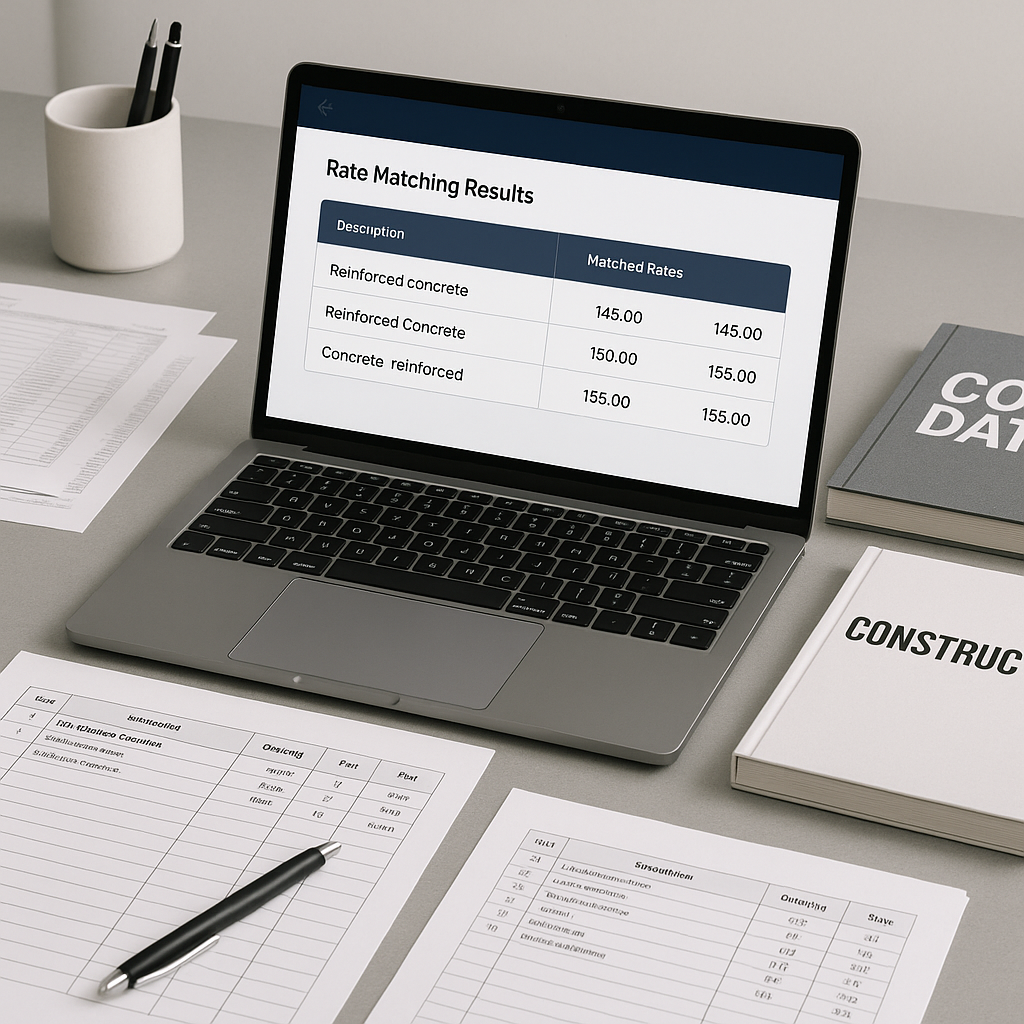
A: Many platforms integrate with tools like Procore, Bluebeam, and Excel.
Q: Is AI hard to learn?
A: No. Most platforms are intuitive, and training typically takes a short amount of time.
Call to Action
If manual takeoffs are consuming too much of your team’s time, consider exploring AI-powered tools to streamline the process and focus on what truly matters. Learn more →