How AI-Powered Takeoffs Improve Preconstruction Estimation
Manual takeoffs are a common challenge for estimators. If you’ve spent hours tracing room dimensions on software or flipping through extensive rate schedules to find the right rate, you know how time-consuming and repetitive the process can be. It often feels like a necessary but inefficient step in the preconstruction workflow.
AI-powered takeoff tools are changing this dynamic by automating key parts of the process. Let’s explore how these tools work and why they’re becoming an essential part of modern estimation.
The Problem with Manual Takeoffs
Takeoff is the first step in any construction estimate. It involves measuring quantities such as square footage of drywall, linear footage of pipe, or the number of electrical outlets. These measurements feed into the Bill of Quantities (BOQ), which drives the entire costing process.
Common Issues with Manual Takeoffs:
-
Time-Intensive: Manual takeoffs require significant time for measuring and inputting data, leaving less time for refining pricing or negotiating with subcontractors.
-
Prone to Errors: Mistakes in measurement or missed items can lead to inaccurate estimates, potentially resulting in underbidding or overbidding.
-
Difficult to Revise: When project designs change, redoing manual takeoffs can be a tedious and error-prone process.
These challenges highlight the need for more efficient and reliable methods, which is where AI-powered tools come in.
How AI Takeoffs Work (and Why They’re a Game-Changer)
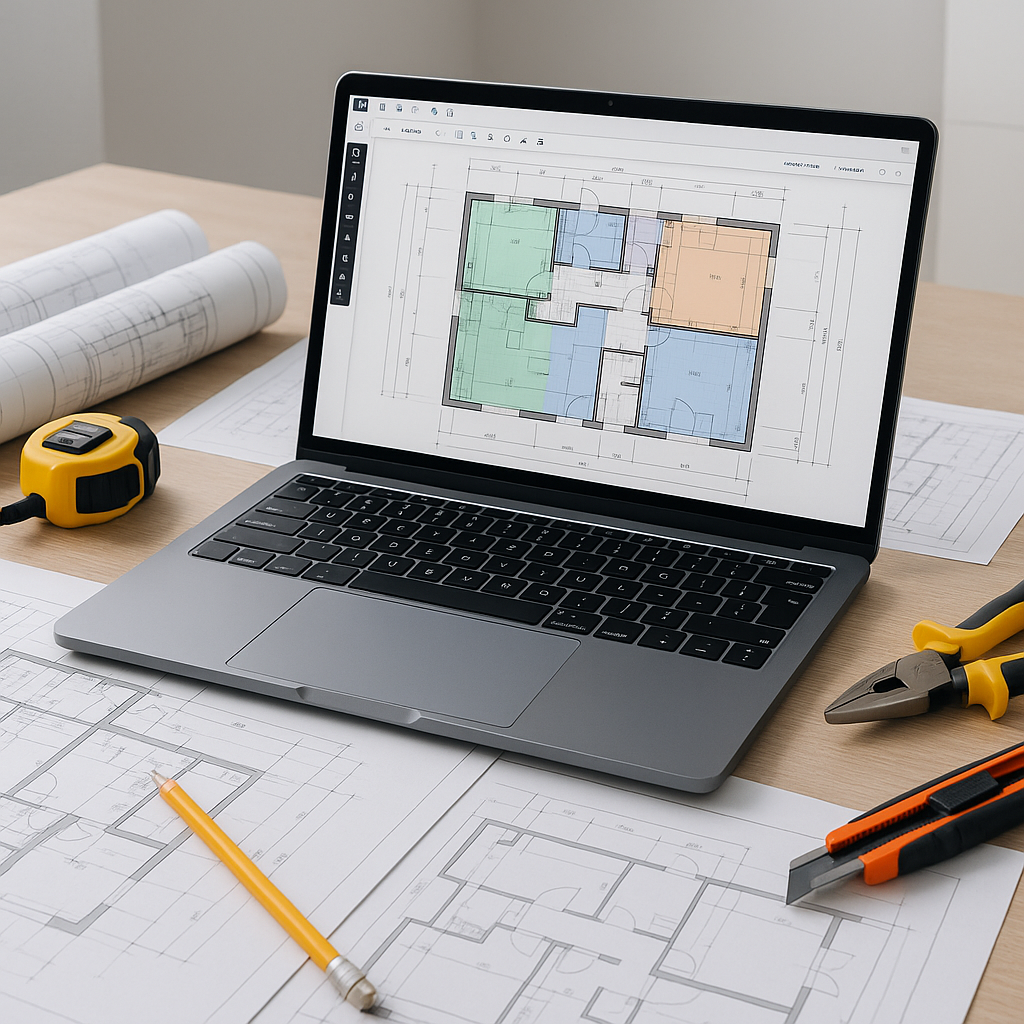
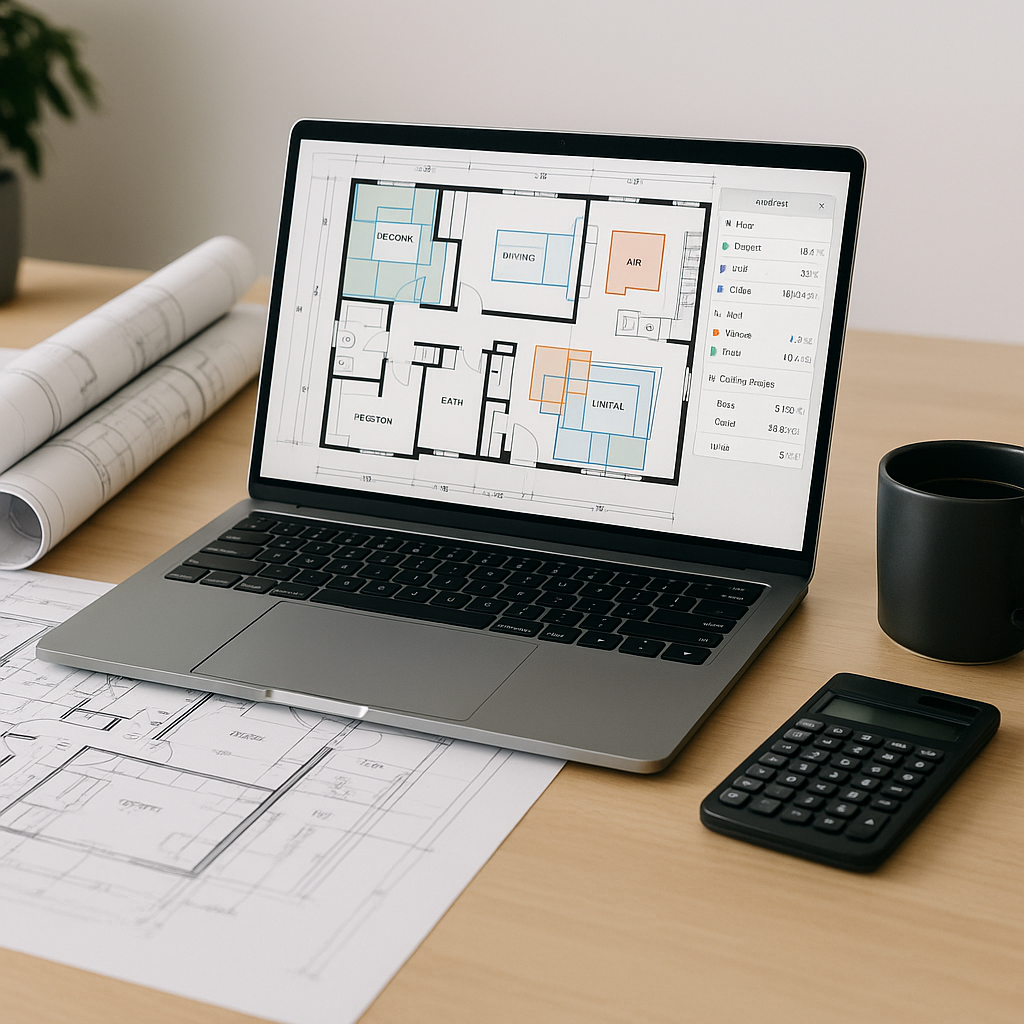
AI-powered takeoff tools use Vision AI to extract quantities directly from drawing files. By automating this process, they significantly reduce the time and effort required for takeoffs.
1. Automated Quantity Extraction
The AI scans your drawings and identifies elements like walls, windows, doors, and fixtures. It is trained on large datasets of similar drawings, enabling it to recognize these elements even in complex or inconsistent plans.
Illustrative example — Imagine bidding on a multi-story office building. Traditionally, you’d spend hours measuring room areas and wall lengths. With AI, these measurements are completed in minutes, and the tool highlights areas requiring review for accuracy.
2. Seamless Integration with BOQs
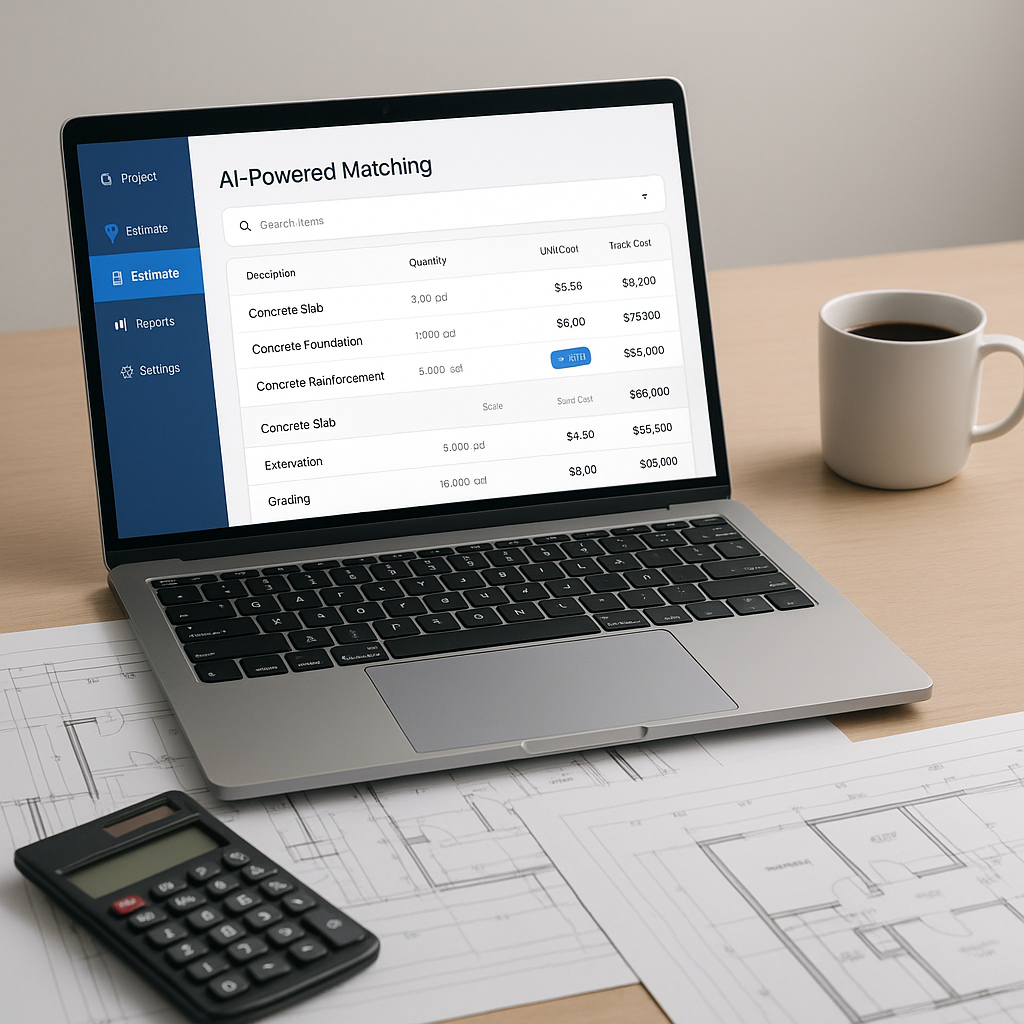
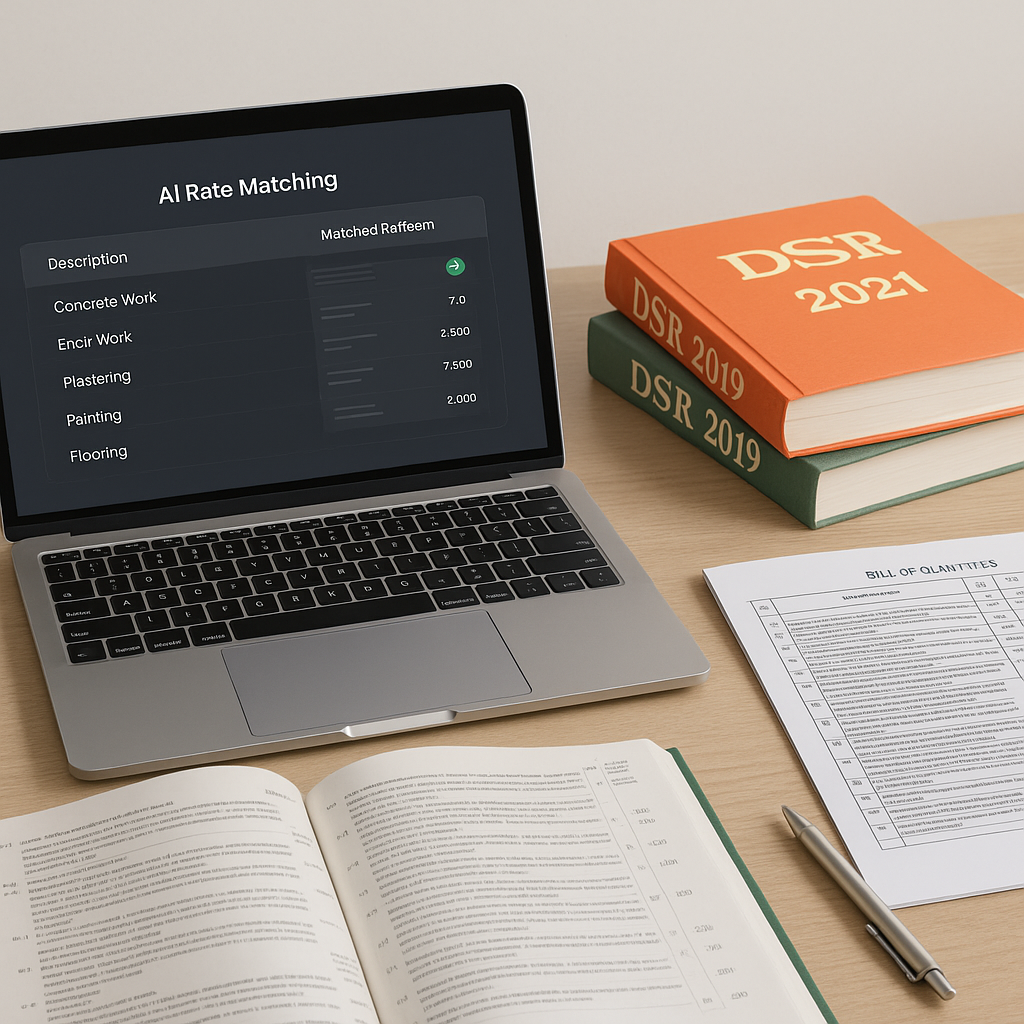
Once quantities are extracted, they are automatically populated into a structured BOQ. This eliminates the need for manual data entry and reduces the risk of transcription errors. Many tools also allow integration with custom rate catalogs or national databases, streamlining the costing process.
3. Efficient Handling of Revisions
AI tools excel at managing design changes. When updated drawings are uploaded, the AI flags the differences, allowing you to focus only on the changes rather than redoing the entire takeoff.
Addressing Concerns: “But AI Can’t Think Like an Estimator”
AI tools are not designed to replace human expertise but to complement it. While AI handles repetitive and time-consuming tasks, estimators remain responsible for judgment calls, negotiations, and strategic decisions.
Think of AI as a tool that frees you from manual labor, allowing you to focus on higher-value activities like refining your bid strategy.
What to Watch For
While AI-powered takeoff tools offer significant advantages, there are some considerations to keep in mind:
-
Input Quality Matters: The accuracy of AI outputs depends on the quality of the input data. Poorly scanned or incomplete drawings may require additional review.
-
Learning Curve: Teams may need a short training period to become proficient with the tool.
-
Human Oversight is Essential: AI can handle a large portion of the work, but human review remains crucial to ensure accuracy and completeness.
FAQ: Common Questions About AI Takeoffs
Q: How accurate are AI-generated takeoffs? AI tools are generally highly accurate, but their performance depends on the quality of the input data. Human oversight is recommended to verify critical items.
Q: Can I use AI tools with my existing software? Yes. Most AI tools integrate with platforms like Bluebeam, Procore, and Excel, making it easy to incorporate them into your existing workflow.
Q: What happens if my project has custom rates? AI tools often allow you to upload custom rate catalogs or define specific rates, ensuring that estimates reflect your actual costs.
Q: Are AI tools suitable for small projects? Yes. AI tools can scale to projects of any size, from small renovations to large infrastructure bids.
Conclusion
Manual takeoffs are time-consuming and prone to errors, but AI-powered tools offer a faster, more reliable alternative. By automating quantity extraction and streamlining the integration with BOQs, these tools enable estimators to focus on strategic tasks that add value to their bids.
If you’re looking to improve efficiency and accuracy in your preconstruction process, exploring AI-powered takeoff tools could be a worthwhile investment.