The Bottleneck: Manual Takeoffs
If you’re an estimator, you’ve likely experienced the challenge of manual takeoffs: staring at a massive set of drawings, manually counting beams, doors, windows, and wall lengths. Manual takeoffs are one of the most time-consuming parts of preconstruction estimation. And even the best estimators can make mistakes. Miscounting a single element can lead to underbidding or overbidding, with significant financial implications.
This isn’t just a small annoyance—it’s a productivity bottleneck. Time spent tracing drawings is time not spent on higher-value tasks like subcontractor negotiations or refining bid strategies. Worse, rushing to meet deadlines can lead to errors piling up, leaving you with incomplete or inaccurate bids.
The AI Fix: Faster Takeoffs
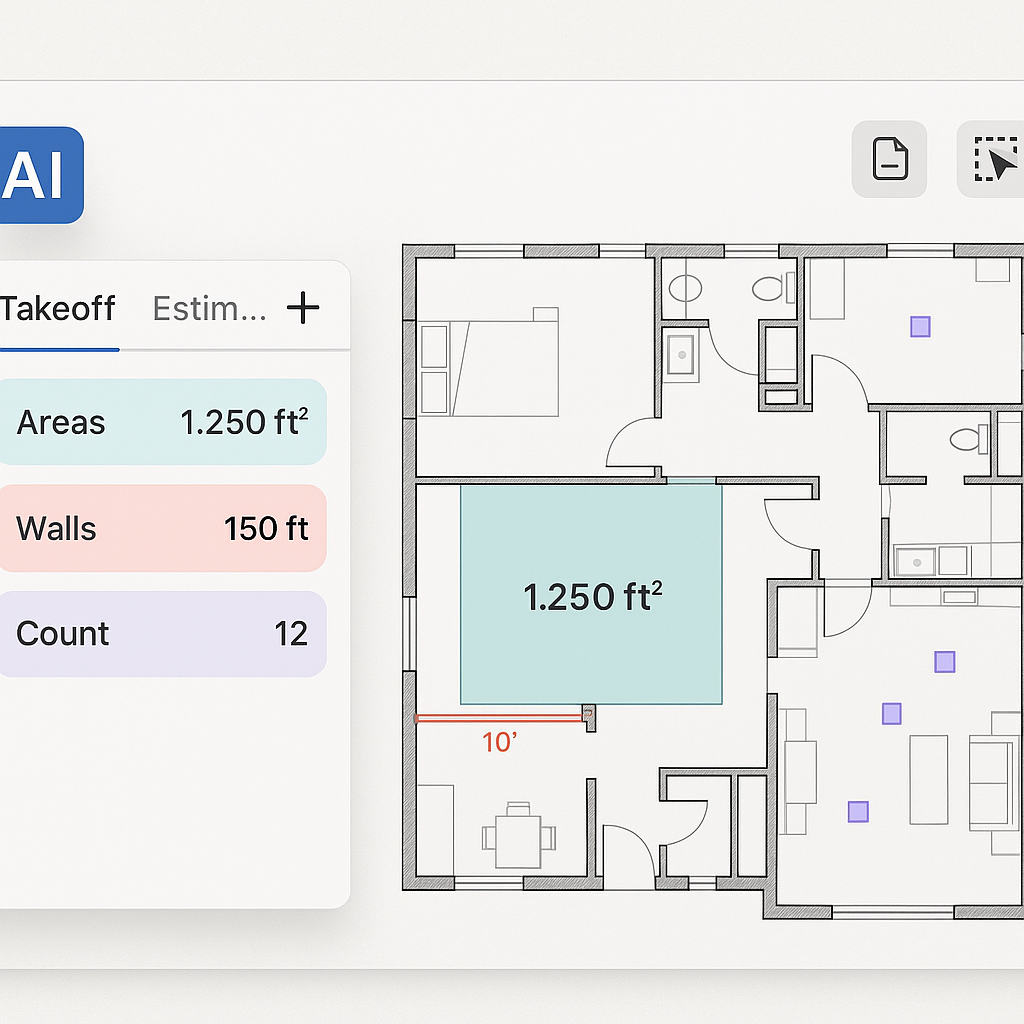
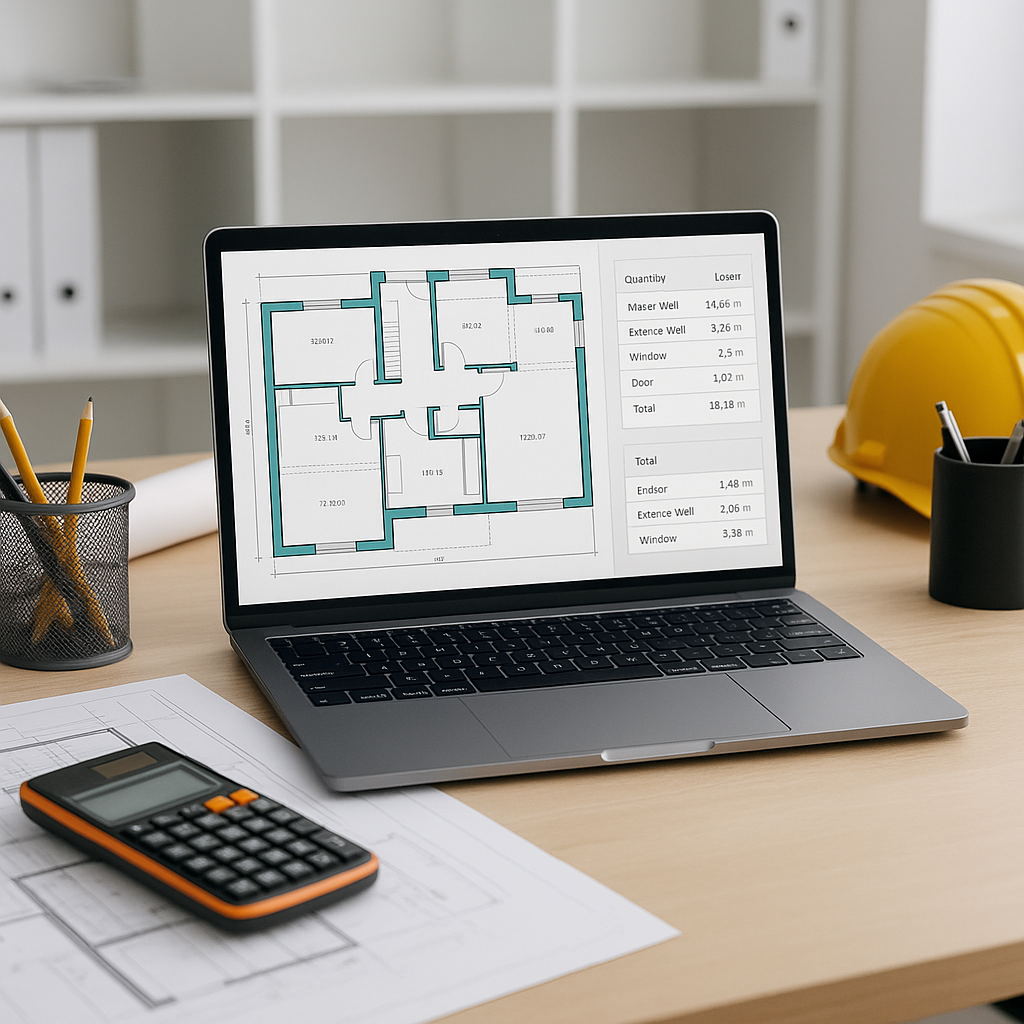
This is where AI steps in. Tools that leverage artificial intelligence can automate the takeoff process, significantly reducing the time required. Instead of manually measuring and counting, you upload your PDF drawings, and the AI extracts quantities automatically.
Here’s how it works: AI scans the drawings, identifies key elements (like room areas, wall lengths, and fixture counts), and calibrates measurements. It can also flag areas with low confidence for manual review. Think of it as an assistant that handles repetitive tasks, allowing you to focus on more strategic aspects of estimation.
What About Accuracy?
You might wonder: can AI really be trusted for something as critical as takeoffs? The answer is that AI takeoffs can be highly accurate when paired with good input data. Many platforms include features like confidence scoring and manual overrides to ensure every line item is checked. While human oversight remains essential, the role shifts from manual tracing to reviewing and approving, which is far less time-intensive.
Common Objections—and Responses
“AI Can’t Think Like an Estimator”
True, AI doesn’t understand project nuances or local labor conditions. But that’s not its purpose. AI is designed to complement your expertise by eliminating repetitive, error-prone tasks. You still make the judgment calls, while the AI handles the groundwork.
“It’s Too Expensive”
While AI tools come with a cost, they can often pay for themselves by saving time and reducing errors. The value lies in the efficiency gains and the ability to focus on higher-value tasks.
“It’s Hard to Learn”
Most AI platforms are designed to be user-friendly. With proper training and support, teams can typically adapt to these tools quickly, especially if they are already familiar with software like Excel or Bluebeam.
Practical Applications
AI-powered takeoffs can be applied to projects of all sizes, from small renovations to large infrastructure builds. By automating the measurement and counting process, these tools free up estimators to focus on refining bids and ensuring accuracy.
Common Mistakes to Avoid
- Skipping the Review Process: AI is accurate but not infallible. Always review flagged areas.
- Using Low-Quality Drawings: Blurry or incomplete PDFs can confuse the AI. Ensure your input files are clean.
- Ignoring Training: Even the best tools require some initial setup and training. Invest the time upfront to maximize the benefits.
FAQ
Q: Can I use AI takeoff tools with my existing software?
Yes, most tools integrate seamlessly with platforms like Bluebeam, Procore, or Excel. You can export estimates directly into your current workflows.
Q: What if my project uses custom rates?
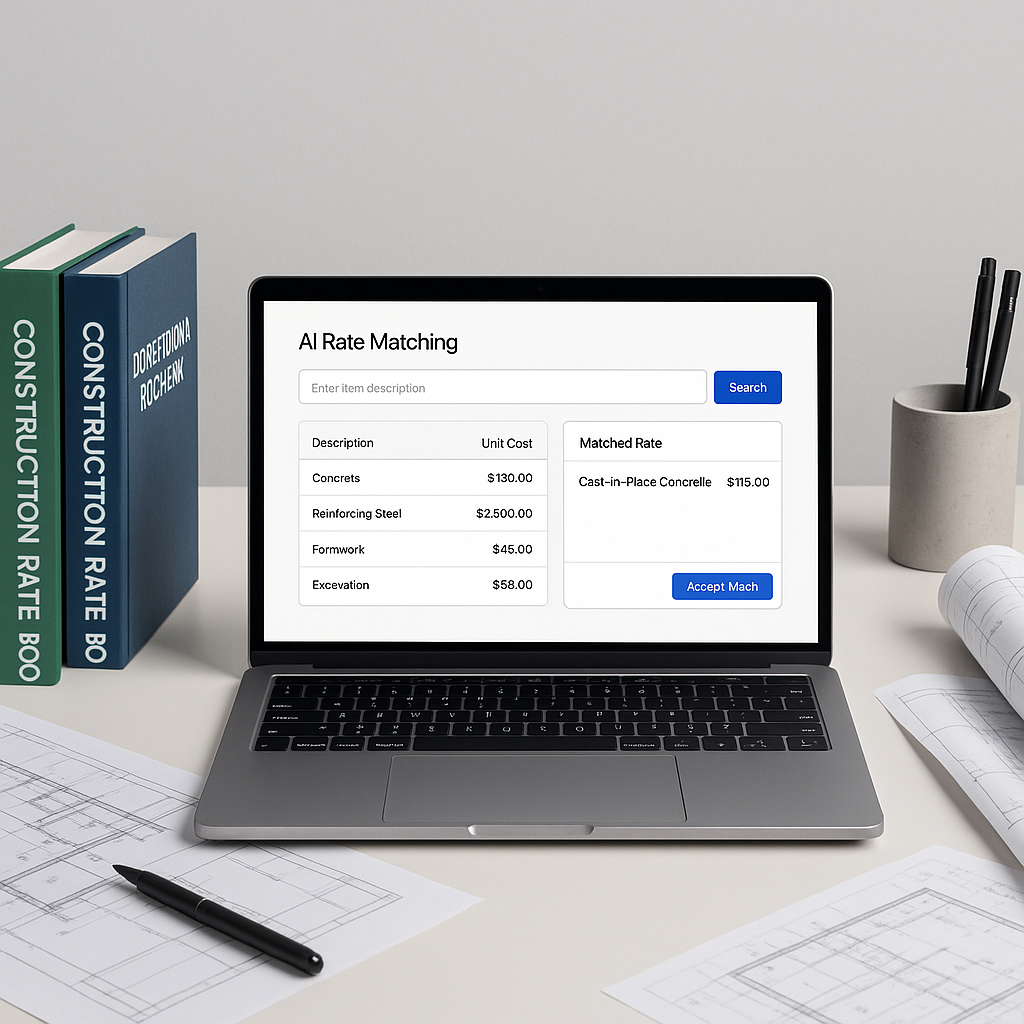
Good AI tools allow you to upload custom rate catalogs. The AI learns from your inputs and improves over time.
Q: Does AI work for small projects?
Absolutely. AI scales to any project size, making it a valuable tool for both small and large projects.
The Bottom Line
Manual takeoffs are a bottleneck that waste time, introduce errors, and leave your team scrambling to meet deadlines. AI-powered tools streamline the process, allowing you to focus on strategy and accuracy rather than repetitive tasks. If you’re looking to improve efficiency and reduce errors in your preconstruction estimation process, AI-powered takeoffs are worth exploring.