Why Manual Takeoffs Are Time-Consuming
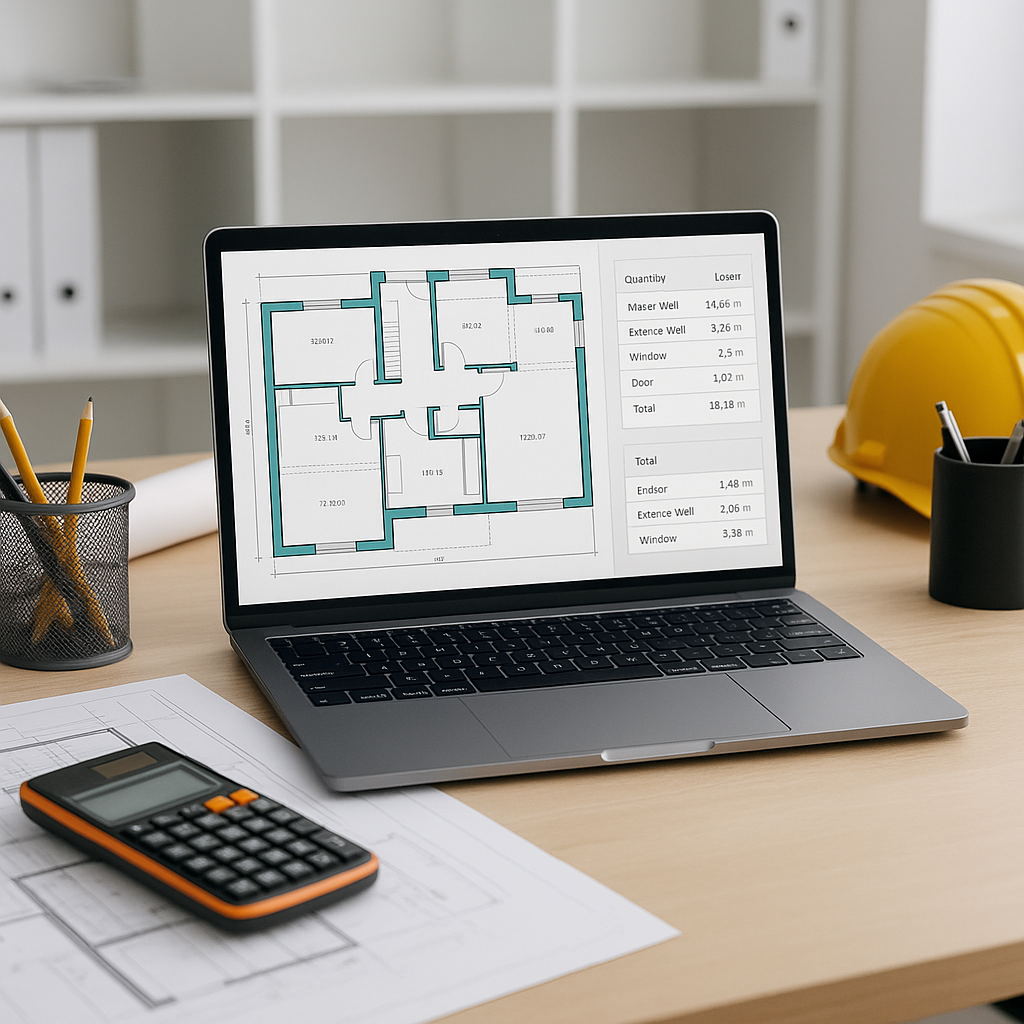
Let’s start with the obvious. Manual takeoffs are a grind. If you’ve ever spent hours tracing beams and calculating wall lengths from a PDF, you know exactly how draining it is. Multiply that across multiple bids a year, and you’re dedicating significant time to repetitive work that doesn’t necessarily make your bid more competitive.
Here’s the key takeaway: much of this work doesn’t require your expertise. You’re an estimator, not a human ruler. This is where AI-powered takeoff tools come in. They don’t replace you—they handle the repetitive tasks so you can focus on the strategic aspects of your work.
How AI Takeoffs Work in Practice
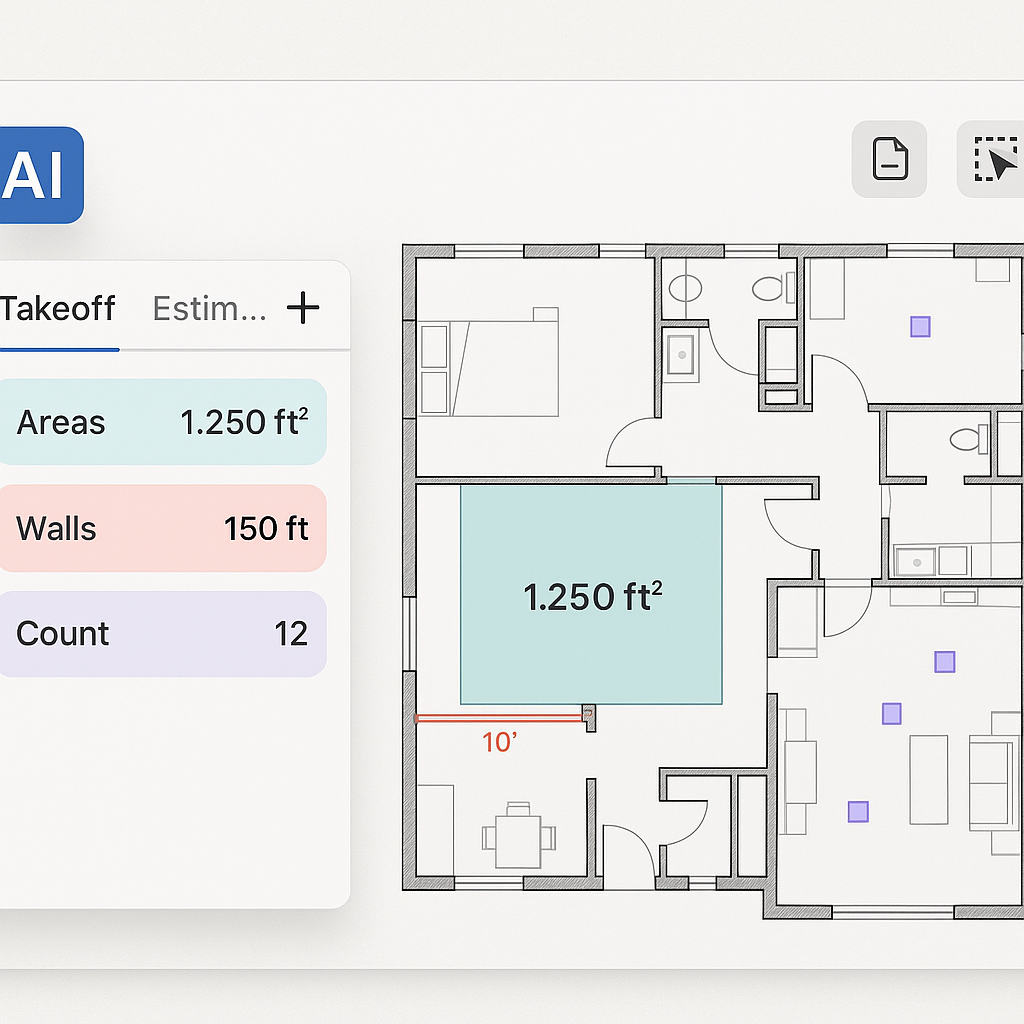
AI takeoffs aren’t magic. They’re just smarter automation. Tools like EstimateNext use advanced Vision AI to scan your PDF drawings and extract quantities for areas, lengths, counts, and more.
Illustrative example — Say you’re pricing a mid-sized commercial building. You upload the drawing set, and within minutes, the tool generates quantities for things like:
- Floor areas by room
- Wall lengths for gypsum partitions
- Door and window counts by type
It can also flag any “low-confidence” measurements where it’s unsure about the linework, so you can double-check before submitting. Compare that to manually measuring every single line—it’s a significant time-saver.
The Benefits of AI-Powered Takeoffs
AI-powered takeoff tools can help reduce the time spent on repetitive tasks, allowing estimators to focus on higher-value activities like refining bid strategies or negotiating with subcontractors. By automating quantity extraction, these tools can improve efficiency and reduce the likelihood of human error.
What About Accuracy?
Here’s a common concern: “AI can’t think like an estimator.” That’s true—it doesn’t know if those beams need fireproofing or if the wall finish is 5/8-inch drywall. But it doesn’t need to. AI handles the repetitive calculations, while you focus on scope-specific adjustments.
Many tools also include features like confidence indicators for each takeoff, so you know where to double-check. While no system is perfect, these tools can be more reliable than manual calculations, especially under tight deadlines.
Common Mistakes to Avoid
- Ignoring Low-Confidence Flags: AI tools flag uncertainties for a reason. Always review these areas manually before submitting.
- Over-Reliance on Default Settings: Customize your measurement preferences in the tool to match your firm’s specific requirements.
- Skipping Training: AI tools have a learning curve, but investing time upfront can lead to significant time savings later.
FAQ
Q: What if my drawings are messy or poorly scanned?
A: Most AI tools, including EstimateNext, can handle cluttered PDFs. However, the cleaner your input, the better the output.
Q: Can AI takeoffs handle revisions?
A: Yes. You can upload revision sets, and many tools will compare changes automatically.
Q: How much does it cost?
A: Pricing varies by tool, but many offer affordable subscription models suitable for general contractors and estimators.
Ready to Streamline Your Next Bid?
If you’re tired of spending excessive time on manual takeoffs, AI-powered tools can help you work more efficiently and focus on what truly matters in your projects.