How AI-Powered Takeoffs Improve Preconstruction Estimation
Let’s talk about takeoffs. If you’re an estimator, you’ve probably spent hours tracing PDF drawings, measuring walls, counting fixtures, and double-checking dimensions. It’s tedious, error-prone, and eats into your time for higher-value work. Worst of all, when revisions come in, you’re back at square one.
Now, imagine significantly reducing that time-consuming process. AI-powered takeoff tools are designed to help achieve exactly that.
The Problem with Manual Takeoffs
Manual takeoffs are slow. Estimators often spend significant time on a single drawing set, which can delay the bidding process. Speed matters, especially when competing for projects.
But speed isn’t the only issue. Accuracy can be inconsistent, depending on factors like fatigue or unclear drawings. A single missed beam or miscalculated area can throw off an entire estimate—and profit margins. Revisions add another layer of complexity, requiring estimators to identify changes in intricate drawings manually.
This inefficiency isn’t just frustrating—it’s costly. According to a McKinsey report, construction projects lose a significant portion of their budgets to rework and estimation errors.
How AI-Powered Takeoffs Work
AI-powered takeoff tools use machine learning to analyze PDF drawings and extract quantities automatically. Here’s how the process generally works:
- Upload the Drawings: Drag and drop your PDF set into the platform.
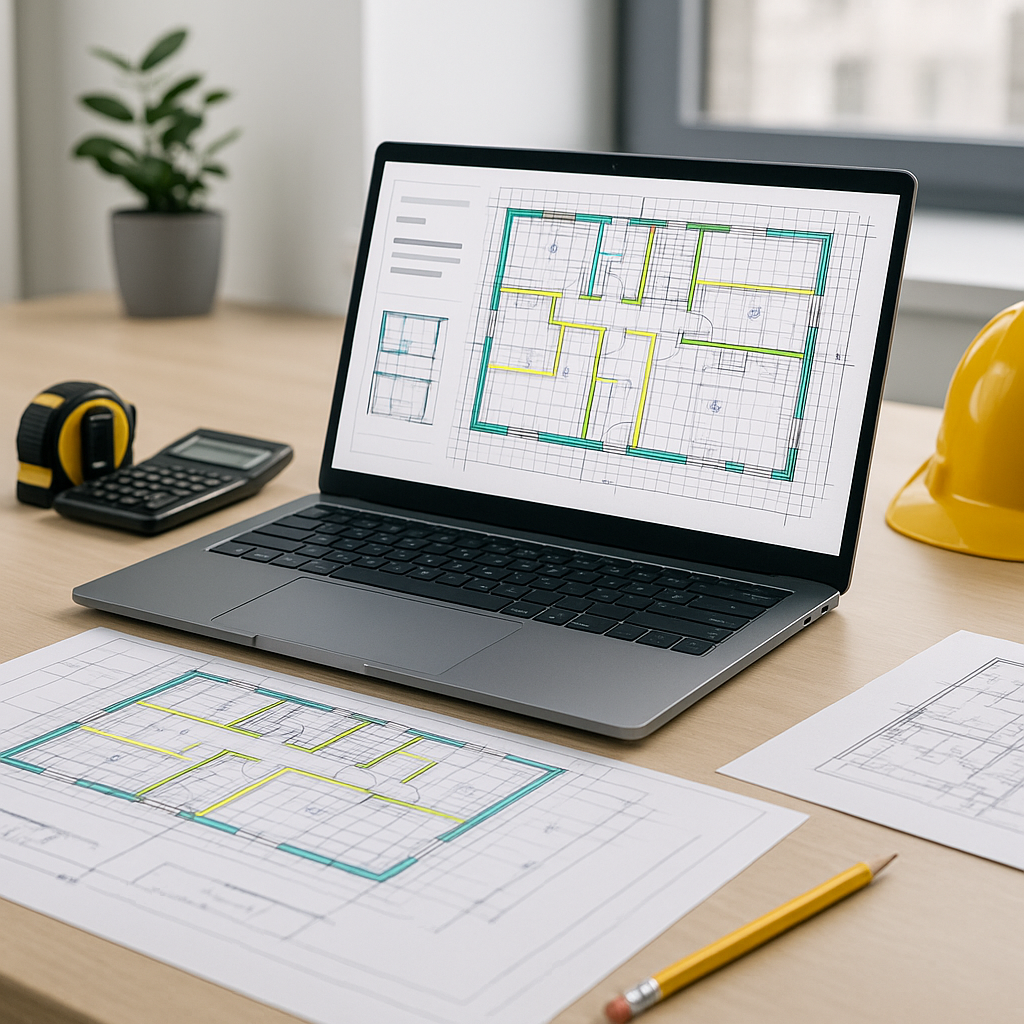
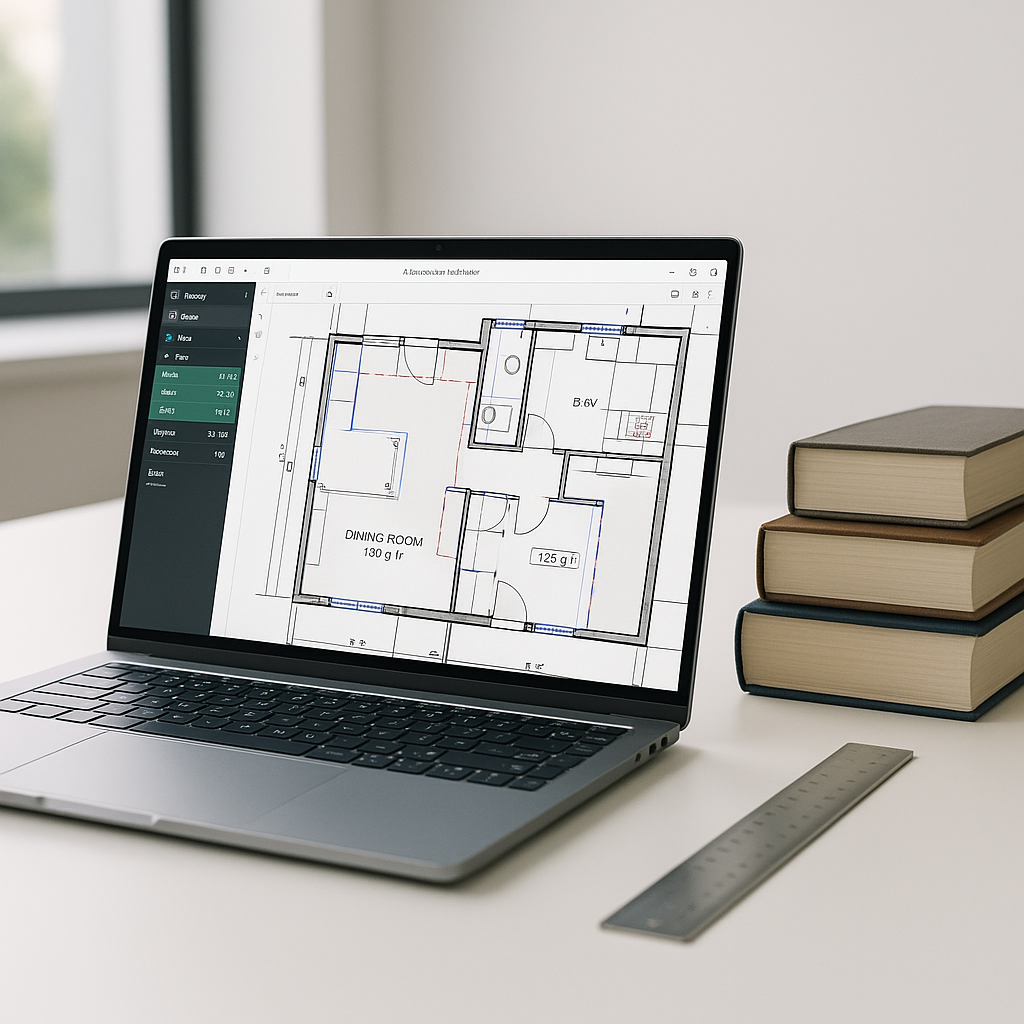
- AI Reads the Drawings: The system identifies key elements like walls, doors, windows, and room areas.
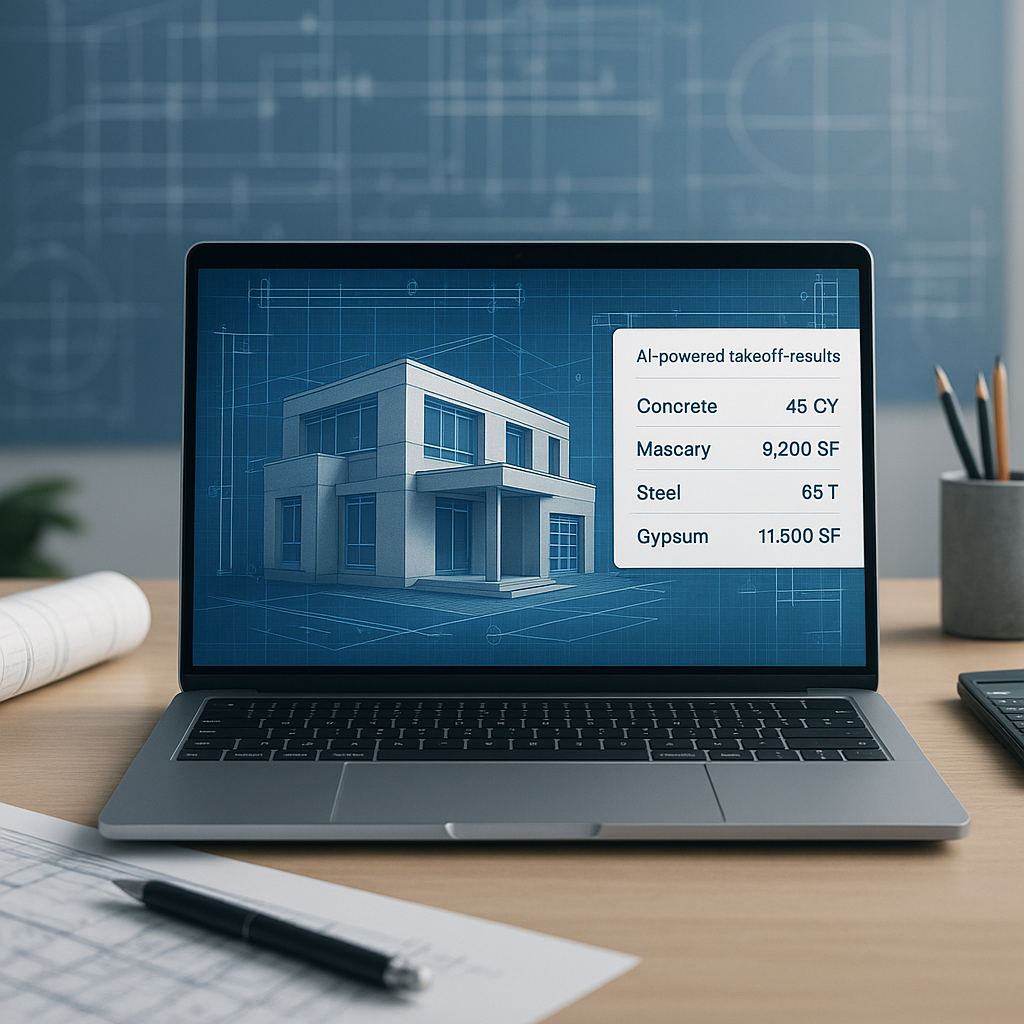
- Quantities Are Extracted: The tool generates a detailed quantity takeoff, including linear measurements, counts, square footage, and more.
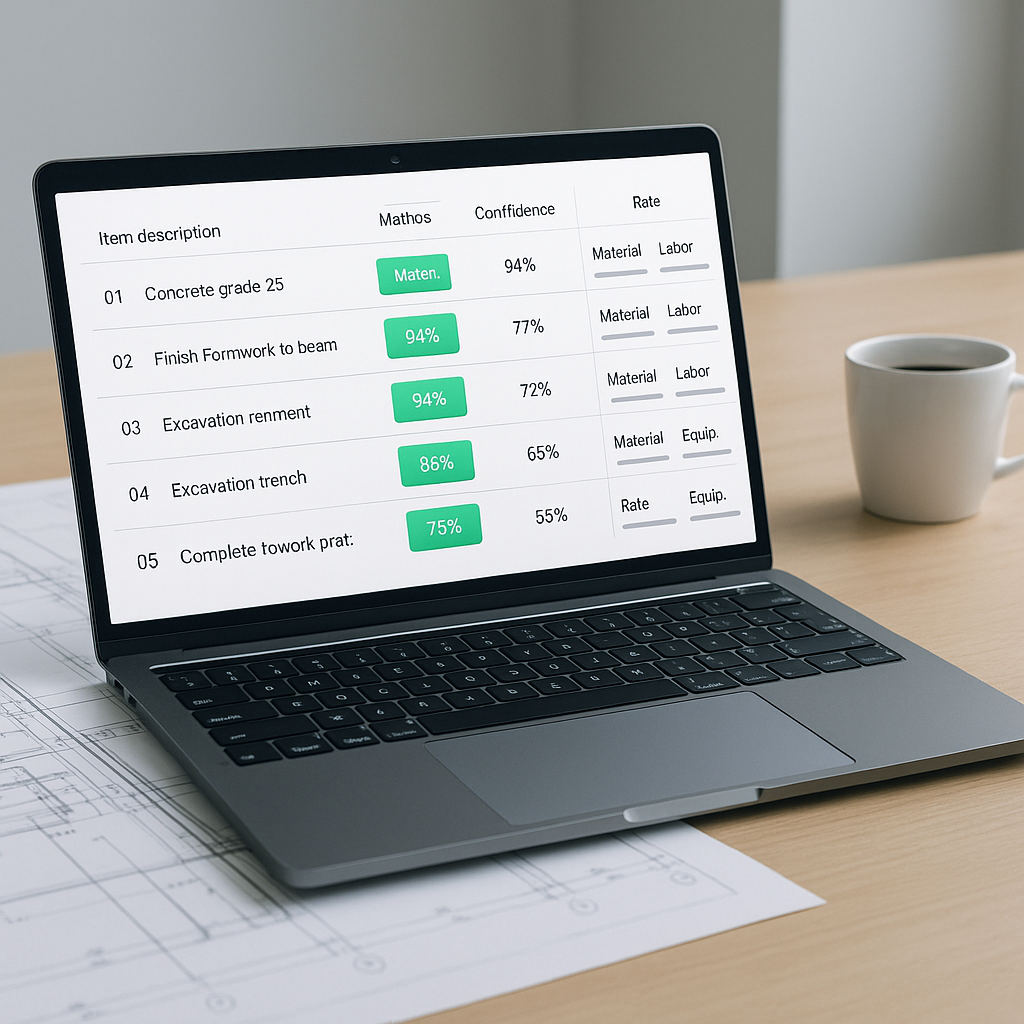
- Flagging for Review: Areas with low confidence are flagged for manual review, ensuring accuracy.
- Revisions Are Streamlined: Upload revised drawings, and the AI highlights the differences automatically, eliminating the need for manual comparison.
Illustrative example — A contractor using an AI-powered tool might reduce the time spent on takeoffs for a mid-sized project from several days to just a few hours, freeing up resources for other tasks.
What About Accuracy?
The obvious question is: “Can AI really be accurate?”
The answer is yes—with some caveats. AI tools are highly accurate when provided with clean, well-labeled drawings. However, messy or incomplete input data can affect results. Most platforms include features like confidence scoring and manual overrides, allowing users to verify and adjust outputs as needed.
AI tools also excel at catching details that humans might overlook, particularly on large or complex projects. Over time, as the system learns from past projects, its performance improves, making it an increasingly valuable tool.
The ROI of AI Takeoffs
Illustrative example — If an estimator typically spends dozens of hours on manual takeoffs, switching to an AI-powered tool could save a significant portion of that time. For firms handling multiple bids annually, these time savings translate into reduced labor costs and increased capacity to pursue additional projects.
For smaller firms, the benefits are equally compelling. AI tools scale to fit projects of various sizes, making them accessible and valuable regardless of the scope of work.
Common Questions About AI Takeoffs
Q: Do AI takeoff tools work for all types of drawings? A: Most tools are designed to handle standard PDF drawing sets, but the quality of the input matters. Clean, well-labeled drawings yield the best results.
Q: How long does it take to learn the software? A: Most platforms are intuitive and require minimal training. Users typically become proficient within a short period.
Q: Can AI handle specialty trades like HVAC or electrical? A: Yes. Many platforms include features tailored to specialty trades such as HVAC, electrical, and plumbing.
Q: What if my drawings are revised? A: AI tools excel at handling revisions. Simply upload the updated set, and the system will highlight changes automatically.
What to Watch For
Not all AI tools are created equal. Here are a few factors to consider:
- Integration: Does the tool work with your existing software like Bluebeam or Procore?
- Customization: Can you define custom rates or upload your own catalogs?
- Support: What kind of customer support and training resources are available?
- Scalability: Will the tool grow with your business needs?
Final Thoughts
AI-powered takeoffs are more than just a time-saver—they’re a strategic advantage. By automating repetitive tasks, estimators can focus on higher-value activities like pricing accurately, negotiating with subcontractors, and improving bid competitiveness. As these tools become more accessible, they offer a practical way for firms of all sizes to enhance efficiency and accuracy in preconstruction estimation.