Manual Takeoffs Are Time-Consuming and Error-Prone
If you’ve ever spent hours manually calculating quantities from drawings, you know how tedious and error-prone the process can be. Takeoffs are the backbone of preconstruction estimation, and inaccuracies can lead to cascading issues throughout a project. Despite advancements in technology, many teams still rely on manual methods, which can be inefficient and prone to mistakes.
AI-powered tools are changing this dynamic by automating the quantity extraction process. Instead of manually tracing lines or counting elements, these tools allow you to upload your PDF drawings and extract quantities in a fraction of the time. This can free up your team to focus on higher-value tasks like pricing strategies and subcontractor negotiations.
How AI Takeoff Tools Work
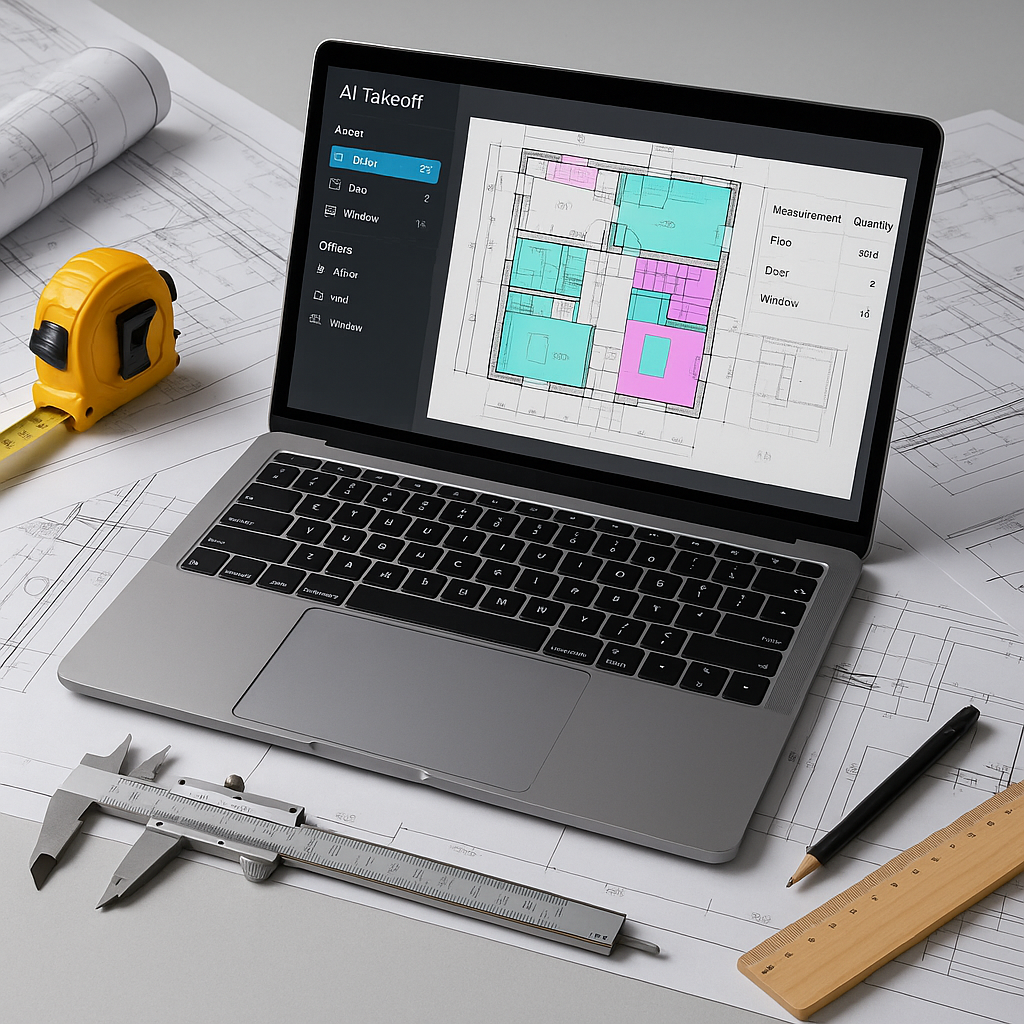
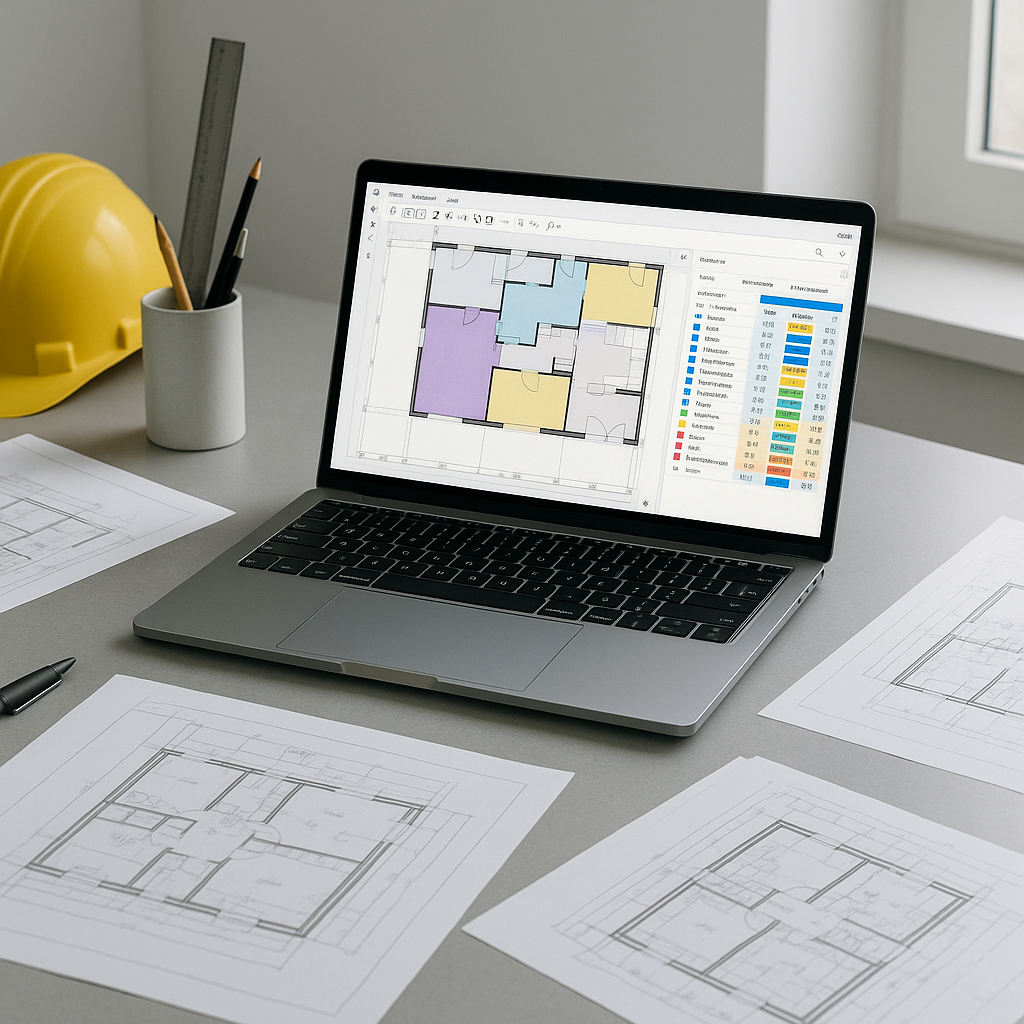
AI tools use computer vision to analyze drawings and identify key quantities such as walls, doors, windows, and areas directly from PDFs. For example, in a high-rise project, these tools can extract room areas, wall lengths, and door counts across multiple pages automatically.
What makes these tools particularly effective is their review workflow. Many AI tools flag low-confidence quantities for manual verification, ensuring accuracy while reducing the time spent on repetitive tasks. Additionally, the system can learn from your corrections, improving its performance over time.
Addressing Common Concerns About AI in Estimation
One common objection is that AI cannot replace the expertise of an experienced estimator. This is true—AI tools are not designed to understand local labor nuances, subcontractor relationships, or site-specific challenges. Instead, they are meant to handle repetitive tasks, allowing estimators to focus on strategic decision-making.
Think of AI as a tool for amplification. It enables teams to accomplish more with the same resources, making it particularly valuable for contractors managing multiple bids or complex projects.
What to Watch For When Choosing AI Tools
Not all AI takeoff tools are created equal. Here are some key features to consider:
- Accuracy and Review Features: Look for tools that flag low-confidence quantities for manual review to minimize errors.
- Integration with Your Workflow: Ensure the tool can export data into platforms like Excel or Procore to fit seamlessly into your existing processes.
- Ease of Use: Choose tools with an intuitive interface to minimize the learning curve for your team.
- Cost: Evaluate the pricing structure to ensure it aligns with your budget and team size.
FAQ
Q: Are AI-powered takeoffs accurate?
A: They are highly accurate but not perfect. Human oversight is still essential, which is why many tools include review workflows.
Q: Will AI replace estimators?
A: No. AI handles repetitive tasks, but estimators are still needed for judgment calls on pricing, markups, and bid strategies.
Q: Can AI tools handle complex projects?
A: Yes. AI tools are scalable and can manage projects ranging from small renovations to large-scale infrastructure developments.
The Bottom Line
AI-powered takeoff tools streamline the preconstruction estimation process by automating quantity extraction and reducing manual effort. By adopting these tools, teams can improve efficiency, reduce errors, and focus on strategic tasks that drive project success.