You’re Losing Time—and Money—on Manual Takeoffs
Let’s be real: the construction industry runs on tight margins and even tighter timelines. And yet, a significant amount of time is often spent on manual takeoffs. Estimators frequently trace PDFs in tools like Bluebeam, manually measuring areas, lengths, and counts for projects. This process can be time-consuming and labor-intensive.
Why does it matter? Because that time isn’t free. Manual work also increases the risk of errors. A missed line item or miscalculated area can cascade into change orders, strained client relationships, and—ultimately—shaved margins.
So what’s the alternative? AI-powered takeoff tools, like the Vision AI feature from EstimateNext, are revolutionizing how teams handle this critical step.
How AI Takeoffs Work
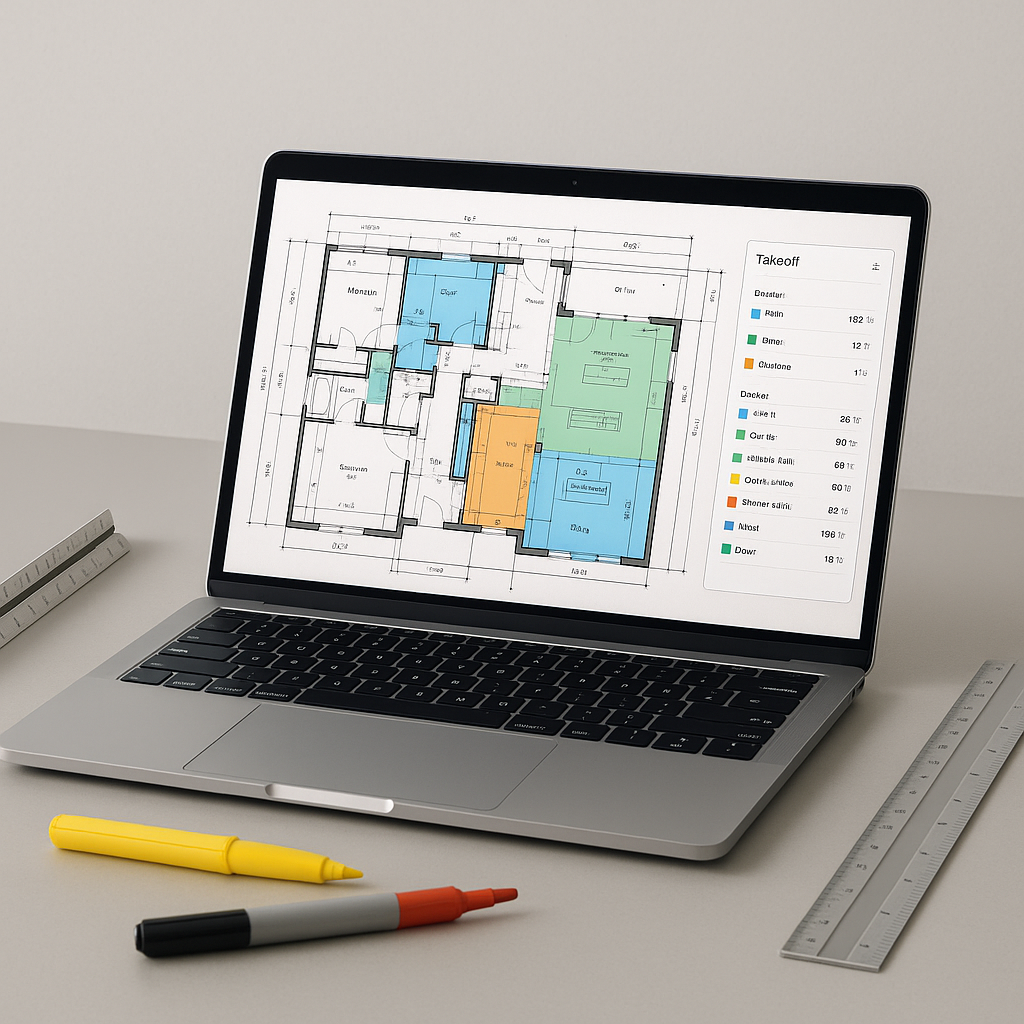
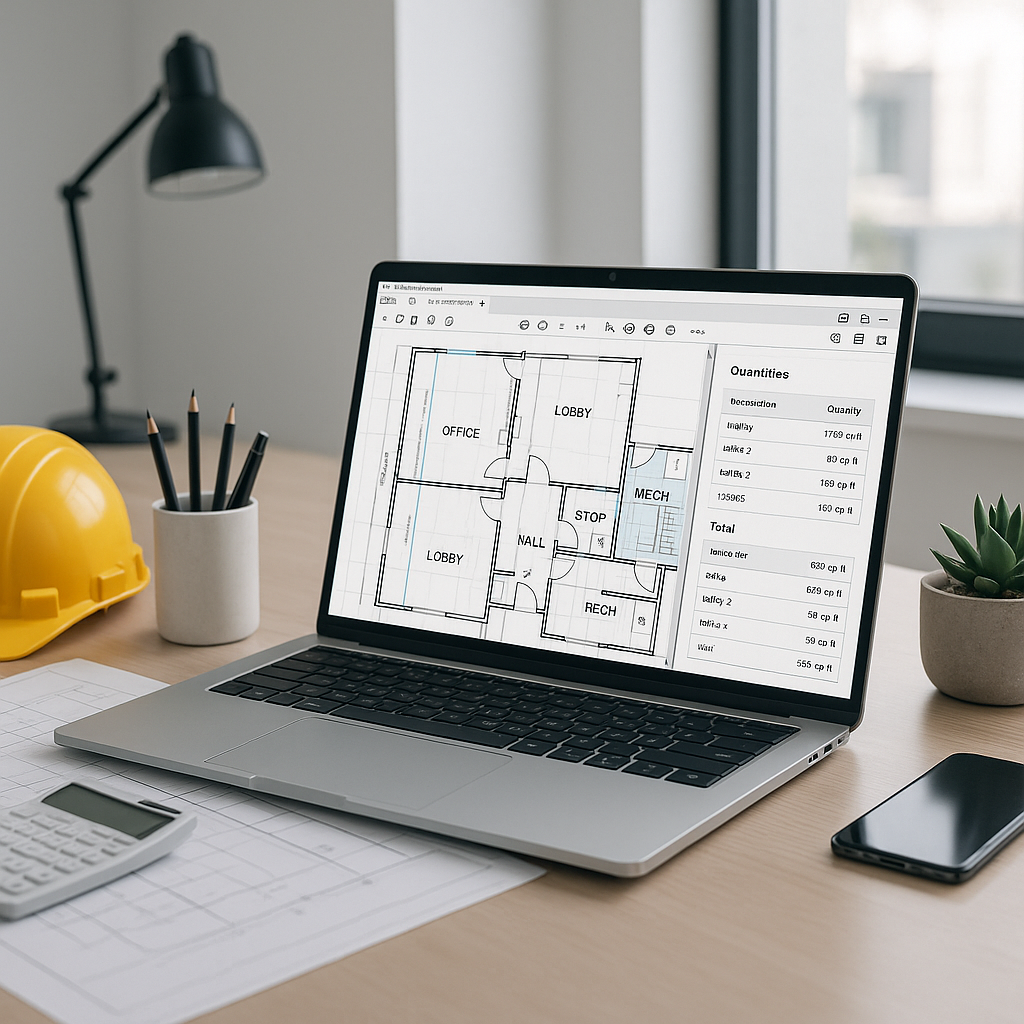
Here’s the idea: instead of spending hours manually tracing drawings, you upload your PDFs into the system. The AI scans the drawings, identifies quantities—like room areas, wall lengths, and even door and window counts—and extracts them into a structured BOQ (Bill of Quantities). The entire process is significantly faster than manual methods.
Illustrative example — A contractor using AI-powered tools could potentially reduce the time spent on takeoffs from several days to a matter of minutes. This time savings allows teams to focus on refining bids, negotiating with subcontractors, or pursuing additional work.
But here’s the part that often gets overlooked: AI doesn’t just speed things up. It also reduces the cognitive load on your team. Estimators no longer have to juggle a thousand measurements or worry about missing a detail buried in a 200-page drawing set. The AI handles the repetitive tasks, and your team focuses on what truly matters—making informed decisions that win bids.
Why Speed Isn’t the Only Benefit
Yes, saving time is great. But let’s talk about why these tools deliver more than just efficiency:
-
Consistency Across Projects: AI doesn’t have off days. It applies the same methodology to every project, ensuring consistent results. This is particularly useful for firms handling multiple bids simultaneously.
-
Error Reduction: Manual takeoffs are prone to human error. AI eliminates those risks by automating measurements and applying algorithms that don’t miss a line.
-
Scalability: Whether you’re estimating a small office fit-out or a large infrastructure project, AI scales to meet the complexity without breaking a sweat.
-
Integration with Existing Tools: Most AI platforms, including EstimateNext, integrate seamlessly with tools like Bluebeam, Procore, and Excel. You don’t have to overhaul your entire workflow—just plug it in where it makes the most sense.
-
Team Efficiency: By automating repetitive tasks, you free up your estimators to focus on higher-value activities, like building relationships with subcontractors or refining bid strategies.
The Obvious Objection: "AI Can’t Think Like an Estimator"
I hear this one a lot: "AI is fast, but it doesn’t understand the nuances of construction." And you know what? You’re absolutely right. AI isn’t a replacement for human expertise. But that’s not the point.
Think of AI as your apprentice. It handles the repetitive, time-consuming tasks so you can focus on the strategic work that actually wins projects. You’re still the one making judgment calls, deciding on markup, and negotiating with clients. The AI just gives you back the time to do it.
What to Watch For
Not every AI tool is created equal. Here are a few things to keep in mind:
-
Input Quality Matters: AI is only as good as the data you feed it. Clean, well-organized PDFs will yield better results than messy, low-resolution files.
-
Manual Oversight: Even the best AI can misinterpret complex drawings, so human oversight is essential to ensure accuracy.
-
Learning Curve: While most platforms are user-friendly, there’s still a learning curve. Invest time in training your team to use the tool effectively.
-
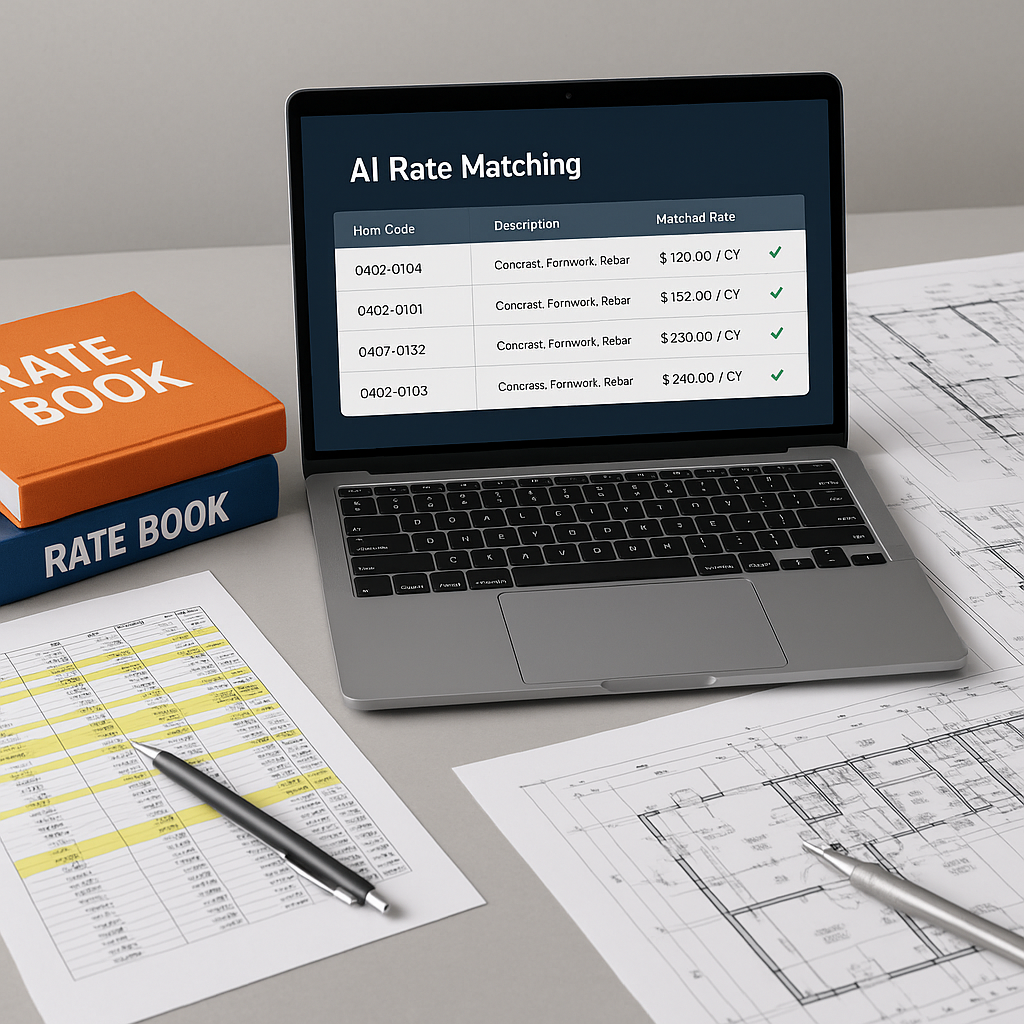
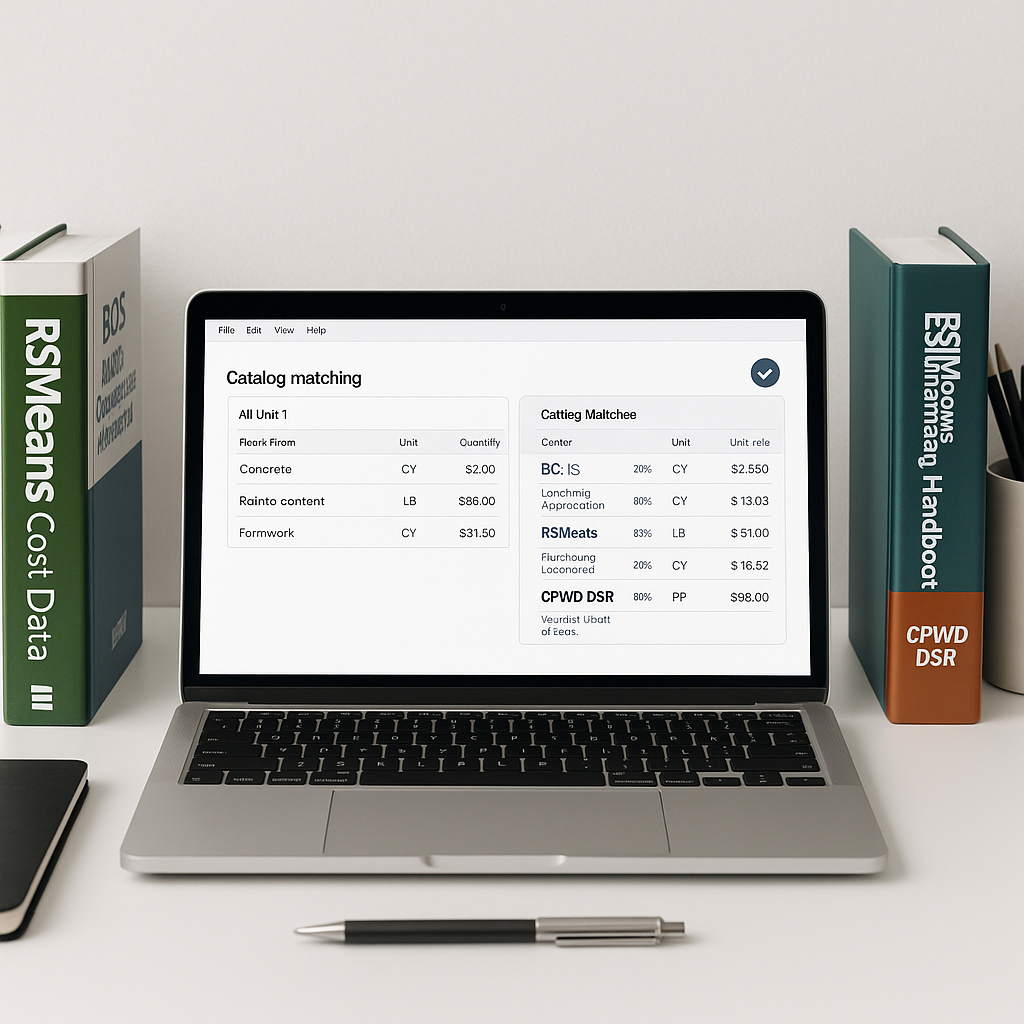
Customization Options: Can you upload your own rate catalogs or define custom parameters? The more flexible the tool, the better it will serve your specific needs.
FAQ
Q: How accurate are AI-generated takeoffs?
AI tools are highly accurate when fed clean, high-quality data. However, no system is perfect. That’s why tools like EstimateNext include manual override features for added flexibility.
Q: Can I use AI tools for small projects?
Absolutely. AI tools scale to fit projects of any size, from small renovations to massive infrastructure projects.
Q: How quickly can my team get up to speed with AI tools?
Most platforms are designed to be intuitive, with training taking a short amount of time. Once your team is comfortable, the time savings will more than justify the effort.
Q: What if my rates are custom or project-specific?
AI tools allow you to upload custom rate catalogs or define project-specific rates. This ensures your estimates reflect your actual costs.
The Bottom Line
If you’re still relying on manual takeoffs, you’re leaving money—and time—on the table. AI tools like EstimateNext aren’t just faster; they’re smarter, more reliable, and better at scaling to meet your needs.