The Takeoff Problem in Construction Estimation
If you’ve worked in construction estimation, you already know the challenges of manual takeoffs. Hours of analyzing drawings, tracing measurements, and double-checking calculations can be tedious and time-consuming. This process often diverts attention from critical tasks like refining bids and managing project margins.
Manual takeoffs can lead to missed deadlines, incomplete bids, and overworked estimators. In today’s competitive market, finding ways to optimize this process is essential.
What Makes AI-Powered Takeoffs Different?
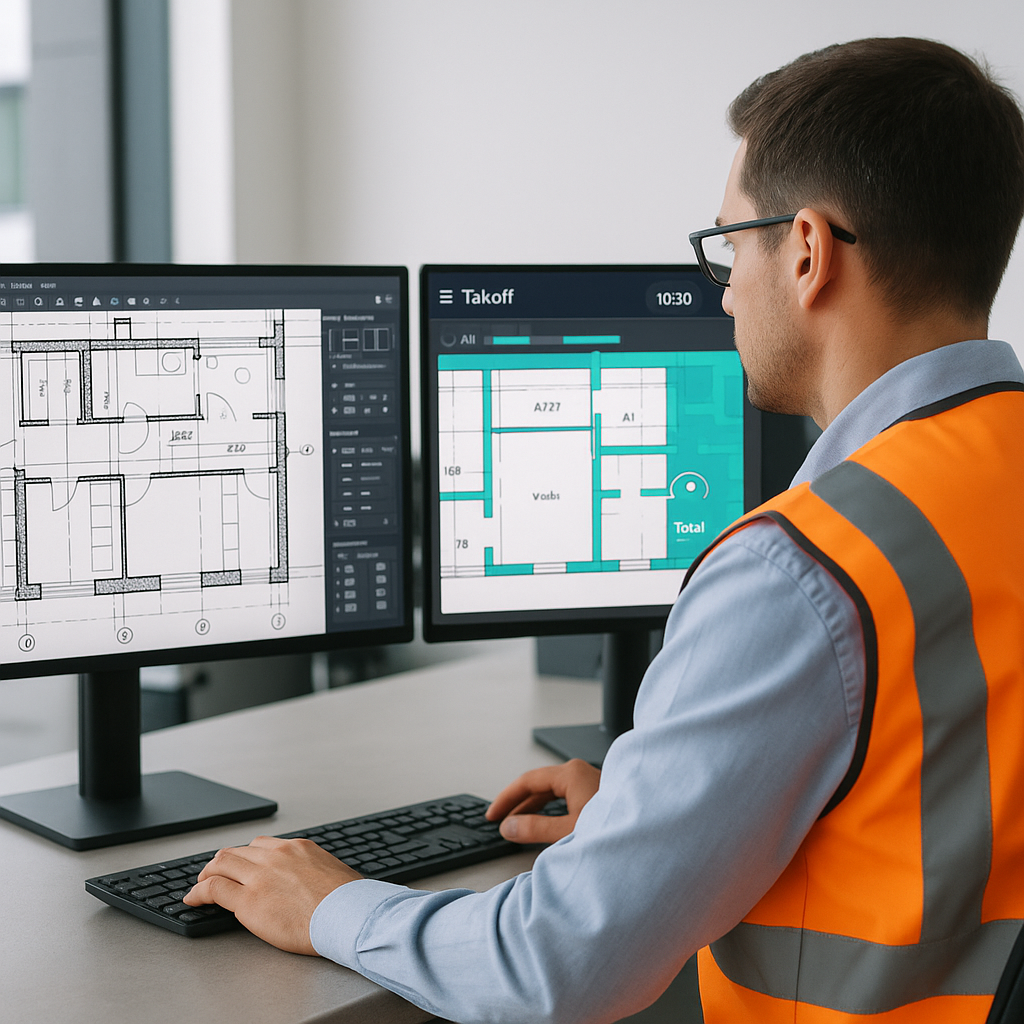
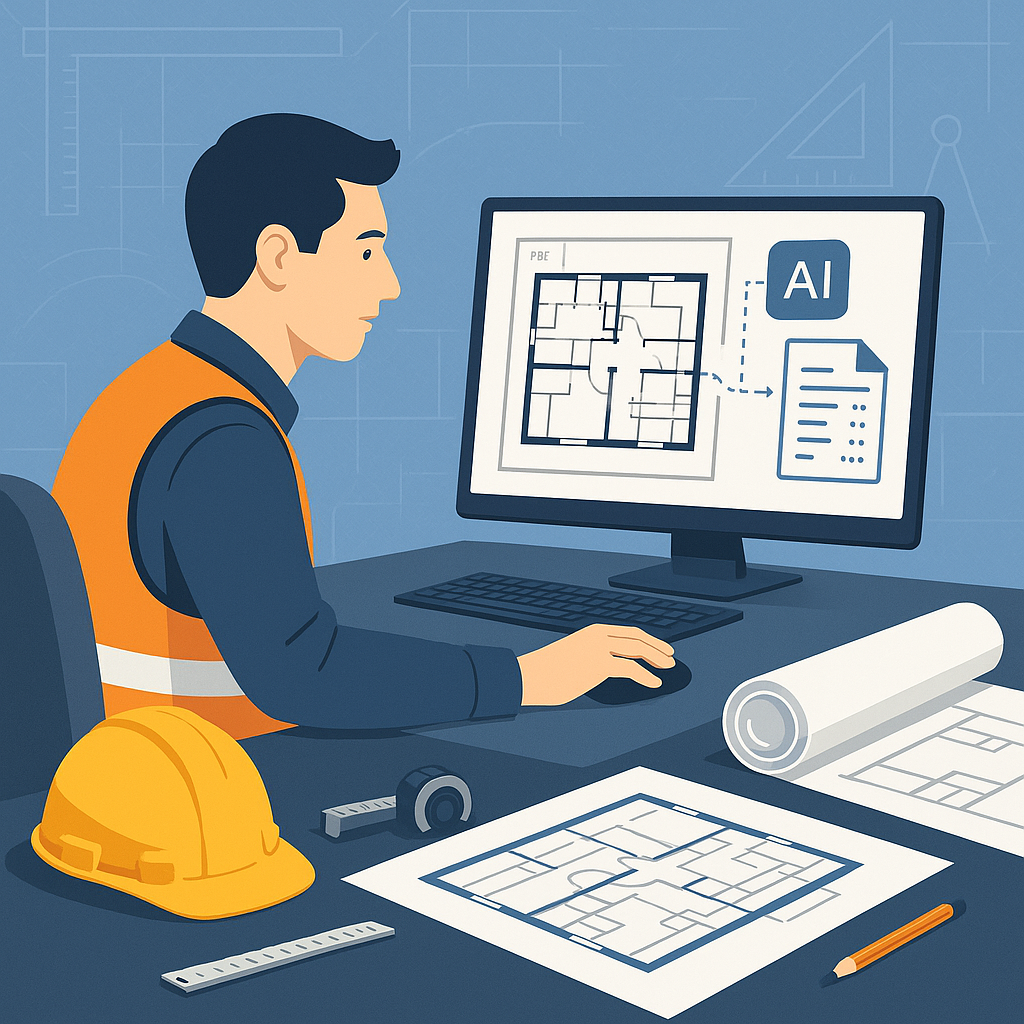
AI-powered tools are transforming the way takeoffs are performed by automating repetitive tasks and reducing the time required for quantity extraction. These tools use machine learning algorithms to scan drawings, identify key elements, and generate quantity takeoffs (QTOs) efficiently.
Here’s how the process typically works:
- Upload Your PDFs: Upload your drawing set into the platform. Most tools accept common file types, simplifying the process.
- AI Reads the Drawings: The AI scans the drawings to identify elements such as room areas, wall lengths, and counts of windows or doors.
- Review and Adjust: The system flags areas requiring manual review, allowing you to verify and adjust as needed.
- Export Your QTO: Once verified, export the quantities into your preferred estimation software or spreadsheet.
Why This Matters
The benefits of AI-powered takeoffs go beyond speed. Here’s what they bring to the table:
- More Bids, Less Stress: Automating takeoffs frees up time, enabling teams to handle more bids without increasing workload.
- Improved Accuracy: By reducing manual input, AI tools help minimize errors, ensuring more reliable estimates.
- Enhanced Team Productivity: Automating repetitive tasks allows teams to focus on higher-value activities like strategy and negotiation.
Addressing Common Concerns
“AI can’t think like an estimator.”
That’s true—AI doesn’t replace expertise. Instead, it complements your skills by handling repetitive tasks, leaving you to focus on strategic decisions.
“What if the AI misses something?”
AI tools often include manual override features, allowing you to review and adjust flagged areas. This ensures accuracy while maintaining control.
“We’ve always done it manually. Why change now?”
The construction industry is evolving, and adopting AI tools can provide a competitive edge. Early adopters often see significant efficiency gains and cost savings.
What to Look for in an AI Tool
When choosing an AI-powered takeoff tool, consider the following:
- Ease of Use: The tool should be intuitive and require minimal training.
- Integration Options: Ensure compatibility with your existing workflows, such as Bluebeam, Procore, or Excel.
- Customizability: Look for features like custom catalog uploads and adjustable rate factors to suit your specific needs.
- Scalability: The tool should handle projects of varying sizes, from small renovations to large infrastructure builds.
FAQ
Q: How accurate are AI-generated takeoffs?
AI tools are designed to be highly accurate, but human oversight remains essential for final validation.
Q: Can I use AI tools for smaller projects?
Yes, AI tools are scalable and can be used for projects of any size, including smaller ones with tighter margins.
Q: What if my drawings are messy or outdated?
Many AI tools can handle a range of drawing quality levels, but cleaner inputs generally yield better results.
Q: Can I try it before committing?
Most platforms offer free trials or demo versions, allowing you to evaluate their effectiveness before making a decision.
The Bottom Line
AI-powered takeoffs are revolutionizing construction estimation by saving time, improving accuracy, and enhancing productivity. As the industry becomes increasingly competitive, adopting these tools can provide a significant advantage. If you’re looking to streamline your estimation process, exploring AI-powered solutions is a step in the right direction.