The Takeoff Problem in Construction Estimation
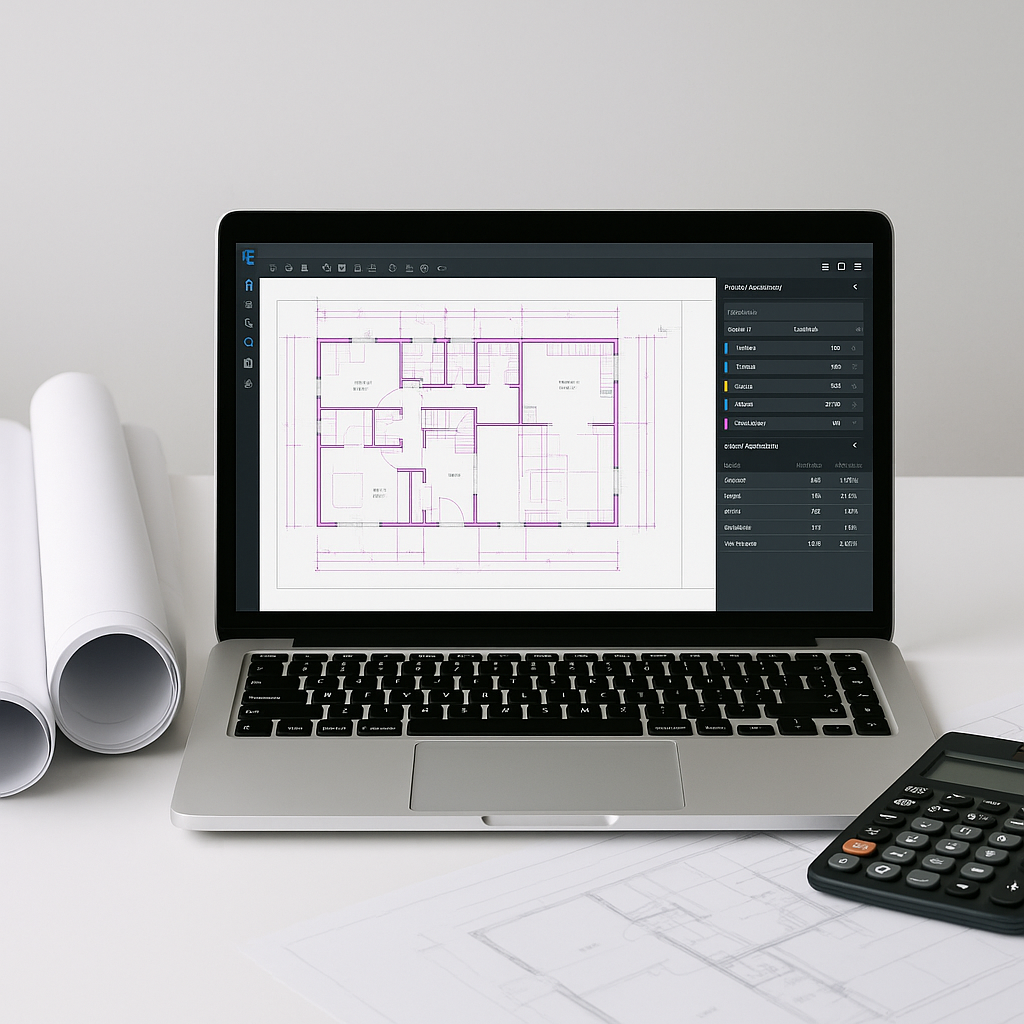
If you're in construction estimation, you know the challenges of manual takeoffs. It's tedious, time-consuming, and prone to errors. Estimators often spend significant time tracing beams, counting doors, or measuring wall areas in a single set of drawings. This process can become overwhelming, especially when managing multiple bids simultaneously.
Why is this still the norm? Many teams rely on a mix of tools like Bluebeam, Excel, and manual effort. While these methods work to some extent, they are slow and keep skilled professionals tied up in repetitive tasks instead of focusing on higher-value activities.
How AI-Powered Takeoffs Help
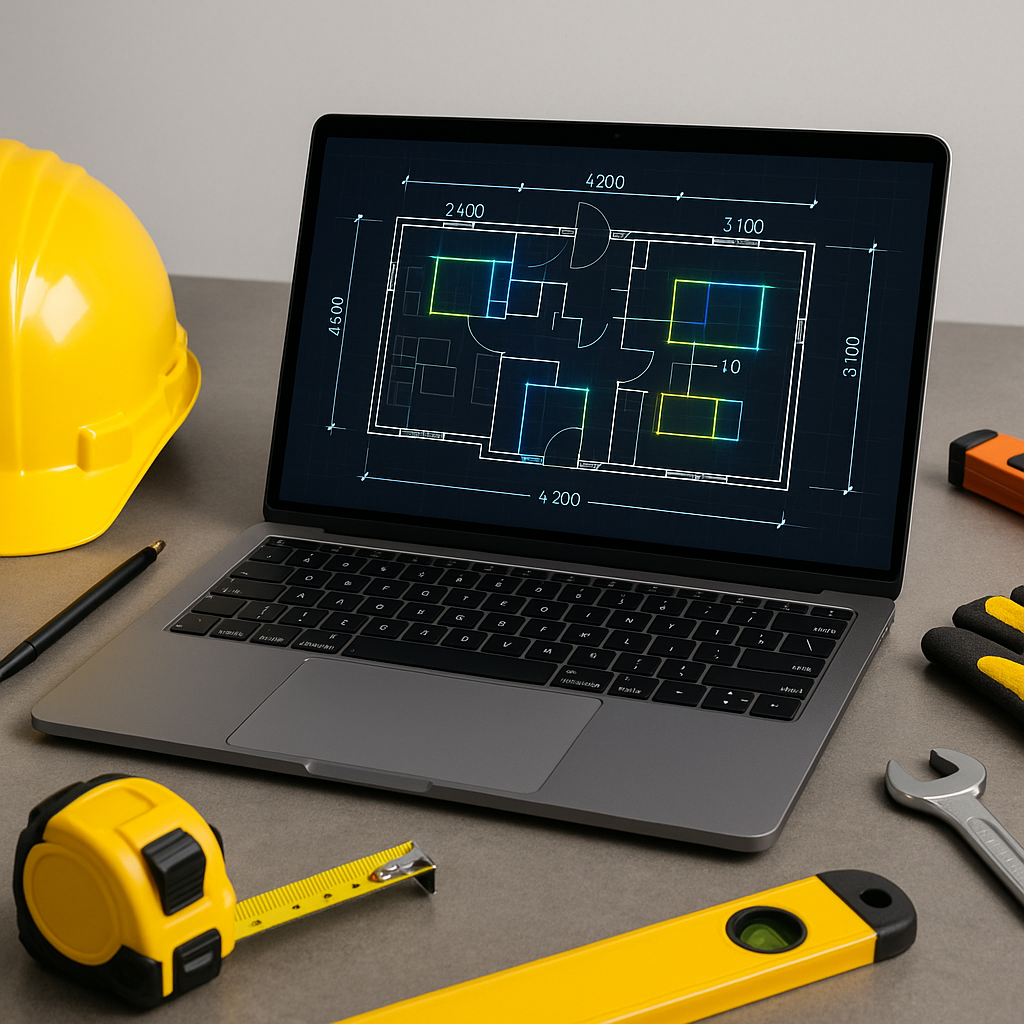
AI-powered tools are transforming the way takeoffs are performed. These tools use Vision AI to automate quantity takeoffs, extracting data such as room areas, wall lengths, and fixture counts directly from PDF drawings. While human oversight remains essential, these tools significantly improve efficiency and reduce manual effort.
Illustrative example — Imagine a task that typically takes two estimators several days to complete. With AI-powered tools, this process can be streamlined, allowing teams to focus on strategic aspects of estimation like scope analysis and negotiations.
How It Works
The process of using AI-powered takeoff tools is straightforward:
- Upload Your Drawings: Drag and drop your PDFs into the platform.
- AI Extraction: The system identifies and measures quantities such as room areas, wall lengths, and fixture counts.
- Review and Adjust: Flagged low-confidence areas allow for corrections without redoing the entire process.
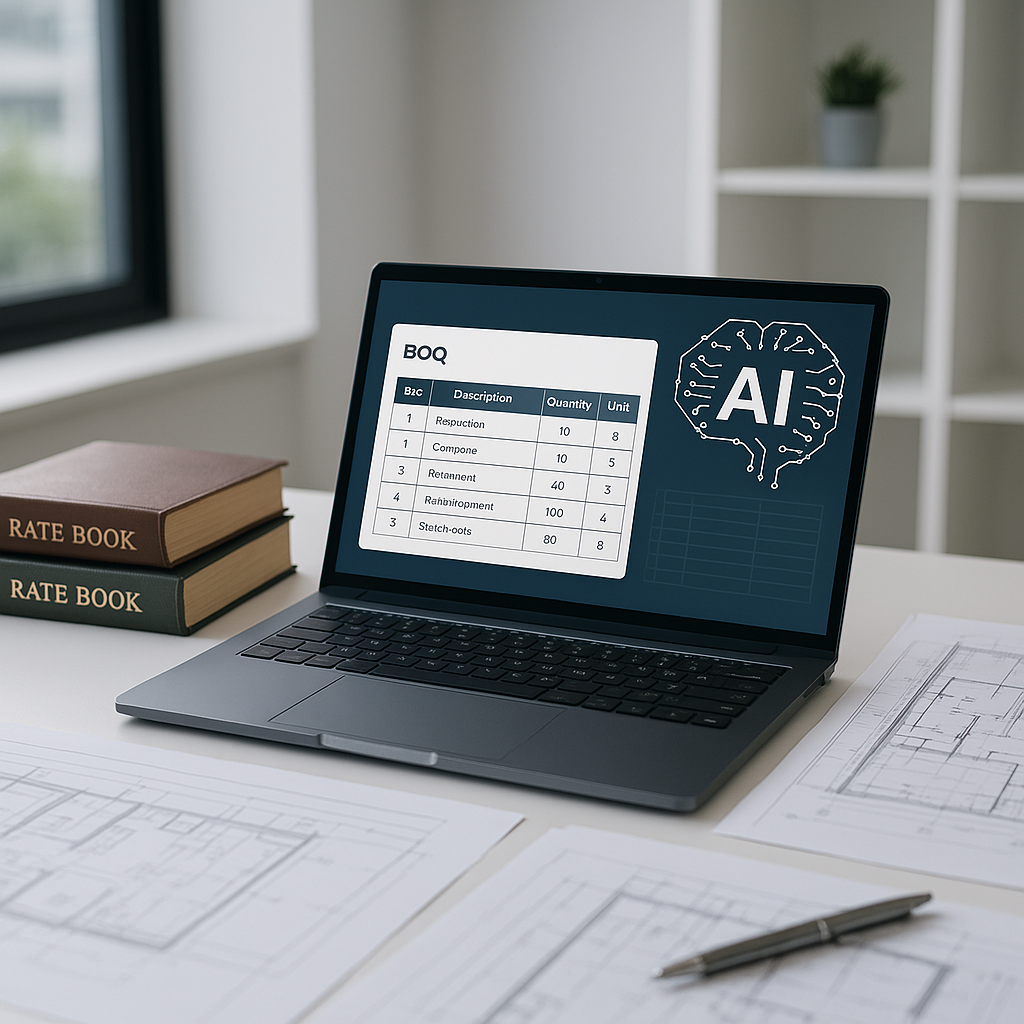
- Export and Use: Export the takeoff data directly into your Bill of Quantities (BOQ) or estimating software.
Benefits of AI-Powered Estimation
The primary advantage is time savings. By automating repetitive tasks, teams can allocate their time to more strategic activities, such as preparing additional bids, refining estimates, or negotiating with subcontractors.
Another key benefit is improved accuracy. Manual takeoffs are susceptible to human error, whereas AI tools provide a more consistent and reliable baseline. While not perfect, these tools offer features like flagged low-confidence areas and audit trails, enabling teams to verify and adjust data as needed.
Addressing Common Concerns
“AI Doesn’t Understand My Projects”
AI tools are not designed to replace human expertise but to handle repetitive tasks, freeing up time for professionals to focus on project-specific nuances. Think of it as an assistant that works quickly and efficiently, allowing you to concentrate on strategic decision-making.
Common Mistakes to Avoid
- Relying Solely on AI: Always review the results, especially for complex or unique project scopes.
- Skipping Training: While most tools are user-friendly, investing time in training ensures you can maximize their potential.
- Ignoring Low-Confidence Flags: These indicators highlight areas that may require additional attention, helping to catch potential errors early.
FAQ
Q: How accurate are AI-powered takeoffs?
A: They are generally accurate but require human review for unique conditions or complex scopes.
Q: Can AI handle revisions?
A: Yes, many platforms allow you to upload revised drawings and compare changes automatically.
Q: Is it worth it for smaller projects?
A: Yes, even for smaller projects, the time saved on takeoffs can add up significantly over time.
Conclusion
If manual takeoffs are consuming too much of your team's time, AI-powered tools offer a way to streamline the process. By automating repetitive tasks, these tools allow construction professionals to focus on the work that truly adds value to their projects.