Why Manual Takeoffs Are Holding You Back
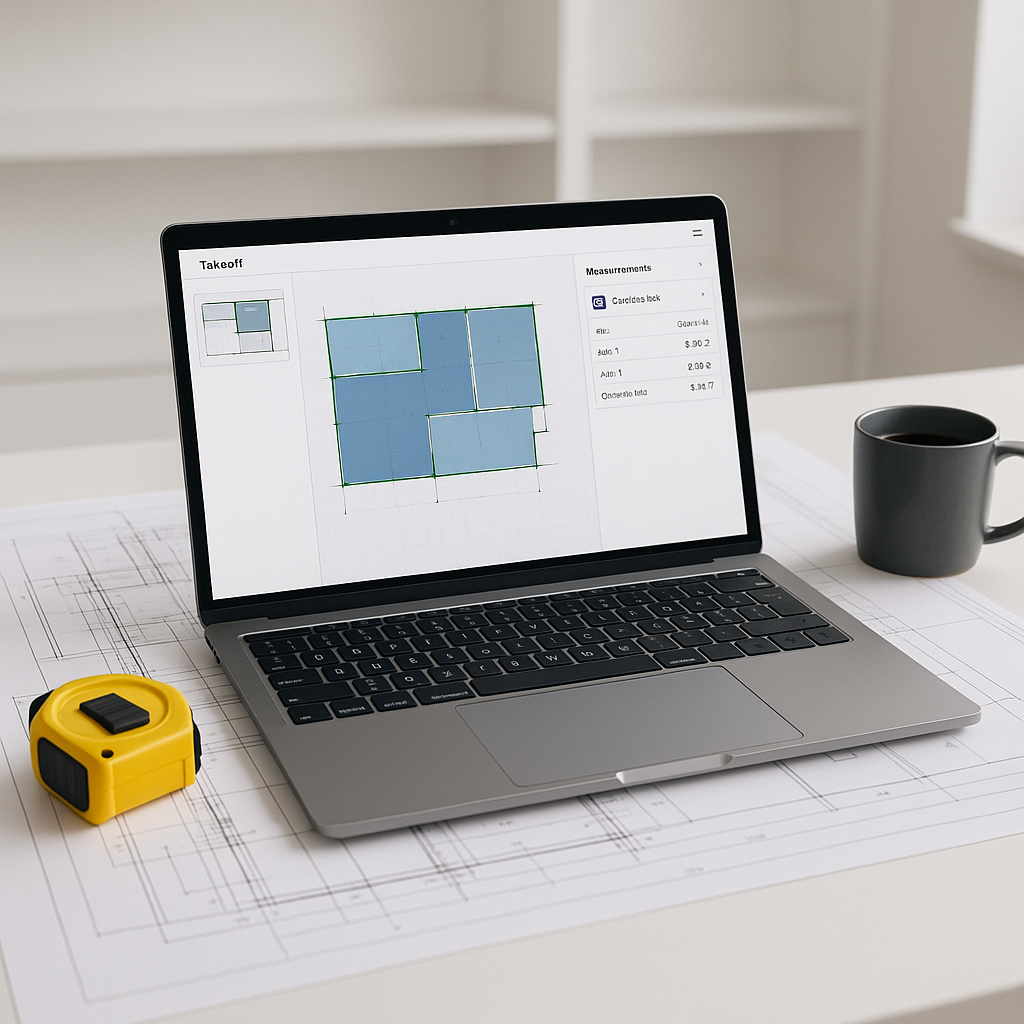
Let’s start with the obvious: manual drawing takeoffs are a time sink. If you’ve spent days poring over PDF drawings, measuring areas, counting fixtures, and tracing lines in tools like Bluebeam, you know what I mean. Estimators often spend significant time completing takeoffs for a single, mid-size project. That’s before you even get to pricing or bid preparation.
Now, let’s talk about the real problem: it’s not just the time; it’s the ripple effect. Every hour spent on manual takeoffs is an hour you’re not vetting subcontractor quotes, refining your bid strategy, or—most importantly—pursuing more work. It’s like trying to run a 100-meter sprint with an anchor tied to your ankle.
The AI Takeoff Advantage
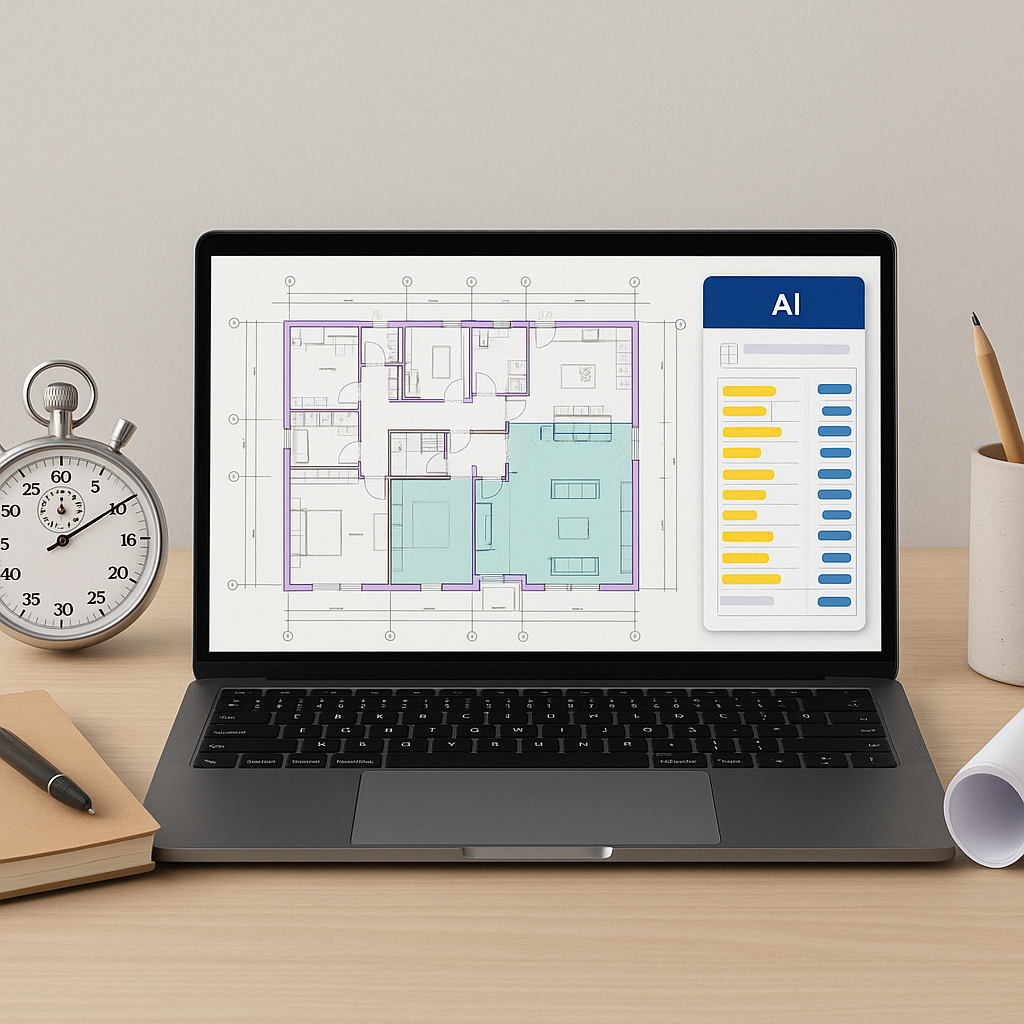
Here’s where AI-powered takeoff tools come in. Instead of spending hours tracing drawings and manually calculating quantities, you can upload your PDFs and let AI do the heavy lifting. AI tools scan your drawings, extract quantities (room areas, wall lengths, door/window counts, etc.), and compile them into a usable QTO much faster than manual methods.
How does it work? It’s not magic. AI algorithms analyze your drawings using pre-trained models. These models can recognize patterns, interpret dimensions, and even flag areas where human oversight is needed. For instance, if a line or measurement is ambiguous, the system will highlight it and ask for confirmation. This way, you’re not just blindly trusting the AI—your judgment is still in the driver’s seat.
Common Concerns About AI Takeoffs
Now, I know what you’re thinking: “AI can’t replace my expertise.” And you’re right—it’s not supposed to. AI isn’t here to take over your job; it’s here to make it easier. You’re still the one deciding on markups, negotiating with subs, and making judgment calls. The AI just handles the grunt work, so you can focus on what actually matters.
Another concern is accuracy. Can you trust AI to get it right? The short answer is: mostly. AI takeoffs are designed to be highly accurate, but no system is perfect. That’s why many tools include features like manual override options. When the AI isn’t sure, it flags the issue, allowing you to step in and make adjustments.
What to Look for in an AI Takeoff Tool
Not all AI tools are created equal. Here are the key features to prioritize:
- Speed: Does the tool genuinely save you time? A good AI takeoff tool should handle what takes hours in minutes.
- Accuracy: Look for features that allow manual adjustments and flagging of ambiguous areas.
- Integration: Can the tool work with your existing stack, like Bluebeam, Procore, or Excel? If it doesn’t fit seamlessly, you’ll lose more time than you save.
- Scalability: Whether you’re bidding on a small project or a large infrastructure job, the tool should scale to meet your needs.
- Learning Curve: A steep learning curve is a dealbreaker. The best tools are intuitive and require minimal training.
Common Mistakes to Avoid
- Over-reliance on AI: Always review results, especially in critical areas. AI is a tool, not a substitute for expertise.
- Skipping Training: Even user-friendly tools need some onboarding. Invest the time upfront—it’ll pay off in the long run.
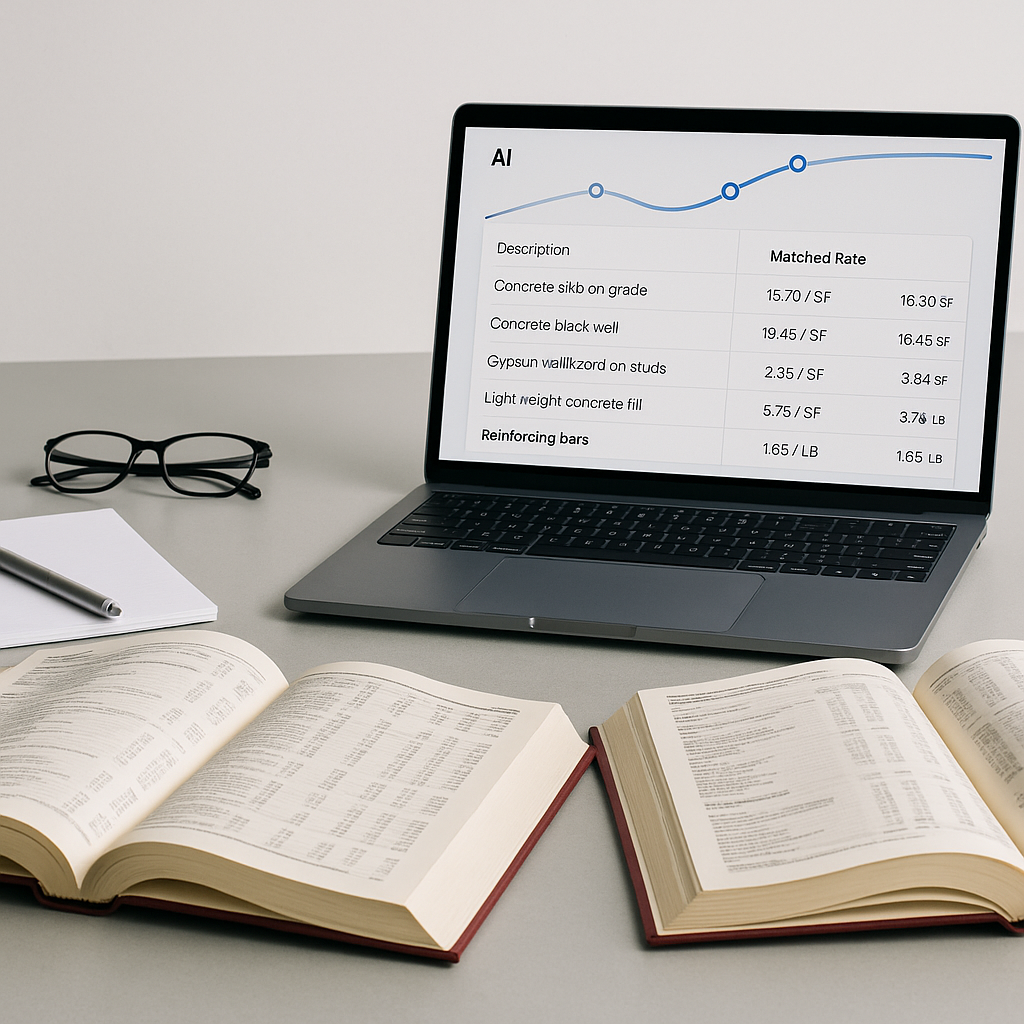
- Ignoring Customization: If your rates are project-specific, make sure the tool allows for custom inputs. Otherwise, you’ll end up with irrelevant data.
- Not Testing First: Start small. Use AI on a less critical project to understand its capabilities and limitations before scaling up.
Final Thoughts
Manual takeoffs are the past. They’re slow, error-prone, and a poor use of your team’s time. AI-powered tools offer a clear path forward. They don’t just save you time—they free you to focus on the strategic parts of estimating that actually win work.
If you’re tired of wasting hours on manual takeoffs, explore AI-powered solutions to see how they can transform your preconstruction process.